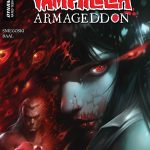
Vampirella: Armageddon #7, by Dynamite Comics on 1/14/26, tackles the impossible task of balancing apocalyptic war, internal psychological collapse, and a protagonist who’s becoming the very thing she fears.
Credits:
- Writer: Tom Sniegoski
- Artist: Edu Menna
- Colorist: Adriano Augusto
- Letterer: Jeff Eckleberry
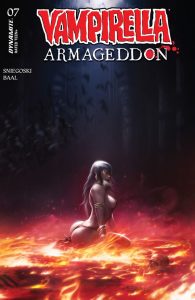
- Cover Artist: Francesco Mattina (cover A)
- Publisher: Dynamite Comics
- Release Date: January 14, 2026
- Comic Rating: Teen+
- Cover Price: $4.99
- Page Count: 24
- Format: Single Issue
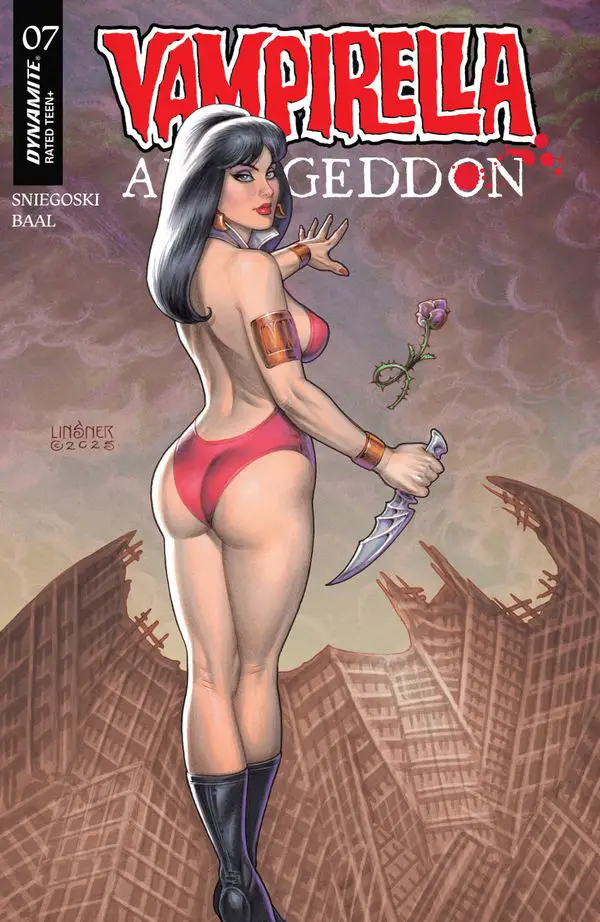
Covers:

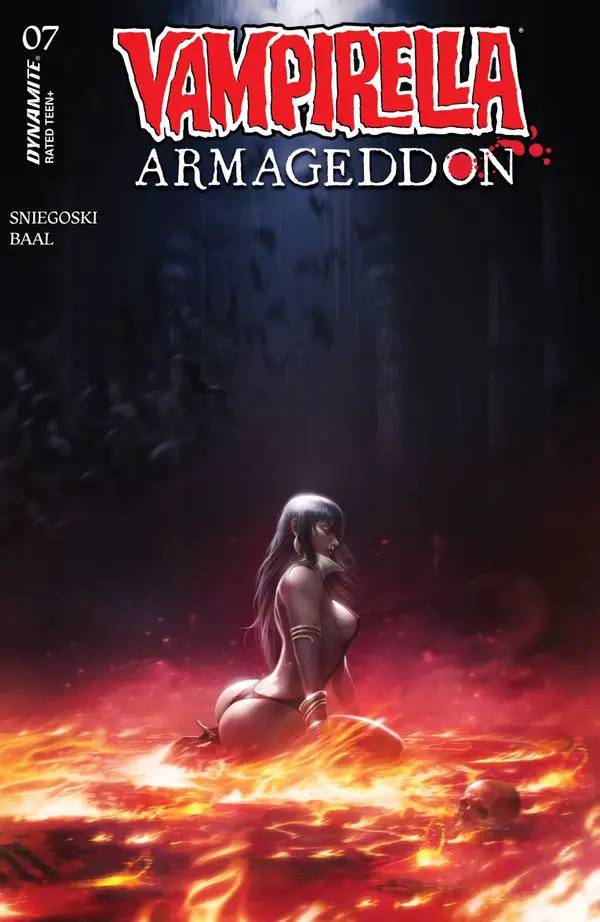
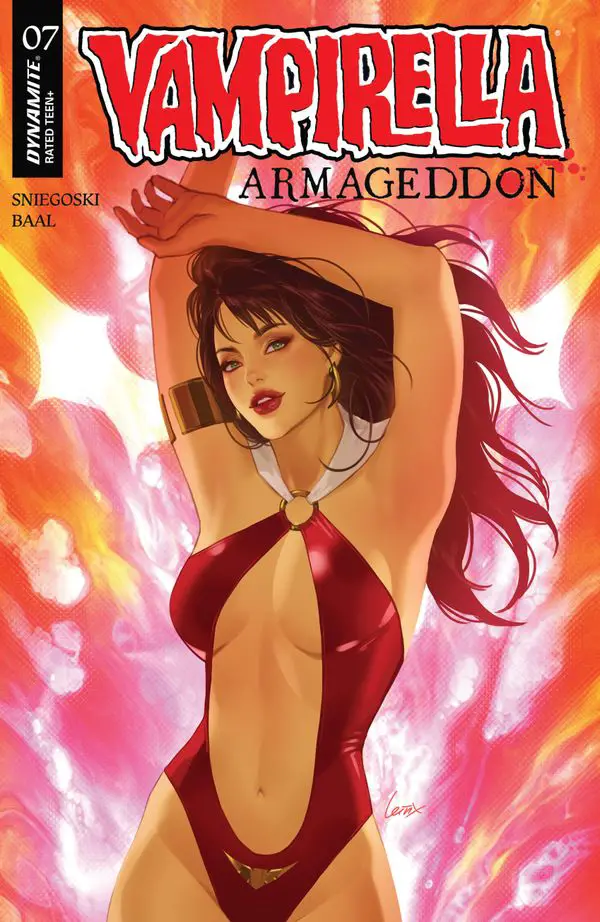

Analysis of VAMPIRELLA: ARMAGEDDON #7:
First Impressions:
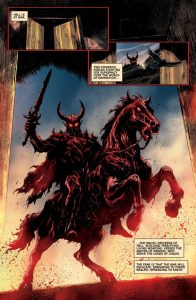
The opening scene with Lord Shroud’s emissary and Baals sets a sinister tone that immediately grabs attention. The concept of conflicting factions in Hell while Vampirella unwittingly becomes a weapon against herself has serious dramatic potential. However, the execution feels scattered, like Sniegoski is juggling too many subplots and occasionally drops a few.
Recap:
In Vampirella: Armageddon #6, Vampirella and Walker trekked across Hell’s burning plains, battling endless hordes while Vampirella struggled with intrusive visions of her mother Lilith. The rescue party from Sepulcher City crossed into Hell but found themselves in grave danger. Hemorrhage resurfaced as a lethal physical threat, forcing Vampirella to balance protecting Walker with confronting her own demons. The issue ended with the rescue team and Vampirella’s convoy converging, setting the stage for massive conflict with uncertain odds.
Plot Analysis (SPOILERS):
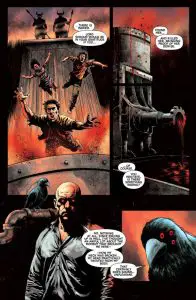
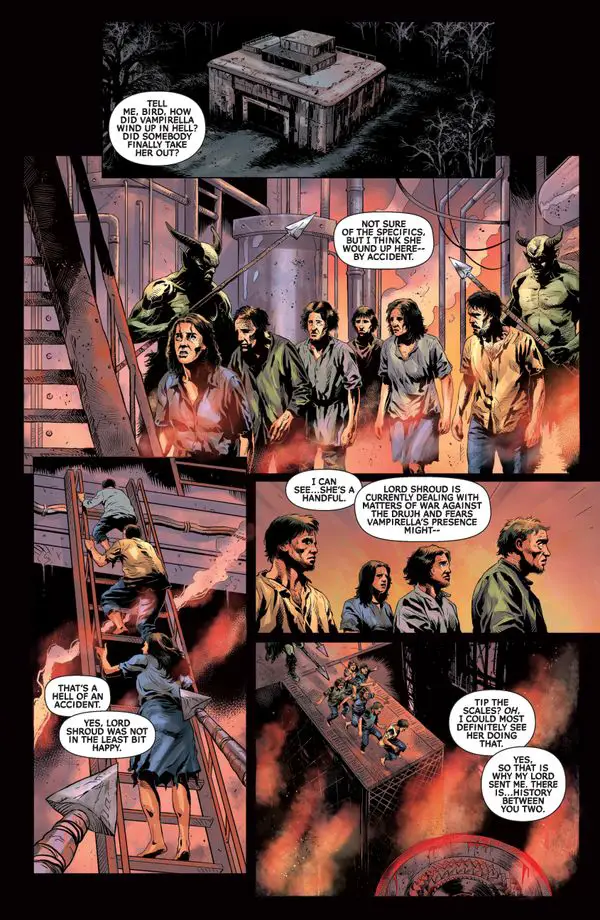
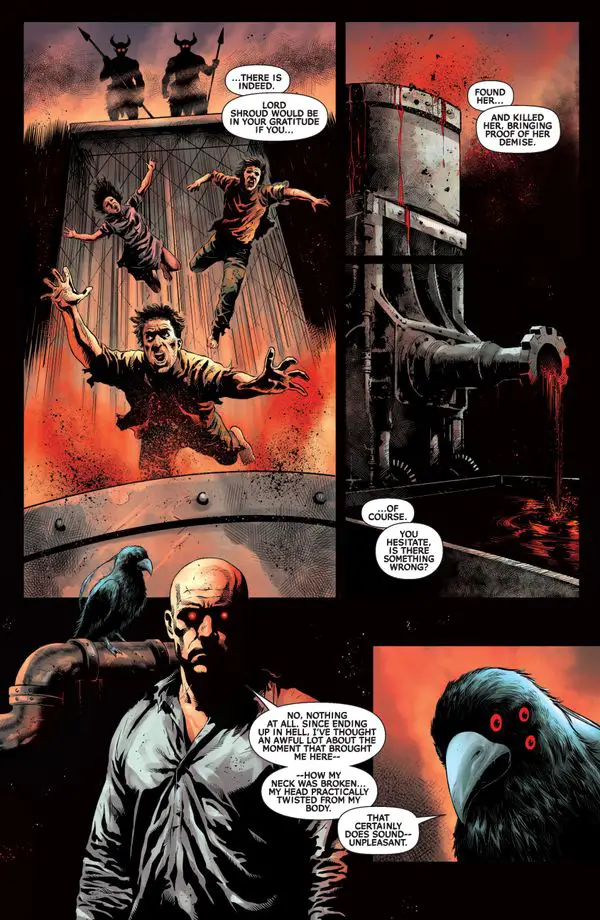
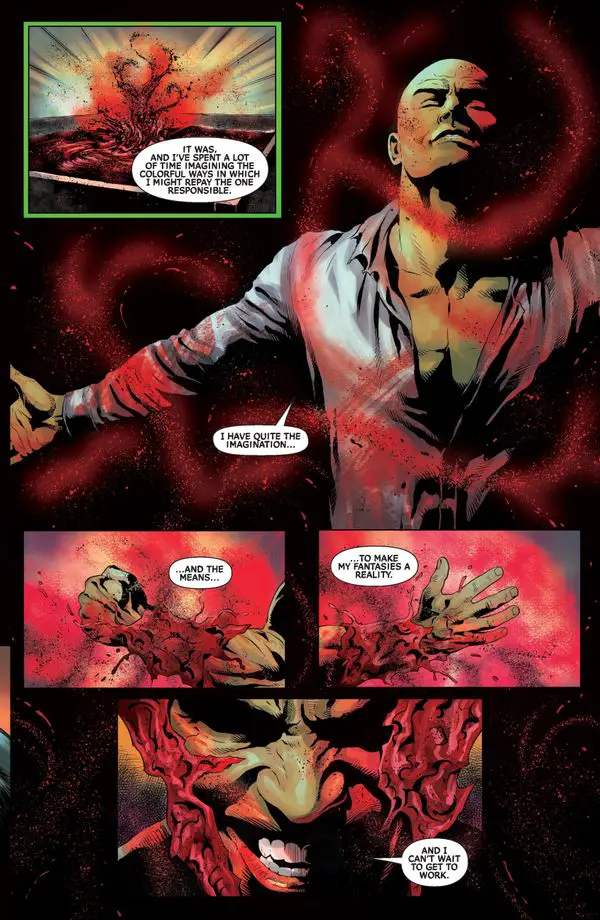
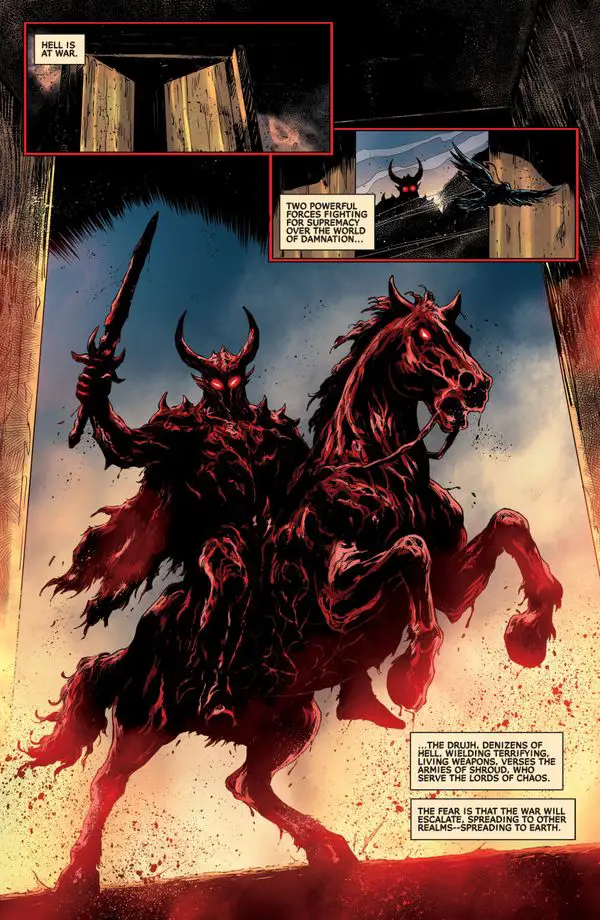
Issue seven opens with a discussion between Lord Shroud’s messenger and Baals, a character with history involving Vampirella. Baals has spent his time in Hell imagining revenge for his broken neck, orchestrated by Vampirella herself. Lord Shroud wants Vampirella dead, and Baals is tasked with the deed. Meanwhile, Hell itself is embroiled in war between the Drujh, who wield living weapons, and Lord Shroud’s armies serving the Lords of Chaos.
Vampirella battles her inner darkness as she fights creatures on the hellish battlefield. The darkness within her whispers temptations to embrace bloodlust and superiority, but she resists, though barely. She questions whether she’s ever truly been in control, sensing that something far more sinister is orchestrating events from within. As the issue progresses, the darkness reveals itself as serving a long-term agenda connected to a dark goddess and a mysterious artifact called the Hellworm.
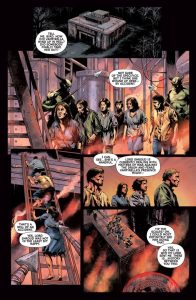
The rescue team arrives in Hell’s Wastes of Despair after an incredibly unpleasant dimensional journey. They struggle to find Vampirella while gathering information. The group heads toward the city of Dis, where they might find answers about the ongoing war. One team member grieves the fate of an old woman and child who vanished during their transit, suspecting they didn’t survive Hell’s hostile environment.
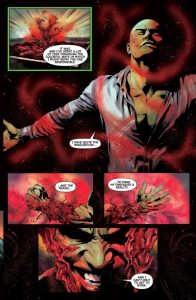
Baals, now physically manifesting in Hell, encounters the dark goddess and begins receiving a vision of his prophesied ascension. He speaks of followers who’ve waited patiently for his rise, promising them suffering beyond measure. The Hellworm, a living weapon, is revealed as instrumental to his plans, repeatedly thinking “Kill God.” The rescue team enters a tavern in Dis seeking information, where tensions escalate with locals who resent strangers. A brief scuffle erupts before another figure enters asking about Vampirella, ending the issue with a new complication in their search.
Story
Sniegoski’s pacing careens between frenetic action and exposition-heavy dialogue. The conversations feel natural and character-driven, particularly Vampirella’s internal monologue about battling her darker nature. However, the narrative jumps between four distinct storylines, Baals’ resurrection and prophecy, Vampirella’s psychological warfare, the rescue team’s arrival, and the tavern scene. The structure becomes muddled when trying to service all these threads simultaneously. Dialogue is sharp and conversational, with vernacular accents for certain characters adding flavor, though some transitions between scenes feel abrupt. The cliffhanger works because it introduces a mystery about the tavern stranger, but the overall pacing suffers from trying to do too much in a single issue.
Art
Edu Menna’s artwork is where this issue truly shines. The hellscapes are rendered with brutal clarity, showing ash-covered wastelands and detailed architecture in Dis without becoming visually overwhelming. Composition choices effectively separate action beats from dialogue-heavy scenes, using panel layout to control pacing. The Hellworm design is genuinely unsettling, rendered with organic grotesqueness that matches the subject matter. Adriano Augusto’s color work is exceptional in distinguishing Hell’s different regions; the sickly yellows and reds of the wastelands contrast sharply with the darker, more shadowed interiors of the tavern. The visual synergy between artwork and narrative is strong, with art conveying emotional weight when dialogue might overexplain. Vampirella’s anguished expressions effectively communicate her internal struggle without relying on thought bubbles.
Characters
Vampirella’s internal conflict is the emotional core, and Sniegoski handles it with surprising nuance. She’s aware of her dark nature and fights it actively, which makes her struggle feel earned rather than melodramatic. Her consistency across issues holds, though this issue reveals that her understanding of her own nature might be incomplete, which adds complexity. Baals serves as an effective antagonist because his motivation is concrete and personal; he’s not a faceless villain but a wronged party seeking revenge. His characterization as someone who’s spent untold time nursing a grudge makes him menacing and sympathetic. The rescue team remains underdeveloped, though one character’s reluctance and anxiety about being part of the mission adds a realistic note of discord. The tavern keeper feels authentically irritating without becoming a caricature, grounding the setting in recognizable tavern dynamics.
Originality & Concept Execution
The core concept of Vampirella discovering she’s unwittingly participating in a larger dark agenda is solid and fits the horror-action genre well. However, the execution feels somewhat familiar; the “hero is the unwitting instrument of their enemy” trope appears frequently in modern fantasy and horror. The Baals resurrection subplot, while visually interesting, doesn’t bring much that feels genuinely fresh. The tavern scene relies on the well-worn “strangers cause trouble” setup. What does work is the genuine sense of scale in the Hell war and the design of the Hellworm as a living weapon. The comic succeeds best when it leans into the visceral, unsettling atmosphere of Hell itself rather than the broader narrative beats.
Positives
The artwork is unquestionably the issue’s strongest asset; Menna and Augusto deliver visually compelling Hell sequences that justify the purchase price alone. Vampirella’s psychological internal struggle is handled with genuine dramatic weight, avoiding the trap of making her seem weak or indecisive. The mystery of the Hellworm and its true purpose works effectively as a story engine, making readers curious about future revelations. The tavern scene, despite relying on familiar beats, includes character details like the hellhound teeth as currency that make the Hell economy feel established and lived-in. The issue also succeeds in raising questions about Vampirella’s agency and control that promise compelling character development ahead.
Negatives
The central issue is narrative overload; four parallel storylines compete for attention, and none gets sufficient breathing room for full impact. The transition between scenes feels rushed, as though Sniegoski is racing to hit all his plot points rather than allowing events to breathe. The Baals subplot, while visually interesting, doesn’t emotionally land because readers haven’t invested in his character; his resurrection and prophecy feel imposed rather than earned. The rescue team still lacks distinct personalities beyond basic archetypes, making their scenes feel obligatory rather than compelling. Dialogue occasionally tips toward exposition, particularly in scenes explaining Hell’s political structure and the war’s nature. The premise that “Vampirella is the problem” is introduced but not fully explored, leaving readers with a setup that promises payoff without delivering it within this issue.
Art Samples:
The Scorecard:
Writing Quality (Clarity and Pacing): [2.5/4]
Art Quality (Execution and Synergy): [3.5/4]
Value (Originality and Entertainment): [0.5/2]
Final Thoughts:
(Click this link 👇 to order this comic)
VAMPIRELLA: ARMAGEDDON #7 arrives with high ambitions and exceptional artwork, but it trips over its own narrative ambitions. The art alone is worth the cover price if you’re already following the series, but the writing sprawls across too many threads without achieving sufficient depth in any single storyline.
We hope you found this article interesting. Come back for more reviews, previews, and opinions on comics, and don’t forget to follow us on social media:
If you’re interested in this creator’s works, remember to let your Local Comic Shop know to find more of their work for you. They would appreciate the call, and so would we.
Click here to find your Local Comic Shop: www.ComicShopLocator.com
As an Amazon Associate, we earn revenue from qualifying purchases to help fund this site. Links to Blu-Rays, DVDs, Books, Movies, and more contained in this article are affiliate links. Please consider purchasing if you find something interesting, and thank you for your support.