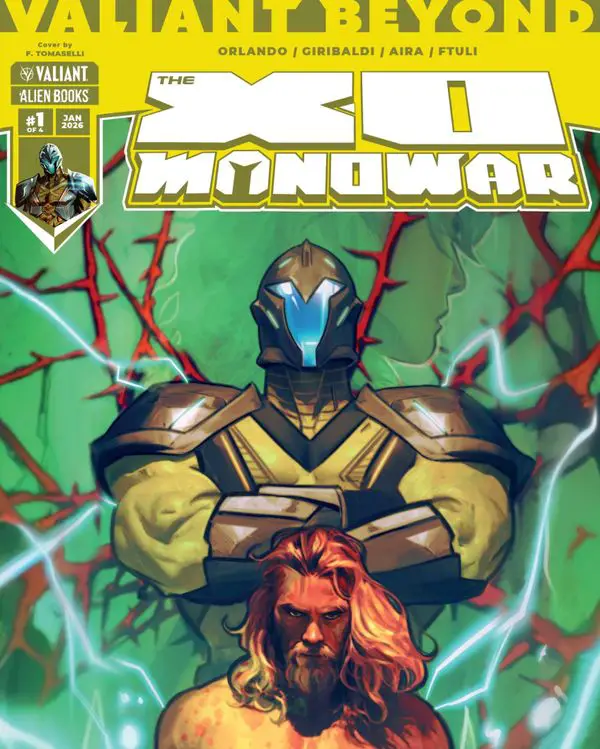
Valiant Beyond: X-O Manowar #5, by Alien Books & Valiant Comics on 1/14/26, takes a hero who spent the last issue breaking free and shoves him into his own mind to wage war against fear itself.
Credits:
- Writer: Steve Orlando
- Artist: Diego Giribaldi, Tomas Aira
- Colorist: Lautaro Ftuli, Ludwig Olimba
- Letterer: Camila Jorge
- Cover Artist: Francesco Tomaselli (cover A)
- Publisher: Alien Books/Valiant Comics
- Release Date: January 14, 2026
- Comic Rating: Teen
- Cover Price: $4.99
- Page Count: 24
- Format: Single Issue
Covers:
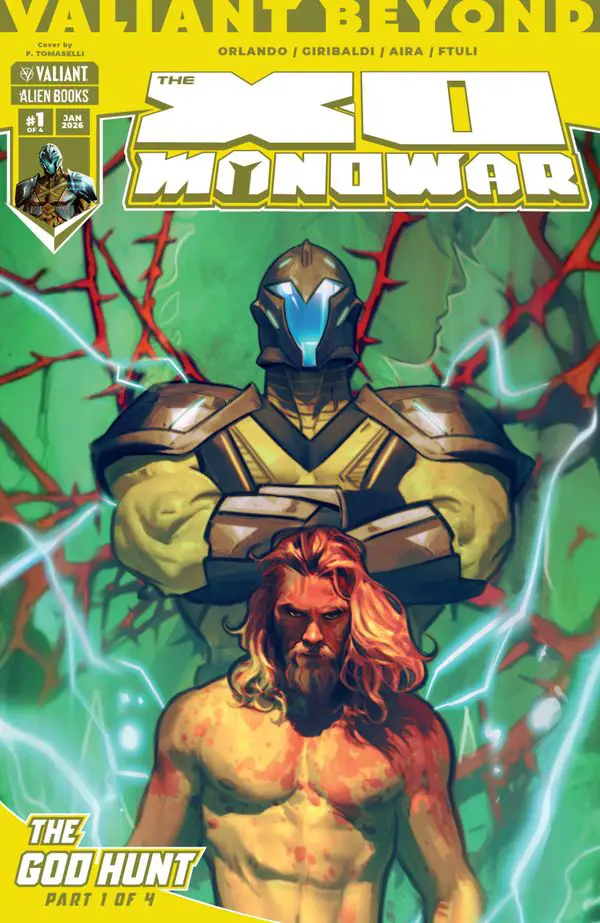
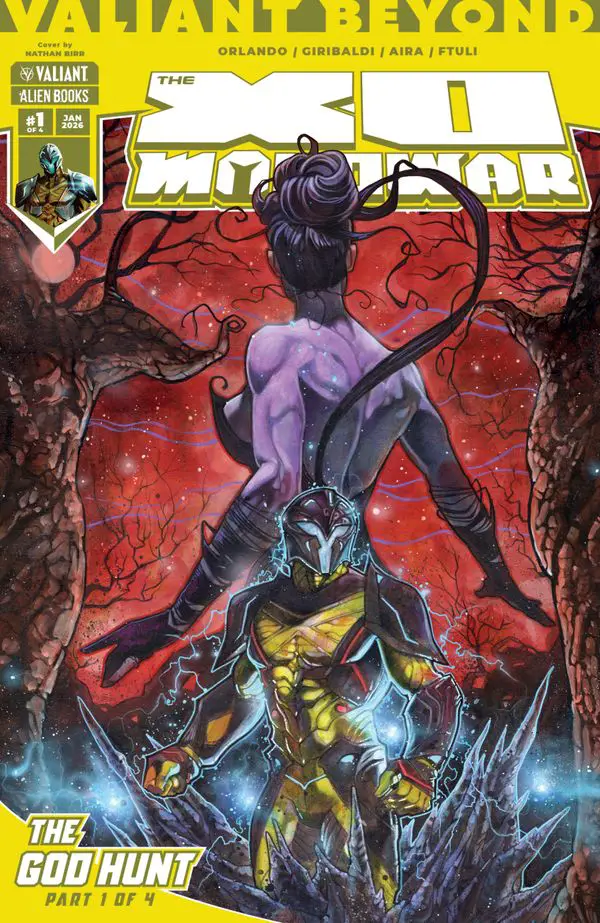
Analysis of VALIANT BEYOND: X-O MANOWAR #5:
First Impressions:
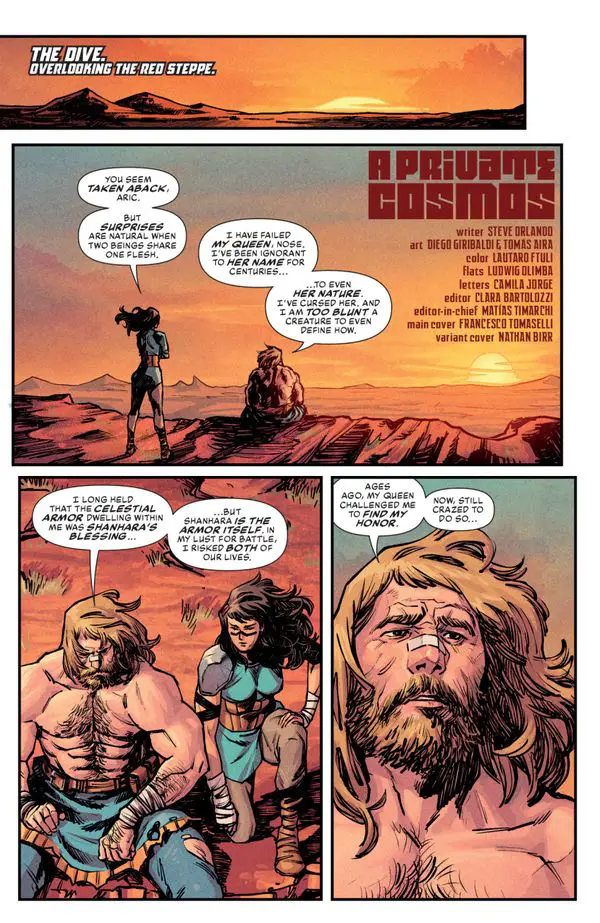
The opening pages establish Aric’s guilt and vulnerability in a way that’s genuinely compelling. He’s grappling with centuries of ignorance about his armor’s true nature and his queen’s suffering, which reframes his entire past. The emotional stakes feel earned and grounded in real character stakes.
Recap:
Valiant Beyond: X-O Manowar #4 concluded with Aric defeating Typhon through sheer cultural will and psychological resistance that transcended the armor’s power. Demolition revealed that Shanhara, Aric’s cosmic armor, is not a tool but a sentient being with a name, trapped in psychological imprisonment and desperately needing rescue from realms beyond the physical world.
Plot Analysis (SPOILERS):
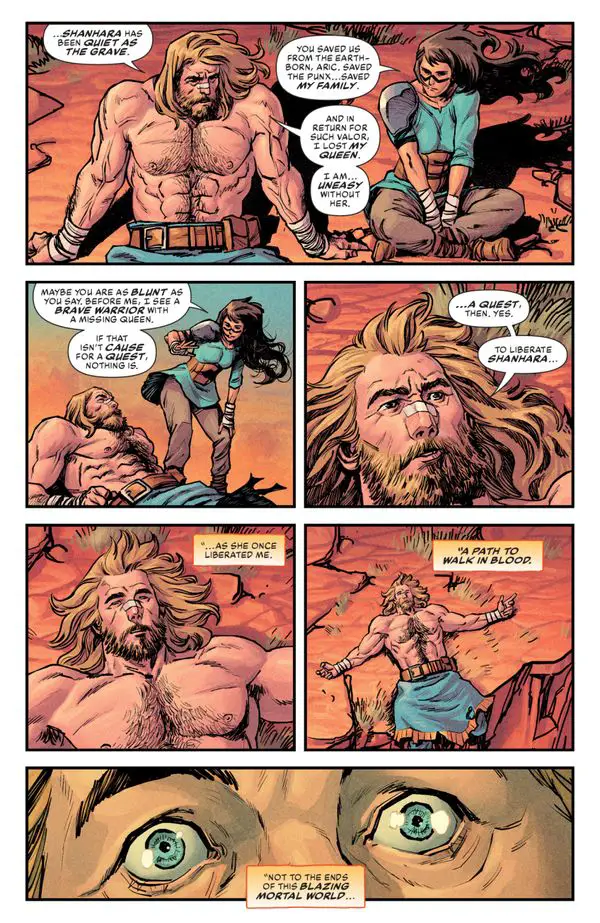
Aric begins at the Punx’s home on the Dive, guilt-stricken over his role in allowing Shanhara to be captured by Typhon’s consciousness. A character named Nose validates his quest, confirming that his need to rescue his queen is honorable and necessary. Aric realizes that his path leads not into the external Red Steppe but into the shared mental realm he and Shanhara inhabit together. He resolves to enter this internal kingdom to sever the bonds that hold his queen prisoner.
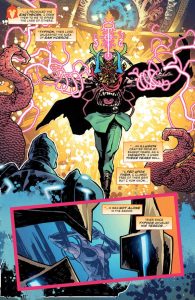
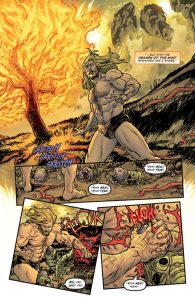
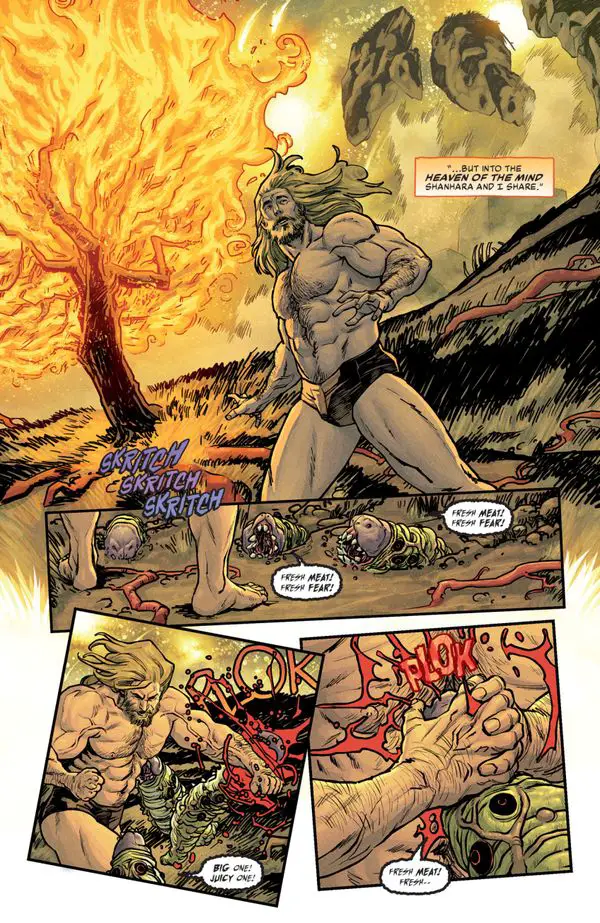
Upon entering the mental realm, Aric encounters twisted creatures called Phobophages, creatures that feed on fear and suffering to sustain a landscape warped by Typhon’s presence. These creatures describe a cosmic ecosystem where fear itself becomes a currency, sustenance, and torture mechanism all at once. Aric battles through hordes of these demons, pressing deeper into a corrupted landscape where the distinction between psychological torture and physical combat blurs completely.
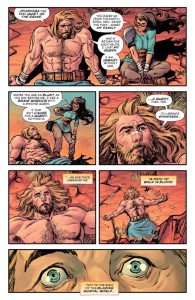
Aric discovers Shanhara herself, imprisoned in a throne-like structure grown from the mental landscape, her power drained and weaponized to sustain the realm’s nightmarish economy. The two reunite and confirm their mutual responsibility for allowing the invasion of their shared heaven. Shanhara corrects Aric’s paternalism by insisting she bears equal blame and will fight alongside him rather than remain a passive victim.
In the final moments, a shadowy military force called Starwatcher Command receives clearance to hunt Shanhara with lethal force and capture her divine power as a sample. Aric remains unaware that his quest has attracted an external threat operating on logistics, protocols, and institutional machinery far colder than Typhon’s psychological horror. The issue closes with the revelation that his internal victory may be meaningless if external forces close in.
Story
The dialogue carries thematic weight and character motivation effectively, particularly in early scenes where Aric processes his guilt and Shanhara corrects his assumptions about honor and sacrifice. The pacing stumbles when transitioning from the psychological setup into the nightmare realm itself. The jump happens so abruptly that readers barely have time to orient themselves before combat begins. Aric’s internal monologues are verbose and atmospheric, which works in small doses but begins to drag when every action sequence gets swallowed by existential reflection. The structure itself is sound, but the execution prioritizes mood over momentum.
Art
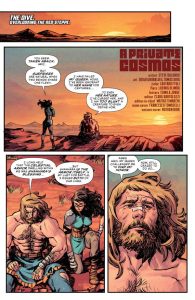
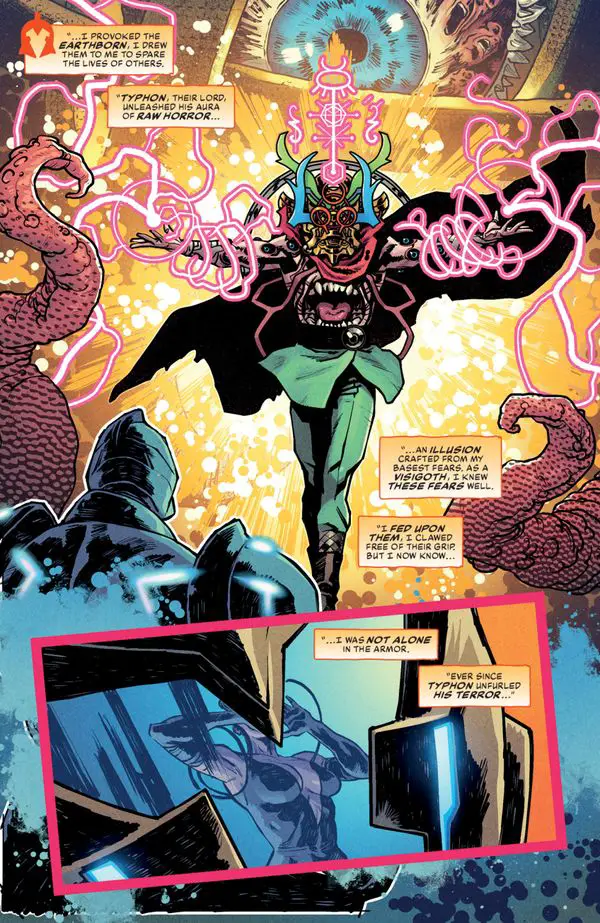
Giribaldi and Aira deliver genuinely impressive visual work that conveys the psychological horror of the mental realm. The creature designs are disturbing and imaginative, with Phobophages rendered as organic amalgamations of fear and hunger. Color work by Ftuli creates a sickly, corrupted aesthetic that contrasts with the earlier earthen tones of the physical world. The composition in combat scenes effectively uses close-ups and dynamic angles to convey chaos and desperation. However, the horror imagery crosses into gratuitous territory, particularly in scenes where the Phobophages feed on Shanhara; the visual language becomes uncomfortably sexualized in ways that feel incidental to the story’s emotional core.
Characters
Aric’s arc in this issue is introspective and meaningful; he moves from guilt-driven desperation to understanding that his strength comes from internal resilience, not external armor. This builds naturally on his previous victory and deepens his character. Shanhara’s emergence as an active participant rather than a victim is refreshing and corrects the power dynamic that had been building. The problem is that Nose, the character who validates Aric’s quest, feels more like a functional plot device than a character with genuine personality. His sole purpose is to confirm Aric’s emotional state and send him on his way.
Originality & Concept Execution
The concept of a hero venturing into a shared mental space to rescue an imprisoned consciousness is not new, but the framing through Typhon’s psychological horror infrastructure is intriguing. The idea that fear can be weaponized as both torture and sustenance creates a unique problem for a warrior accustomed to physical solutions. However, the execution falters because the mental realm lacks internal logic. Why does Shanhara need rescue through combat if this is purely psychological? Why does defeating Phobophages matter if they’re manifestations of fear? The story asks readers to accept the nightmare logic without ever establishing the rules or stakes in ways that feel coherent.
Positives
The art absolutely earns its place as the comic’s strongest asset; Giribaldi and Aira create a genuinely unsettling visual environment that conveys psychological horror without relying on familiar clichés. The color palette amplifies this work, creating a corrupted atmosphere that distinguishes this arc from standard superhero fare. Aric’s character development remains solid; his introspection about honor and sacrifice carries emotional authenticity. The concept itself is ambitious, attempting to blend psychological horror with superhero action in ways that feel fresh. The twist ending, revealing Starwatcher Command’s external threat, adds another layer of complexity that suggests the internal victory might carry no external meaning whatsoever.
Negatives
The core narrative contradiction undermines the entire premise; if this is a purely psychological realm, combat outcomes shouldn’t matter, yet the issue treats them as if they’re definitively consequential. This conceptual muddiness leaves readers uncertain whether they’re supposed to care about the Phobophages as genuine threats or as manifestations of abstract fear. The dialogue sometimes overwhelms action, making combat sequences feel bloated with philosophical reflection rather than kinetic energy.
Most troublingly, the visual rendering of horror sometimes veers into imagery that feels inadvertently sexual and exploitative, particularly in how Shanhara’s imprisonment is depicted; the intention is cosmic horror, but the execution reads as uncomfortable. The issue also leaves several questions unanswered about the basic mechanics of this mental realm, asking readers to simply accept the logic without explanation.
Art Samples:
The Scorecard:
Writing Quality (Clarity & Pacing): [2/4]
Art Quality (Execution & Synergy): [3.5/4]
Value (Originality & Entertainment): [0.5/2]
Final Thoughts:
(Click this link 👇 to order this comic)
VALIANT BEYOND: X-O MANOWAR #5 wants to be a smart, conceptually adventurous exploration of what honor means when external power becomes irrelevant. It’s got genuine artistic merit and a protagonist whose internal struggle feels earned. But it buckles under the weight of its own ambition, failing to establish the basic rules of its own battlefield. The final reveal suggests bigger things are coming, but for a single issue focused on internal rescue, it doesn’t quite deliver the narrative coherence it promises.
We hope you found this article interesting. Come back for more reviews, previews, and opinions on comics, and don’t forget to follow us on social media:
If you’re interested in this creator’s works, remember to let your Local Comic Shop know to find more of their work for you. They would appreciate the call, and so would we.
Click here to find your Local Comic Shop: www.ComicShopLocator.com
As an Amazon Associate, we earn revenue from qualifying purchases to help fund this site. Links to Blu-Rays, DVDs, Books, Movies, and more contained in this article are affiliate links. Please consider purchasing if you find something interesting, and thank you for your support.