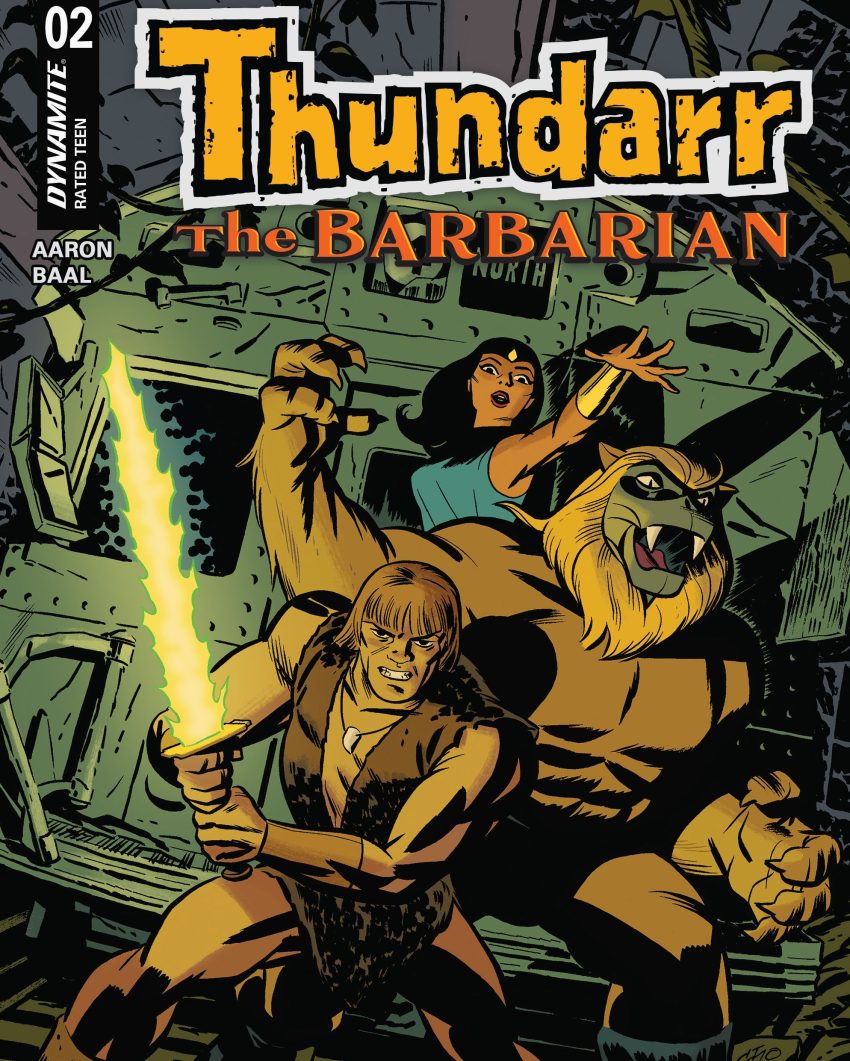
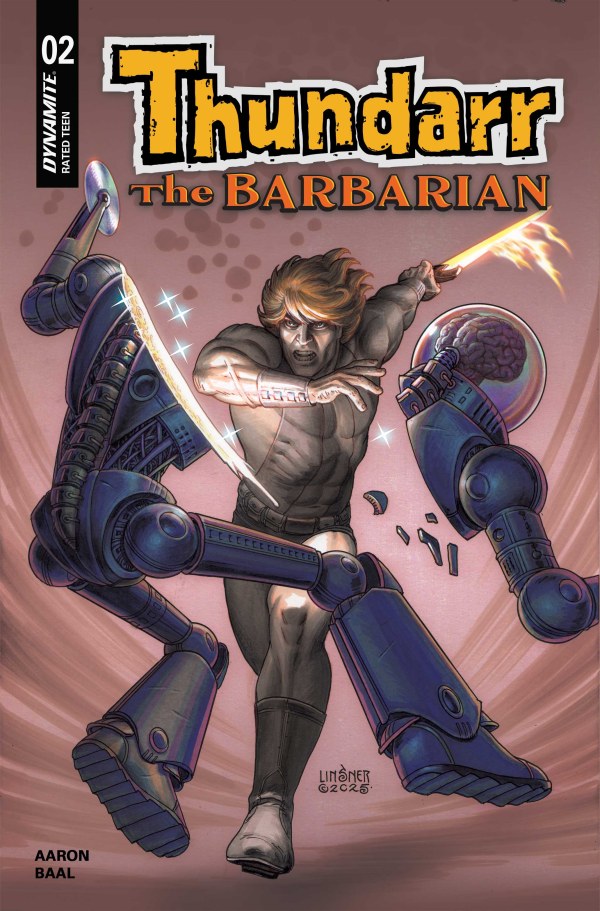
Thundarr the Barbarian #2 (Dynamite Comics, 3/2/26): Writer Jason Aaron and artist Kewber Baal trap Thundarr in dueling timelines, juggling an enslaved gladiator nightmare with a Moon Dial time‑war plot that pits him against the Council of Wizards. The execution is conceptually bold but structurally uneven, with fantastic moments undermined by whiplash transitions and an abrupt cliffhanger that feels more clever than satisfying; Verdict: For die‑hard fans only.
Credits:
- Writer: Jason Aaron
- Artist: Kewber Baal
- Colorist: Jorge Sutil
- Letterer: Taylor Esposito
- Cover Artist: Michael Cho (cover A)
- Publisher: Dynamite Comics
- Release Date: March 4, 2026
- Comic Rating: Teen
- Cover Price: $4.99
- Page Count: 24
- Format: Single Issue
Covers:
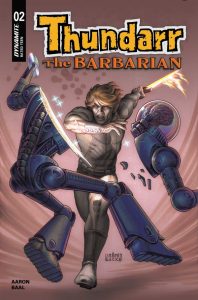
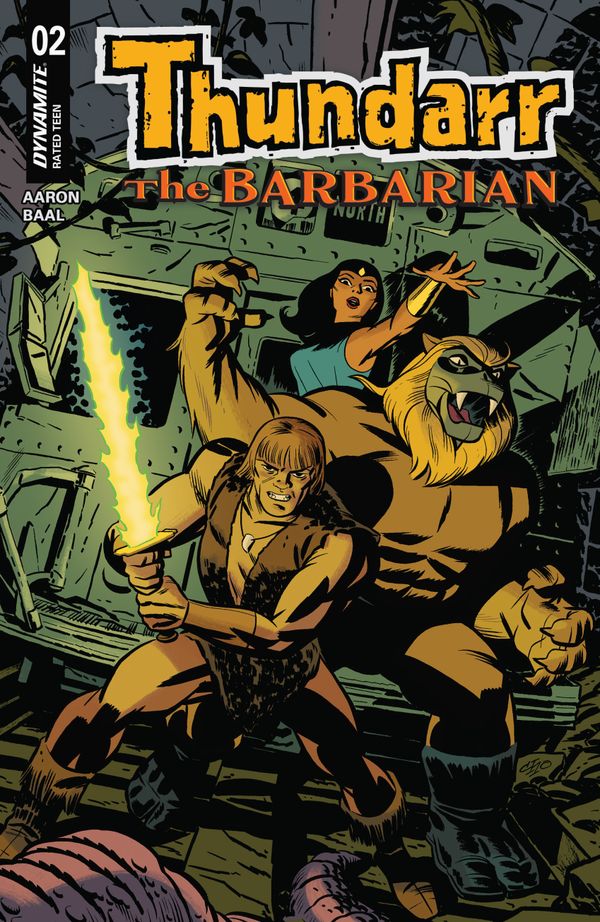
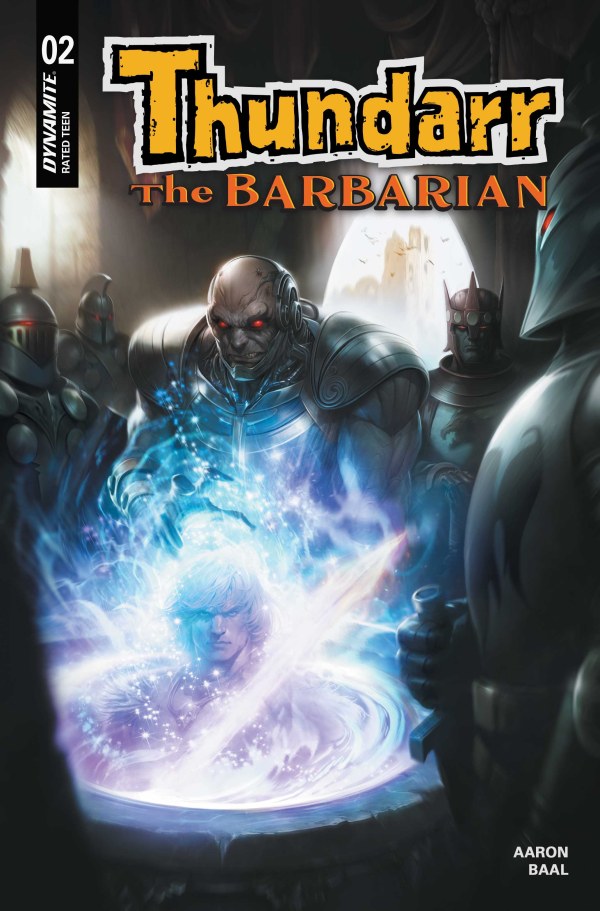
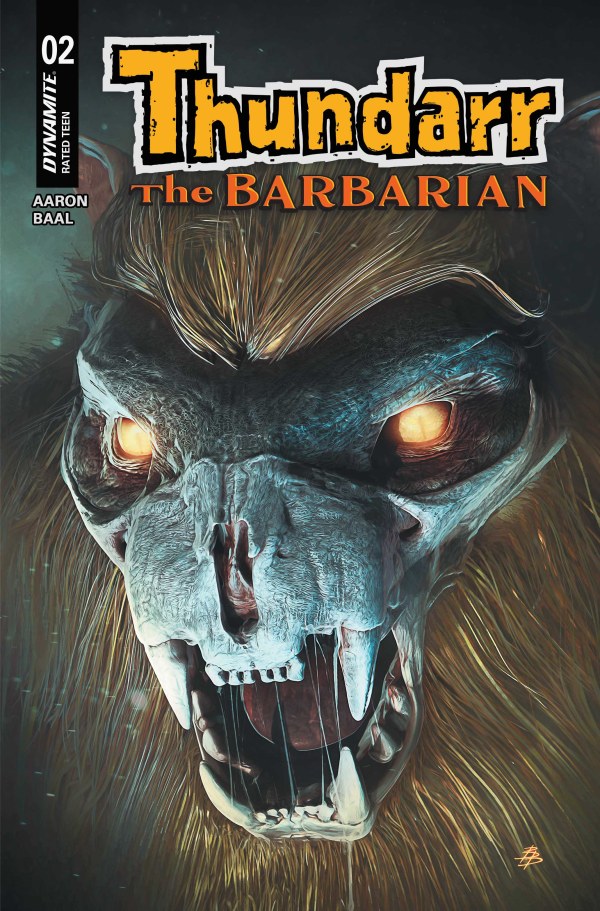
Analysis of Thundarr the Barbarian #2:
First Impressions:
This chapter hits like a hangover, appropriately enough, because it drops you into Thundarr’s enslaved gladiator life with a grim, almost repetitive rhythm that sells how small his world has become. The contrast between his numbed arena routine and the vivid, almost heroic dreams of riding free with Ariel and Ookla lands fast and hard, so your gut reaction is sympathy tinged with frustration that the book is more interested in setting tone than in moving the emotional ball down the field.
Once the story swings over to the Council of Wizards, the energy spikes as the Moon Dial, Gemini’s lingering grudge, and the full “rewrite the world” plan finally snap into focus, but that high is undercut by a structure that keeps bouncing between timelines right when a scene should crest. By the time the heroes jump into 1994 to face a runaway planet and then the book slams you back into the arena just long enough to tee up a “Thundarr vs. Ookla” cliffhanger, it feels like a strong second act that keeps ducking its own punches.
Recap:
In Thundarr the Barbarian #1, Thundarr allowed himself to be sold at a slave auction so Ariel and Ookla could infiltrate a Groundling mining operation using humans as disposable divers in the Sea of Kann‑Zass to retrieve a technological component. He freed the captives but failed to stop the Groundlings from escaping with the piece, which turned out to be the missing part of Khromm’s Moon Dial, a device the Council of Wizards needed to bend time and fuel a shared plan for vengeance led by Gemini. That chapter also framed the whole mission with scenes of an enslaved gladiator version of Thundarr fighting in Sabian’s arena, haunted by dreams of freedom and his friends, leaving it unclear whether that broken barbarian was a failed future, an alternate timeline, or the trap the wizards intended all along.
Plot Analysis (SPOILERS):
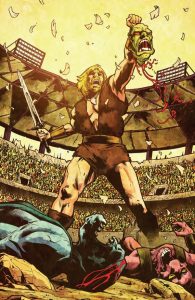
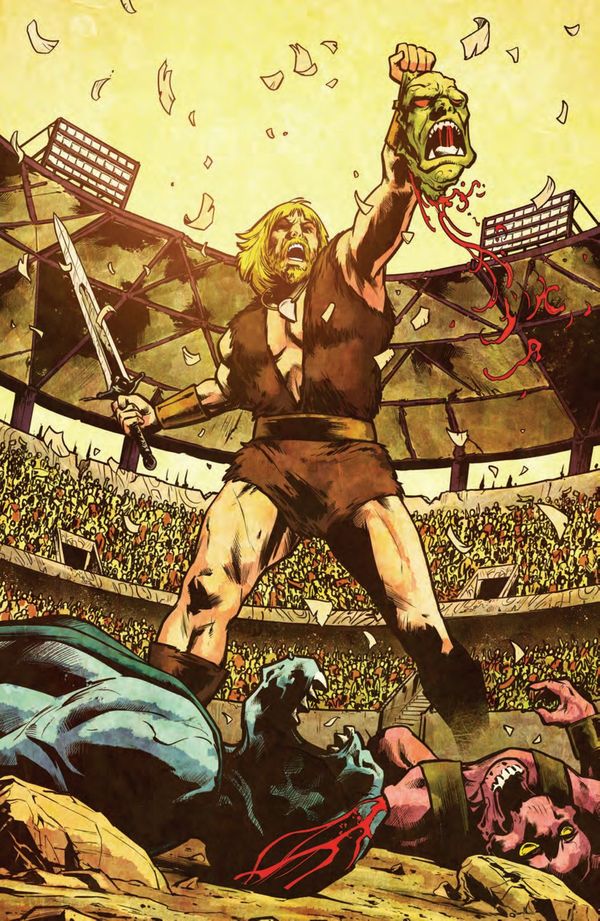
The issue opens in an alternate timeline where Thundarr is a broken, enslaved gladiator fighting in Lord Sabian’s arena. He has no memories of being free except haunting dreams where he rides with companions (Ariel and Ookla), fights wizards, and wields a mighty sword. He drinks heavily to numb the void but wakes each morning still in chains, believing his dreams of freedom are just ghosts and fairy tales.
The story then cuts to “years later” where the Council of Wizards (including villains like Gemini, Mindok, Argos, Striya, Infernus, and Khromm) have gathered to execute their ultimate revenge against Thundarr. They’ve assembled the Moon Dial, a device that combines science and sorcery to bend time itself and rewrite reality. Just as they begin their ritual, the “real” Thundarr, Ariel, and Ookla burst in to stop them.
A chaotic battle erupts with mutants defending the wizards. During the fight, the wizards activate the Moon Dial and escape through time. Thundarr immediately jumps through the portal after them, with Ariel and Ookla following on horseback. They emerge in 1994, in a modern city with cars and skyscrapers. The heroes race through the streets and scale a building to reach the wizards on the rooftop.
On the roof, they discover the wizards are performing a ritual on the exact day of the Great Catastrophe, two thousand years in their past, when a runaway planet hurtled between Earth and the Moon, destroying civilization. The wizards plan to harness that cataclysmic energy to end humanity once and for all. As the planet approaches and the city begins crumbling around them, Ariel admits she has no idea how to stop it.
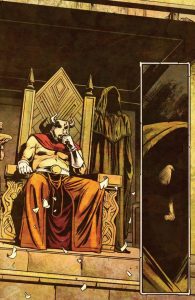
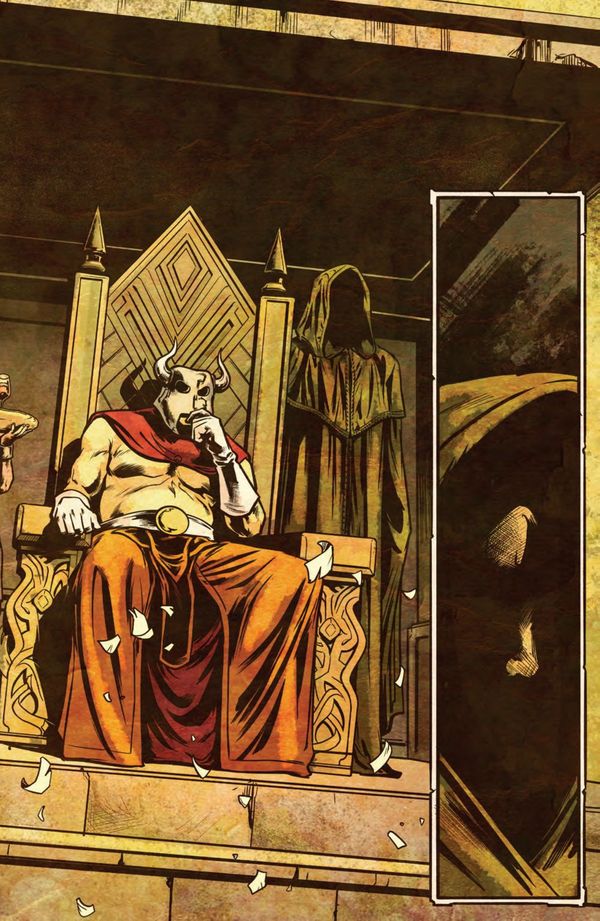
The scene abruptly cuts back to the enslaved Thundarr being beaten awake by guards who drag him to the arena. Lord Sabian tells his daughter that “hope can be a dangerous thing” and today Thundarr’s hope will meet a grisly end. The issue ends with a shocking cliffhanger: Thundarr’s opponent in the arena is Ookla the Mok, set up to fight his own friend to the death.
How is the story in Thundarr the Barbarian #2?
Jason Aaron structures this issue around the tension between two realities, one where Thundarr is a broken slave and one where he is a defiant hero chasing wizards through time, and that duality is both the script’s biggest strength and its main pacing problem. The gladiator segments are deliberately slow and suffocating, using repetition and inner narration to sell how thoroughly Thundarr’s spirit has been smothered, while the Council and 1994 sequences operate at a breakneck clip that throws big ideas and visual hooks at you faster than they can fully land.
Dialogue is blunt in a way that fits the property, with Thundarr mostly speaking in simple commands and battle declarations, and the wizards indulging in theatrical speeches about doom, dominion, and destiny. Sabian’s exchanges with his daughter are a highlight, sharply articulating the idea that hope itself is a threat to tyrants, but some of the Council’s lines lean on standard “we will end humanity” villain talk instead of sharpening their individual agendas. Structurally, hard cuts between the rooftop cataclysm and the arena cliffhanger make for a punchy reading experience, yet they also create a sense that important connective beats have been skipped to chase maximum drama over maximum clarity.
How is the art in Thundarr the Barbarian #2?
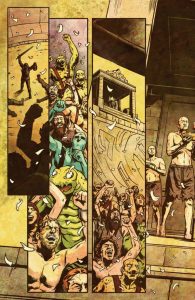
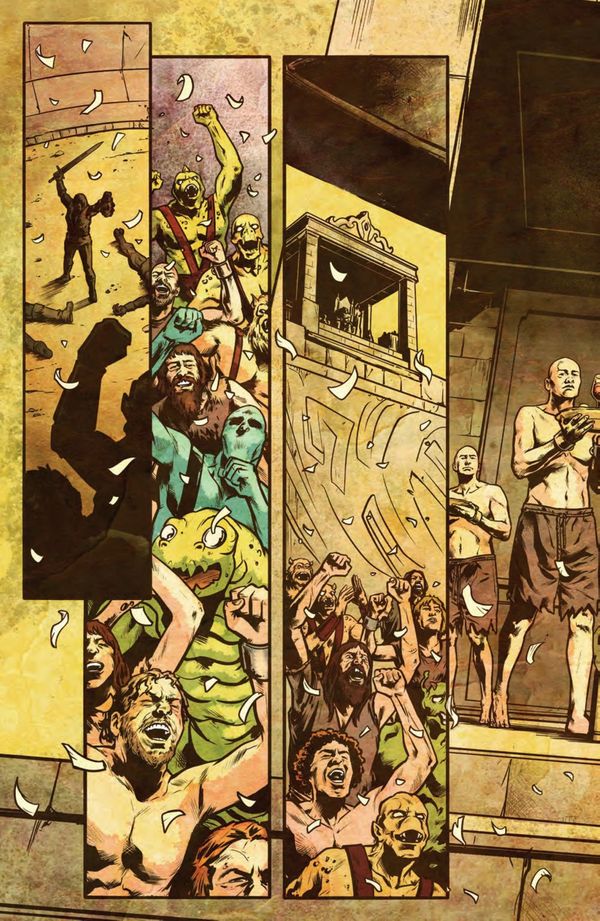
Even without zooming in on every panel, the art clearly leans into high‑impact compositions, contrasting the grim, dirty textures of Sabian’s arena with the sleek, vertical lines of the 1994 skyscraper and the cosmic spectacle of a planet grinding between Earth and the Moon. The gladiator pages use heavy shadows, thick figure outlines, and close‑up shots of weary eyes and scarred faces to sell the brutality of Thundarr’s daily grind, making his brief dream sequences of riding free feel almost overexposed by comparison.
On the time‑travel side, the rooftop ritual sequence plays with wide shots of the city crumbling under green energy, tight panels on chanting wizards, and reaction shots of the trio staring up at the unfolding disaster, creating an effective sense of scale even when the layouts have to juggle multiple focal points. Color shifts help differentiate spaces and stakes, with the arena drenched in earthy browns and sickly firelight, the Council chamber glowing with cold, artificial hues around the Moon Dial, and the 1994 scenes popping with more natural daylight that curdles as the sky tears open. That visual language supports the narrative idea that time itself is being bent and bruised, even when the script is a little cagey about explaining exactly how the timelines mesh.
Characters
Thundarr’s core motivation is reinforced rather than reinvented, the enslaved version of him still bristles at chains and cruelty, even when he believes his dreams of freedom are lies, so his rage reads as the residue of a hero who has been broken but not erased. The repetition of his arena routine, his dependence on drink, and his haunted sleep give him more pathos than a standard “shouty barbarian,” making it easier to invest in his struggle even when the narrative withholds definitive answers about which Thundarr is “real.”
Ariel remains the strategic counterpoint, the one trying to understand the Moon Dial and the timing of the Great Catastrophe instead of just charging at the nearest wizard, which keeps her consistent with her role as the brains of the trio. That said, the issue still leans heavily on Thundarr’s perspective, so Ariel’s emotional response to the possibility of multiple Thundarrs, or to the sight of the world ending in 1994, gets less room than it deserves. Ookla, as usual, is more body language and sound effects than interiority, functioning as loyal muscle in the rooftop assault and an ominous, weaponized friend in the arena cliffhanger, which is powerful on the page but keeps him relatively opaque as a person.
Originality & Concept Execution
Framing a licensed barbarian revival around wizards weaponizing time to trap the hero inside multiple possible lives is a sharp, modern angle on a nostalgic property. The idea that Thundarr might simultaneously exist as a hopeless slave and as a legend who can literally ride into the past to stop the end of the world gives the book a thematic backbone about fate, agency, and how stories can be used to cage or liberate people.
In practice, this issue sells the concept in broad strokes, especially through the juxtaposition of the runaway planet sequence with the arena slog, but it stops short of fully interrogating what that means for Thundarr as a person. The script gestures toward big questions about whether the wizards are rewriting history, branching timelines, or trapping Thundarr in manufactured realities, yet it saves most of the answers for later, which can make this chapter feel more like a stylish setup piece than a fully satisfying exploration of its own big swing. For readers who enjoy simmering metaphysical questions, that restraint is enticing; for others, it may read as the book holding its best cards a little too tightly.
Pros and Cons
Art Samples:
The Scorecard:
Writing Quality (Clarity & Pacing): 3/4
Art Quality (Execution & Synergy): 3/4
Value (Originality & Entertainment): 1/2
Final Thoughts:
(Click this link 👇 to order this comic)
Thundarr the Barbarian #2 is the kind of middle chapter that rewards readers who already care about the character and the premise, giving them raw emotion, brutal arena tension, and a legitimately striking time‑travel disaster to chew on. If you are running a tight, modern‑heavy pull list and need every issue to stand alone cleanly, this one’s structural hiccups and deferred explanations may leave you cold.
Related Posts:
We hope you found this article interesting. Come back for more reviews, previews, and opinions on comics, and don’t forget to follow us on social media:
If you’re interested in this creator’s works, remember to let your Local Comic Shop know to find more of their work for you. They would appreciate the call, and so would we.
Click here to find your Local Comic Shop: www.ComicShopLocator.com
As an Amazon Associate, we earn revenue from qualifying purchases to help fund this site. Links to Blu-Rays, DVDs, Books, Movies, and more contained in this article are affiliate links. Please consider purchasing if you find something interesting, and thank you for your support.