Thundarr the Barbarian #1, by Dynamite Comics on 2/4/26, drops readers straight into a post-apocalyptic slavery auction before exploding into pure, visceral action.
Credits:
- Writer: Jason Aaron
- Artist: Kewber Baal
- Colorist: Jorge Sutil
- Letterer: Taylor Esposito
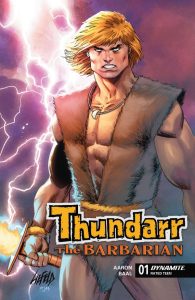
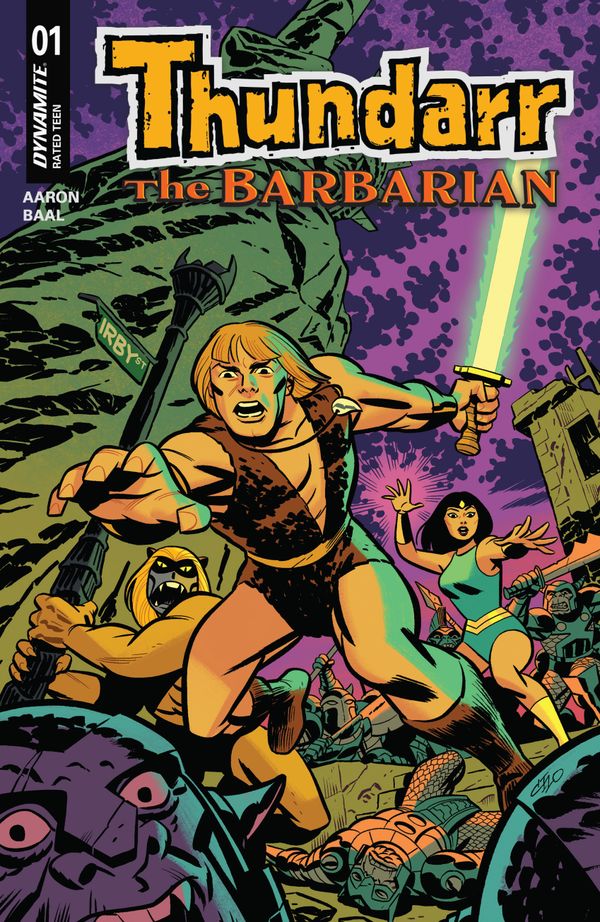
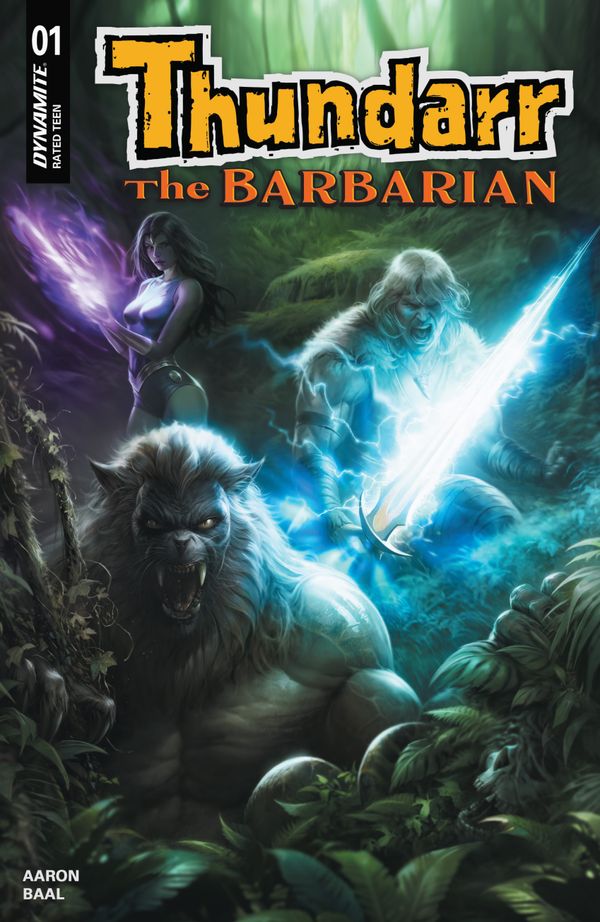
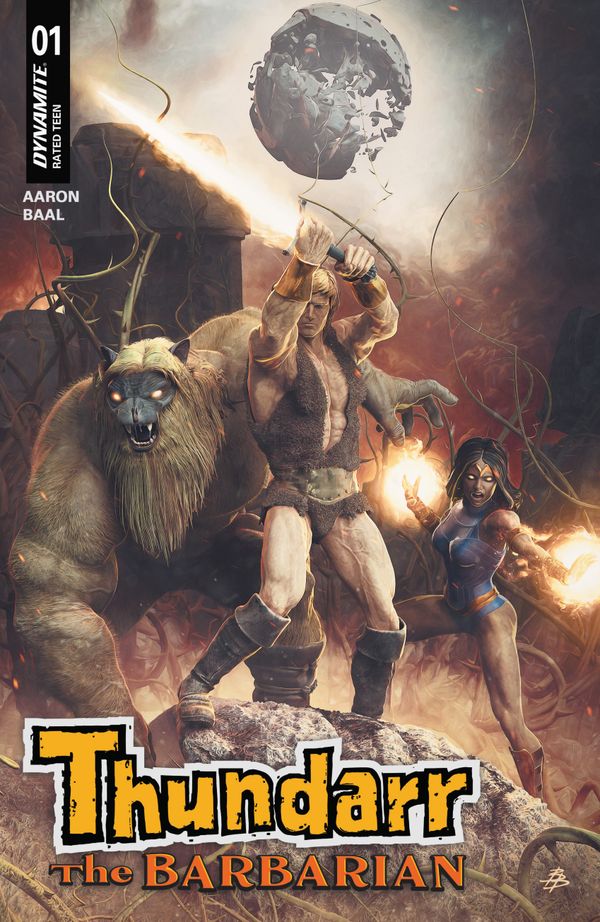
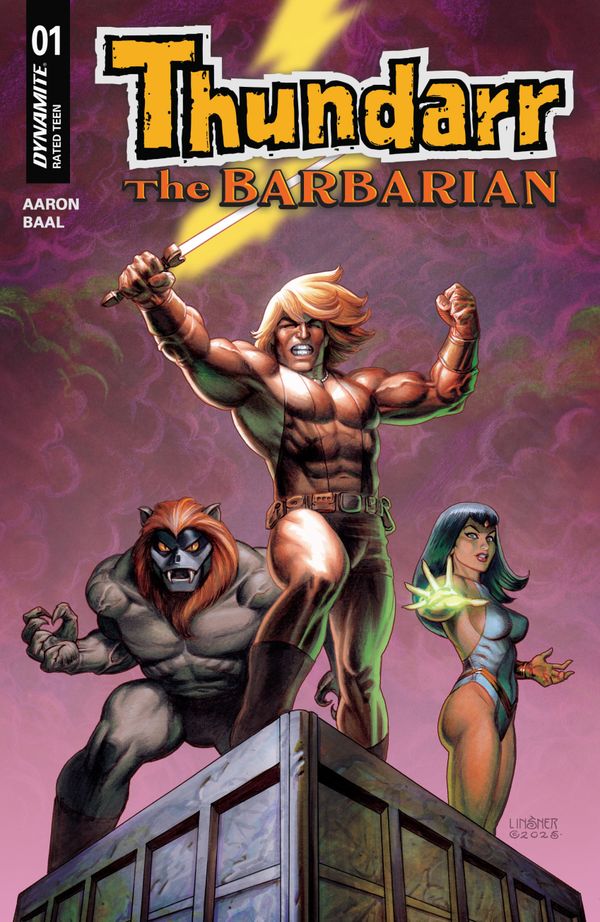
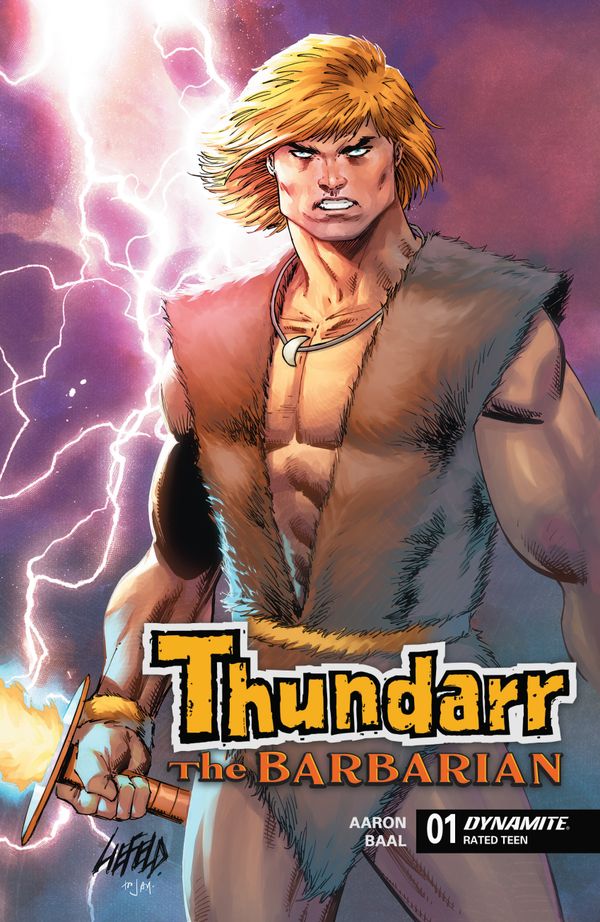
- Cover Artist: Michael Cho (cover A)
- Publisher: Dynamite Comics
- Release Date: February 4, 2026
- Comic Rating: Teen
- Cover Price: $4.99
- Page Count: 26
- Format: Single Issue
Covers:
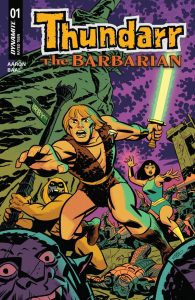
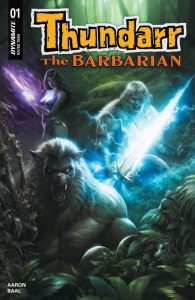
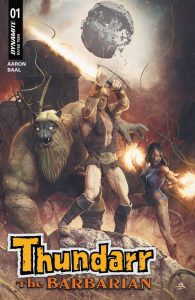
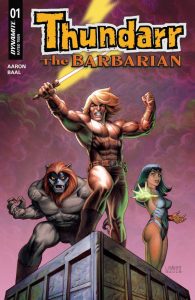
Analysis of THUNDARR THE BARBARIAN #1:
First Impressions:
Walking away from this comic, the immediate feeling is one of genuine excitement mixed with cautious optimism. The setup is straightforward and effective; Jason Aaron understood the assignment of translating the cartoon’s core appeal into sequential art without overthinking it. The execution stays focused on what made the original Thundarr concept work: a genuinely powerful hero in a world that needs saving, with companions worth rooting for alongside him.
Plot Analysis (SPOILERS):
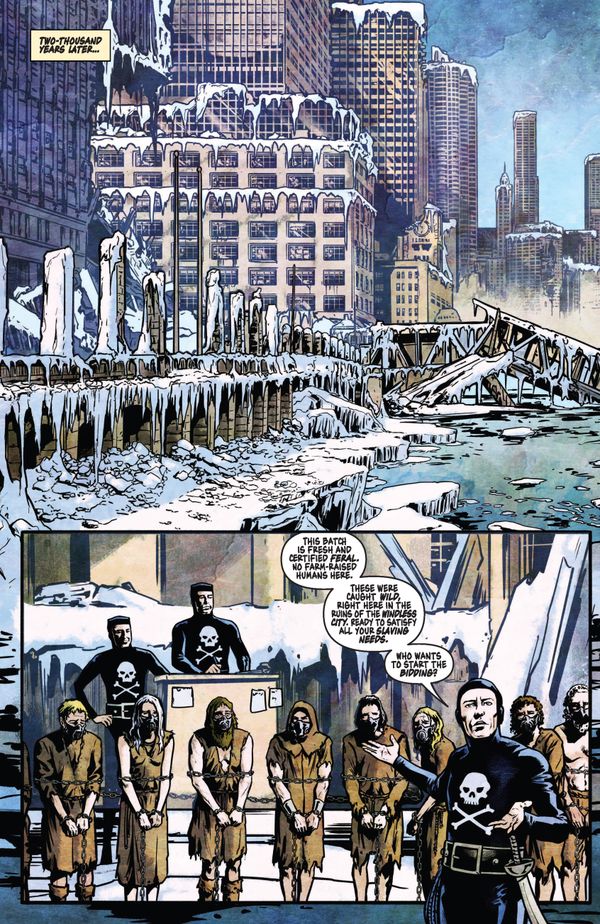
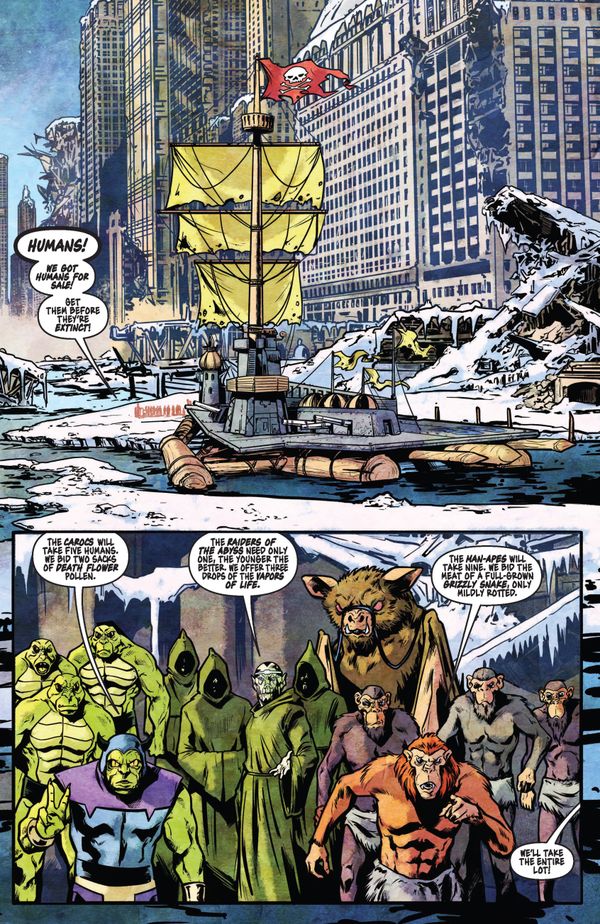
The issue opens at a human slave auction in the post-apocalyptic wasteland where multiple factions of mutants and creatures bid for their merchandise. A one-armed captive triggers violence when subjected to inspection by the Ratmen (Groundlings). The captive reveals itself to be Thundarr the Barbarian, who proceeds to demolish the slavers with overwhelming strength and fury. After his escape, we learn that Thundarr, Ookla the Mok, and Princess Ariel deliberately orchestrated his capture to infiltrate a mining operation where humans were being forced to labor.
The trio tracks the Groundlings and their mysterious masters to the Sea of Kann-Zass, where enslaved humans are forced to dive into underwater ruins seeking a specific technological relic. Thundarr rescues the captives and defeats the creatures standing guard, but the Groundlings manage to recover the artifact before fleeing. The relic is revealed to be a crucial component; when delivered to the Council of Wizards, it completes something called the Moon Dial, a device capable of manipulating time itself. The issue concludes with hints that Gemini, a wizard previously defeated by Thundarr, is orchestrating this plan for revenge.
The framing device introduces an alternate vision of Thundarr’s present, showing him as an enslaved gladiator fighting in an arena under the wizard Sabian. The gladiator dreams of freedom and his friends. This parallel timeline raises questions about whether this Thundarr is the same one or an alternate version bound to his despair. The issue teases conflict between Thundarr and the Council of Wizards as the next chapter.
Story
Aaron handles the pacing with tremendous confidence. The opening auction sequence establishes the world’s stakes and tone in roughly six pages, mixing exposition with character action. The slave market dialogue feels authentic to the high-stakes trading of dangerous goods; the various factions bidding convey the world’s strange hierarchy quickly. When Thundarr breaks his chains, the momentum never stops. The fight choreography through dialogue and caption boxes reads cleanly. Aaron smartly uses short, declarative sentences during action sequences and longer exposition during quieter moments, creating natural rhythm shifts.
The dialogue between Ariel and Thundarr in the water carries emotional weight without overexplaining; their exchange about talking through troubles versus running from emotion feels earned rather than forced. The ending revelation about the Moon Dial works because Aaron has sprinkled enough world-building references throughout to make it feel discovered rather than invented. The pacing stumbles slightly with the gladiator framing device at the issue’s end; it works as a teaser but leaves readers uncertain whether this is a vision, prophecy, or alternate timeline.
Art
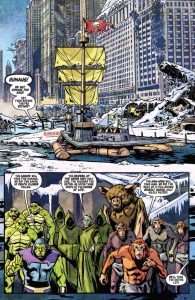
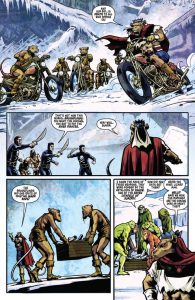
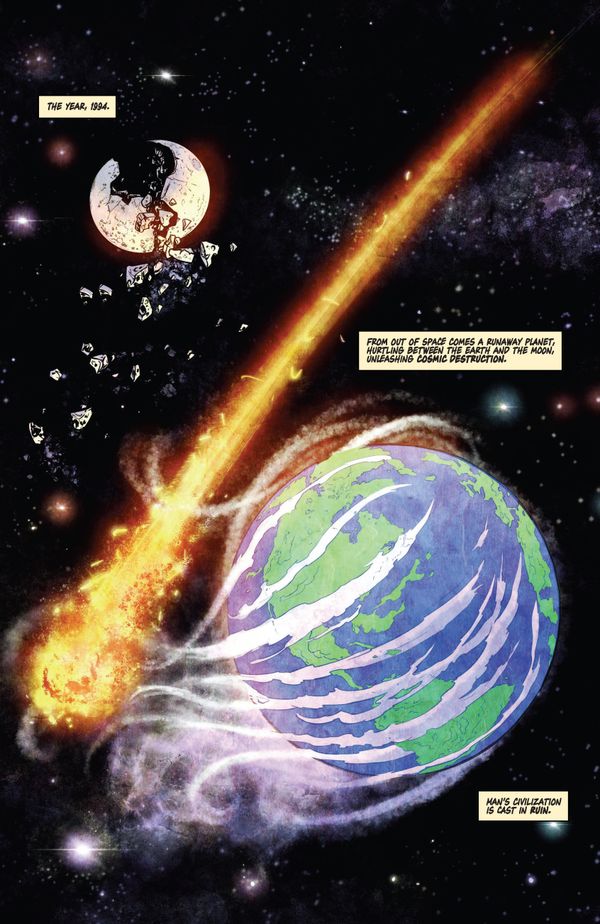
Kewber Baal delivers consistent clarity throughout without sacrificing visual interest. The slave auction panels are packed with strange creatures and environmental details, yet the eye finds Thundarr easily in every frame. His anatomy is exaggerated in ways that serve the action rather than distract from it. Compositions favor wide shots during crowd scenes and tight close-ups during moments of triumph or vulnerability. During the underwater sequence, Baal uses depth effectively to suggest the sea’s pressure and darkness.
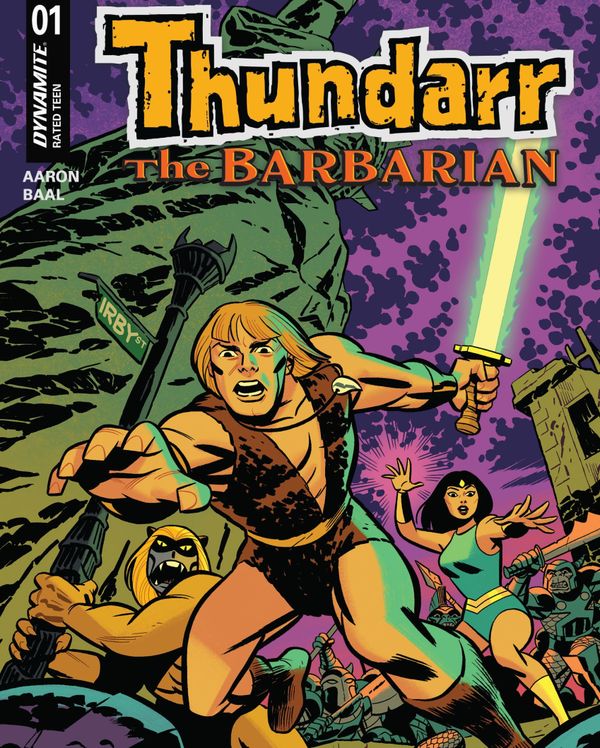
The coloring by Jorge Sutil enhances mood significantly; the auction scene uses warm, sickly yellows and reds to convey decay and moral corruption. The underwater sequences shift to cold blues and grays, creating genuine dread. The final panel shifts to a harsh, prison-like palette of grays and sickly greens, suggesting the gladiator’s degradation. Where the art occasionally falters is in the transition panels; a few movement shots feel slightly stiff, and some character expressions during emotional moments could use more nuance. The cover by Michael Cho is striking and captures the barbarian-in-chains premise effectively, though it slightly oversells the issue’s violence compared to what actually occurs.
Characters
Thundarr’s motivation is crystal clear: he volunteered to be enslaved to rescue humans in danger. This action speaks volumes about his character; he’s not a glory-seeker but a protector willing to degrade himself for others. His arc within this single issue moves from enslaved and seemingly powerless to liberated and dominant, which tracks the emotional journey readers want from a barbarian character. Consistency remains strong; Thundarr’s reluctance to explain his emotional pain to Ariel fits his rough exterior while showing vulnerability.
Ookla and Ariel serve their functions adequately. Ariel acts as the magical counterbalance and the voice of emotional honesty. Ookla is loyal muscle with personality quirks that hint at deeper character. The issue doesn’t provide enough space to develop these companions fully, but their established dynamics suggest they’ve been tested and trusted through prior adventures (which may be drawn from the cartoon). The Groundlings feel interchangeable as threats, which isn’t necessarily a flaw for minion-level antagonists. Their panic at recognizing Thundarr hints that he’s earned a fearsome reputation. The Council of Wizards remains mysterious but suitably menacing, positioning Gemini as someone Thundarr has bested before, adding stakes to their impending conflict.
Originality & Concept Execution
The comic book adaptation of Thundarr doesn’t reinvent the concept; it faithfully translates it. Audiences already know Thundarr is powerful and heroic from the cartoon, so Aaron isn’t surprising anyone with that baseline. The freshness comes in the execution details. Using slave rescue as the inciting incident rather than a random encounter feels purposeful. The Moon Dial plot device carries echoes of high-fantasy and science-fiction time-manipulation tropes but remains undefined enough to feel threatening. The parallel gladiator timeline at the issue’s end is intriguing and suggests the adaptation is willing to add new dimensions to the character.
The concept executes on its promise; readers get a barbarian fighting in a savage, magical world alongside trustworthy companions. The issue delivers action, world-building, and genuine stakes without feeling bloated. It succeeds in making readers curious about what comes next, which is the fundamental job of a #1 issue.
Positives
The standout achievement is the economy of storytelling. Aaron wastes no panel introducing the world, establishing stakes, and delivering satisfying action sequences. The opening auction manages to convey multiple factions, the selling of humans as livestock, and the moral degradation of the world through efficient dialogue and visual composition. Baal’s artwork remains consistently legible during chaotic sequences, which is no small feat when drawing multiple mutant creatures, water, and a barbarian destroying everyone in the frame.
The coloring work by Sutil elevates every scene through mood and atmosphere; the palette shifts between locations feel purposeful and guide reader emotion without manipulation. The characterization of Thundarr as someone willing to endure slavery for a larger cause provides moral weight that prevents the comic from feeling like simple spectacle. The underwater rescue sequence combines action, visual storytelling, and genuine stakes without over-relying on dialogue to explain what’s happening. The appearance of General Zoa and the hint that wizards are orchestrating events in the background set up compelling mysteries without dangling loose threads.
Negatives
The most significant weakness is the confusing final sequence. The gladiator framing device raises more questions than it answers. Is this an alternate timeline? A memory? A prophetic vision? A dream within the dream Thundarr mentions? The lack of clarity here leaves readers uncertain whether Aaron is introducing a major plot complication or simply teasing future conflict in an unnecessarily convoluted way. This ambiguity feels earned in some narrative contexts but here feels like overcomplication.
The secondary cast remains functional but underdeveloped; Ariel and Ookla are more plot devices than fully realized characters, despite hints that they should be emotionally significant to Thundarr. Their presence raises few compelling questions about who they are beyond “loyal companions.” The Groundlings themselves feel interchangeable and lack distinctive personalities; they’re efficient threat units but forgettable ones.
The Moon Dial motivation for the Council of Wizards, while thematically interesting, remains underexplained. Why do they specifically need this device? What does time-manipulation accomplish for wizards already living in a world of sorcery? The setup promises answers but doesn’t quite earn reader investment yet. The pacing, while generally strong, moves so quickly through the underwater sequence that the peril to the enslaved humans never quite lands emotionally; it reads as a set piece rather than a moment with genuine human cost.
Art Samples:

The Scorecard:
Writing Quality (Clarity & Pacing): [3/4]
Art Quality (Execution & Synergy): [3/4]
Value (Originality & Entertainment): [2/2]
Final Thoughts:
(Click this link 👇 to order this comic)
THUNDARR THE BARBARIAN #1 delivers on its core promise without exceeding it. This is a solid, no-nonsense introduction to a barbarian and his world that respects the source material while committing to the violent, sword-swinging action readers expect. It’s competent entertainment that builds momentum toward future conflict. The real question isn’t whether this comic is good; it’s whether it’s worth your limited reading budget when dozens of other competent action comics exist. It’s a must-have for Thundarr fans.
We hope you found this article interesting. Come back for more reviews, previews, and opinions on comics, and don’t forget to follow us on social media:
If you’re interested in this creator’s works, remember to let your Local Comic Shop know to find more of their work for you. They would appreciate the call, and so would we.
As an Amazon Associate, we earn revenue from qualifying purchases to help fund this site. Links to Blu-Rays, DVDs, Books, Movies, and more contained in this article are affiliate links. Please consider purchasing if you find something interesting, and thank you for your support.