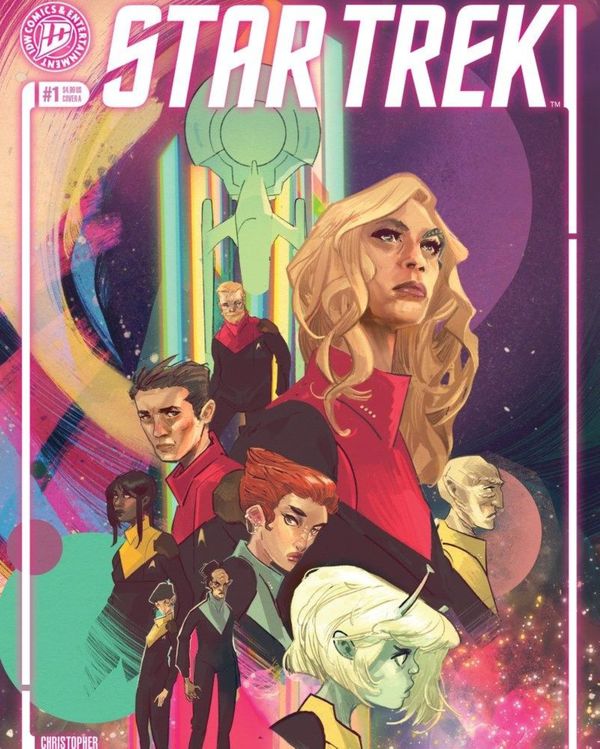
Star Trek #1 (IDW Publishing, 9/23/26): Writer Christopher Cantwell & artist Dennis Menheere send Captain Seven of Nine and the Enterprise-G on an adventure to relocate refugee colonies to a new home across time and space. Cantwell’s core idea has merit, even if the issue gets bogged down with pacing problems and Easter Eggs. Verdict: An okay start.
Credits:
- Writer: Christopher Cantwell
- Artist: Dennis Menheere
- Colorist: Dennis Menheere
- Letterer: Jodie Troutman
- Cover Artist: Dennis Menheere (cover A)
- Publisher: IDW Publishing
- Release Date: September 23, 2026
- Comic Rating: Teen
- Cover Price: $4.99
- Page Count: 48
- Format: Double-sized issue
Covers:

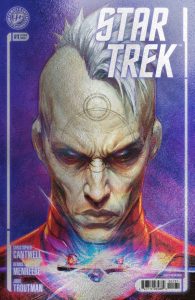
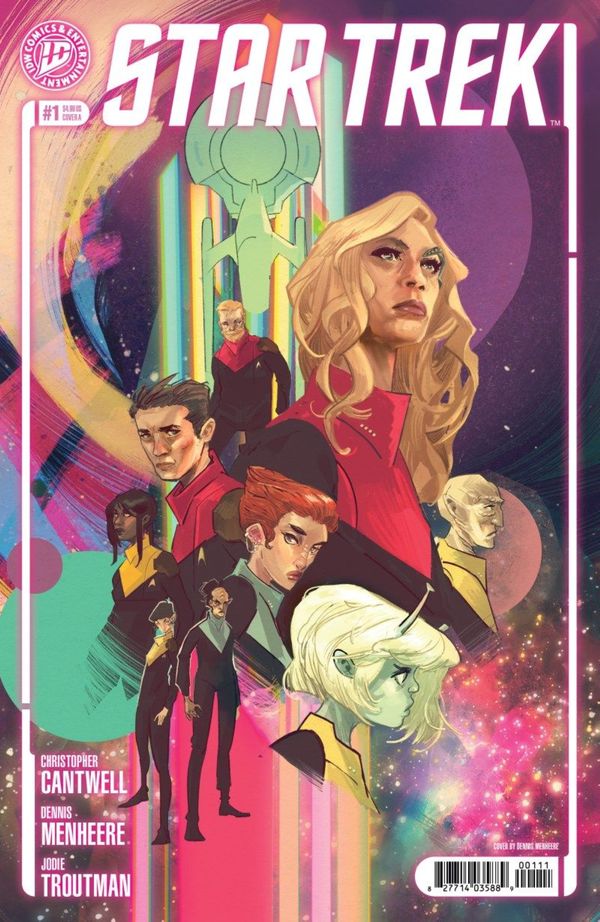
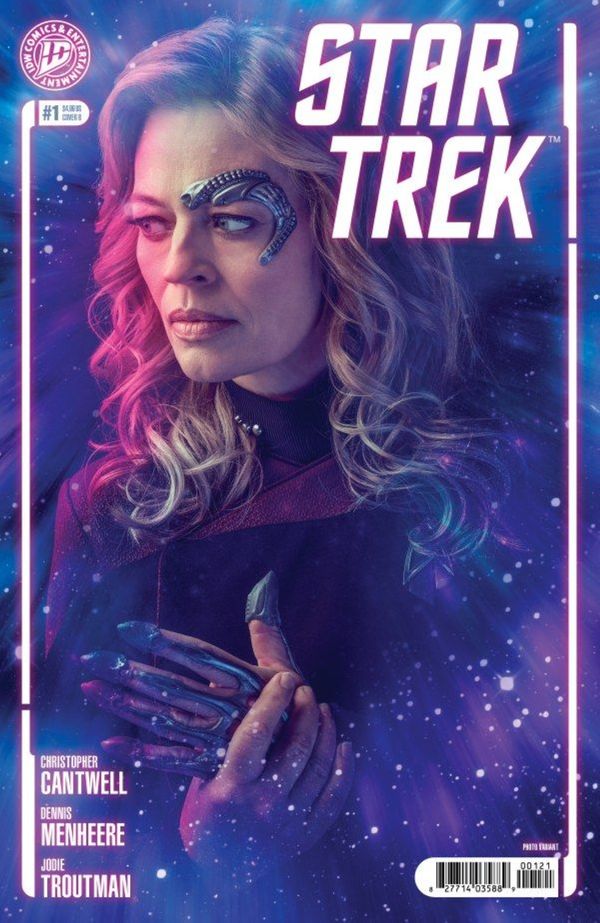
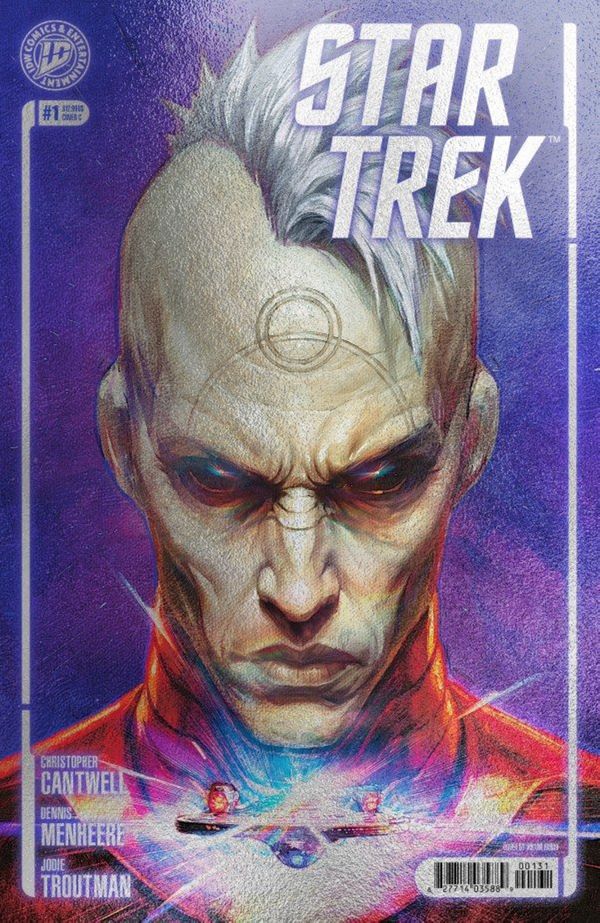
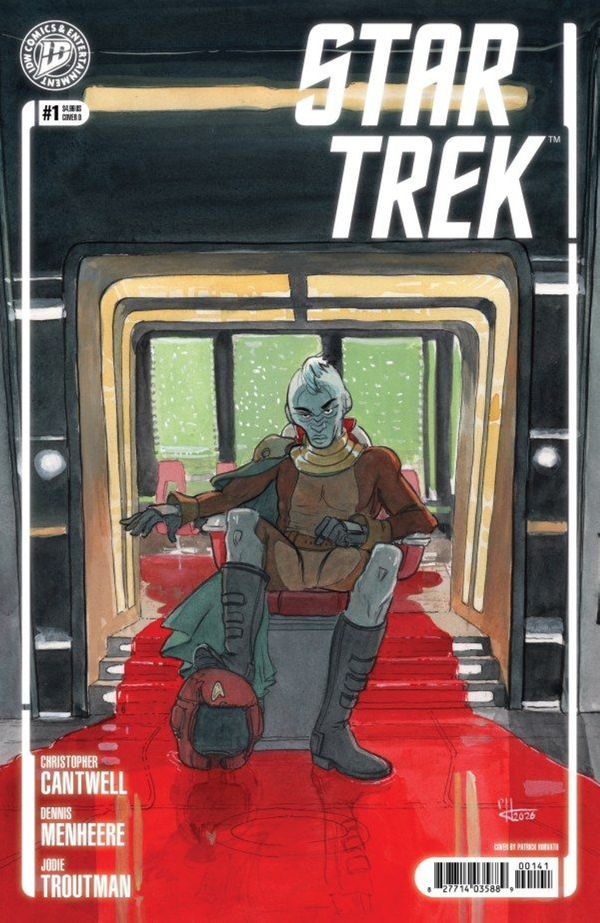
Analysis of Star Trek #1:
First Impressions:
It’s fair to say that the state of the current Star Trek brand is not a high point, so I went into this issue with some trepidation as a so-called old-head Trekker. For the most part, the first issue is a decent start, with a few sticking points.
Plot Analysis (SPOILERS):
The issue begins with a rescue mission. Captain Seven and the Enterprise-G arrive at a 4-planet system named Revlav to rescue colonists from the simultaneous collapse of planetary electromagnetic fields. The Revlavs, so named and led by Silex, are a peaceful offshoot of Romulans who favor art and culture over the strict military regime of Romulans. The mission is a success with limited casualties.
Before anyone has time to count the cost and loss, Captain Seven is summoned to a secret meeting with Admiral Janeway. The Enterprise-G is ordered to resettle the Revlavs on Class M planets outside of known space by traversing a time-space-dilation corridor known as Epsilon. The move is seen as both a shortcut to resettle the Revlavs quickly and an opportunity to “plant the flag” for Federation expansion. The mission is also risky because traversing the Epsilon corridor causes a loss of time. One year through the corridor is equal to five years of Federation time. All crew who choose not to take the loss are granted reassignment.
Once the crew is reset, the mission begins with the accompaniment of a Vulcan Science Ship and a Defiant-class Federation ship along for the ride. The traversal is weird but uneventful. However, their arrival does not go unnoticed.
How is the story in Star Trek #1?
Christopher Cantwell’s script is a patchwork of Easter Eggs, pseudo-science, and intrigue. On the whole, it’s a serviceable mission containing most of the bits and pieces of a well-developed story. Characters like Jack Crusher (Jr?) and Alexander Rushenko round out the cast to make the issue feel ingrained with the best of Trek, and the setup shows promise.
What doesn’t work? The central idea shows cracks, and the core elements of the plot feel too similar to other, better stories. The third but lesser problem is the dialog.
For example, the whole idea of resettling Revlavs outside of known space is too quick and too risky for a colony of civilians who are given no say-so in the matter. In fact, Silex and his followers are not consulted at all in the move, which sounds very at odds with Prime Directive philosophy.
In another example, the idea of a wormhole to get to another region of space sounds very much like a rehash of Star Trek: Voyager, a similarity that’s even referenced in the dialog. Further still, the concept of time dilation as a natural obstacle sounds too much like the ST: Voyager episode “Blink of an Eye.” For you non-Trek readers out there, it’s also the time-dilated water planet from the Christopher Nolan film Interstellar (2014).
Lastly, the dialog has a modernity problem. Occasional cursing and bits of slang sound too much like 21st-century Earth language, and the few bits that crop up will pull you out of the story immediately.
Put that all together, the combination of pieces is fine at a broad level, but the details and individual pieces come off as rehashes of older, better, original ideas. Plus, Cantwell meanders getting to the point with scenes that might build background for some of the characters but don’t add anything to the direction of the plot. If, for example, Cantwell had reserved the panels that build the romance between Seven and Raffi, there would have been room to explore how the colonists reacted to being forcefully relocated outside of known space, which would have added a layer of dramatic conflict that’s largely missing from the issue.
How is the art in Star Trek #1?
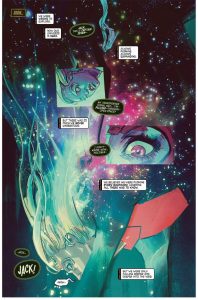
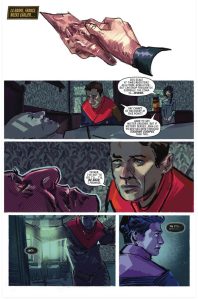
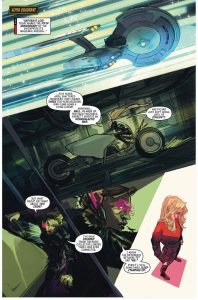
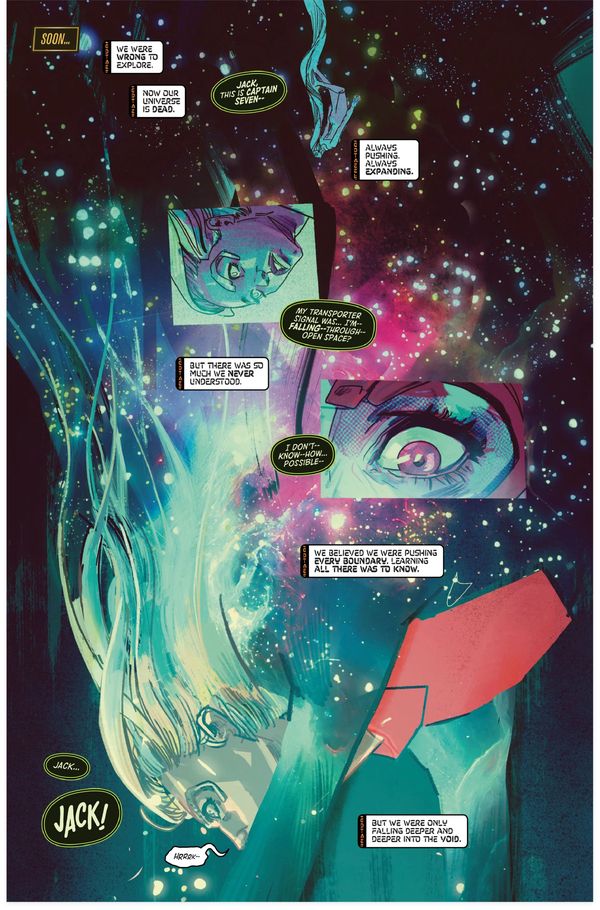
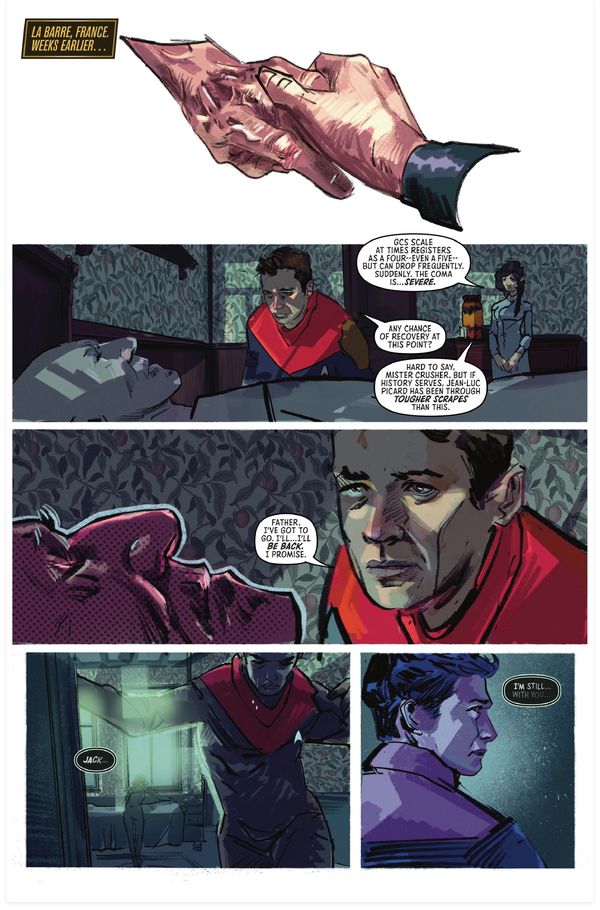
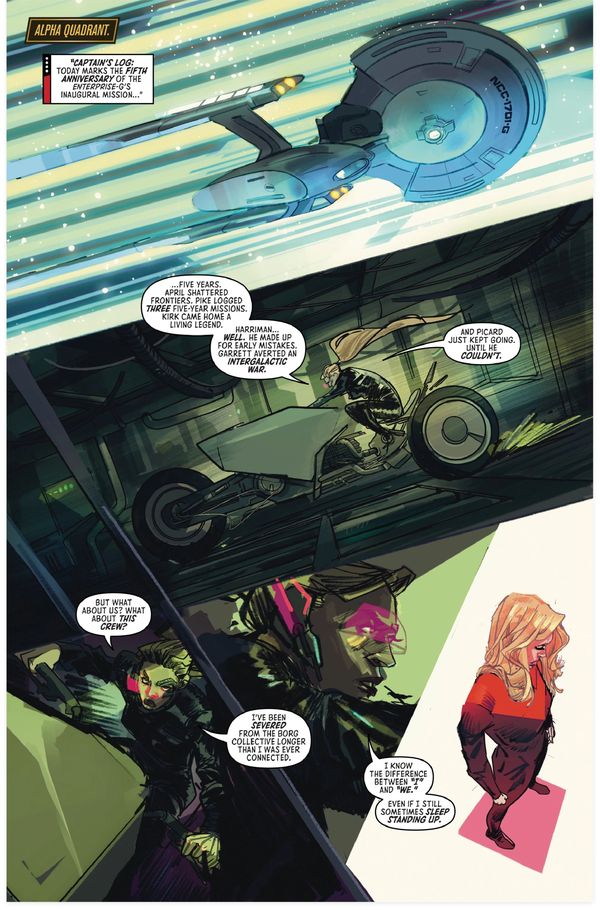
The art, sadly, is the other weak spot in this issue. Star Trek, when done well and right, has an air of military crispness that reinforces the professional atmosphere of the crew. Dennis Menheere’s art style is not necessarily subpar or bad in the general sense, but it doesn’t fit the material, with the exception of the weirdly cosmic space travel scenes through the Epsilon corridor. Character designs are loose and sketchy. The ship designs are tight, but this is a dialog-heavy issue, so all the emphasis is on the characters to speak, move, act, and react. When most of those depictions look like rough sketches, the crisp aesthetic is missing, and honestly, it looks a bit rushed.
Characters
Seven takes the spotlight as the focal character. She’s commanding yet reasonable. In one instance, we see her bend the rules regarding her Borg-link with Jack Crusher to complete an objective, and her reaction to the news of her mission feels authentic to her character. The Enterprise-G is in good hands.
Originality & Concept Execution
As noted above, the individual elements that make up that start of the mission feel pulled from other, better stories, but the combination forms a new whole with merit. Barring the problems with pacing and dialog, Cantwell’s core concept is executed well.
Pros and Cons
Art Samples:
The Scorecard:
Writing Quality (Clarity & Pacing): 2.5/4
Art Quality (Execution & Synergy): 2.5/4
Value (Originality & Entertainment): 1/2
Final Thoughts:
(Click this link 👇 to order this comic)
Star Trek #1 sets sail when the Enterprise-G is given a life-altering mission to relocate colonists to a region outside of known space. Christopher Cantwell’s script puts a LOT of familiar pieces together in a clunky mosaic, and the art is fine, albeit not up to the ship’s regulation standards.
Related Posts:
We hope you found this article interesting. Come back for more reviews, previews, and opinions on comics, and don’t forget to follow us on social media:
If you’re interested in this creator’s works, remember to let your Local Comic Shop know to find more of their work for you. They would appreciate the call, and so would we.
As an Amazon Associate, we earn revenue from qualifying purchases to help fund this site. Links to Blu-Rays, DVDs, Books, Movies, and more contained in this article are affiliate links. Please consider purchasing if you find something interesting, and thank you for your support.