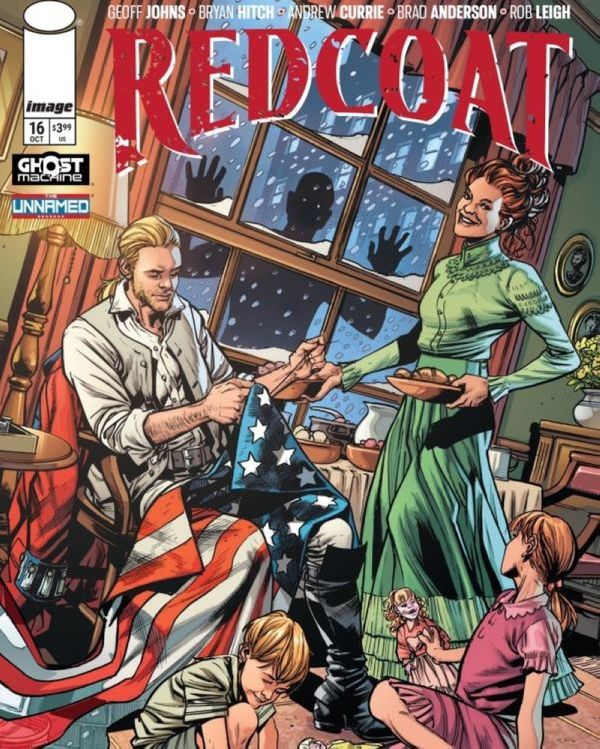
Redcoat #16, by Image Comics on 1/21/26, reunites a tailor-turned-immortal with his darkest mirror when a supposedly drowned devil in a sharp suit brings tailored menace back to 1909 Boston.
Credits:
- Writer: Geoff Johns
- Artist: Bryan Hitch, Andrew Currie
- Colorist: Brad Anderson
- Letterer: Rob Leigh
- Cover Artist: Bryan Hitch (cover A)
- Publisher: Image Comics
- Release Date: January 21, 2024
- Comic Rating: Teen
- Cover Price: $3.99
- Page Count: 36
- Format: Single Issue
Covers:
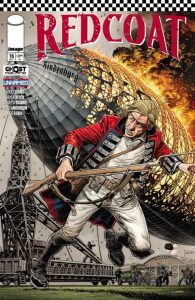
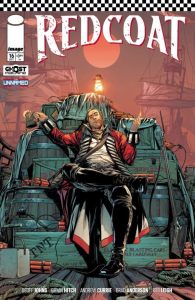
Analysis of REDCOAT #16:
First Impressions:
Simon’s quiet domestic bliss hits with genuine warmth, the opening splash of stitched seams and golden light setting a tone that feels earned after centuries of battlefield chaos. But the comfort lands with an undercurrent of dread, like knowing the tailor’s needle will soon draw blood instead of thread. The issue grabs you fast by asking the core question: can an immortal mercenary really bury his past, or does his past just keep clawing back up from the ocean?
Recap:
In Redcoat #15, Simon Pure’s life as a tailor in 1909 New York had settled into contentment, his immortal hands finding peace in measuring cloth instead of wielding blades. The issue opened with Simon surrounded by the warmth of family, his wife and children representing the normal life he’d fought to claim after centuries of war. His coworker teased him about his mysterious past over bolts of fabric, but Simon brushed it off with easy grace, savoring the simple rhythm of needles and stitches as his best camouflage yet. That evening, after buying flowers for his wife, Simon was greeted at his brownstone by his young children, his wife preparing dinner, the entire scene radiating a domesticity that seemed impossible for someone cursed with immortality.
But as rain fell and his family slept, Simon pulled out a dusty tome about America’s founding fathers, reading by candlelight about forgotten rituals and ancient curses that suggested his peace might be fragile. The next morning brought a knock at the door, and Simon found his old friend Albert Einstein waiting with news, a mustache bristling with urgency and eyes reflecting genuine alarm. Albert revealed that Benedict Arnold, the traitor immortal Simon thought had drowned seventeen years earlier, was somehow stirring in the darkness, and that something called “the book that burns blue” was involved in his return. Simon’s comfortable life took a sudden turn toward dread.
Plot Analysis (SPOILERS):
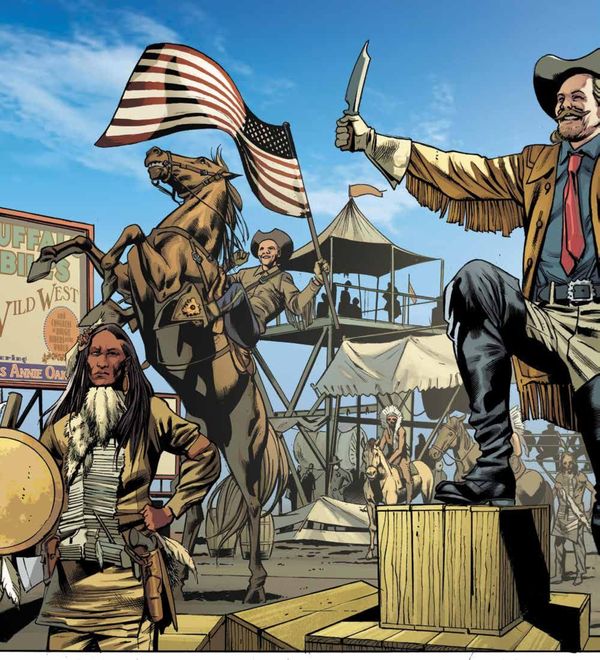
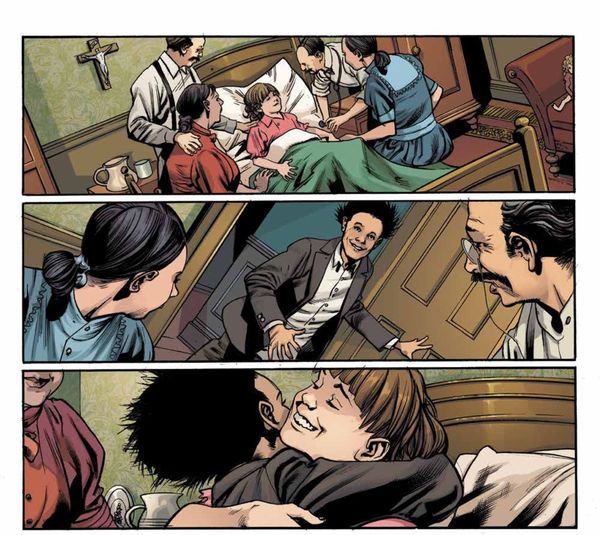
The issue opens with Simon’s inner monologue establishing the mythology. He explains how he became immortal during the American Revolution after stumbling into a founding fathers ritual, and how the “Great Fire,” a power seized by George Washington and his men, could heal or destroy depending on who wielded it. Simon recounts his first meeting with Albert Einstein in 1892, a young genius searching for a way to wake his sister from an unnatural coma after she’d bought a dreamcatcher at Buffalo Bill’s Wild West Show and suffered prophetic visions. The narrative weaves backward through their early adventures, establishing the stakes.
Albert witnessed Maja’s visions of America burning like hell on earth, and Simon was cut by a relic that turned him into a living bomb designed to unleash the Great Fire and incinerate the unworthy. Benedict Arnold emerged as the orchestrator obsessed with crowning himself king of America. Einstein’s genius thwarted Arnold’s plan, saving the continent and inadvertently saving Simon himself, while Arnold fell into New York’s harbor with an uncertain fate. This backstory sets the trap for what comes next.
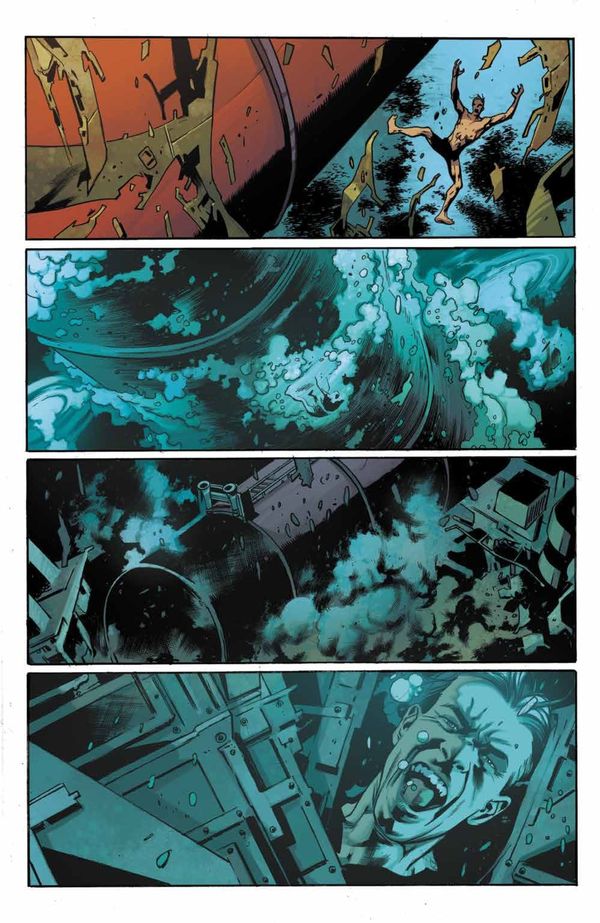
The present-day narrative kicks off in Boston on July 31, 1909, when workers dredging the harbor pull up wreckage from the S.S. Majestic and discover something that terrifies them, hinting at Arnold’s resurrection. A newspaper headline screams “DOCKSIDE MASSACRE: SIX KILLED BY AXE-WIELDING MANIAC,” and Albert arrives at Simon’s door with confirmation that the killer rose from the harbor itself, leaving six bodies arranged in a ritual circle. Simon’s comfortable life shatters as Albert reveals he’s been tracking spontaneous combustion incidents across Europe, signs that the Great Fire is stirring again. The dockside murders suggest Arnold has returned with plans beyond simple revenge.
The turning point comes at the tailor shop when a mysterious customer walks in, revealed as Benedict Arnold himself, alive and remarkably transformed after his ordeal beneath the ocean. Arnold confesses that his years trapped at the harbor’s bottom gave him time to reconsider everything, and that his hatred gave way to gratitude and spiritual transformation. He admits he killed the six dockworkers in a moment of disorientation upon surfacing, yet claims his time at the ocean floor was like being in a chapel. Arnold reveals his new purpose: he’s seeking something he never had before, love and family, the kind of happiness Simon has built with his wife and children.
Arnold bought ten suits to give Simon legitimate access into his life, masking his true intent beneath tailoring transactions. He confesses that when he saw Simon’s family, he finally understood what he’d been missing his entire existence. Arnold now reveals his true intention: he plans to make Simon’s family immortal so they’ll never suffer the pain of aging and loss. The issue ends with Arnold’s ominous promise hanging in the air, transforming what seemed like redemption into something far more sinister.
Story
The issue masterfully balances exposition with forward momentum by layering Simon’s internal narration across flashbacks that contextualize the present threat without grinding the narrative into a lecture. The dialogue between Simon and Albert feels natural and urgent, with Albert’s European accent and pressing tone contrasting sharply against Simon’s calm skepticism, creating dynamic exchanges that advance both plot and character conflict. Where the writing truly excels is in Benedict Arnold’s monologue, where his transformation feels earned through his reflection on suffering and spiritual awakening, delivered with a tone that hovers between sincere confession and sinister manipulation. The structure moves from peaceful domestic opening through espionage-style revelations to confrontation, each beat tightening the noose around Simon’s fragile happiness.
The biggest strength lies in how the issue refuses easy answers: Arnold’s motivation isn’t cartoon villainy but genuine philosophical shift, and Simon’s inability to fully trust or reject him creates ongoing tension. The pacing allows breathing room for character moments without sacrificing momentum. The final reveal of immortality for Simon’s family feels earned rather than sudden. This approach bleeds complexity into the verdict.
Art
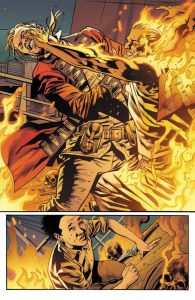
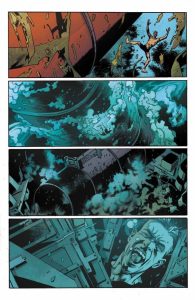
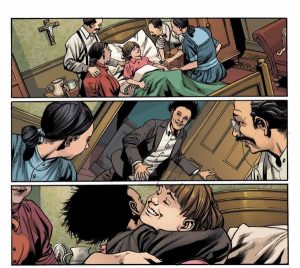
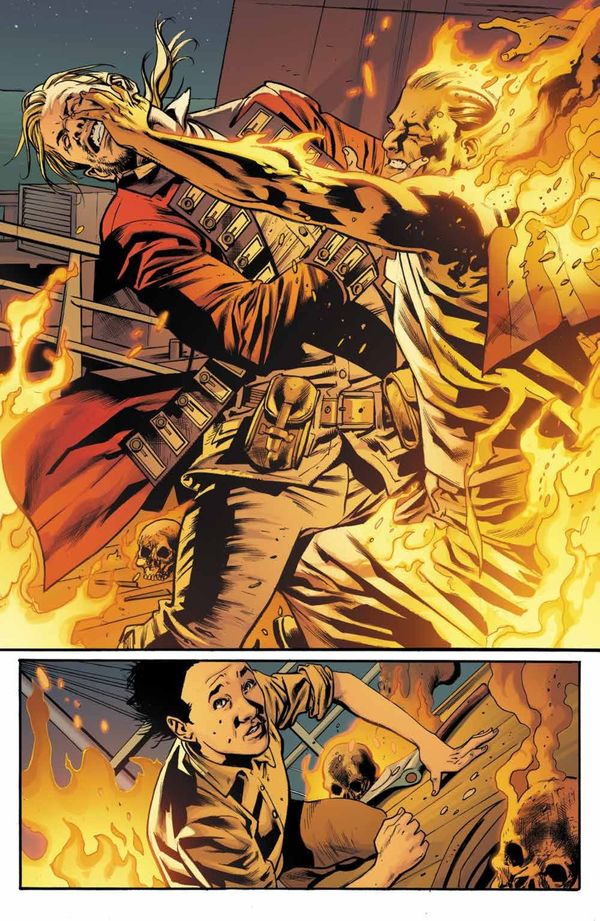
Bryan Hitch’s pencil work maintains crystal clarity throughout crowded scenes, from the bustling tailor shop to the harbor dredging sequence where every worker and piece of wreckage pops distinctly off the page. Composition uses tight framing in intimate moments, with Simon’s family huddled around the breakfast table rendered in angles that emphasize both warmth and confinement. The harbor and street scenes open up to show the vastness of Boston’s geography and Simon’s exposure within it. This balance between intimate and expansive framing strengthens the narrative’s emotional core.
Brad Anderson’s color work brilliantly shifts mood; the early domestic scenes glow in warm golds and creams that suggest safety and comfort. The harbor sequence introduces murky blues and grays that signal danger, while the tailor shop scene uses shadow and careful lighting to suggest Arnold’s unnaturally composed presence. The visual synergy between Hitch’s line work and Anderson’s palette creates an undercurrent of wrongness even in calm moments. Anderson’s restraint amplifies Arnold’s threat far more than overt menace ever could.
Characters
Simon’s motivation to protect his family drives every action and every moment of hesitation, and his internal conflict between wanting to believe Arnold’s reformed sincerity and knowing Arnold’s historical treachery creates genuine emotional stakes. The character remains consistent throughout, his combination of weathered cynicism and genuine capacity for love making him relatable as a man caught between two worlds. His inability to fully reject or trust Arnold reflects the impossible position immortality has placed him in. This complexity makes him deeply human despite his centuries.
Albert’s motivation to warn Simon stems from his scientific observation of supernatural patterns and his loyalty to his oldest friend. His character works as a sounding board for Simon’s internal conflict. However, his character could benefit from more personal stakes beyond the plot mechanics. Adding deeper personal investment would strengthen his presence in the narrative.
Arnold’s motivation is the issue’s most complex and least certain: he claims spiritual awakening and desire for love, yet his methods and timing raise doubts about whether this transformation is genuine. His monologue about suffering and transformation sounds sincere, but readers never quite know if he’s been reborn or executing a more sophisticated manipulation. This ambiguity is the issue’s greatest asset. It keeps you off balance and questioning his every word.
Originality & Concept Execution
The concept of an immortal mercenary trying to live a normal life while his past repeatedly erupts refreshes the immortality trope by grounding it in domestic stakes and personal relationships rather than epic battles. The execution succeeds by blending historical American mythology with personal tragedy, making the founding fathers’ curse feel like a family curse specific to Simon and his choices. Benedict Arnold’s redemption arc is genuinely original in its ambiguity, refusing to play either hero or traditional villain, instead existing in a grey space that makes prediction impossible. The issue delivers on its premise of exploring whether the past can be truly escaped or merely delayed.
The freshness lies in how the writing refuses to make Arnold a cartoonish threat but instead forces readers to genuinely question whether his transformation is sincere, making the stakes personal and psychological rather than purely physical. The final reveal of Arnold’s true intent, making Simon’s family immortal, feels only slightly predictable given the setup, though the emotional implications remain potent. What prevents this from being perfect execution is that clever readers will anticipate this conclusion before Arnold states it. However, the journey to that reveal still lands with force.
Positives
The issue’s greatest strength is how it nails emotional tension through character conflict and moral ambiguity rather than action sequences. Arnold’s transformation and confession work brilliantly because the writing never fully tips into confirming whether he’s genuinely reformed or executing an even more insidious plan. The art’s subtlety in rendering Arnold’s unnatural composure through careful lighting and brushwork creates visual dread that complements the dialogue perfectly. You distrust him even as Simon considers trusting him.
The domestic opening scenes establish stakes that feel real and fragile, making Simon’s difficult position genuinely relatable; his happiness is tangible enough that we understand why he’d hesitate to immediately reject Arnold’s offer. The dialogue between Simon and Albert captures era-appropriate flavor without falling into caricature, and the flashback narration integrates seamlessly with present-day events. Both advance plot while answering lingering questions about the series’ mythology. The core concept lands with genuine philosophical weight.
The issue examines whether redemption is possible for a character defined by betrayal and whether immortality offers blessing or curse, elevating the work beyond typical superhero fare. The visual rendering of Arnold in the tailor shop scene perfectly marries art and writing, communicating both his transformation and persistent danger. Readers genuinely cannot predict whether to hope Arnold has changed or fear what he’s planning. This productive uncertainty is rare and valuable in modern comics.
Negatives
The issue’s primary weakness lies in the rushed revelation of Arnold’s true plan in the final pages, which telegraphs intent just when the writing had successfully maintained productive ambiguity. While the six dockworkers’ deaths are addressed through Arnold’s explanation of disorientation, the lack of genuine consequence or discussion about accountability undercuts his redemption claims. Saying “I’ll provide for their families” doesn’t satisfy the moral weight of casual slaughter, even if unintentional. This glossing over of real harm weakens his character arc.
Albert’s urgency feels somewhat unearned given he hasn’t actually presented concrete evidence beyond newspaper reports and Maja’s dreams, making Simon’s resistance to his warnings feel more stubborn than prudent. The issue would benefit from deeper exploration of what seventeen years underwater actually did to Arnold’s mind and whether his spiritual transformation is plausible. Rather than accepting his redemption wholesale through monologue, the writing could challenge Arnold’s own understanding of his motivations. This would deepen the psychological complexity.
The concept execution stumbles slightly in that making Simon’s family immortal is a relatively predictable escalation given the setup; clever readers will anticipate this conclusion before Arnold states it. This reduces narrative impact and diminishes the surprise factor. The supporting characters, while functional as emotional anchors, lack enough distinctive voice or personality to land as genuinely memorable individuals. They work primarily as plot devices symbolizing what Simon stands to lose.
Art Samples:

The Scorecard:
Writing Quality (Clarity & Pacing): [3/4]
Art Quality (Execution & Synergy): [4/4]
Value (Originality & Entertainment): [2/2]
Final Thoughts:
(Click this link 👇 to order this comic)
REDCOAT #16 swings boldly at philosophical questions about redemption and the price of immortality, and mostly connects, earning a solid spot on your shelf if you’re invested in the series’ mythology. The writing trusts readers to sit with ambiguity and moral complexity rather than spelling everything out, a rare strength in modern comics that makes Simon’s impossible choice feel genuinely weighty. The art elevates the material through careful visual storytelling, using color and composition to communicate dread beneath surface civility. The issue delivers on its premise of exploring whether the past can truly be escaped.
We hope you found this article interesting. Come back for more reviews, previews, and opinions on comics, and don’t forget to follow us on social media:
If you’re interested in this creator’s works, remember to let your Local Comic Shop know to find more of their work for you. They would appreciate the call, and so would we.
As an Amazon Associate, we earn revenue from qualifying purchases to help fund this site. Links to Blu-Rays, DVDs, Books, Movies, and more contained in this article are affiliate links. Please consider purchasing if you find something interesting, and thank you for your support.