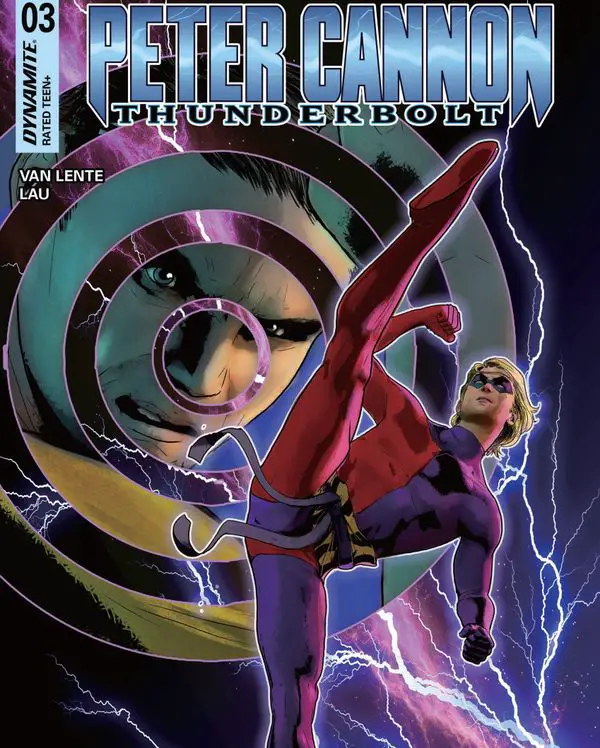
Peter Cannon: Thunderbolt #3, by Dynamite Comics on 1/14/26, opens on a philosophical duel wrapped in existential terror, and it demands to know if Peter Cannon is actually enlightened or just another guy lying to himself.
Credits:
- Writer: Fred Van Lente
- Artist: Jonathan Lau
- Colorist: Andrew Dalhouse
- Letterer: Jeff Eckleberry
- Cover Artist: Cat Staggs (cover A)
- Publisher: Dynamite Comics
- Release Date: January 14, 2026
- Comic Rating: Teen
- Cover Price: $4.99
- Page Count: 22
- Format: Single Issue
Covers:
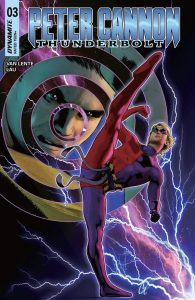
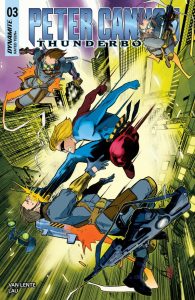
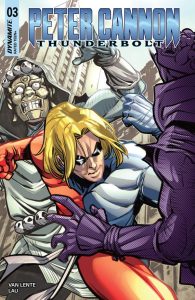
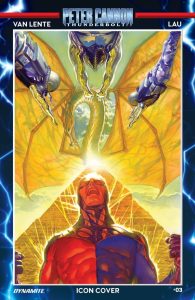

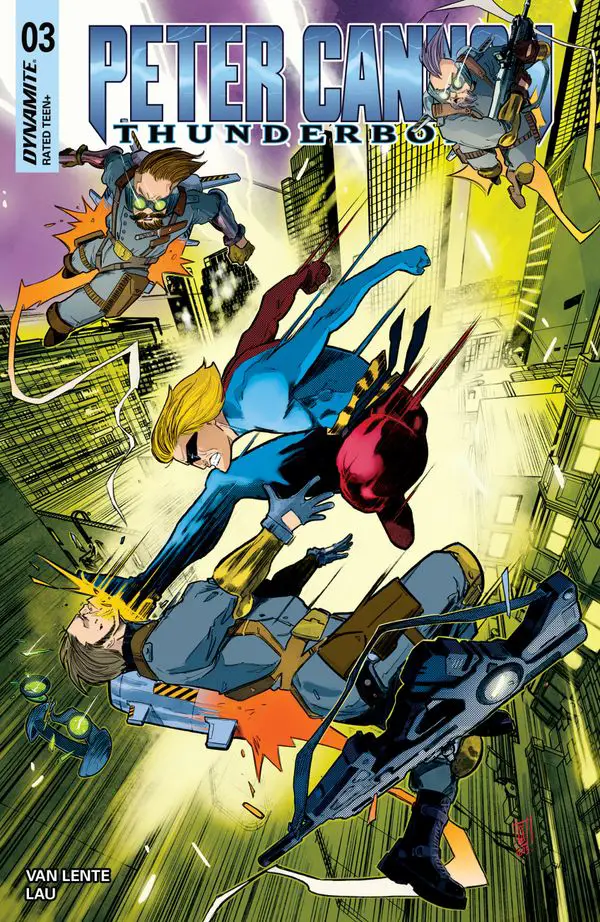
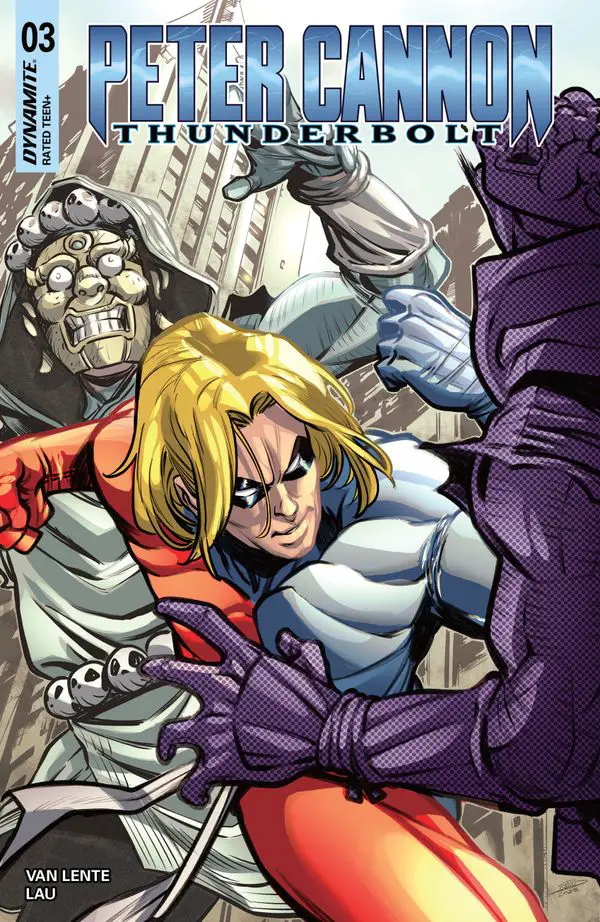
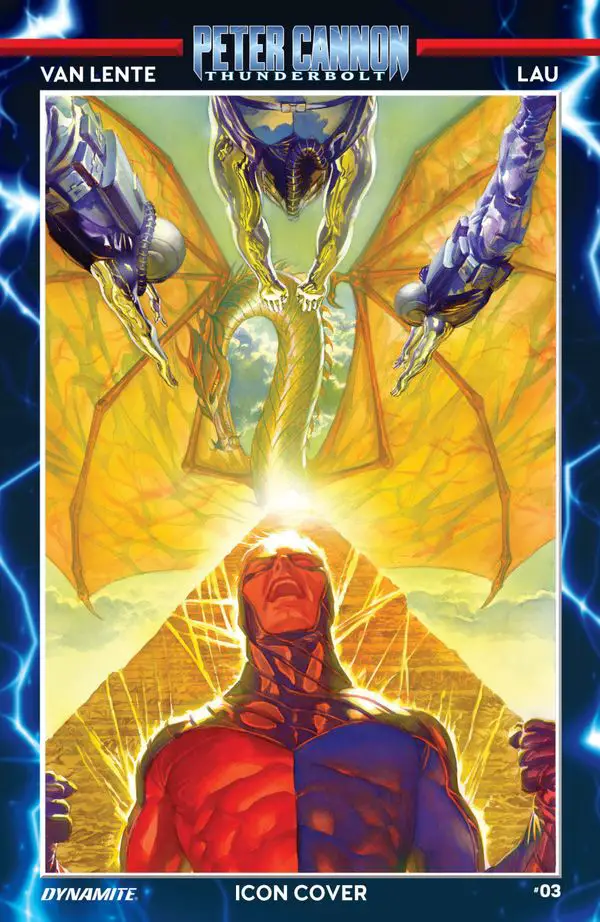
Analysis of PETER CANNON: THUNDERBOLT #3:
First Impressions:
The comic explodes with raw psychological warfare disguised as a conversation between two men who both claim to hold the truth. The Abbot methodically deconstructs Peter’s entire sense of self while invoking Zen koans like weapons, which is both intellectually fascinating and deeply unsettling. It’s clear that Van Lente isn’t interested in letting readers coast through an action spectacle; he’s building something meaner and more conceptually ambitious.
Recap:
In issue two, Peter Cannon confronted the Hooded One at a wealthy gala and learned a shattering truth: his childhood tormentor didn’t just survive the cult’s collapse, he stole Peter’s identity to build a corporate empire. The Abbot monetized the very teachings that destroyed them both, making himself a dark reflection of what Peter could become without morality. The issue ended with Peter forced to prove his mastery of the “Awakened” powers against an enemy insulated by wealth and layers of security, with the promise that reclaiming his name would require burning down the false life his enemy had built.
Plot Analysis (SPOILERS):
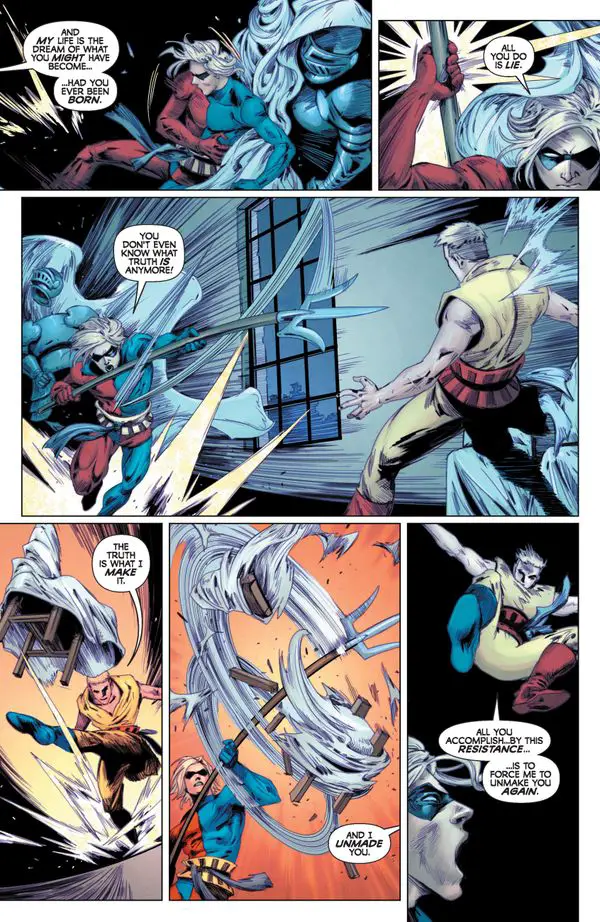
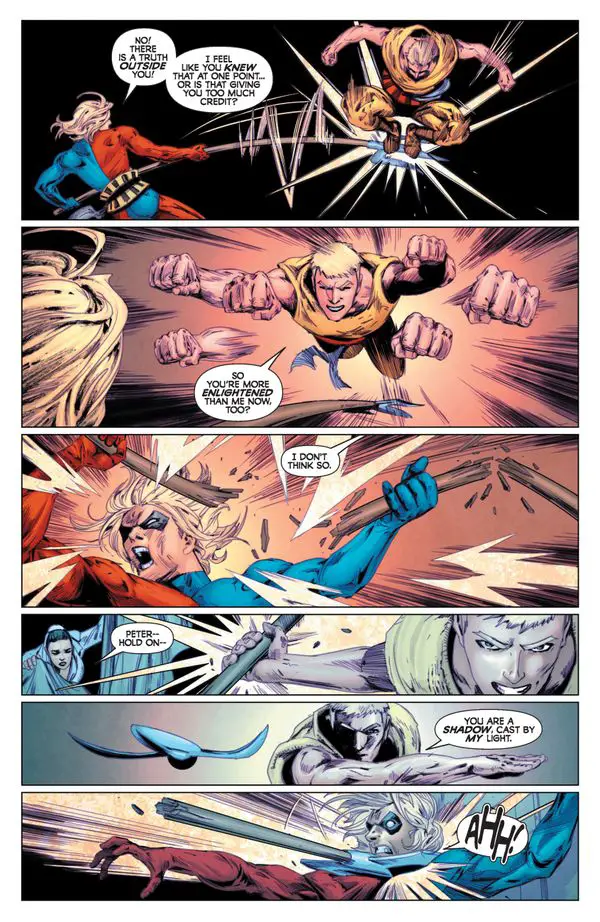
Peter and the Abbot’s confrontation dominates the present-day narrative as psychological combat reaches its peak. The Abbot weaponizes the classic Zen butterfly koan, inverting it to suggest Peter is less real than he is, a shadow cast by superior enlightenment. Peter desperately argues for the existence of objective truth while the Abbot dismisses this as childish belief, claiming he simply remakes reality through force of will.
The Abbot then exploits Peter’s emotional weakness by threatening Tabu, forcing Peter to confront whether desire for another person contradicts his claims of enlightened detachment. When Peter fights back emotionally, the Abbot weaponizes this reaction as proof that Peter is just as corrupted by worldly attachments as anyone else. The psychological gaslighting cuts deeper than any physical attack could, leaving Peter gasping for air as the Abbot claims victory.
The narrative then shifts to a flashback showing young Peter’s mother warning him to hide in a bunker while she sends him away from an Abbot sermon. The scene suggests darker stakes; she’s protecting him from something terrible about to happen. Meanwhile, the Abbot addresses his cult members and announces his readiness to perfect the final technique: the destroyer of death, the ultimate ascension ritual his form was supposedly preventing him from completing.
Peter resurfaces with a desperate counterattack, challenging the Abbot to deliver this legendary destroyer of death and prove his superiority. The Abbot reveals himself as the literal lightning vessel, the perfected form, and claims Peter could never comprehend love or power. Peter then performs an unexpected reversal, realizing the destroyer of death isn’t destructive at all, but a life-touch that restarts hearts. He channels his chi into the Abbot’s chest, literally resurrecting him, and the two emerge confused and gasping.
The issue concludes in present-day New York where Peter holds a press conference announcing that the Mandela Group has acquired Gould’s Foods and a mansion on the Hudson River. Peter pledges to focus the company on sustainability and carbon reduction, directly acting on the problems of the world rather than just advising about them. Security personnel demand handprint confirmation to verify he’s actually Peter, given the stakes of identity theft, while an assistant questions whether Peter actually has a plan this time or is improvising. The final page shows Peter apparently at the Mandela Group office with a news bulletin announcing the Thunderbolt Action Team.
Story
Fred Van Lente crafts the psychological duel at the issue’s heart with precision and rhythm that feels like watching two fighters trade blows in slow motion. Every line of dialogue carries weight because each one is either truth or deception, and the reader never quite knows which interpretation is correct. The pacing doesn’t rush; instead, it lingers on the Abbot’s insults, making each word land harder than quick action ever could.
However, the structural transition from the intense present-day confrontation to the flashback to the modern press conference feels like three separate comics stitched together. The flashback provides necessary context about young Peter and the mother figure’s warnings, but it interrupts momentum at the worst possible moment. The jump to the press conference is even more jarring, shifting from life-or-death philosophical combat to corporate sustainability announcements. By the final page, readers might be confused about whether Peter won, lost, or is still in danger, which creates ambiguity that doesn’t feel intentional.
Art
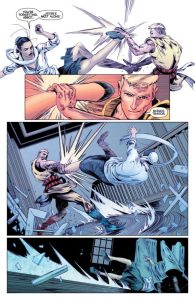
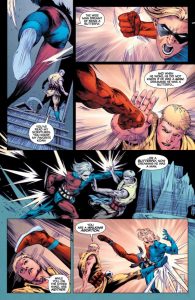
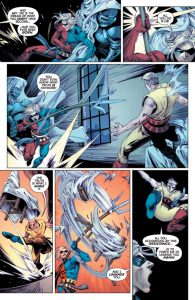
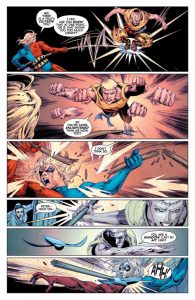
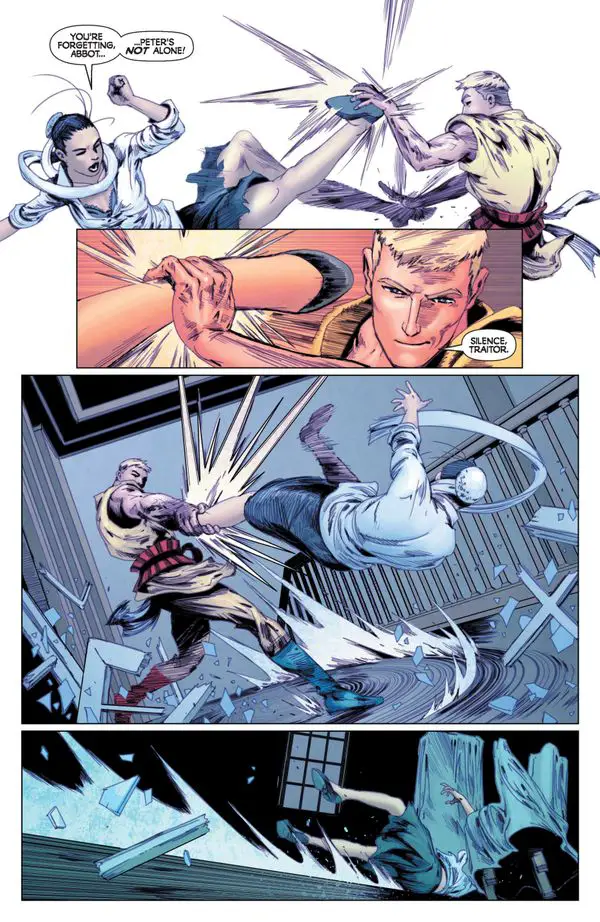
Jonathan Lau’s work in the opening confrontation scenes is visceral and dynamic, making a conversation between two still figures feel genuinely threatening through facial expressions and the weight of their poses. The contrast between Peter’s defensive body language and the Abbot’s relaxed confidence communicates everything about the power imbalance. Andrew Dalhouse’s color palette emphasizes cold, institutional lighting during the Abbot’s sermon, creating an ominous atmosphere that justifies the mother’s fear.
The flashback sequence loses some visual clarity when it shifts perspective to young Peter, making it harder to follow the spatial relationships in the bunker scene. The final press conference pages read more like a newspaper report than a comic book narrative, with dense caption boxes and crowd photography that dilutes the visual storytelling. The handprint verification scene attempts a callback to earlier world-building, but it gets buried under exposition that should have been delivered more dynamically.
Characters
The Abbot remains deeply consistent as a philosophical nihilist convinced of his own superiority, but his character doesn’t evolve within this issue; he simply explains himself more thoroughly. Peter’s vulnerability shines when the Abbot attacks his feelings for Tabu, exposing the contradiction between enlightenment claims and human attachment. This moment reveals Peter as someone still learning what his powers actually mean rather than someone who has already figured everything out.
The mother figure in the flashback creates emotional stakes, but she’s introduced and removed from the narrative so quickly that her presence doesn’t resonate fully. Tabu remains offscreen during the main confrontation, reducing her from active participant to motivation, which wastes her potential.
Originality & Concept Execution
The concept of philosophical combat as the primary action sequence continues to set this book apart from standard superhero fare, and the reframing of the destroyer of death as a life-giving technique shows creative thinking about power systems. The idea of Peter pivoting from personal vengeance to corporate action on climate change and sustainability is genuinely fresh, offering a metacommentary on whether enlightened individuals should work within systems or burn them down.
However, the execution stumbles because the issue doesn’t clearly resolve whether Peter actually defeated the Abbot or simply escaped. The destroyer of death reversal is clever, but it raises more questions than it answers about what Peter actually did and what happens next. The press conference feels like the beginning of a new arc rather than the climax of the confrontation, leaving the main plot thread hanging rather than advanced.
Positives
The absolute standout strength of this issue is the psychological war of words between Peter and the Abbot, which treats dialogue like combat choreography. Every insult lands, every philosophical jab cuts deeper than the last, and Lau’s art of their expressions makes readers feel the damage without a single punch thrown. The Abbot’s use of Zen koans as psychological weapons is brilliant and unexpected, transforming ancient spiritual teaching into a tool of manipulation. The reversal of the destroyer of death concept also deserves credit; discovering it’s actually a life-touch rather than a killing technique reframes the entire magical system in a single moment.
Negatives
The structural pacing collapses after the main confrontation ends, jumbling three separate narratives without clear transitions or payoffs. The flashback to young Peter feels obligatory rather than organic, interrupting climactic tension to deliver exposition that could have been woven in more subtly. The shift to the press conference undercuts any sense of victory or defeat from the philosophical duel, making readers unsure whether Peter actually won the fight or just moved on to a different problem. The ambiguity isn’t clever; it reads like the story is stalling before the actual climax arrives next issue.
In short, for the arc’s ending to land and feel satisfying, the conflict between Peter and the Abbott needed a clear, definitive resolution. In this, case the ending felt like a shortcut that practically screams, “The Abbott Will Be Back!” so the satisfaction factor is lost.
Art Samples:

The Scorecard:
Writing Quality (Clarity & Pacing): [3/4]
Art Quality (Execution & Synergy): [3.5/4]
Value (Originality & Entertainment): [1/2]
Final Thoughts:
(Click this link 👇 to order this comic)
PETER CANNON: THUNDERBOLT #3 delivers a psychologically intense duel that ranks among the best dialogue sequences in the series, but then immediately sabotages itself by losing focus in the final act. The confrontation between Peter and the Abbot is genuinely captivating, with each sentence functioning as a strike in an intellectual fight. Unfortunately, the comic doesn’t commit to the outcome of this battle; so the arc’s structure falls short at the most important moment. As a whole, this is still one of Dynamite’s better offerings, but half-measures hold a good comic back from being great.
We hope you found this article interesting. Come back for more reviews, previews, and opinions on comics, and don’t forget to follow us on social media:
If you’re interested in this creator’s works, remember to let your Local Comic Shop know to find more of their work for you. They would appreciate the call, and so would we.
Click here to find your Local Comic Shop: www.ComicShopLocator.com
As an Amazon Associate, we earn revenue from qualifying purchases to help fund this site. Links to Blu-Rays, DVDs, Books, Movies, and more contained in this article are affiliate links. Please consider purchasing if you find something interesting, and thank you for your support.