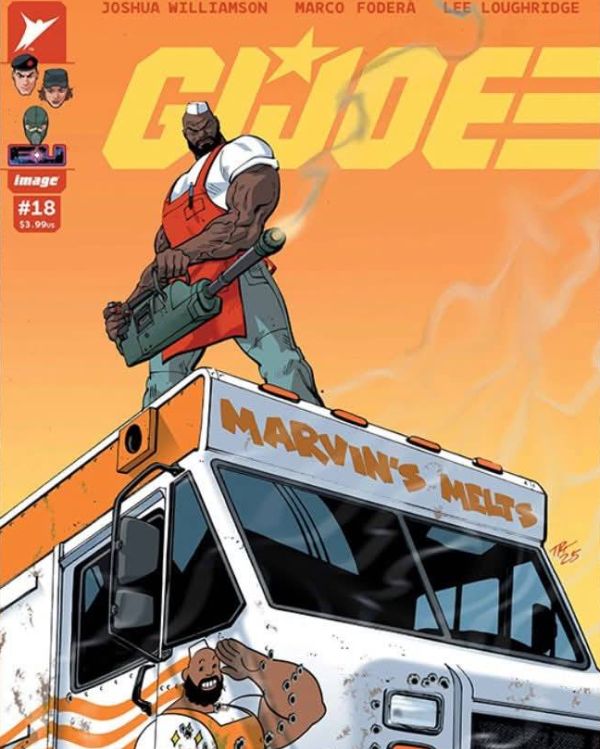
G.I. Joe #18, by Image Comics on 1/28/26, pivots hard away from desert explosions and straight into the domestic drama of a food truck owner getting dragged back into the world he fought so hard to leave.
Credits:
- Writer: Joshua Williamson
- Artist: Marco Fodera
- Colorist: Lee Loughridge
- Letterer: Rus Wooton
- Cover Artist: Tom Reilly (cover A)
- Publisher: Image Comics
- Release Date: January 28, 2026
- Comic Rating: Teen
- Cover Price: $3.99
- Page Count: 32
- Format: Single Issue
Covers:
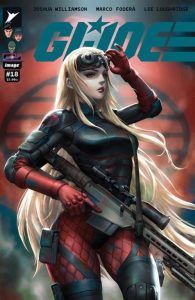
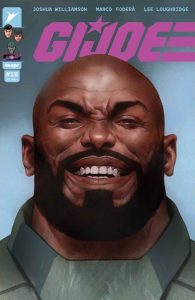
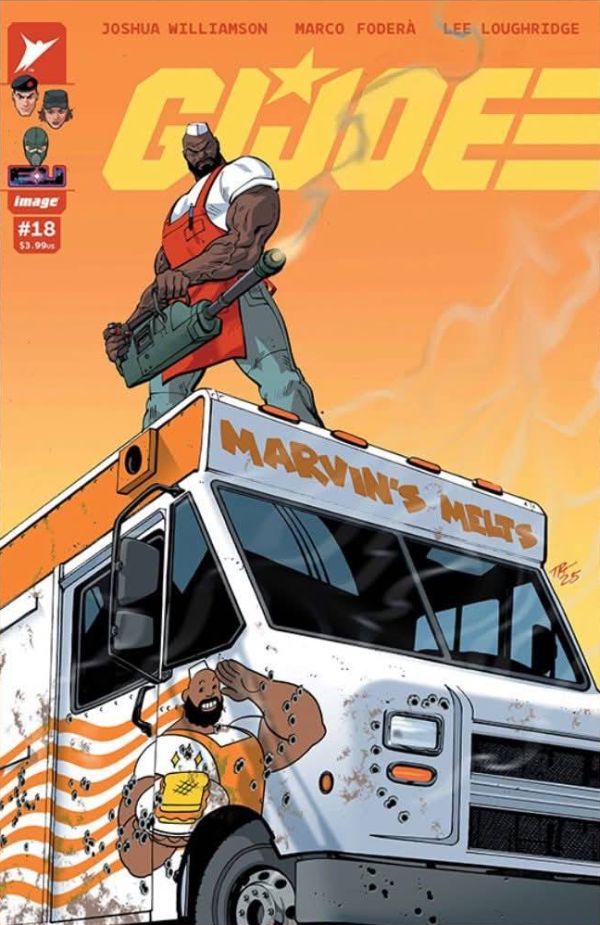
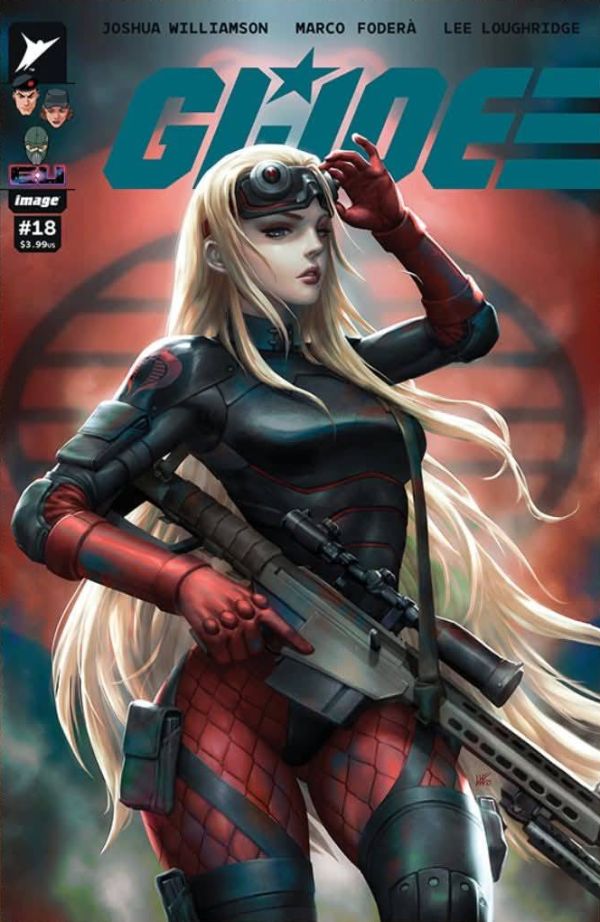
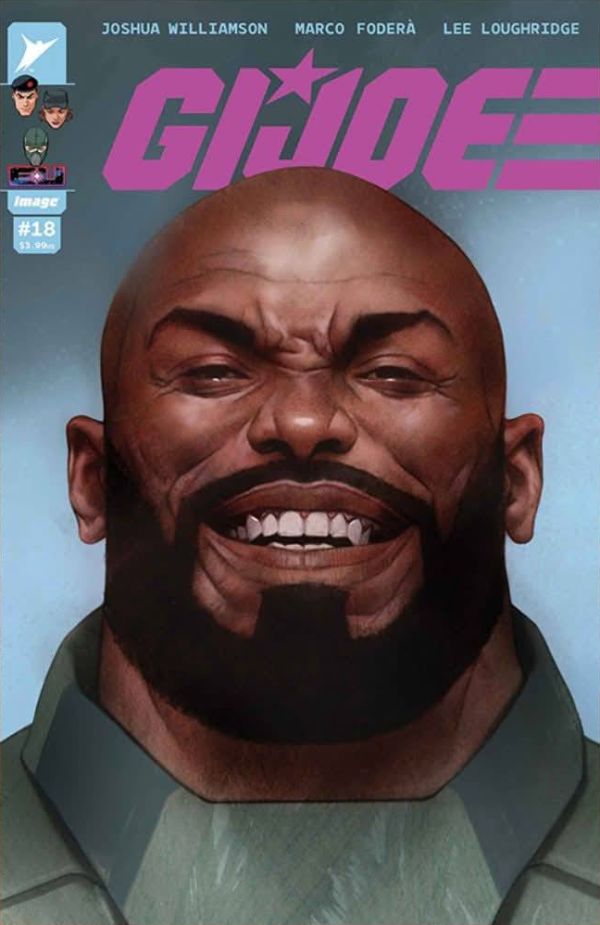
Analysis of G.I. JOE #18:
First Impressions:
Reading this issue left me with a complicated feeling. The pivot from “Dreadnok War” action to a grounded Roadblock spotlight is intentional and smart, but the execution stumbles by splitting focus between his food truck romance and the real meat of the story. The pacing makes you wait too long for the payoff, and when Tomax and Xamot finally show up and things escalate, it feels like the comic found its voice too late in the game. The final act with Shooter’s mysterious appearance hints at something much bigger, but the middle stretch is conversational filler when momentum would have served the issue better.
Recap:
In G.I. Joe #17, closed out the “Dreadnok War” arc with Cobra Commander escaping the desert alive and hiring the Dreadnoks as independent contractors. Duke’s team secured an Energon-powered robot as a tactical asset, but the real cost hit hard when Zartan revealed himself as Colonel Hawk, infiltrating G.I. Joe leadership from the inside. The stage was set for internal chaos.
Plot Analysis (SPOILERS):
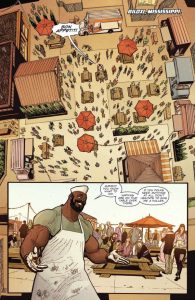
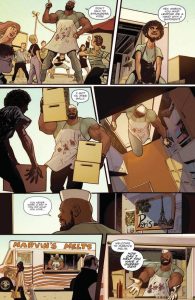
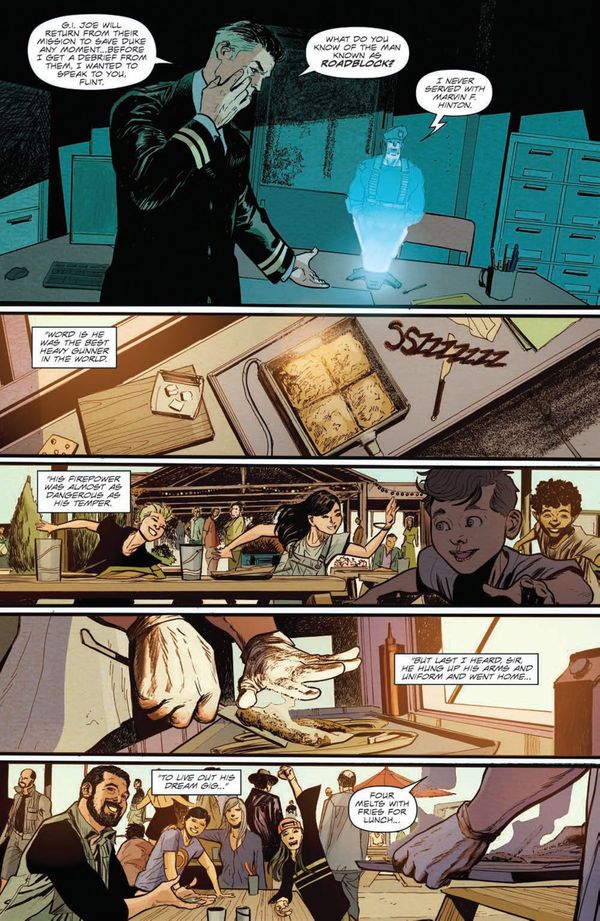
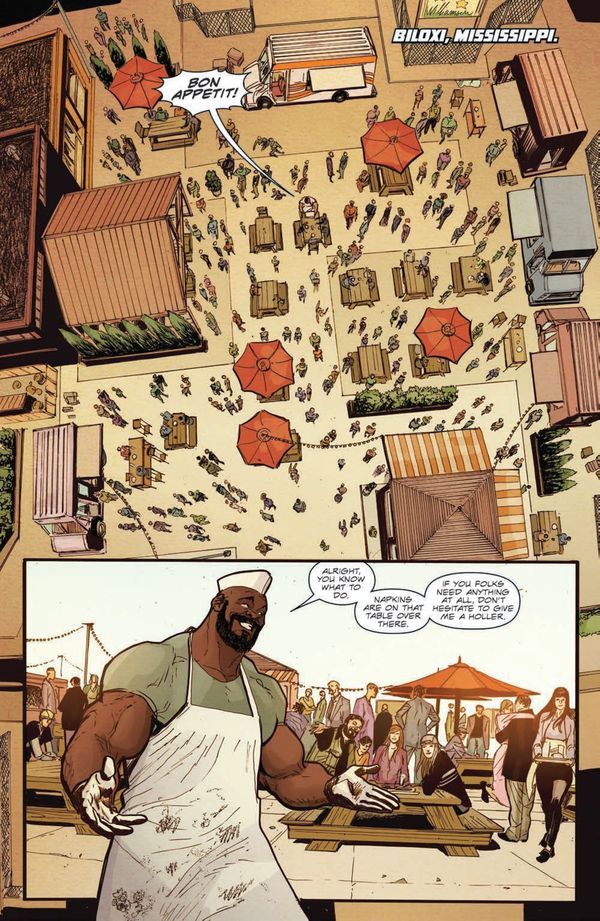
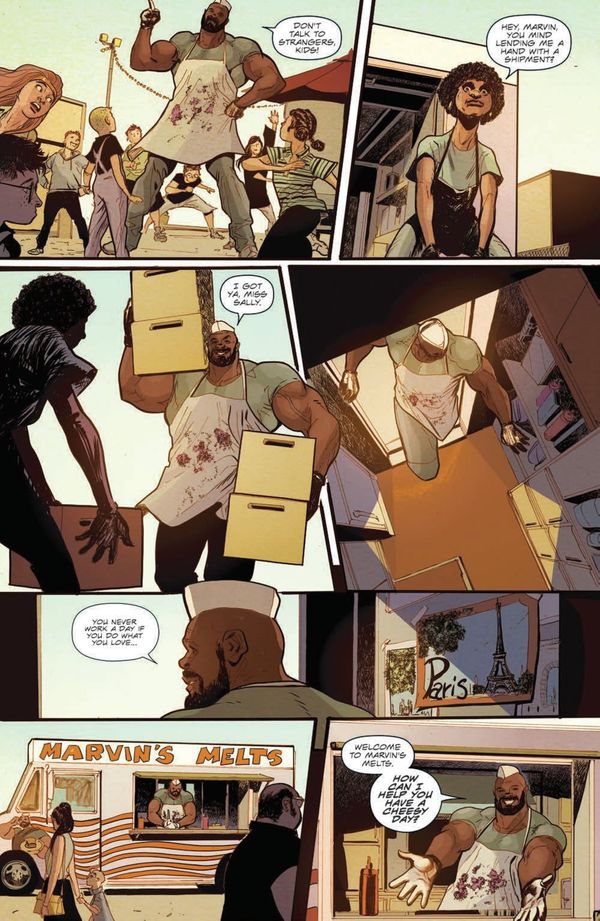
Roadblock, known to the world as Marvin F. Hinton, has left his life as the world’s deadliest heavy gunner far behind. He now runs Marvin’s Melts, a food truck in Biloxi, Mississippi, where he serves grilled sandwiches, laughs with customers, and helps his coworkers with shipments. Flint’s voiceover establishes that Roadblock was dangerous, temperamental, and legendary in combat, but he chose a simpler life doing what he loves. The issue opens with a naval officer asking Flint about Roadblock’s background, setting up the question of why anyone cares about a retired Joe running a food business.
Tomax and Xamot of Extensive Enterprises arrive at the food truck with a business proposal. They want Roadblock as the face of Red Rockets, a new national franchise they plan to scale internationally. They appeal to his past, his desire for change, and the money that could fund his restaurant dreams. Roadblock politely refuses, knowing exactly what the Crimson Twins are and what their recruiting operation really does. He tells them no one turns down his hospitality and sends them away.
Moments after they leave, Tomax and Xamot send armed soldiers in red armor to attack the food court. Roadblock’s protective instinct ignites. He fights the soldiers barehanded, flipping a military vehicle and smashing through their assault with brutal efficiency. When they mount a gatling gun, he disarms them, steals the weapon, and pursues their escape vehicle by ramming it with his food truck, grinding them into a utility pole. The Crimson Twins flee in defeat, and Roadblock is left standing among the wreckage of his peaceful life.
At the food court, a mysterious woman named Shooter approaches Roadblock and asks to talk. She’s there with others who’ve cleaned up the damage and kept the incident quiet, preferring to handle it themselves. Roadblock recognizes her with shock and a crude expletive, suggesting deep military history. The issue ends with Shooter asking Roadblock if they can talk, hinting that G.I. Joe has found him and he’s about to be pulled back into the fight.
Story
The pacing has two distinct modes that don’t quite sync. The opening sequences establishing Roadblock’s peaceful life are leisurely and character-focused, with Flint’s voiceover and visual storytelling doing the heavy lifting to show his contentment. This works well for establishing stakes and his motivation to refuse the Crimson Twins. However, the negotiation scene between Roadblock and Tomax and Xamot stretches longer than necessary, using multiple pages on dialogue that repeats the same pitch. Once the action erupts, the pacing accelerates sharply into combat beats and one-liners. The structure is clear, the dialogue is character-specific for each player, and the twist ending lands solid, but the middle section feels padded. The transition from food truck owner back to operative is inevitable, yet the script doesn’t quite find the gear that makes the shift feel urgent until the final pages.
Art
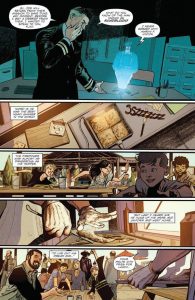
Marco Foderà’s line work is dynamic and clear in the action sequences. Roadblock’s physicality is rendered with weight and power, his flips and strikes reading instantly in panels. The food court establishing shots and early character work are detailed and warm, selling the contrast between his civilian life and the violence that intrudes on it.
However, the color work by Lee Loughridge has moments where it flattens the action. The red armor of the military force blends a bit too closely with the chaos around it during the combat section, making panel-to-panel clarity occasionally muddled. The food truck ramming sequence is clear enough, but sharper color separation in the Tomax and Xamot pursuit would have made the kinetic energy punch harder. The lighter palette of the opening, with its sunny food court atmosphere, makes the sudden shift to combat jarring in the right way, so that works in the comic’s favor. In fairness Loughridge’s output is world’s better than regular colorist Jordie Bellaire but not galaxies better.
Characters
Roadblock is portrayed as a man who has genuinely moved on from violence into purpose. His interactions with customers and coworkers feel authentic, not performative. His refusal of the Crimson Twins is grounded in principle, not ego; he knows what they are and won’t be part of it. When violence finds him anyway, his response is immediate and focused, not a return to old habits but a defense of something he’s built. The shift from “I’m retired” to recognizing Shooter is charged with weight because we’ve spent the issue understanding what he’s leaving behind.
Tomax and Xamot are framed as corporate types who understand manipulation and money but misjudge their target. Shooter remains mysterious, but her final appearance and the group’s willingness to handle the situation quietly signals that G.I. Joe operates with more sophistication than simple recruitment. Roadblock’s development in this issue is about integrity tested, not about capability.
Originality & Concept Execution
The concept of “retired soldier forced back into the game” is well-worn, but grounding it in a food truck and making his return depend on protecting civilians rather than military obligation gives it a twist. The Crimson Twins as corporate recruiters for a cult-like organization is fresh, and the idea that they use business opportunity as a lure is smart and timely. The issue executes this premise cleanly. Roadblock’s refusal followed by immediate attack feels like a setup for a longer game rather than a simple rejection, which is more interesting. The introduction of Shooter and the G.I. Joe apparatus stepping in quietly suggests a larger framework where recruitment isn’t about force alone but about finding the right people and the right moment. That’s good world-building that supports the larger Energon Universe story.
Positives
The strongest aspect of this issue is how it reframes a classic action hero archetype through the lens of civilian contentment. Roadblock genuinely loves what he’s doing, and the comic sells that without sarcasm or cynicism. His refusal of the Crimson Twins on principle, knowing exactly who they are and what they want from him, establishes his character as someone who has genuinely found an alternative to combat. When violence intrudes, his response is measured and proportional: he protects the food court, he stops the threat, and he doesn’t pursue vendetta. That’s maturity in action.
The Crimson Twins’ pitch is funny and uncomfortable in equal measure, using business jargon and flattery to approach recruitment, which adds satirical edge. The action sequences, particularly the food truck ramming sequence, are clear, kinetic, and fun. Finally, Shooter’s introduction and the suggestion that G.I. Joe operates with quiet intelligence rather than recruitment-by-force sets a solid table for the next arc and rewards readers who’ve been following the larger story.
Negatives
The pacing in the middle section undercuts the tension. The negotiation with Tomax and Xamot goes on longer than it needs to, repeating pitches and appeals when the “no thank you” moment should be where the plot pivots. This makes the first half of the comic feel like setup without urgency, and readers have to wait until the attack begins to feel engaged. The coloring in the action sequence, while not broken, could be sharper. The red armor of the soldiers blends into the chaos when it should stand out as a distinct visual threat.
The issue also doesn’t quite land the emotional weight of Roadblock’s forced return to duty. Shooter’s appearance is mysterious, but there’s no real moment where Roadblock reacts to being pulled back into the life he left. The issue ends on her question rather than his response, which is narratively smart for a cliffhanger but emotionally unsatisfying as a conclusion. For readers seeking character beats that match the action, that lack of follow-through is a miss.
Art Samples:
The Scorecard:
Writing Quality (Clarity & Pacing): [2.5/4]
Art Quality (Execution & Synergy): [2.5/4]
Value (Originality & Entertainment): [2/2]
Final Thoughts:
(Click this link 👇 to order this comic)
G.I. JOE #18 is a solid pivot away from the desert war and into character setup for the next phase. If you care about Roadblock as a character or the larger Energon Universe infrastructure, this issue does the work to make you invested in what comes next. The action is clean, the humor lands, and the frame of a retired warrior choosing principle over opportunity is genuinely compelling. If your comic budget runs thin and you only read the big arc chapters, you can skip this and pick up the next issue without major confusion.
We hope you found this article interesting. Come back for more reviews, previews, and opinions on comics, and don’t forget to follow us on social media:
If you’re interested in this creator’s works, remember to let your Local Comic Shop know to find more of their work for you. They would appreciate the call, and so would we.
As an Amazon Associate, we earn revenue from qualifying purchases to help fund this site. Links to Blu-Rays, DVDs, Books, Movies, and more contained in this article are affiliate links. Please consider purchasing if you find something interesting, and thank you for your support.