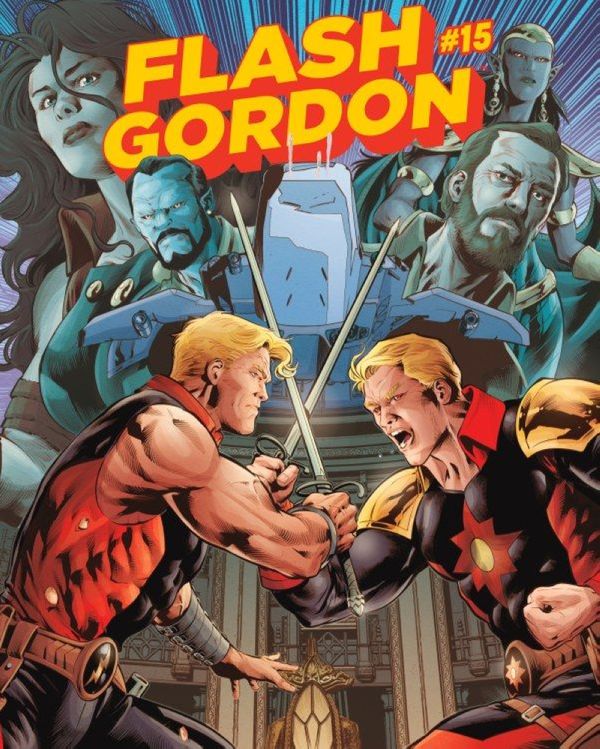
Flash Gordon #15, by Mad Cave Studios on 2/4/26, sends the title character racing against time, physics, and his own doppelgänger to restore a shattered world.
Credits:
- Writer: Jeremy Adams
- Artist: Eder Messias, Tom Derenick
- Colorist: Lee Loughridge
- Letterer: Taylor Esposito
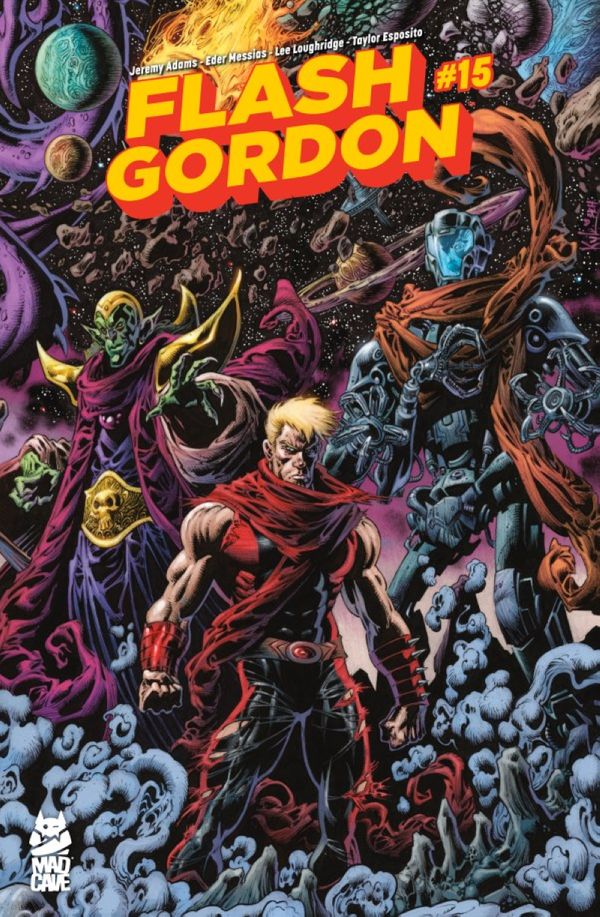
- Cover Artist: Will Conrad (cover A)
- Publisher: Mad Cave Studios
- Release Date: February 4, 2026
- Comic Rating: Teen
- Cover Price: $4.99
- Page Count: 34
- Format: Single Issue
Covers:
Analysis of FLASH GORDON #15:
First Impressions:
This issue hits hard with emotional weight and satisfying payoff. After 15 issues of escalating tension, Adams delivers a finale that earns its “epic conclusion” label without feeling rushed or unearned. The bittersweet ending lands with genuine impact, offering closure while respecting the journey that brought us here.
Recap:
The previous issue exploded with Flash’s stolen army attacking Mingo City as a diversion while Flash veered north toward the Cave of the Ancients, hunting for something to help defeat Ming. Flash navigated deadly booby traps and laser grids to reach Zarkov’s ancient machine while Vultan’s air wings battled Ming’s fighters in brutal aerial combat. Dale and Zarkov escaped Ming’s palace during the chaos, vowing to help Flash from above. Flash, boxed in by pressure plates and laser grids, raced against Ming’s advancing soldiers and the Evil Flash, who now hunted him with orders to kill on sight.
Plot Analysis (SPOILERS):
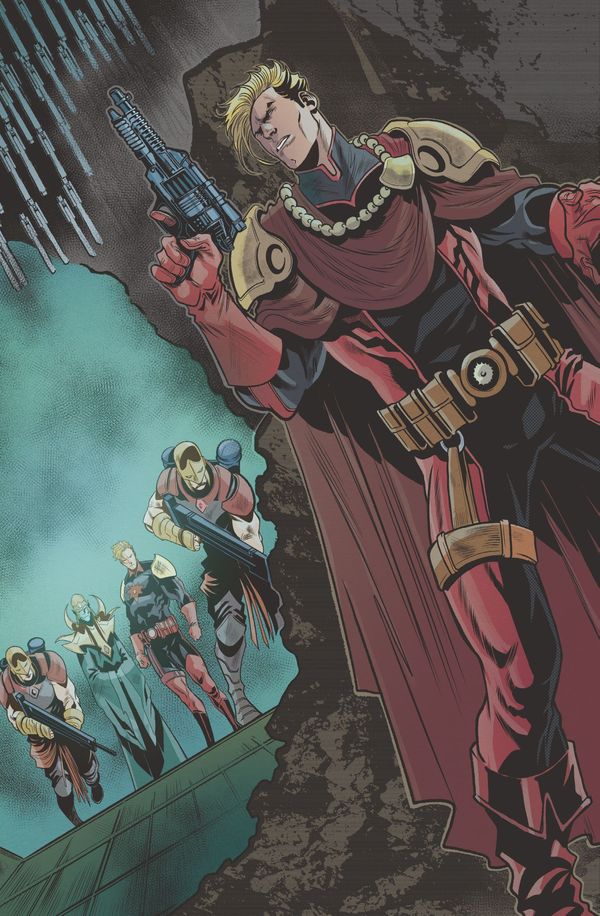
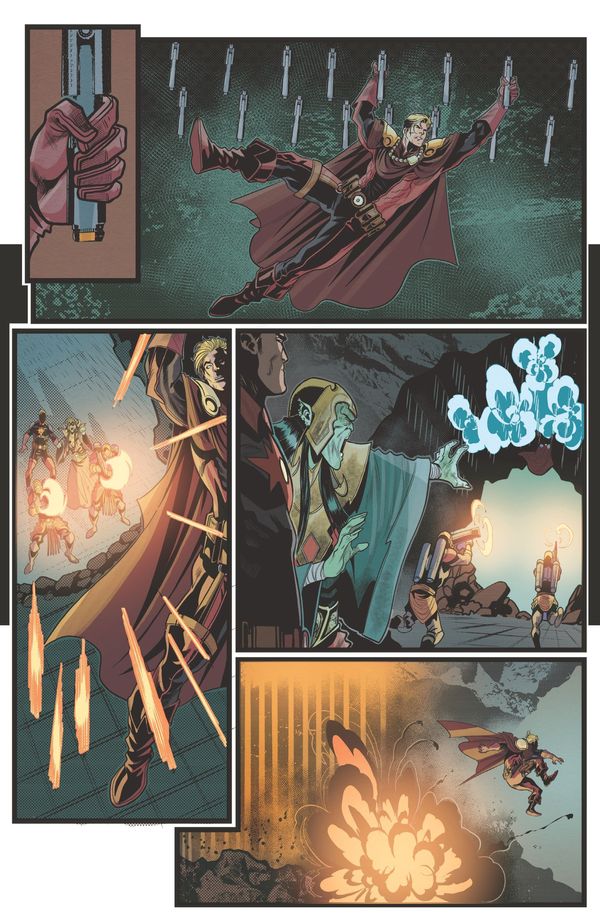
Flash swings across pressure-plate traps in the Cave of the Ancients, narrowly avoiding Ming’s soldiers and his evil doppelgänger. He reaches the ancient technology and touches the rod, triggering contact with the Ancients of Mongo, who question why they should help the man who destroyed their planet. Flash accepts the knowledge they offer despite being warned of a terrible sacrifice: separation from those he loves. The Ancients grant him the time-travel knowledge, which floods his mind as the rod disintegrates, though they warn the information will fade after one use.
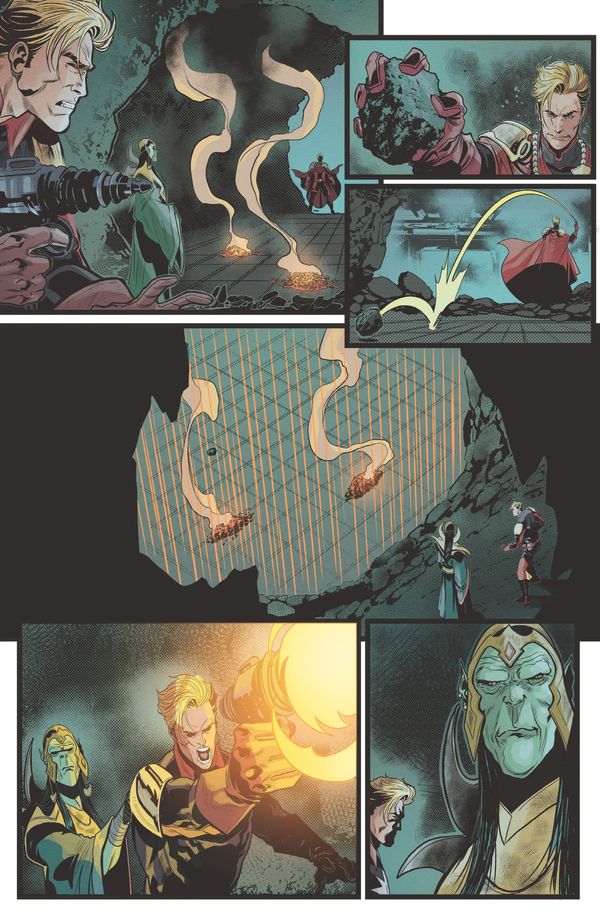
Evil Flash confronts him immediately, followed by Ming, and Flash reveals the truth: the doppelgänger used the Ancients’ knowledge to overthrow his universe’s Ming and planned to do it again here. Ming, enraged by the betrayal, blasts Evil Flash, killing him instantly. Flash pleads with Ming to let him restore Mongo, but Ming refuses, declaring he’d rather be savior of a broken world than share power. Ming’s blaster fire damages the cave’s core, triggering an imminent explosion, and Flash grabs onto Ming’s jetpack as they escape the collapsing cavern together.
Flash punches Ming unconscious after they clear the blast radius, steals his jetpack, and flies to rejoin Vultan’s aerial assault. He crashes through Ming’s forces just as they corner Dale and Zarkov in the lab, reuniting with his team and revealing he knows how to stop the catastrophe. Flash and Zarkov activate the modified Unraveller, using the Ancients’ knowledge to reverse time and restore Mongo to its pre-destruction state. The planet knits itself back together through time, but Zarkov discovers a critical problem: Mongo is moving backward through space toward its original location, light-years away.
Flash realizes this is the sacrifice the Ancients mentioned. He has less than a day before Mongo becomes unreachable, so he sends word across the refugee populations that they can return home. The Mongonians rush back to their restored world while Flash says goodbye to Barin, Aura, and Vultan, thanking them for the adventure. Flash, Dale, and Zarkov board their ship and set course for Earth, watching Mongo disappear light-years away, never to be seen again.
Story
Adams balances breakneck action with emotional weight throughout this finale. The opening sequence in the Cave demonstrates tight pacing, moving Flash from one death trap to the next without unnecessary exposition. The dialogue between Flash and the Ancients carries appropriate gravitas without becoming ponderous, establishing clear stakes and foreshadowing the sacrifice. Flash’s narration maintains personality while conveying urgency, particularly during the monkey-bar sequence where his self-encouraging thoughts (“Come on, Flash. Swing like your life depends on it, because it does!”) feel authentic to a character talking himself through mortal danger.
The confrontation between the two Flashes and Ming delivers satisfying character payoff. Flash’s tactical revelation of Evil Flash’s treachery weaponizes Ming’s hatred of betrayal, demonstrating intelligence over brute force. Ming’s subsequent murder of Evil Flash feels inevitable and earned, consistent with his established character. However, the extended debate between Flash and Ming in the cave slightly stalls momentum, though it serves to reinforce Ming’s villainy and Flash’s desperation.
The final act’s structure works beautifully. Adams resists the temptation to drag out Mongo’s restoration, instead focusing on the emotional goodbye between Flash and the supporting cast. Barin’s simple “How will we survive without the great Flash Gordon there to save us again and again?” and Aura’s “You’ll mean more to me than you’ll ever know” land with understated power. The closing narration about Mongo being “a place of menace and adventure” provides thematic closure without over-explaining. Adams understands when to let moments breathe and when to push forward.
Art
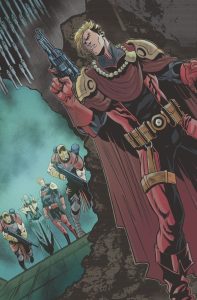
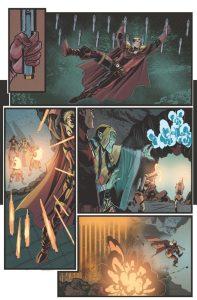
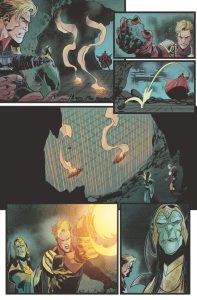
Eder Messias and Tom Derenick deliver dynamic visuals that effectively convey both action spectacle and quieter emotional beats. The Cave of the Ancients sequence showcases strong spatial storytelling, clearly establishing Flash’s predicament between electric shields and pursuing enemies. The panel where Flash grabs the overhead pipes demonstrates clear action choreography, making his improvised solution immediately comprehensible. The Ancient’s spectral appearance during the knowledge transfer uses appropriately ethereal visual effects without becoming muddy or confusing.
The confrontation scenes benefit from expressive character work. Evil Flash’s desperation and rage read clearly in his body language during the fight. Ming’s cold fury when shooting Evil Flash comes through in his posture and expression, particularly in the panel where he declares “If anyone is going to kill Flash Gordon, it’s me.” The subsequent cave collapse employs effective diagonal panel layouts and debris-filled compositions to convey chaos without losing visual clarity.
Lee Loughridge’s colors enhance the storytelling throughout. The Cave glows with otherworldly blue-green energy during the Ancient’s appearance, creating visual distinction between the mystical and physical threats. The explosion sequence uses appropriate oranges and reds without overwhelming the page. The restoration of Mongo receives stunning treatment, with light streaming through reforming continents as the planet knits together. However, some panels during the mid-issue action feel slightly cluttered, with overlapping energy blasts creating occasional visual confusion.
The farewell sequence demonstrates restraint and emotional intelligence. Close-ups on characters’ faces during goodbyes convey genuine emotion without melodrama. The final splash page of Mongo disappearing into the distance against the star field is appropriately wistful, capturing the bittersweetness of victory-through-loss. The art team understands when spectacle serves story and when simplicity carries more weight.
Characters
Flash’s character arc completes satisfyingly in this issue. His acceptance of the Ancients’ sacrifice, despite not fully understanding its cost, demonstrates growth from the brash hero of earlier issues to someone willing to lose everything for others. His line “If it means saving Mongo and my friends, yes” carries weight because Adams has spent 15 issues establishing these relationships. Flash’s tactical thinking, evidenced by turning Ming against Evil Flash and later grabbing Ming’s jetpack, shows he’s learned to fight smarter rather than just harder.
Ming remains consistently villainous while revealing additional dimension. His immediate execution of Evil Flash for betrayal aligns with his established character while demonstrating his values extend beyond simple cruelty. His refusal to let Flash restore Mongo, choosing instead to be “savior of a broken world,” showcases pathological need for control. This isn’t cartoon villainy but tragic stubbornness. Ming would rather rule fragments than share a restored kingdom.
The supporting cast receives appropriate closure given page constraints. Barin’s friendship with Flash feels earned through accumulated interactions, making his gratitude genuine rather than perfunctory. Aura’s restrained goodbye to Flash respects the complicated dynamic between them without forcing romantic resolution. Vultan’s enthusiasm and loyalty remain consistent, providing levity without undercutting emotional stakes. Dale and Zarkov feel somewhat underserved, functioning more as functional elements than fully realized characters in this specific issue, though their presence throughout the series justifies their inclusion.
Evil Flash serves his purpose effectively as Flash’s dark mirror. His desperation when Flash takes the knowledge, and his attempt to eliminate Flash despite the collapsing cave, demonstrates single-minded villainy. His death at Ming’s hands provides ironic justice: the manipulator gets manipulated, and the would-be tyrant dies at the hands of the tyrant he tried to use.
Originality & Concept Execution
The “restore the planet but lose access to it” sacrifice provides a fresh twist on typical hero victories. Rather than saving the day and celebrating, Flash must immediately say goodbye to everyone and everything he’s fought for. This subverts the traditional triumphant ending while still delivering heroism and hope. The time-reversal restoration of Mongo, with its attendant spatial displacement, introduces creative science-fiction consequences that feel emotionally earned rather than arbitrary.
The issue successfully concludes a 15-issue arc while functioning as a standalone finale. New readers would struggle with context, but returning readers receive payoff on established relationships and story threads. The Evil Flash plotline, introduced in previous issues, reaches satisfying resolution through Ming’s betrayal rather than heroic combat, demonstrating Adams’ willingness to subvert expected action beats. The Ancients of Mongo tie directly to earlier world-building, rewarding long-term readers.
Adams navigates the challenge of delivering a definitive ending to a licensed character with limited future availability. Rather than leaving threads dangling or forcing a cliffhanger, he provides genuine closure while acknowledging the Flash Gordon mythos continues beyond this specific run. The final caption, “Though… stranger things have happened,” acknowledges the cyclical nature of adventure serials without undermining the emotional weight of this particular goodbye.
Positives
The emotional payoff justifies the entire 15-issue journey. Adams earns the bittersweet ending through accumulated character work, making Flash’s sacrifice land with genuine impact rather than manipulative sentimentality. The restoration of Mongo sequence delivers visual spectacle that serves story rather than replacing it, with Zarkov’s realization about spatial displacement introducing consequence into what could have been pure triumph.
Ming’s character consistency, particularly his execution of Evil Flash and subsequent refusal to accept salvation, demonstrates Adams understands villainy rooted in psychology rather than plot convenience. The art team balances action clarity with emotional subtlety, knowing when to deploy spectacle and when close-ups on faces carry more weight. The pacing manages to feel both urgent and contemplative, rushing through action beats while allowing farewell scenes appropriate breathing room.
Negatives
The mid-issue debate between Flash and Ming in the collapsing cave slightly stalls momentum during what should be the story’s most urgent sequence. While the dialogue serves character, it stretches credibility that Flash would pause for philosophical arguments while laser blasts ricochet around him. Dale and Zarkov feel somewhat underutilized in this specific issue, functioning primarily as functional story elements during the lab sequence rather than receiving meaningful character moments. Their presence throughout the series justifies their inclusion, but readers hoping for strong Dale/Flash closure may feel disappointed.
Some action panels during the cave battle suffer from slight visual clutter, with overlapping energy effects occasionally obscuring character positioning. The “knowledge that fades after one use” concept, while narratively convenient for preventing future time-travel stories, introduces questions about why the Ancients built such limitations into their gift.
Art Samples:
The Scorecard:
Writing Quality (Clarity & Pacing): [3.5/4]
Art Quality (Execution & Synergy): [3.5/4]
Value (Originality & Entertainment): [1.5/2]
Final Thoughts:
(Click this link 👇 to order this comic)
FLASH GORDON #15 sticks the landing. Jeremy Adams concludes his run with an issue that respects both the character’s pulp adventure roots and the emotional investment readers have built over 15 issues. The sacrifice Flash makes feels earned rather than arbitrary, and the bittersweet farewell to Mongo carries genuine weight. This is how you end a run: with consequence, emotion, and respect for everything that came before. Adams leaves Flash Gordon in a place of heroic completion. That’s a hell of a goodbye.
We hope you found this article interesting. Come back for more reviews, previews, and opinions on comics, and don’t forget to follow us on social media:
If you’re interested in this creator’s works, remember to let your Local Comic Shop know to find more of their work for you. They would appreciate the call, and so would we.
As an Amazon Associate, we earn revenue from qualifying purchases to help fund this site. Links to Blu-Rays, DVDs, Books, Movies, and more contained in this article are affiliate links. Please consider purchasing if you find something interesting, and thank you for your support.