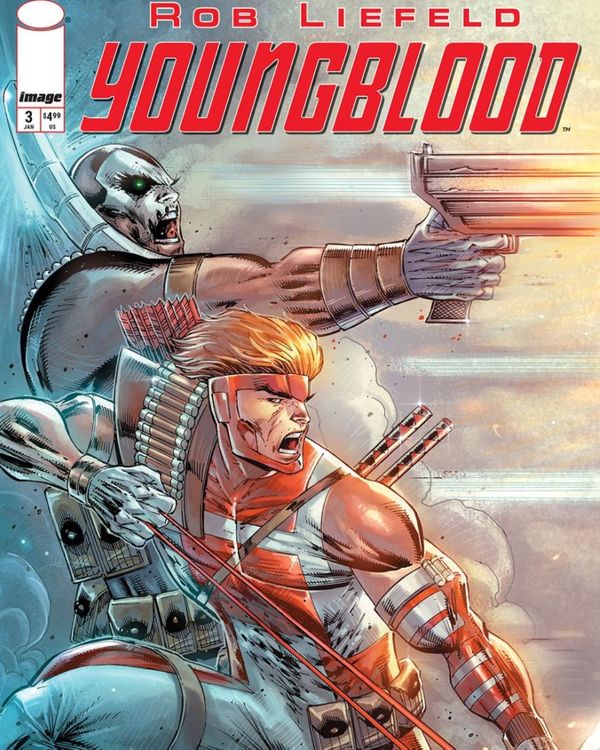
Youngblood #3, by Image Comics on 1/28/26, escalates the chaos as The Keep arrives on Earth while Youngblood fractures under the weight of impossible odds.
Credits:
- Writer: Rob Liefeld
- Artist: Rob Liefeld, Chance Wolf
- Colorist: Juan Manuel Rodriguez
- Letterer: Rus Wooton
- Cover Artist: Rob Liefeld (cover A)
- Publisher: Image Comics
- Release Date: January 28, 2026
- Comic Rating: Teen
- Cover Price: $4.99
- Page Count: 36
- Format: Single Issue
Covers:
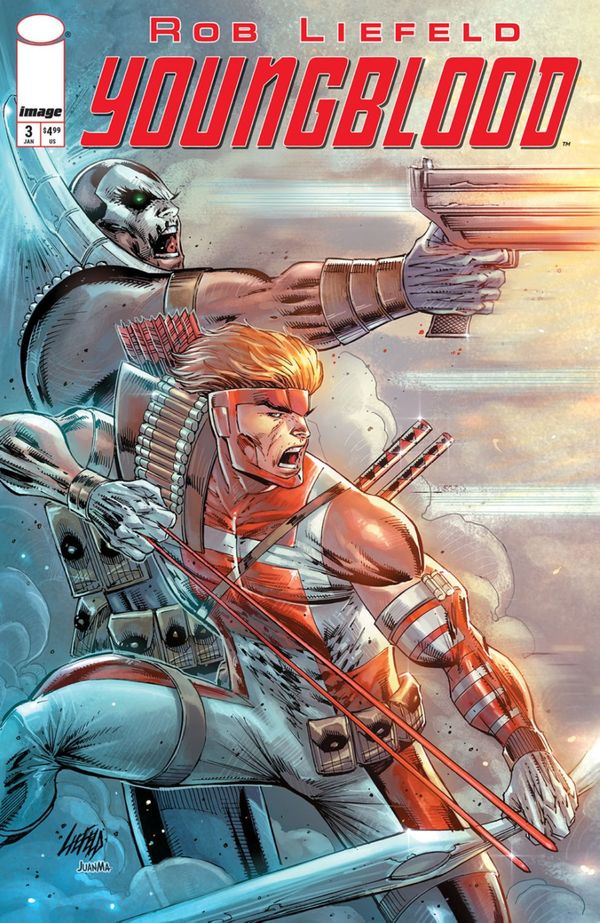
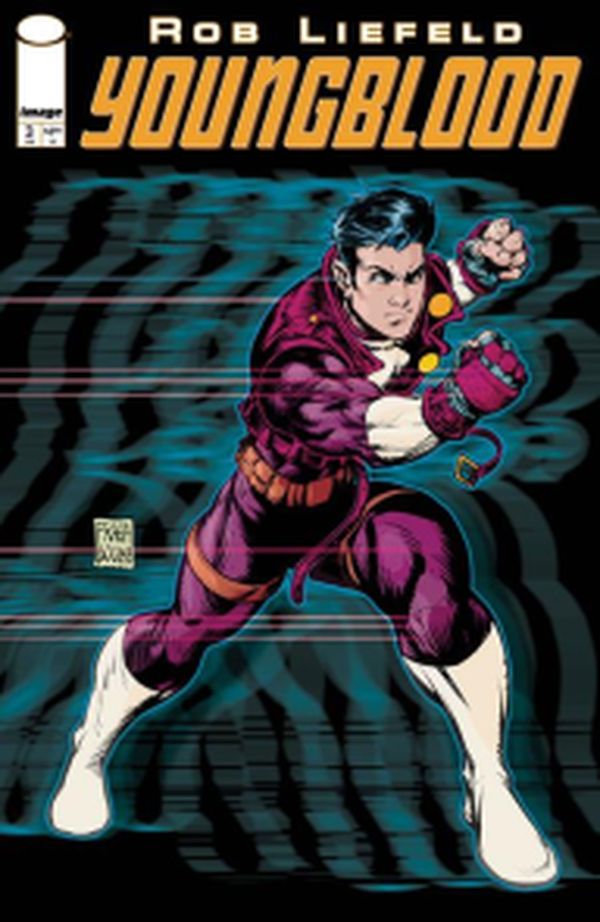
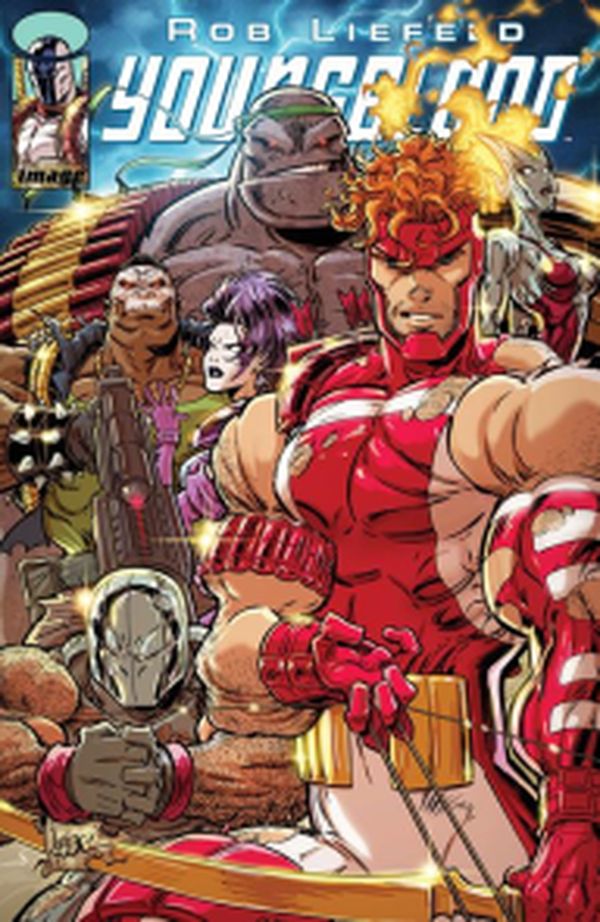
Analysis of YOUNGBLOOD #3:
First Impressions:
Walking away from this issue, I felt genuinely gutted in the best possible way. Liefeld commits to stakes that matter; the team doesn’t win, Supreme family members are brutalized, and our protagonist loses spectacularly to a tyrant who’s built on contempt for human will. The emotional weight lands because the action sequences earn every consequence through meticulous panel-to-panel brutality.
Recap:
In Youngblood #2, Supreme arrives above the Megladon and becomes the central conflict’s third factor, with Xerxes recognizing him as a former ally or lover from another time, literally another planet. Xerxes launches into desperate pleas mixed with threats, attempting to seduce Supreme back into his fold while Supreme rebuffs him, ultimately choosing combat. During this sky-based showdown, Die-Hard unleashes such force against Vandel that the creature is catapulted into Earth’s atmosphere, leaving Vandel to encounter a new threat: the Shepherd and the Keep, cosmic entities demanding submission to their “kingdom of Imperion” with annihilation as the penalty for refusal. Below deck, Chapel discovers the horrifying truth driving Xerxes’ operation as Xerxes conducts mass time displacement, pulling innocent people from Jerusalem circa A.D. 33 into the present to operate his temporal equipment, with the ocean providing necessary coolant for his generators.
Plot Analysis (SPOILERS):
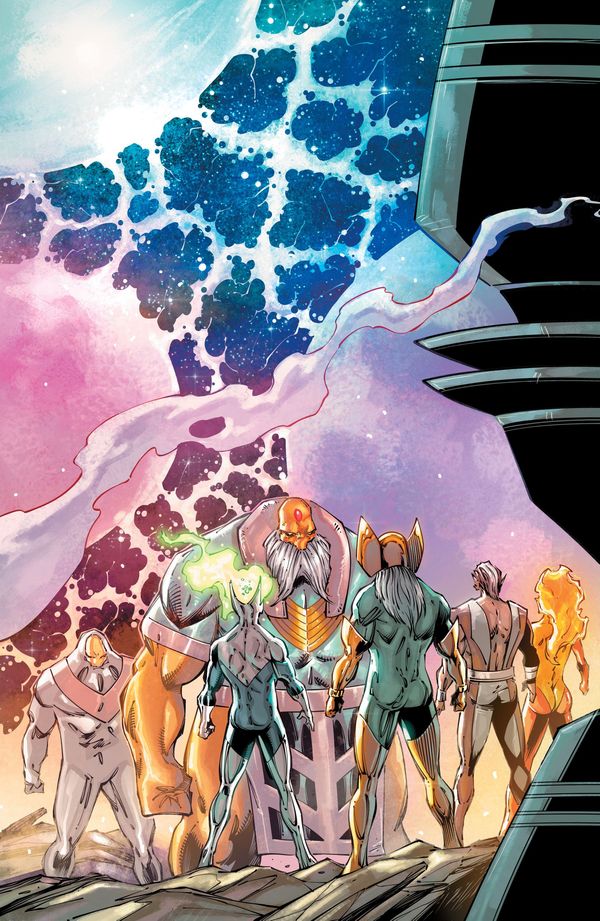
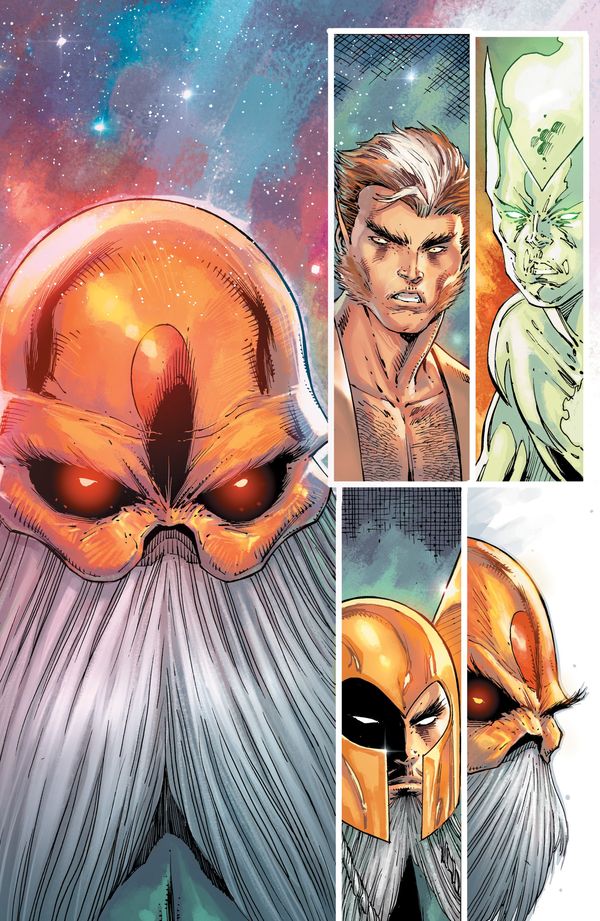
The issue opens in the ruins of Kandria on Katella, where the StarGuard faction of Youngblood negotiates a peace treaty between warring alien civilizations. Cougar, Combat, and Photon work to broker a ceasefire, but the Grand Vizier refuses to accept the terms without territorial restoration and reparations for Acuran attacks. As tensions escalate, the sky fractures with an otherworldly phenomenon that proves catastrophic; The Keep, massive cosmic entities previously defeated, arrive and dismiss the gathered diplomats as insignificant before announcing their true destination: Earth, “the third rock,” as their singular focus. The message chills everyone present because it confirms that surviving one threat does nothing to save the planet.
Cut to the Pacific Ocean, where Badrock awakens mysteriously healed by Neptune and Coral, underwater entities who’ve restored him to peak condition and stronger than before. Badrock immediately demands vengeance against Xerxes, whose ship occupies their waters and endangers Neuport, the kingdom ruled by Roman and Coral. What follows is a brutal extended combat sequence where Badrock, Chapel, and Shaft assault Xerxes with relentless aggression, combining supernatural strength, archery, and firearms in a coordinated assault that should obliterate a normal enemy. Xerxes, however, demonstrates why he terrifies entire worlds; he absorbs punishment, dismisses bullets as “feeble weapons,” and extends one final offer for the team to join him, framing it as salvation rather than surrender.
Die-Hard arrives late to the battle, announcing the Supreme family is barely escaping the ship and that Xerxes is “just the maniac left to deal with.” He engages Xerxes directly with mechanical precision and indomitable will, fighting as if he were engineered specifically for this moment. Xerxes counters by asserting that automatons are “easy fixes” compared to corralling humans, then turns his contempt toward Roman, demanding the king surrender before threatening to pin him to the deepest ocean trench. Die-Hard and Roman’s coordinated assault forces Xerxes into a corner, but Xerxes detonates something, killing Die-Hard and forcing a desperate retreat. Battlestone arrives via satellite communication with evacuation orders, revealing that the satellite can’t hold everyone and forcing an agonizing choice; some heroes will be left behind to fend for themselves while others escape. The issue closes with Battlestone vowing that defeat is temporary, that in darkness they’ll find strength, and that when they return, their strike must be “devastating.” Meanwhile, The Keep broadcasts to all of Earth that humanity’s freedom is over; they now live under The Keep’s sovereignty, and a new age of subjugation has begun.
Story
Liefeld constructs this issue with exceptional momentum that never lets tension drop. The opening negotiation provides crucial world-building and stakes before the threat arrives; this framing choice makes The Keep’s announcement land with legitimate weight because we’ve seen what’s at risk. Dialogue is functional and punchy throughout, albeit a bit stiff, with characters making bold declarations and issuing threats that feel earned rather than posturing.
Xerxes’ repeated dismissal of human efforts as “feeble” and “insignificant” establishes his contempt through repetition without becoming tedious because each rejection raises the stakes for the next assault. The structure pivots smoothly from alien diplomacy to personal combat to cosmic horror, compartmentalizing each sequence while maintaining a unified threat escalation. Pacing accelerates as the issue progresses, moving from measured negotiation to frantic combat to existential dread, creating a climactic sense of cascade that justifies why heroes must abandon the battlefield.
Art
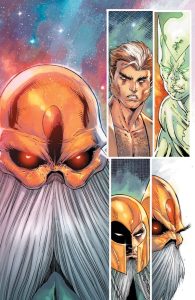
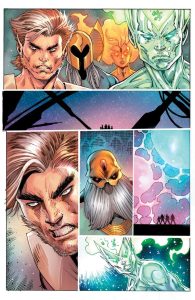
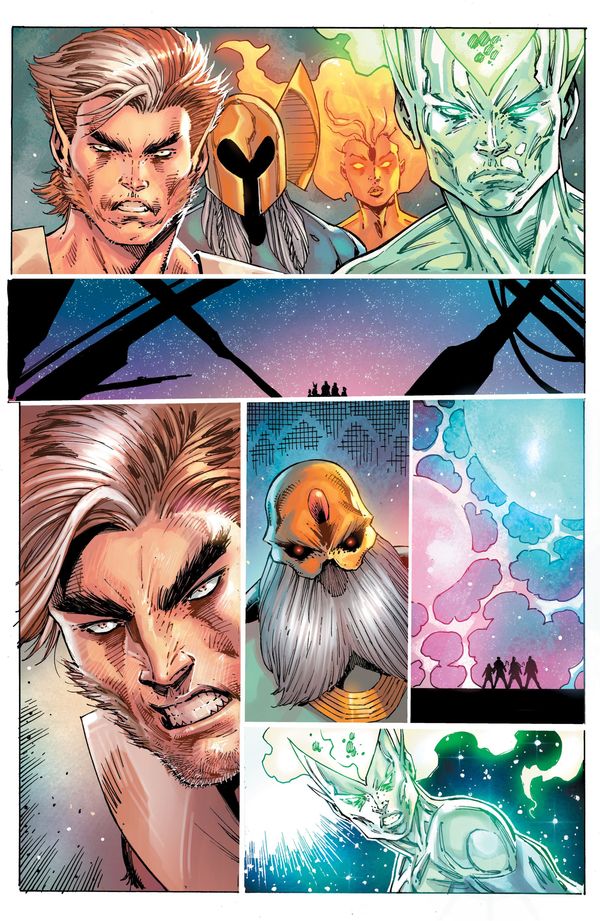
Rodriguez’s color work transforms the Pacific Ocean sequences into a visceral battle arena where reds and flesh tones dominate during combat, then shift to blues and cosmic purples as The Keep’s arrival changes the entire tone. Panel clarity remains strong throughout extended action sequences, with distinct character positioning even during multi-combatant battles where tracking movement could become confusing.
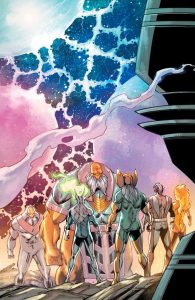
Liefeld’s pencil and ink work emphasizes dynamic physicality; every punch connects with weight, every dodge feels earned, and body language communicates emotional stakes as clearly as dialogue. The cosmic sequence showing The Keep’s arrival uses negative space and scale to communicate their incomprehensibility compared to the small figures reacting to their presence. Composition in the retreat sequences contrasts cramped, desperate interiors of evacuation with wide cosmic vistas, visually representing how outmatched humanity has become and how inadequate escape routes are for this magnitude of threat.
Characters
Badrock’s motivation is crystal clear; he’s been revived specifically to exact vengeance, and his internal monologue about fearing death and wanting to return that fear to Xerxes makes his assault feel personal rather than simply tactical. Chapel and Shaft’s participation in the battle demonstrates team cohesion even as individuals play distinct roles based on skill sets, but the issue doesn’t provide their internal perspectives, limiting emotional investment in their specific arcs.
Xerxes remains consistent as an ideological zealot who views his brutal methods as salvation, never breaking character even as Die-Hard forces him into tactical retreat; his offer of “life” to the team contrasts sharply with his threats, establishing him as someone who genuinely believes he’s merciful.
Battlestone’s command decisions in the evacuation create tension by forcing choices that pit team preservation against individual survival, and his assertion that retreat enables future victory reframes losing as strategic rather than shameful. Die-Hard’s sacrifice lands emotionally because his entire narrative arc centers on being “built for this,” so his final moments fighting Xerxes feel like actualization even in death.
Originality & Concept Execution
The concept of a tyrant so powerful that coordinated superhero assault barely slows him down subverts standard combat expectations where heroes ultimately prevail through teamwork or determination. Xerxes succeeds by weaponizing ideology, offering salvation alongside threats, which creates a villain who can’t be simply overpowered because his danger isn’t purely physical.
The Keep’s arrival simultaneously resolves one conflict (forces Xerxes’ escape) while introducing a larger existential threat, effectively communicating that winning individual battles means nothing if the war itself is unwinnable. This is fresher than standard superhero climaxes because heroes lose decisively, leaving the reader uncertain whether they’ll ever recover or if this defeat is genuinely final. The execution matches the concept perfectly; the issue doesn’t cheat by giving heroes a moral victory or clever solution, it commits to consequences where some team members die, escape is chaotic, and Earth falls under alien occupation before the final page.
Positives
The uncompromising brutality of Xerxes’ characterization stands as this issue’s greatest strength. Rather than making him defeatable through clever tactics or emotional appeals, Liefeld establishes him as a philosophical absolute; Xerxes believes in his mission with such conviction that human lives register as insignificant obstacles rather than meaningful opposition. This makes combat sequences feel genuinely high-stakes because violence won’t solve an ideological problem, yet the team attempts it anyway out of desperation. Rodriguez’s color palette during the ocean sequences heightens emotional investment by using warm, saturated tones that emphasize the brutality of physical contact and blood, then transitioning to cooler cosmic purples when The Keep arrives, signaling the shift from personal conflict to planetary-scale catastrophe.
Badrock’s resurrection and immediate investment in vengeance provides emotional grounding for readers who might otherwise see him as a minor character, giving his assault on Xerxes personal weight that justifies the intensity of each panel. The pacing decisions that move from diplomatic negotiation to personal combat to cosmic horror create a narrative momentum that accelerates naturally rather than feeling artificially rushed, making the final page reveal of Earth’s occupation feel earned rather than arbitrary.
Negatives
Chapel and Shaft’s participation in the climactic battle lacks internal perspective or character-specific moments that would allow readers to understand their emotional stakes or individual arcs, leaving them functionally identical to generic soldiers following orders. While the evacuation sequence communicates Battlestone’s command choices effectively, the issue doesn’t explore the psychological cost of abandoning team members to fend for themselves, missing an opportunity to complicate victory conditions and force readers to question whether escape was genuinely justified.
The Keep’s arrival, while visually striking and thematically appropriate as a larger threat, feels somewhat disconnected from the Xerxes narrative thread; the issue establishes them as an independent faction rather than exploring whether Xerxes anticipated their coming or whether they represent a consequence of his actions. Xerxes’ rapid retreat after Die-Hard’s sacrifice, while tactically sound, undercuts some of the momentum built throughout the combat sequence by removing him from the final panels; readers don’t witness his escape decision or reaction to Die-Hard’s intervention, leaving his characterization incomplete at the issue’s climax.
The issue’s core emotional payoff depends entirely on reader investment in Supreme’s family and the broader Youngblood roster, meaning newcomers may struggle to feel the weight of losses since previous issues haven’t established these characters’ significance with sufficient depth.
Art Samples:
The Scorecard:
Writing Quality (Clarity & Pacing): [2.5/4]
Art Quality (Execution & Synergy): [3.5/4]
Value (Originality & Entertainment): [0.5/2]
Final Thoughts:
(Click this link 👇 to order this comic)
YOUNGBLOOD #3 earns a home in your pull list if you’re invested in watching heroes lose decisively and teams fracture under pressure, particularly in Liefeld’s signature “EXTREME” style. The emotional weight lands precisely because the execution commits fully to consequences. However, if you’re seeking character development that extends beyond ideological conflict or emotional complexity that rivals the action sequences, this issue’s secondary characters feel more like pawns than players.
We hope you found this article interesting. Come back for more reviews, previews, and opinions on comics, and don’t forget to follow us on social media:
If you’re interested in this creator’s works, remember to let your Local Comic Shop know to find more of their work for you. They would appreciate the call, and so would we.
Click here to find your Local Comic Shop: www.ComicShopLocator.com
As an Amazon Associate, we earn revenue from qualifying purchases to help fund this site. Links to Blu-Rays, DVDs, Books, Movies, and more contained in this article are affiliate links. Please consider purchasing if you find something interesting, and thank you for your support.