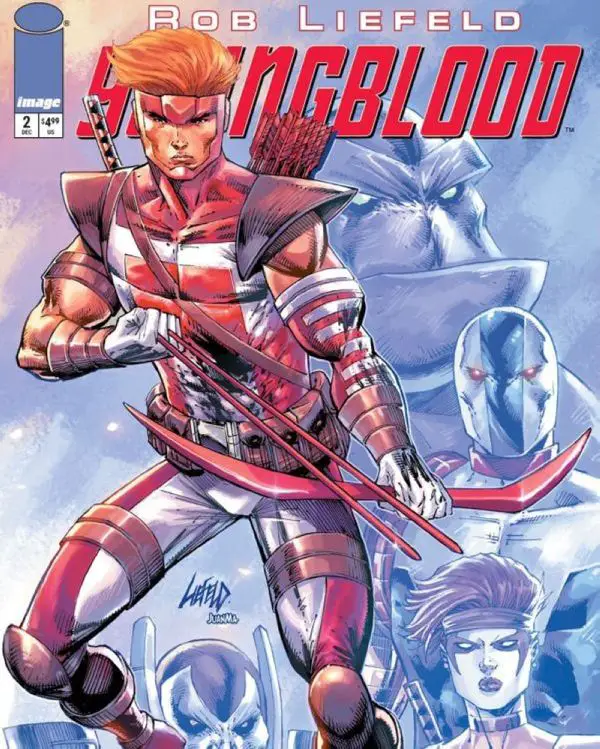
Youngblood #2, by Image Comics on 12/17/25, hurls the team into a chaos multiplier where Supreme shows up to complicate things, Xerxes reveals he’s been time-warping people from ancient Jerusalem, and Badrock wakes up mysteriously healed by ocean deities.
Credits:
- Writer: Rob Liefeld
- Artist: Rob Liefeld, Chance Wolf
- Colorist: Juan Manuel Rodriguez
- Letterer: Rus Wooton
- Cover Artist: Rob Liefeld (cover A)
- Publisher: Image Comics
- Release Date: December 17, 2025
- Comic Rating: Teen
- Cover Price: $4.99
- Page Count: 38
- Format: Single Issue
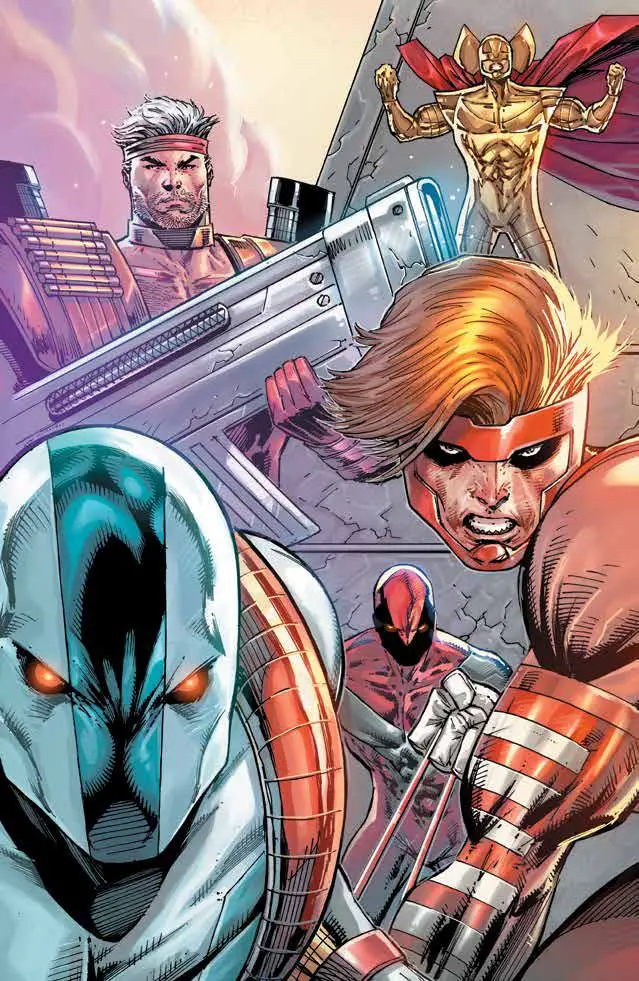
Covers:
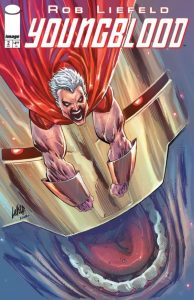
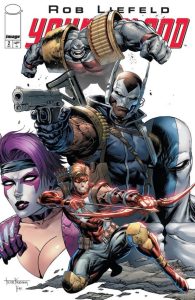
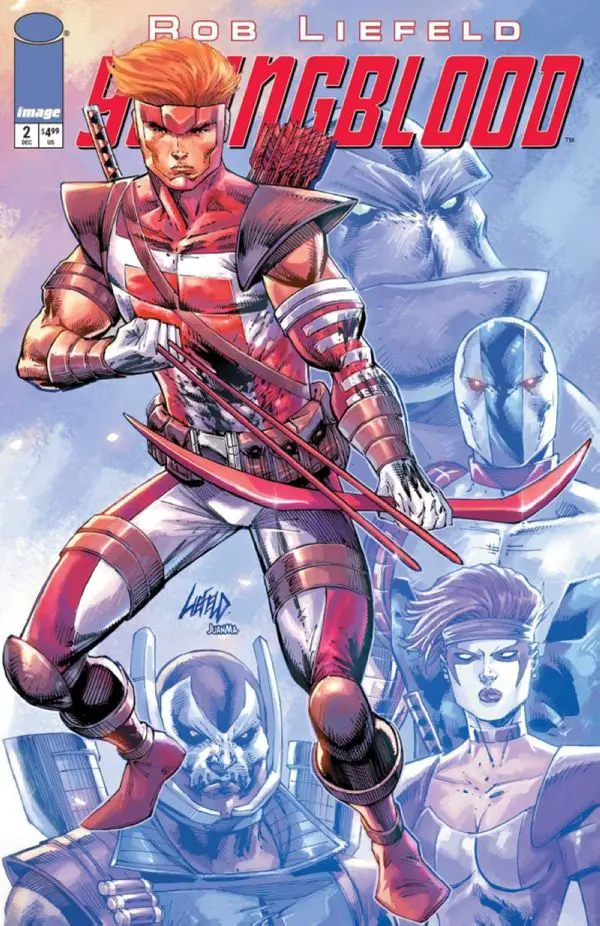
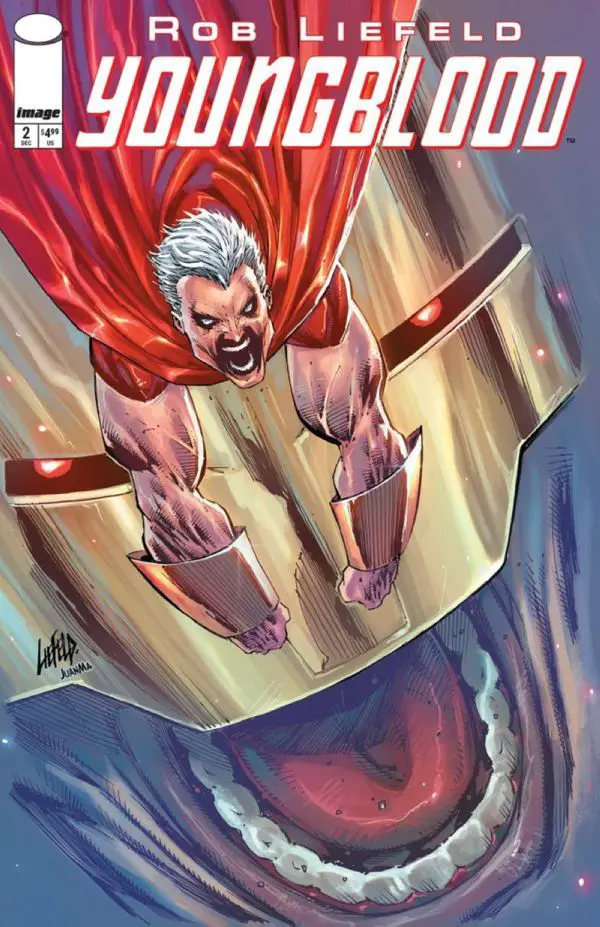
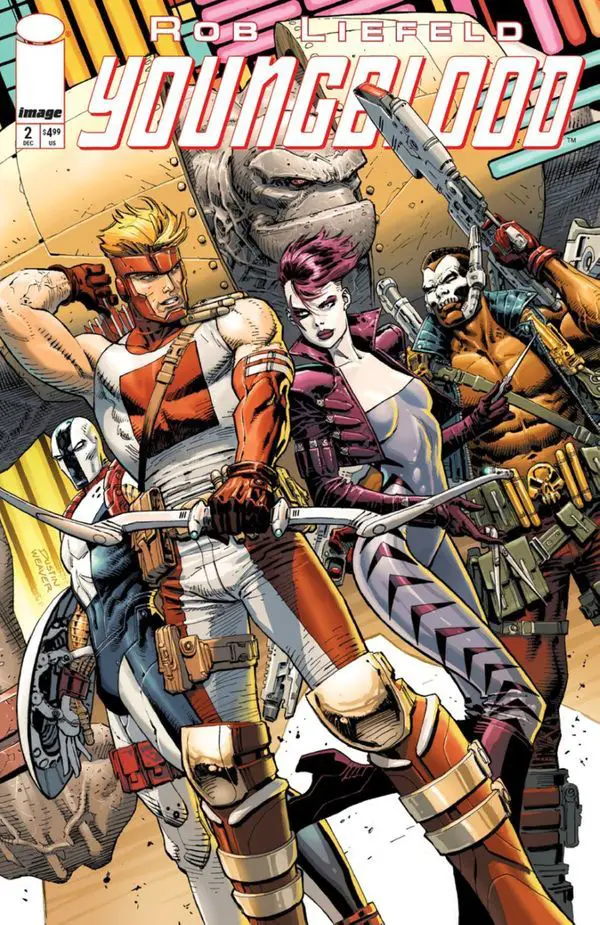
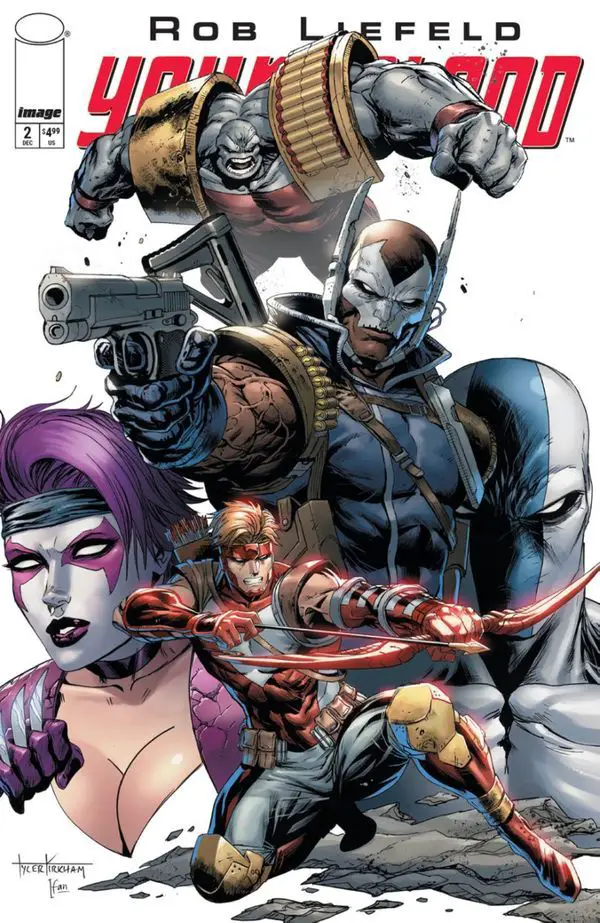
Analysis of YOUNGBLOOD #2:
First Impressions:
The opening immediately signals a tonal shift: Supreme arrives as a wildcard element, transforming a contained team mission into a cosmic-level threat. The energy is there, with high-stakes confrontation and emotional weight underneath the action beats. However, the script jumps fast between locations and characters, demanding readers track multiple threads without breathes to establish connections.
Recap:
Youngblood #1 established Youngblood as a government-sanctioned superhero team deployed against the mysterious mega-yacht “the Megladon” off the Pacific coast, with minimal intel and maximum pressure. The team burst through the vessel with Badrock, Die-Hard, Shaft, Vogue, and Chapel each engaging Xerxes’ cultish forces in separate battles. Badrock clashed with Xerxes directly, Shaft fought a clawed opponent named Vandel, and Die-Hard managed his cyborg capabilities. Most critically, Chapel discovered something below deck that forced a communications blackout, setting up a cliffhanger that left the team’s situation unresolved and Supreme’s involvement completely absent.
Plot Analysis:
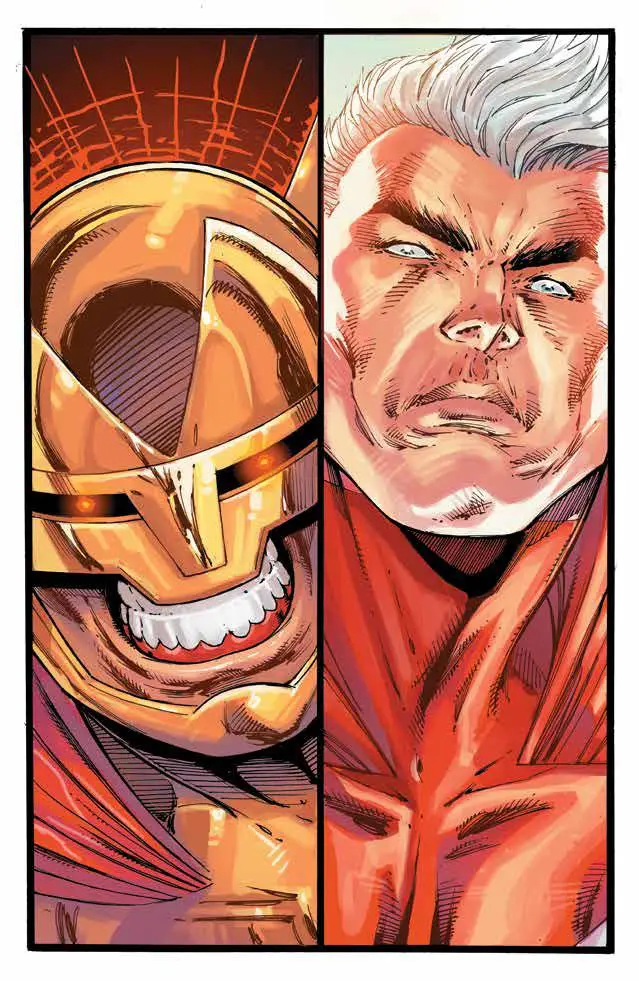
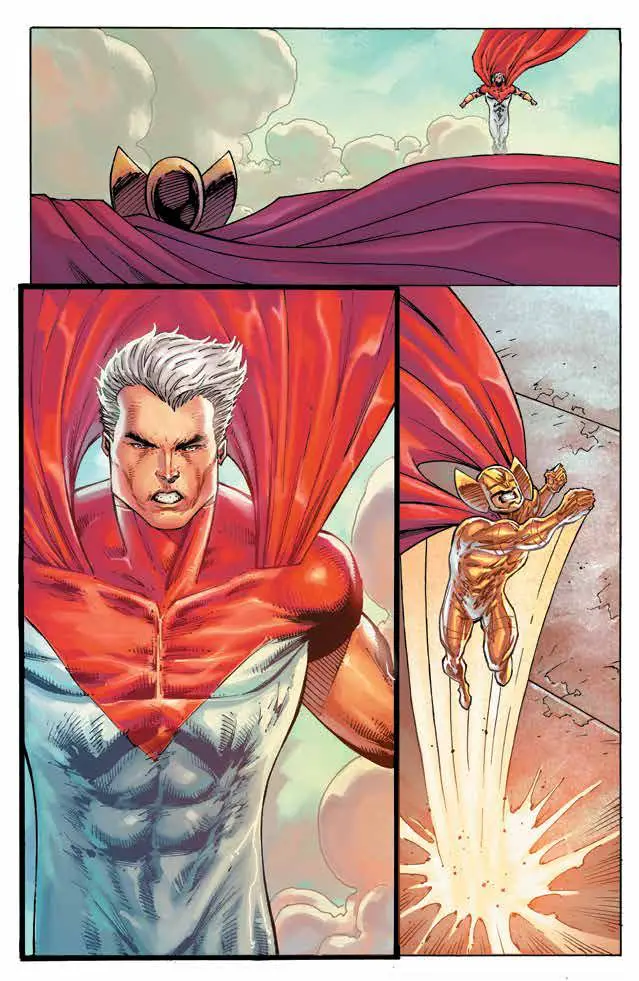
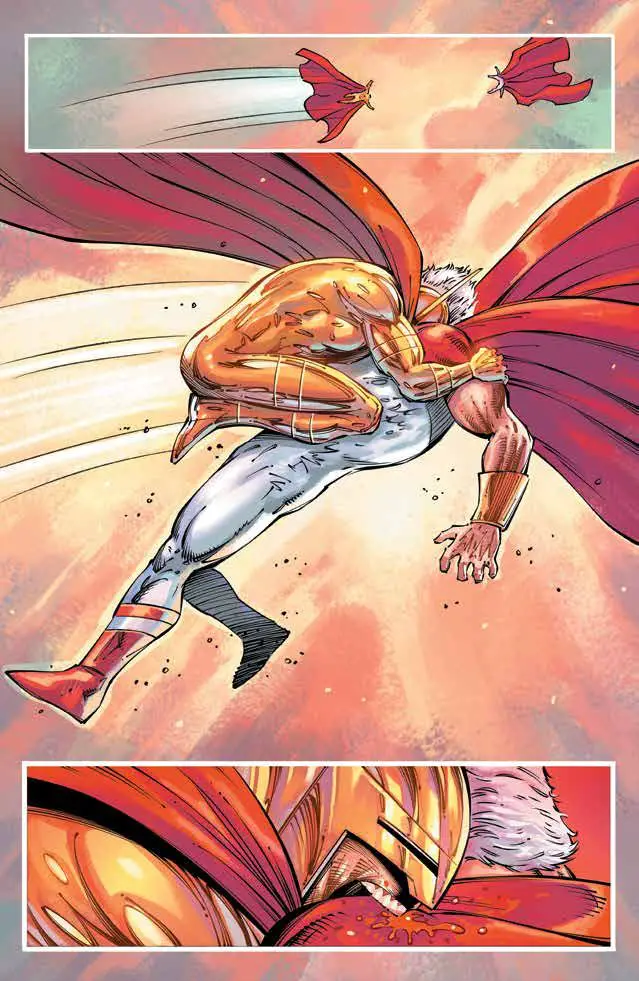
Supreme arrives above the Megladon and immediately becomes the central conflict’s third factor, with Xerxes recognizing him as a former ally or lover from another time, literally another planet. Xerxes launches into desperate pleas mixed with threats, attempting to seduce Supreme back into his fold while Supreme rebuffs him, ultimately choosing combat. During this sky-based showdown, Die-Hard unleashes such force against Vandel that the creature is catapulted into Earth’s atmosphere, leaving Vandel to encounter a new threat: the Shepherd and the Keep, cosmic entities demanding submission to their “kingdom of Imperion” with annihilation as the penalty for refusal.
Below deck, Chapel discovers the horrifying truth driving Xerxes’ operation. Xerxes is conducting mass time displacement, pulling innocent people from Jerusalem circa A.D. 33 into the present, using them to operate his temporal equipment. The mission is an elaborate retreat into the past to reset and repurpose, with the ocean providing necessary coolant for his generators. Chapel encounters a figure called the Colonel, who reveals Xerxes is running a long game strategy against an incoming alien horde, treating this temporal escape as the only viable survival tactic. Meanwhile, Badrock has been mysteriously healed by underwater entities called Neptune and Coral, awakening rejuvenated and stronger than ever, learning Xerxes occupies their waters and endangered Neuport.
Battlestone, watching from Direct Orbital Command, narrates the unraveling crisis as forces mobilize across timelines. The team faces not one threat but cascading layers: Xerxes’ time manipulation, the incoming “Day of the Destroyer,” Supreme’s uncertain allegiance, the Keeper’s cosmic invasion, and Badrock’s unexpected reemergence. The issue concludes with the promise that stopping Xerxes alone won’t solve the problem; stopping him is just the first domino in a much larger conflict requiring everything humanity can throw at it.
Story
The pacing accelerates relentlessly, jumping between sky battles, ship interiors, ocean depths, and orbital viewpoints without transition breathing room. Readers must work harder to orient themselves between each location shift. Dialogue carries more weight than issue one, particularly the exchange between Xerxes and Supreme which drips with history and emotional stakes. Chapel and the Colonel’s conversation grounds the plot’s larger mechanism in character motivation, explaining not just what’s happening but why Xerxes would attempt something so cosmically reckless.
However, the structure still sacrifices clarity for scope; introducing the Shepherd, the Keep, and the Destroyer threat simultaneously creates information overload rather than compelling mystery. The time displacement revelation is the issue’s strongest narrative moment, transforming Xerxes from generic bad guy into someone with an actual philosophical framework for his actions, even if readers disagree with his methods.
Art
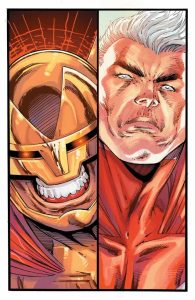
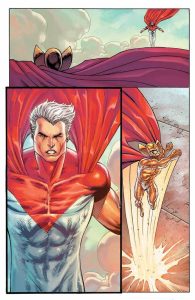
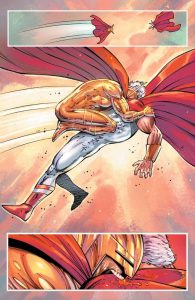
Liefeld’s line work remains dynamic and muscular, with each character occupying distinct physical space and moving with purpose. The Supreme versus Xerxes confrontation uses vertical composition effectively, with Supreme hovering above and Xerxes’ forces below creating visual hierarchy. Character expressions carry weight; Xerxes’ desperation and Supreme’s contempt read clearly even in dense panel layouts.
However, backgrounds remain shadowy and indistinct, particularly during the underwater sequences where Coral and Neptune should evoke an alien oceanic environment but instead feel like dark silhouettes. Rodriguez’s color work is functional but flat, missing opportunities to distinguish the different spatial zones; the sky battle, the ship interior, and the ocean depths all blend into a similar color palette rather than establishing visual separation. Composition occasionally prioritizes posing over legibility, with figures overlapping in ways that obscure who’s fighting whom during the Badrock awakening sequence.
Characters
Xerxes finally moves beyond one-note villainy. His recognition of Supreme, the plea for reunion, and the subsequent rage when rejected paint him as someone operating from loss and desperation rather than simple megalomania. This is character work. Supreme’s refusal, while firm, is interesting precisely because his dismissal includes mercy, offering exile; Supreme isn’t executing a threat, he’s refusing to join it. Chapel’s determination and the Colonel’s tactical explanation show team members with actual strategic thinking rather than just punching harder.
However, Die-Hard, Shaft, and Vogue remain largely absent or reactive, reducing them to set pieces in a larger conflict. Badrock’s awakening by oceanic entities contradicts his desperation at the end of issue one but makes narrative sense if readers accept off-page healing; the issue doesn’t earn this development through on-page moments. Battlestone’s narration positions him as a cosmic accountant, neutral but observant, though his role remains unclear and his sudden introduction feels like world-building shorthand rather than character establishment.
Originality & Concept Execution
Time displacement as a plot device isn’t new, but using it as Xerxes’ survival strategy against an unstoppable cosmic threat reframes the concept. Rather than time travel for personal gain, Xerxes is sacrificing others for species-level survival, creating moral complexity instead of simple right and wrong. The Destroyer, the Keep, and the Shepherd layer mythology and sci-fi cosmology into what could have been a straightforward superhero brawl.
The execution struggles because readers haven’t earned investment in these threats yet; they arrive suddenly, with minimal setup, demanding gravity that hasn’t been established. The concept of a team discovering their mission isn’t the problem but part of a much larger existential threat is strong. The execution delivers this idea but hasn’t made readers care about the larger stakes yet beyond spectacle.
Positives
Youngblood #2 finally establishes why Xerxes matters beyond smashing things. The time displacement revelation transforms the plot from “stop the bad guy attacking the boat” into a tragic choice between survival and morality, giving the conflict actual stakes rather than abstract villainy. Supreme’s arrival escalates threat level credibly, and his interaction with Xerxes drips with history and emotional weight, suggesting deep narrative potential.
Badrock’s healing through oceanic intervention, while initially jarring, opens interesting world-building possibilities for Neuport’s role in the larger conflict. The issue’s final narration from Battlestone effectively communicates that the team’s challenges multiply geometrically, creating reader investment in what comes next. For readers who want escalating stakes and cosmic scope mixed with street-level team dynamics, this issue delivers genuine promise that the series might develop beyond surface spectacle.
Negatives
The issue prioritizes introducing threats over integrating them into the narrative successfully. The Shepherd, the Keep, Imperion, and the Destroyer all arrive with minimal context, demanding readers care about a cosmic invasion they haven’t witnessed. Vandel’s encounter with these entities happens off-page or in the atmospheric edges, leaving his fate unclear and reducing the emotional impact of Die-Hard’s legendary throw. Background clarity continues deteriorating, particularly during the underwater sequences where Badrock’s awakening could convey wonder or horror but instead reads as visual noise.
The dialogue sometimes sacrifices naturalism for exposition, especially in Chapel’s discovery scene where characters explain time displacement mechanics in stiff, technical language rather than organic conversation. Vogue and Shaft remain virtually absent despite their presence on the mission, making the “team” feel like scattered individuals rather than a coordinated unit. The tonal shift from issue one’s straightforward action to issue two’s cosmic dread happens abruptly, without enough foundation for readers to understand why they should accept these new stakes as organic rather than convenient plot escalation.
Art Samples:

The Scorecard:
Writing Quality (Clarity & Pacing): [1.5/4]
Art Quality (Execution & Synergy): [3/4]
Value (Originality & Entertainment): [1/2]
Final Thoughts:
(Click this link 👇 to order this comic)
YOUNGBLOOD #2 operates with genuine ambition, revealing its villain as something more complex than issue one suggested and escalating the threat level beyond team versus boat. However, it’s still fumbling the basics. Readers jumping in cold won’t understand why these cosmic entities matter, Xerxes’ motivations work better than his methods are explained, and the art still struggles to make dense action sequences communicate clearly. The foundation for something engaging is here, but the comic hasn’t yet earned the cosmic stakes it’s demanding readers accept.
We hope you found this article interesting. Come back for more reviews, previews, and opinions on comics, and don’t forget to follow us on social media:
If you’re interested in this creator’s works, remember to let your Local Comic Shop know to find more of their work for you. They would appreciate the call, and so would we.
Click here to find your Local Comic Shop: www.ComicShopLocator.com
As an Amazon Associate, we earn revenue from qualifying purchases to help fund this site. Links to Blu-Rays, DVDs, Books, Movies, and more contained in this article are affiliate links. Please consider purchasing if you find something interesting, and thank you for your support.