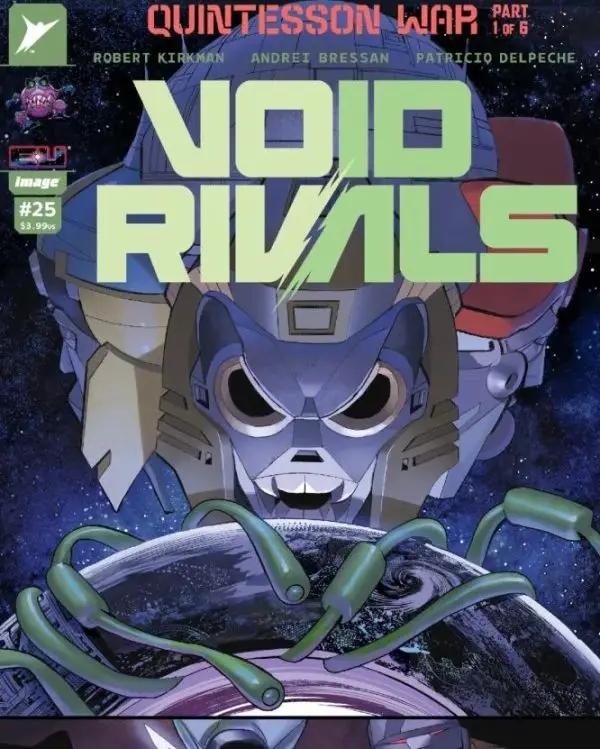
Void Rivals #25, by Image Comics 12/24/25, barrels forward with the Quintesson invasion while the comic book universe pivots toward its next big crisis.
Credits:
- Writer: Robert Kirkman
- Artist: Andrei Bressan
- Colorist: Patricio Delpeche
- Letterer: Rus Wooton
- Cover Artist: Lorenzo De Felici (cover A)
- Publisher: Image Comics
- Release Date: December 24, 2025
- Comic Rating: Teen
- Cover Price: $3.99
- Page Count: 32
- Format: Single Issue
Covers:
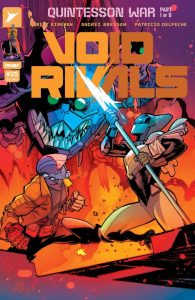
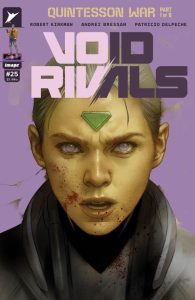
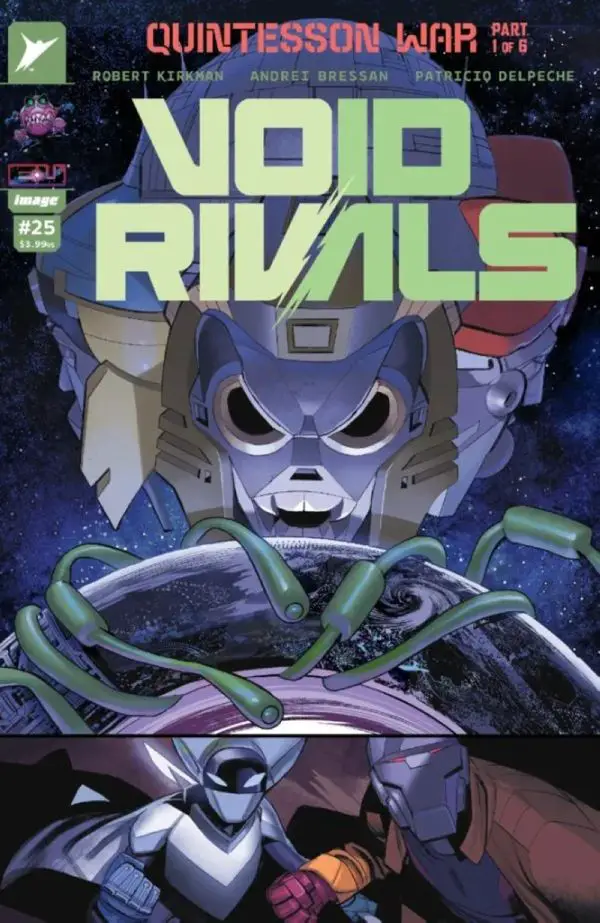
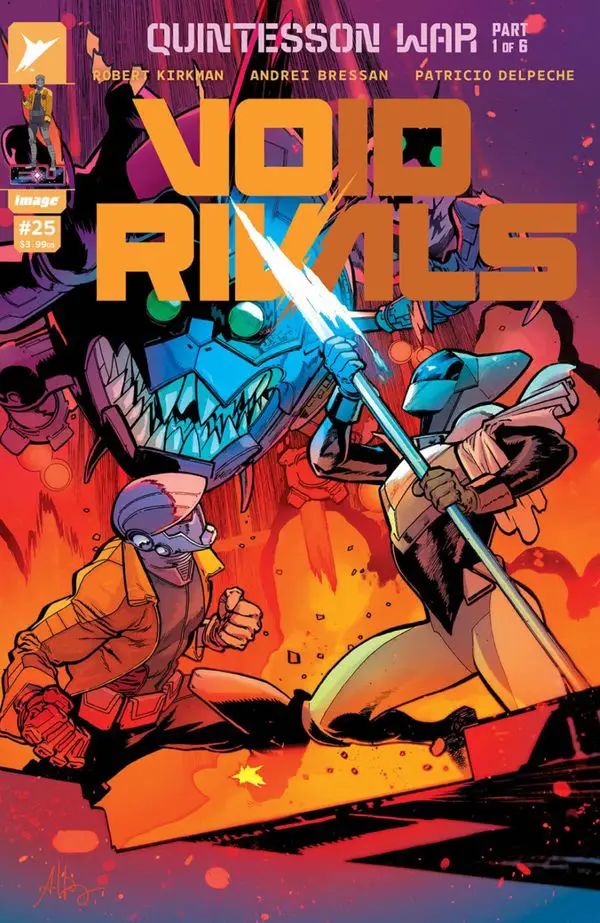
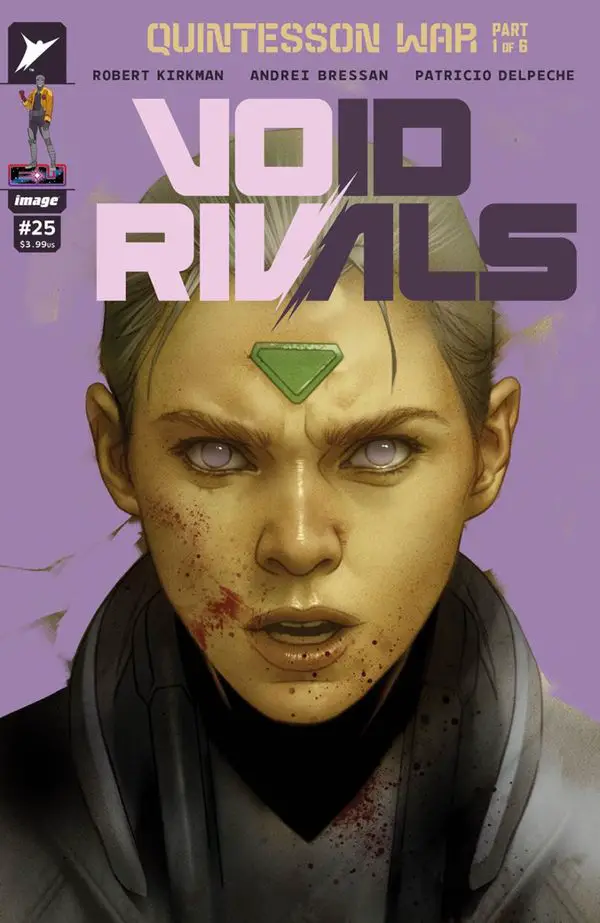
Analysis of VOID RIVALS #25:
First Impressions:
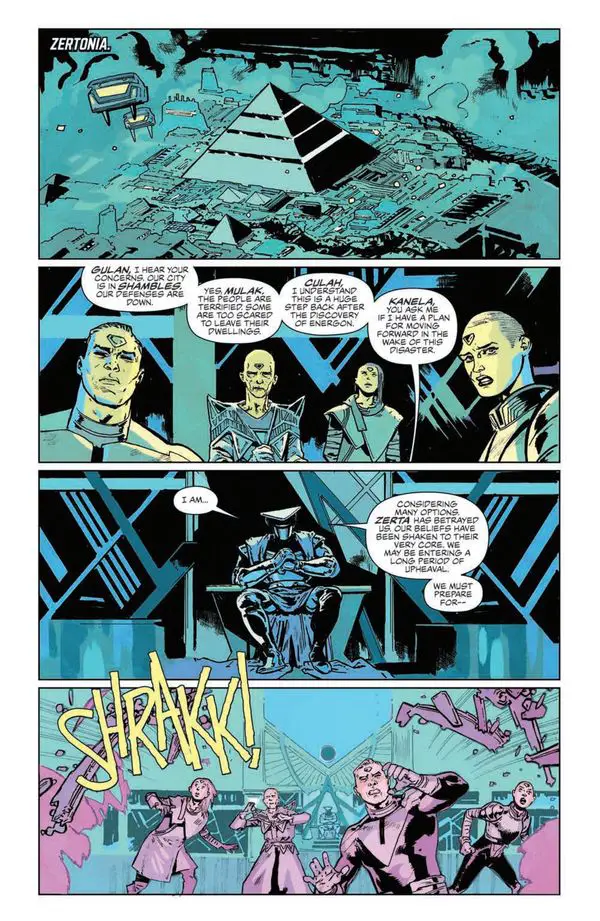
The opening pages hit hard with the aftermath of Zerta’s betrayal rippling through Zertonian society. You can feel the institutional panic as Mulak, Galan, and their leaders grapple with crumbling defenses and terrified citizens. The immediate gut reaction is one of claustrophobic despair, like watching a civilization in freefall, and the comic doesn’t waste time getting you invested in that emotional chaos. The tension is real and earned, pulling you into the world’s upheaval before anything else happens.
Recap:
Last issue left Zertonia reeling. Solila, who orchestrated betrayal for Zerta’s sake, lost everything, stripped of titles and power and tossed into the Temple of Zerta’s Light under Mistress Vil’s supervision. Meanwhile, Darak earned battlefield respect, and tentative peace talks flickered between the Agorrians and Zertonians. Skuxxoid’s rebellion kicked off as he and his fellow “divisioned” recruits rose up against their controller, and the Quintessons were quietly plotting in the shadows, watching and waiting for their chance to move.
Plot Analysis:
The chaos erupts immediately as Zertonian leaders panic over their civilization’s collapse. Zalilak, the Premier, gets caught in street violence when citizens rage about the Zerta betrayal, and the dialogue crackles with raw emotion as characters scream accusations at each other. Proximus complains that Zerta’s voice still echoes in his head, a haunting detail that shows how deeply the false goddess infected their society. The Zertonian government is fracturing in real time, and no one has answers. Meanwhile, a massive disruption shakes the Temple of Zerta’s Light, where Solila sits imprisoned. A Handroid suggests freeing her arm from the restraints to pick locks, and Solila agrees, though her face remains hidden from us. AZerta’s disembodied voice returns and tells Solila she’ll be given a chance to “serve one final time,” hinting at something bigger moving behind the scenes.
On the Agorrian side, things are chaotic too. Darak wakes up to emergency sirens and joins the pilots at the military base, where Grand General Dukan struts around demanding medals for his battlefield heroics. Minister Dulin gets word that unknown objects are approaching the Sacred Ring from Zertonian space, having somehow evaded detection. Darak and his pilot crew scramble to intercept, and as they close in, something massive appears out of nowhere and picks off one of their own, Garad, in a single devastating shot. The implications are clear: this isn’t another skirmish. This is an invasion.
The tone shifts when Darak realizes the threat isn’t from Zertonia but something far worse. Back in Agorria, the Handroid who serves alongside Darak has a philosophical conversation with him about existence and consciousness, questioning whether it truly “lives.” The dialogue is surprisingly touching for a droid, and Darak’s response, affirming the Handroid’s right to exist and want to remain active, feels like a genuine moment of connection in an otherwise frantic issue. Darak even cracks a joke about keeping the Handroid around to boss it around, and the Handroid accepts this, their bond strengthened. But the respite is short, and pilot alerts pull Darak back into action as the invasion accelerates.
Story
Robert Kirkman moves the plot at breakneck speed, juggling three major locations and multiple subplots without letting any single thread bog down. The opening sequence in Zertonia is dialogue heavy but punchy, with characters trading emotional accusations that reveal both the scale of the betrayal and the fractured morale. The conversation between Darak and the Handroid is the issue’s emotional anchor, grounding the cosmic conflict in questions of identity and consciousness. The writing balances political chaos, military action, and philosophical depth without feeling scattered. One minor quibble is that some character names (Mulak, Galan, Kanela, Proximus, Kromi) blend together in the opening sequence, and if you’re not deep in the series, you might struggle to track who’s who among the Zertonian leadership. The pacing accelerates perfectly toward the invasion’s reveal, building dread with each page turn.
Art
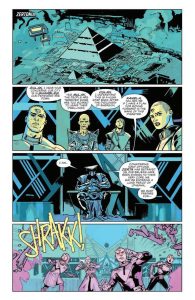
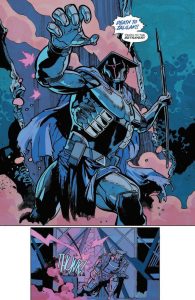
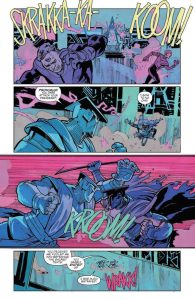
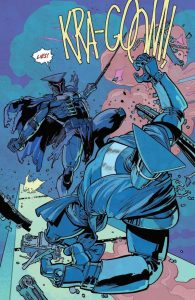
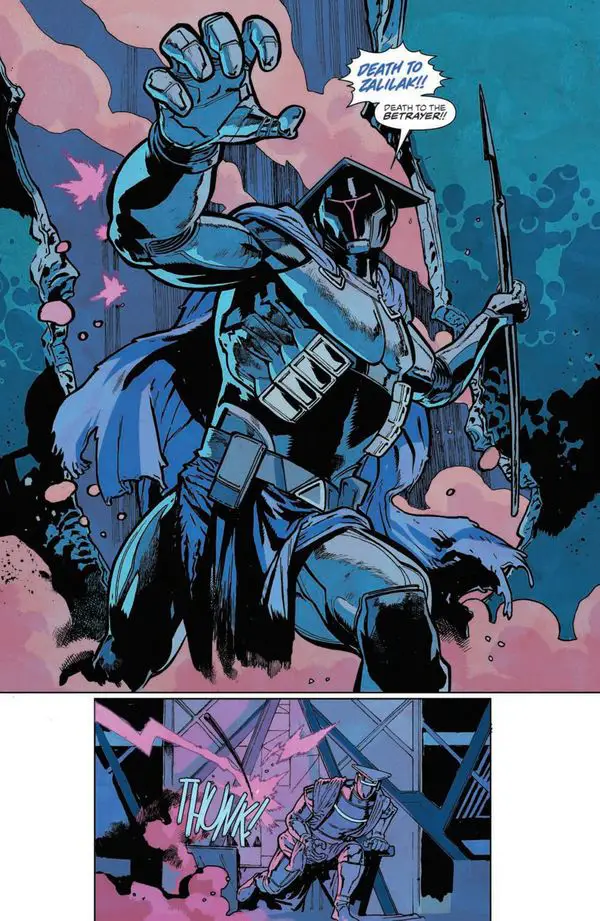
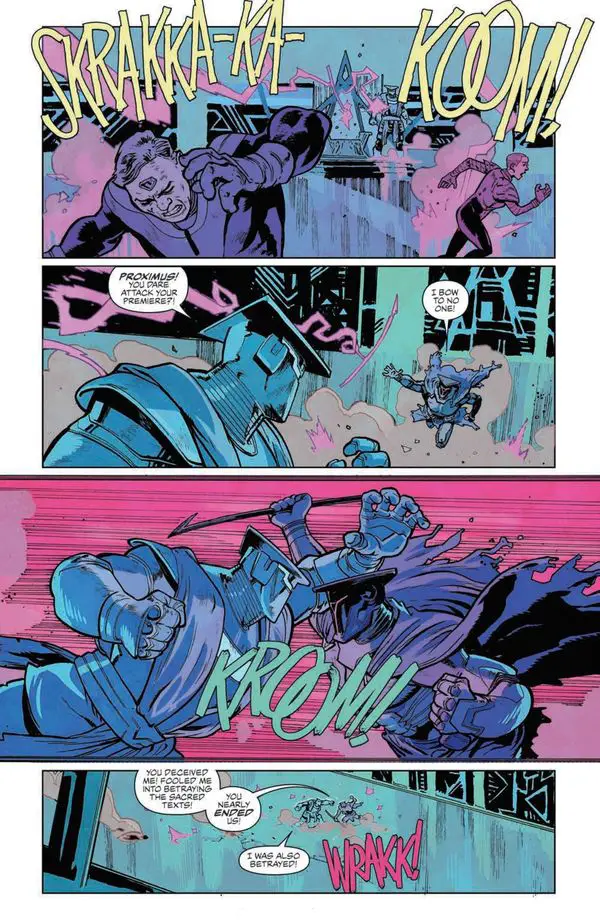
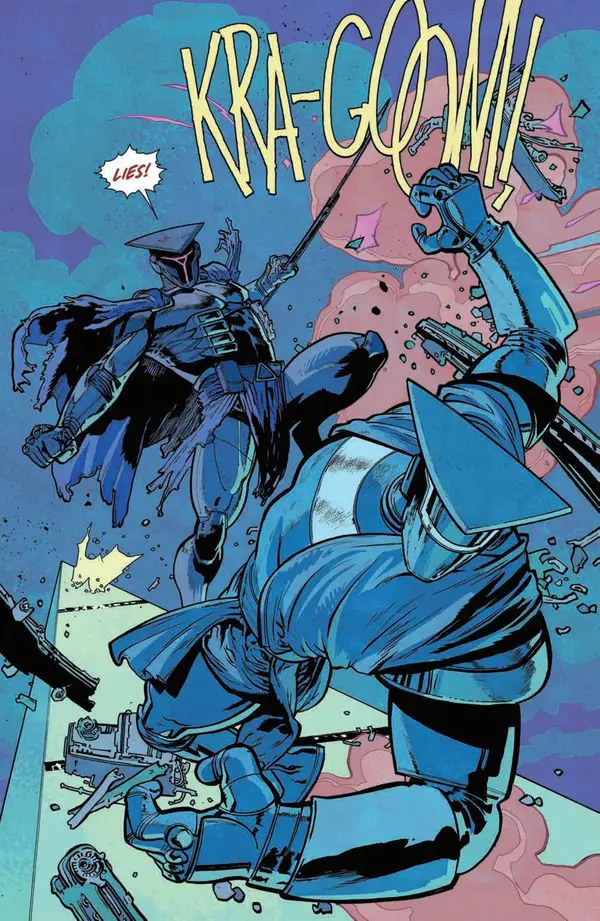
Andrei Bressan’s artwork is kinetic and visually clear, with strong panel layouts that guide your eye across the page without confusion. The Zertonian sequence relies on wide shots of crowded spaces and close-ups of anguished faces, effectively conveying institutional collapse.
Colors by Patricio Delpeche range from cool blues in the governmental scenes to warm, oppressive tones in the Temple, creating distinct emotional spaces. The action sequence where the Quintesson vessel destroys Garad is explosive and genuinely shocking, with good use of negative space to emphasize the sudden violence. Character expressions are readable, and Darak’s Handroid has enough visual personality despite being metallic and mechanical. The overall visual mood swings from political desperation to military urgency to philosophical intimacy, and the art supports each shift cleanly.
Characters
Darak continues his arc from reluctant pilot to thoughtful leader, and his willingness to affirm the Handroid’s consciousness shows growth beyond combat heroics. The Handroid itself gains unexpected depth through its existential struggle, making it far more than a plot device. Solila’s absence is conspicuous, and her implied future role suggests character movement we haven’t yet seen play out.
The Zertonian leadership’s panic feels earned given last issue’s betrayal, though individual motivations blur slightly due to the number of characters introduced in rapid succession. Darak’s father, Dulin, appears briefly and with his typical bluster, remaining consistent with his prior characterization. The weight of responsibility settles on multiple characters at once, making the stakes feel personal rather than abstract.
Originality & Concept Execution
The premise is a straightforward invasion narrative, but the comic executes it by layering political fallout, philosophical questioning, and military crisis simultaneously. The Handroid’s existential dialogue is a standout, offering thematic depth that superhero comics rarely attempt. Introducing an external threat (the Quintessons) to force former enemies into cooperation is a familiar beat, but the comic sells it by making the internal consequences of the prior arc still painfully fresh. The idea that consciousness and personhood don’t require organic biology is not entirely fresh, but Kirkman handles it with sincerity rather than cynicism.
Positives
The Handroid sequence is phenomenal. It transforms what could be a throwaway character into an emotionally resonant reflection on identity and existence. Darak’s reassurance that the Handroid’s desire to “live” counts as evidence that it is alive is unexpectedly moving and speaks to the comic’s willingness to ground cosmic stakes in genuine human (or android) connection.
The art remains razor-sharp and expressive, making even crowd scenes feel dynamic and purposeful. The pacing is brisk without feeling rushed, giving each location and subplot room to breathe before cutting to the next crisis. The invasion reveal lands with real impact, undercutting political restoration hopes with an external doomsday scenario that forces uncomfortable alliances.
Negatives
The Zertonian political sequence, while emotionally charged, can feel crowded with minor characters who aren’t yet distinctive enough to stand out individually. New readers or those who missed previous issues will struggle to care about Proximus, Zalilak, and Kra-Co’s specific grievances when they’re introduced in rapid emotional outbursts. Solila’s imprisonment feels like a setup waiting for payoff rather than a fully developed subplot in this issue, leaving her storyline feeling incomplete.
The cliffhanger surrounding Solila’s re-recruitment and why is intriguing but also a bit manipulative, designed to pull you into the next issue without answering the questions raised here. Garad’s death, while visually shocking, happens so fast that you don’t have time to process who he is before he’s gone, diminishing the emotional weight that likely should land harder.
Art Samples:
The Scorecard:
Writing Quality (Clarity, Pacing): [2.5/4]
Art Quality (Execution, Synergy): [3/4]
Value (Originality, Entertainment): [1.5/2]
Final Thoughts:
(Click this link 👇 to order this comic)
VOID RIVALS #25 is a solid setup issue that trades character breathing room for plot momentum, and for the most part, the trade-off works. The Handroid conversation alone justifies the price of admission, offering philosophical meat alongside the cosmic action. The invasion lands as a genuine threat, and the artwork maintains the series’ consistently high visual standard. What holds it back from excellence is the crowded cast of Zertonian characters who blur together and the sense that several subplots are merely parking themselves on this issue’s runway before launching elsewhere.
We hope you found this article interesting. Come back for more reviews, previews, and opinions on comics, and don’t forget to follow us on social media:
If you’re interested in this creator’s works, remember to let your Local Comic Shop know to find more of their work for you. They would appreciate the call, and so would we.
Click here to find your Local Comic Shop: www.ComicShopLocator.com
As an Amazon Associate, we earn revenue from qualifying purchases to help fund this site. Links to Blu-Rays, DVDs, Books, Movies, and more contained in this article are affiliate links. Please consider purchasing if you find something interesting, and thank you for your support.