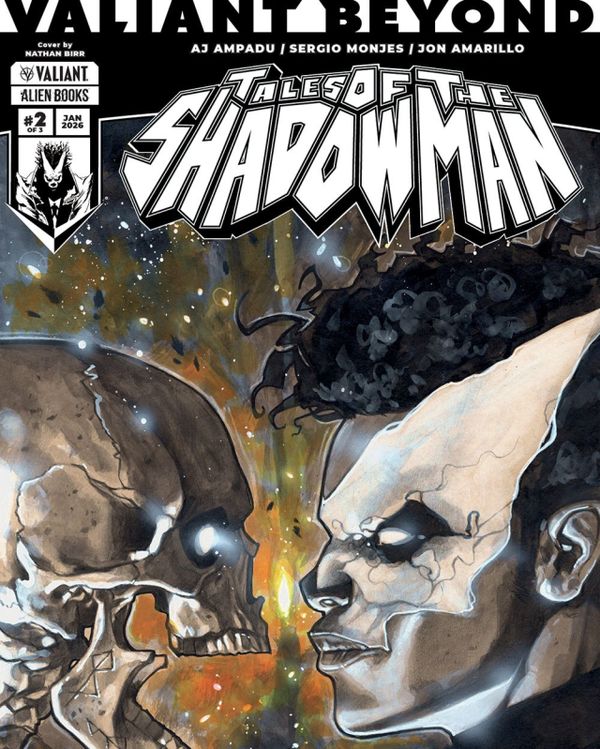
Valiant Beyond: Tales of the Shadowman #5, by Alien Books & Valiant Comics on 1/28/26, imagines what happens when a werewolf detective finally admits he is dying, and the only shadow willing to listen is cursed the same way he is?
Credits:
- Writer: AJ Ampadu
- Artist: Sergio Monjes
- Colorist: Jon Amarillo, Ludwig Olimba
- Letterer: Camila Jorge
- Cover Artist: Nathan Birr (cover A)
- Publisher: Alien Books, Valiant Comics
- Release Date: January 28, 2026
- Comic Rating: Mature
- Cover Price: $4.99
- Page Count: 32
- Format: Single Issue
Covers:
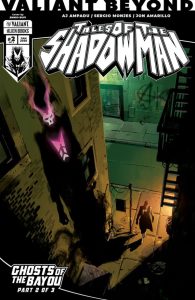
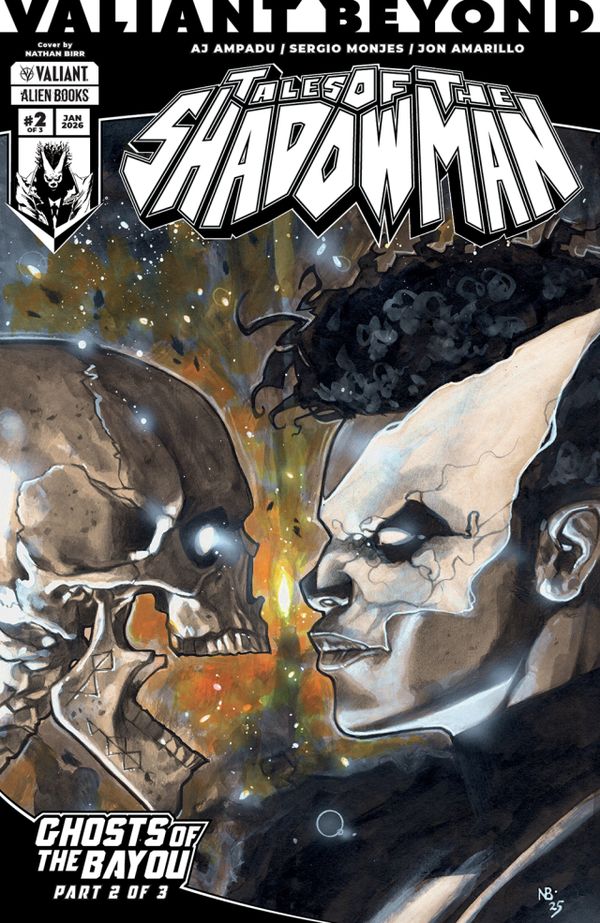
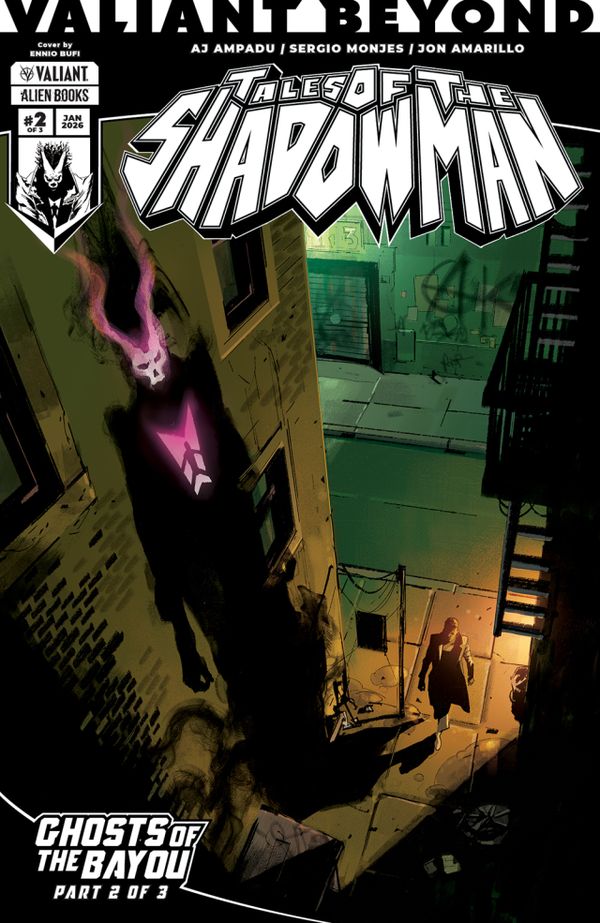
Analysis of VALIANT BEYOND: TALES OF THE SHADOWMAN #5:
First Impressions:
Walking into this issue expecting another romp through the Deadside with Jolie and Uncle Sami meant getting blindsided by a complete tonal pivot toward the Glass City and Detective St. Brown’s personal hell. The comic shifts its weight so hard that it takes a few pages to realize the tribunal arc and the werewolf backstory are the real meat of this chapter, not set-dressing. That rebalance actually works because the emotional stakes land sharper than any monster hunt could, and the script sticks the landing on what it is trying to do, which is examine what people sacrifice to stay human when the beast is written into their bones.
Recap:
Previously in Valiant Beyond: Tales of the Shadowman #4, an old woman named Maman Jolie du Sang hid in the shadows while the Bayou Cannibal butchered a victim in the Deadside swamps, paralyzed by fear and guilt. The Mayor of Shambhala pushed her to act instead of rot, and Jolie summoned Shadowman to hunt Uncle Sami, a killer blessed by the loa of doubt so that everyone who sees him forgets the encounter. They trapped him with powders and a veve of Papa Legba that pinned his escape routes, and Jolie herself struck the killing blow that bound him to one path and one memory. When Shadowman offered payment for his aid, Jolie chose to become a living shadow between worlds, cursed to watch existence from the dark and eternally unable to hide from what she had failed to prevent. That sacrifice set the stage for a werewolf reckoning to come.
Plot Analysis (SPOILERS):
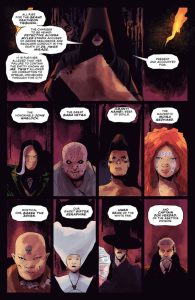
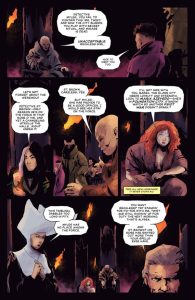
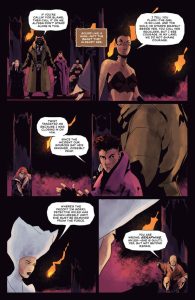
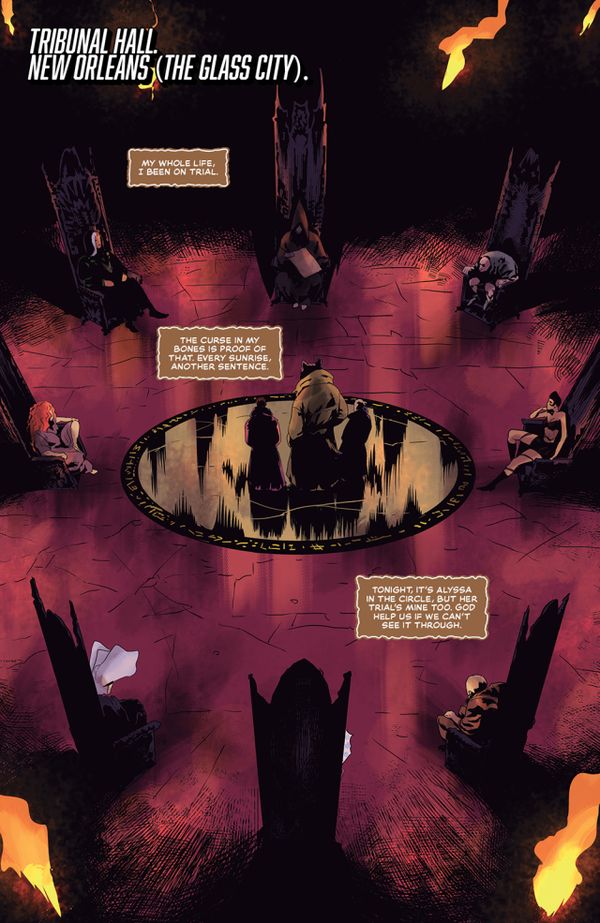
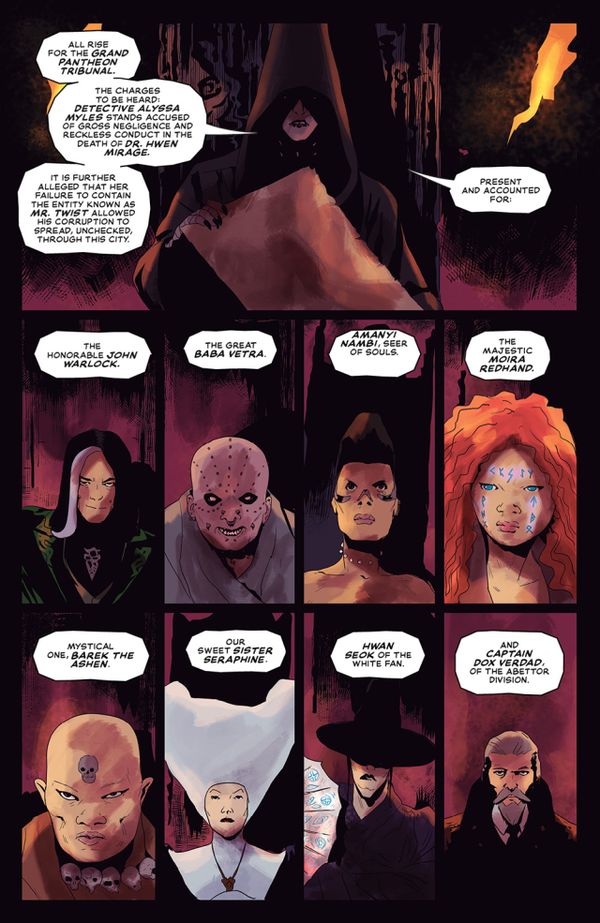
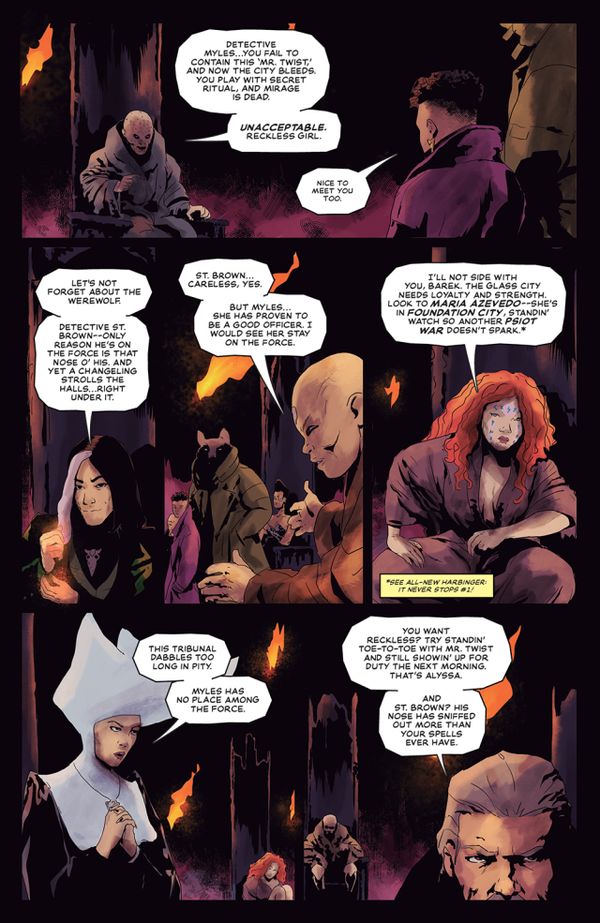
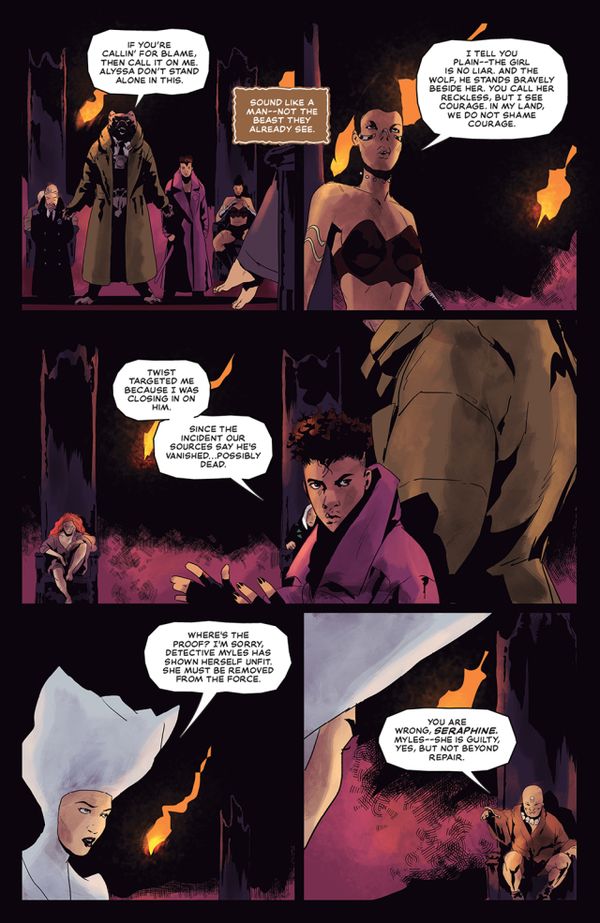
The issue opens in Tribunal Hall where Detective Alyssa Myles stands accused of gross negligence in the death of Dr. Hwen Mirage and failing to contain the entity known as Mr. Twist. Seven members of the Grand Pantheon debate her fitness for duty, with some calling for her removal and others defending her courage under impossible circumstances. After careful deliberation the Tribunal votes to reinstate her license to magick and her position in the Abettors Division, though the Honorable John Warlock adds a cutting remark about her doing better next time a serial killer comes hunting. That same night, Myles visits her partner Detective St. Brown at his apartment and asks him bluntly what he wants from the Shadowman, because he stole an artifact from evidence and performed forbidden magic to make the call.
St. Brown breaks down his entire origin story for Maman Jolie, who answers the summons instead of Bosou Koblamin himself. He was bitten by the Night Howler on the Yorkshire Moors as a child, killed his mother, and survived when she did not. His father Aziza, a mage from Benin, recognized the curse at once: a bite under a blood moon means no cure and no mercy, only a slow transformation into a beast. After the Psiot Wars made England hostile to witches and mages, the family fled to the Glass City aboard a ship full of displaced magical folk, where St. Brown met a mambo who promised to start a band and never follow rules. His father’s sickness worsened as the curse drained life from anyone bound to him genetically, and doctors confirmed the truth; the Night Howler was an ancient lycan, and the curse burned hot enough to spill into his bloodline.
St. Brown joined the Abettors when Captain Verdad saw use in his curse, letting him sniff out spelled money and cursed objects. He met Alyssa Myles, who did not flinch at what he was, and they became partners. Now his father is dying from the genetic drain, and he just wants to be a man long enough to say goodbye instead of a beast that has already cost his family everything. When Shadowman finally arrives, St. Brown begs him to cure the curse or at least suppress it long enough for a final moment of clarity. Shadowman explains he cannot remove the curse, only interrupt it while his scythe rests in the victim’s body, and once withdrawn the damnation returns. St. Brown accepts this brutal limitation and takes the Shadowman’s offer of a boon, agreeing to pay some precious price for the temporary mercy.
The magic freezes St. Brown’s curse, and suddenly he remembers his last supper as a boy before the blood moon rose, sitting at a table with his mother Sylvia and his father in a moment of ordinary family peace. But the magic demands a true boon, and Shadowman takes that memory, leaving St. Brown hollow and lost, unable to recall his own mother’s face or her love. When he opens his eyes, his father thinks he is the beast at first, then sees his son and cracks jokes about the Parisian carpets ruined by fur before telling him that it does not matter what shape he wears; he will always be his boy. The two share what they know is the last goodbye, with his father squeezing his shoulders and saying that is what fathers do. After it is over, Shadowman observes that mercy always carries a price, some debts get paid in silence, and others get paid in blood.
Story
This script makes a ballsy choice by opening with tribunal bureaucracy instead of leaning into St. Brown’s emotional hook immediately. The gamble pays off because the dialogue in Tribunal Hall is sharp and full of personality, with each Pantheon member getting a distinctive voice that conveys their position without spelling it out. The pacing shifts gears once St. Brown begins his origin story, settling into a long, intimate flashback that lets readers sit with him and his father on the ship and in their apartment afterward. That shift from public judgment to private devastation mirrors St. Brown’s own journey from being seen as a problem on the force to being seen as a son, and the structural choice amplifies the emotional weight instead of feeling like the script has lost focus.
The dialect continues from issue four, and while it is thick, it grounds the story in a specific world where ordinary speech carries the weight of survival. Exposition about the curse, the blood moon, and the Abettors lands naturally because it matters to why St. Brown is broken the way he is, not because someone needs to dump lore on the reader.
Art
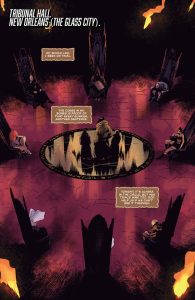
Sergio Monjes handles two very different spaces in this issue, the austere marble and gold formality of Tribunal Hall and the cramped, intimate warmth of St. Brown’s apartment and his childhood flashbacks. The tribunal pages use wide panels and symmetrical layouts that make the space feel imposing and cold, with the Pantheon members arranged like a firing squad. When the scene moves to St. Brown’s apartment, the panel structure tightens and the angles shift to favor close-ups of his face and his father’s, so readers are locked into his emotional state rather than observing from distance.
The color work under Jon Amarillo shifts alongside the composition, moving from institutional blues and golds in the tribunal to softer, warmer tones in the apartment and the memory of the dinner table. The memory sequence itself is rendered in softer focus, almost watercolor-like at points, which creates a dreamlike quality that contrasts sharply with the harsh clarity of the present-day conversation. The final panels where St. Brown’s father tells him he will always be his son are framed in tight, intimate shots that sell the intimacy without a single word of explanation.
Characters
St. Brown enters this issue as a side character from prior chapters and leaves as a fully realized person carrying his own curse that mirrors Shadowman’s in structure but cuts deeper because it is killing the people he loves most. His motivation is simple and human, he wants one moment where he can be the son his father raised instead of the monster his blood has made him. That desire propels every choice he makes, from stealing the artifact to summoning a dangerous spirit to accepting a boon that erases his own mother from his memory. The cost he pays is heavier than readers might expect, which is exactly where the script’s power sits.
His father Aziza grounds the emotional core of the issue, a man who has already lost his wife to the beast and now watches his son slowly drained by the curse that made him. Instead of demanding pity or dramatic monologues, he cracks jokes and says the obvious truth that shape does not change what they are to each other. That kind of understated strength in the face of inevitable loss feels honest rather than sentimental. Alyssa Myles appears briefly but serves as a concrete proof that St. Brown has built a life where people see him as more than a werewolf, which makes his crisis about fatherhood the right emotional hook rather than a story about shame.
Originality & Concept Execution
The core idea is not groundbreaking, a cursed man wants to reclaim his humanity before he loses everything, but the execution locates the story’s power in the specific details of what humanity costs in this universe. Shadowman cannot remove the curse, only suppress it temporarily, which means there is no happy ending where the beast goes away. Instead, the script offers a smaller, sharper mercy: a few hours where St. Brown can be present with his father without the constant pressure of the transformation.
The magic system of booms and prices feels consistent with prior Shadowman stories, and the choice to have Shadowman take St. Brown’s memory of his mother rather than his life or his agency shifts the story away from straightforward sacrifice into something morally more complicated. St. Brown saves his father’s final hours by erasing his own ability to remember his mother, which is the kind of trade that has teeth. The issue does not resolve the larger threat of the Five or the DarkSoul Apocalypse, it just sits quietly with one person paying the price that magic demands, which is a refreshing shift from constant escalation.
Positives
The greatest strength of this issue is its willingness to break from action and mystery plot into pure character study, letting St. Brown’s origin story and his goodbye with his father carry the entire emotional weight without a single punch thrown. Monjes’ art communicates the shift from public judgment to private intimacy through layout and color work, so readers feel the emotional ground shifting even before the dialogue lands.
The script trusts readers to understand why a man would steal an artifact and break magical law just to get a few hours with a dying parent, which is a kind of emotional intelligence that a lot of cape comics skip over entirely. The boon that Shadowman takes is clever and cruel in equal measure, because erasing a memory is not the same as death but it still costs the person everything they wanted to preserve. For readers who care about character work and moral complexity over spectacle, this issue is the kind of comic that justifies the monthly subscription.
Negatives
The tribunal sequence, while competently written, takes up real estate that could have gone deeper into St. Brown’s relationship with his father, and it reads more like necessary setup than essential character work. The issue spends most of its runtime on St. Brown and his family, which means Detective Myles gets sidelined after carrying much of the prior arc, and that imbalance leaves her character development in a holding pattern. The dialect is thicker than ever, and paired with magical terminology and centuries of Deadside history, it can feel like a wall that casual readers have to climb rather than a flavor that enhances the story.
The broader DarkSoul Apocalypse threat continues to loom in the background without integration, so this chapter still feels somewhat disconnected from the bigger event, even though the Five are theoretically the reason St. Brown’s father is dying. Finally, the issue ends on an emotional beat that is earned but quiet, which some readers coming for action and serial killer hunts may experience as downbeat or unsatisfying given the shift away from the Jolie/Sami plot.
Art Samples:
The Scorecard:
Writing Quality (Clarity & Pacing): [3/4]
Art Quality (Execution & Synergy): [3/4]
Value (Originality & Entertainment): [1.5/2]
Final Thoughts:
(Click this link 👇 to order this comic)
VALIANT BEYOND: TALES OF THE SHADOWMAN #5 trades the bayou gothic horror of the prior issue for intimate family drama, and it sticks the landing hard enough that the switch feels intentional rather than scattered. If you are reading for Shadowman’s role in a larger cosmic threat or for more time with Alyssa Myles hunting serial killers, this chapter will feel like a detour that slows the main plot down. But if you care about seeing a character wrestle with what magic costs and what he is willing to sacrifice to stay human, this is the kind of character work that makes comics worth collecting.
We hope you found this article interesting. Come back for more reviews, previews, and opinions on comics, and don’t forget to follow us on social media:
If you’re interested in this creator’s works, remember to let your Local Comic Shop know to find more of their work for you. They would appreciate the call, and so would we.
Click here to find your Local Comic Shop: www.ComicShopLocator.com
As an Amazon Associate, we earn revenue from qualifying purchases to help fund this site. Links to Blu-Rays, DVDs, Books, Movies, and more contained in this article are affiliate links. Please consider purchasing if you find something interesting, and thank you for your support.