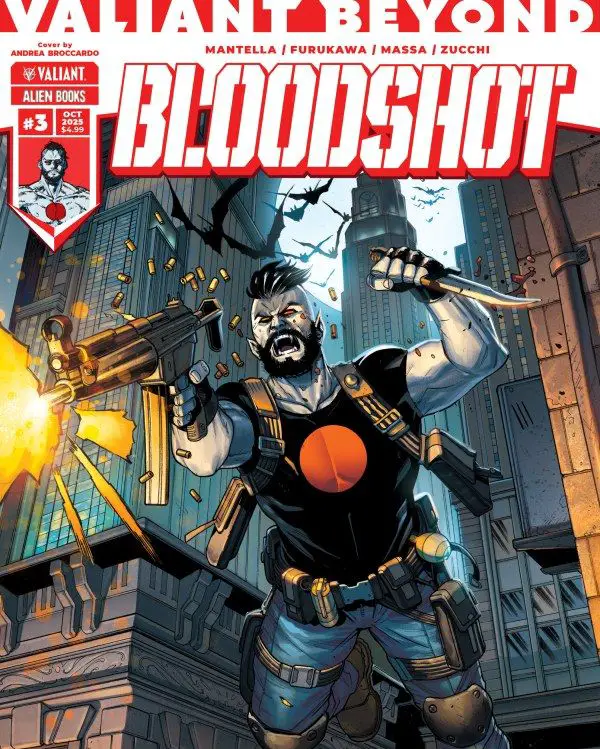
Valiant Beyond: Bloodshot #3, by Alien Books & Valiant Comics on 12/10/25, barrels toward the arc’s climax with blood, viscera, and existential stakes that would make philosophers weep.
Credits:
- Writer: Mauro Mantella
- Artist: Fernando Heinz Furukawa
- Colorist: Rocio Zucchi, Fernando Heinz Furukawa, Ludwig Olimba
- Letterer: Camila Jorge
- Cover Artist: Agustin Alessio (cover A)
- Publisher: Alien Books, Valiant Comics
- Release Date: December 10, 2025
- Comic Rating: Mature (language, gore)
- Cover Price: $4.99
- Page Count: 30
- Format: Single Issue
Covers:
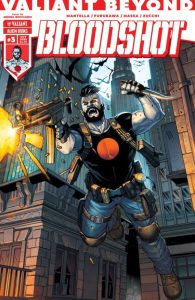
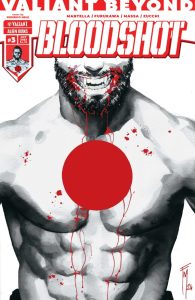
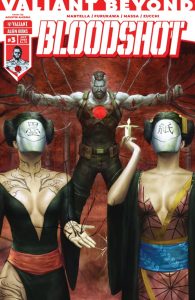
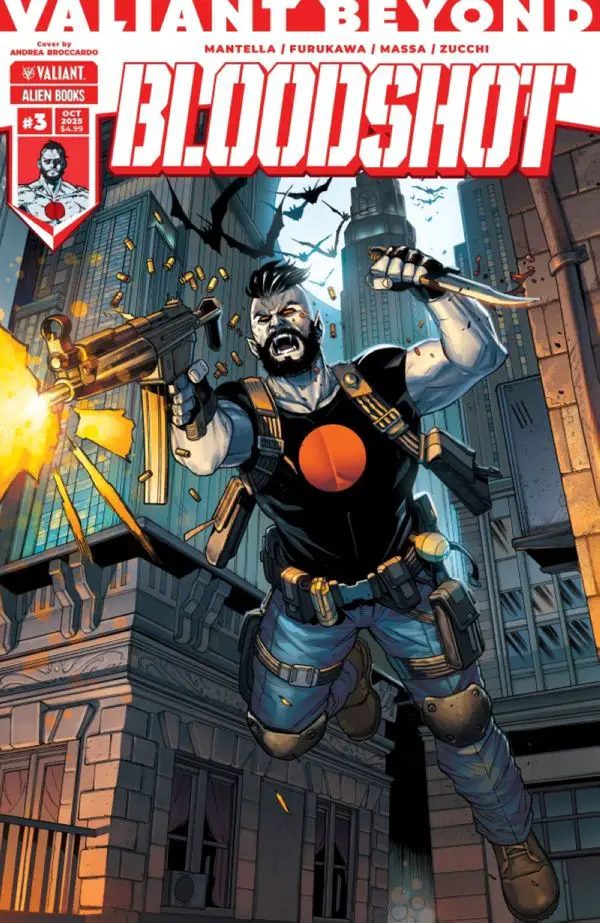
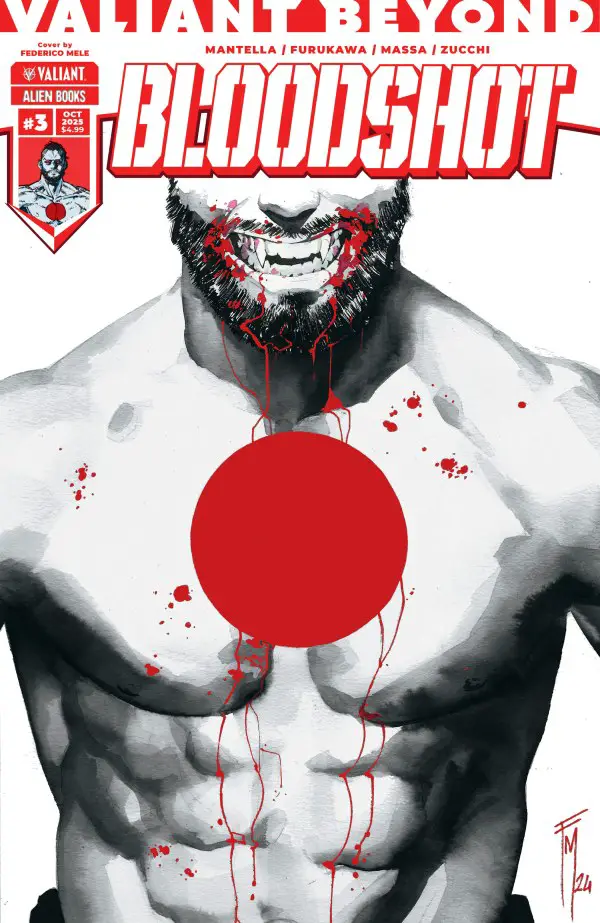
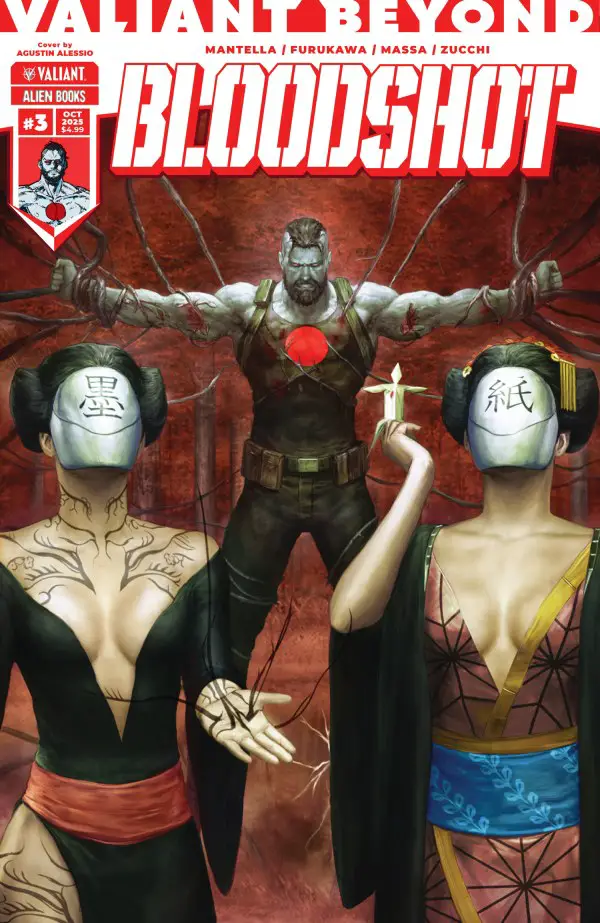
Analysis of VALIANT BEYOND: BLOODSHOT #3:
First Impressions:
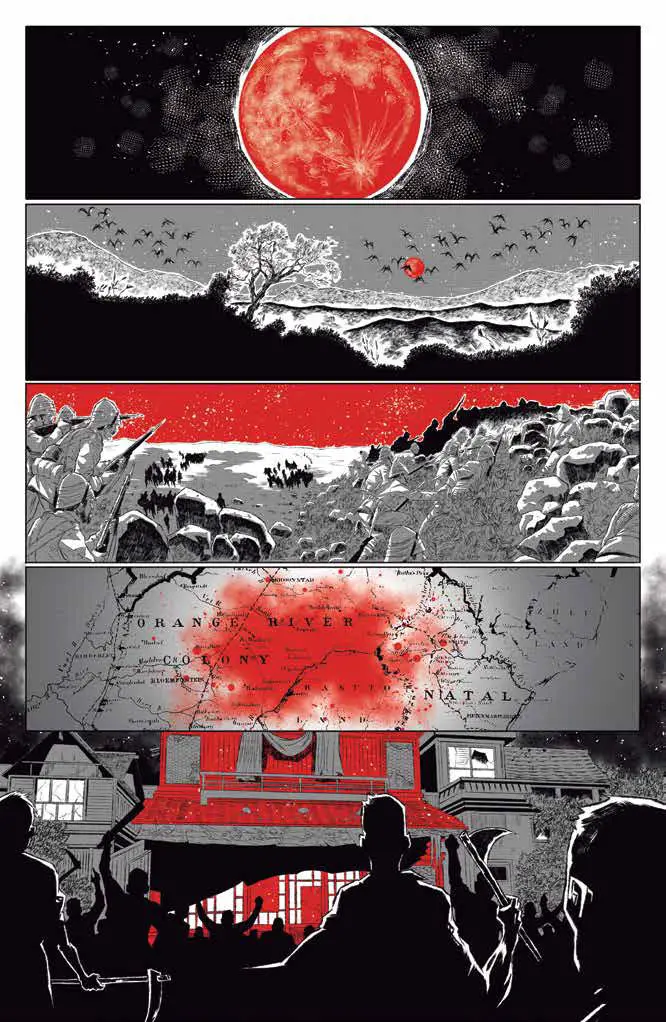
The opening pages punch you in the mouth with philosophical exposition about pregnant vampire transformations and historical cover-ups that reframe the Second Boer War as a monster-suppression operation. It’s audacious worldbuilding that immediately signals this comic is swinging for the fences. The tonal shift from lofty mythology to a contemporary Tokyo crisis creates genuine tension. Within moments, you’re wondering whether this premise can actually deliver on its absurd promise.
Plot Analysis:
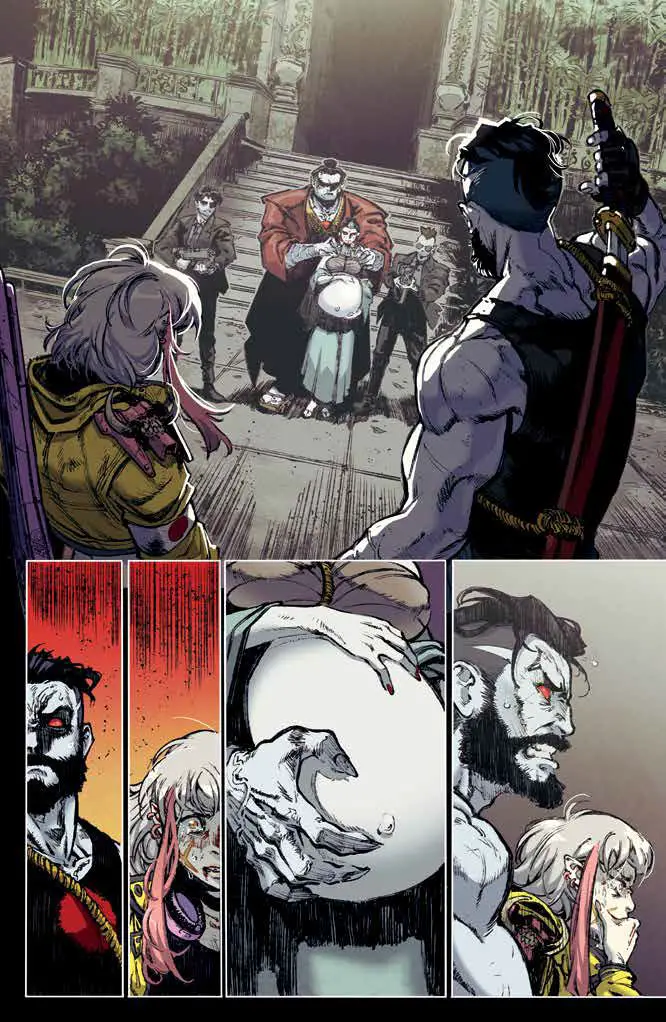
The issue opens with Udo Namura, Sawa’s father, holding his pregnant wife hostage in his underground Tokyo base while revealing a devastating truth: he accidentally created an unstoppable hybrid creature by turning Sawa’s mother into a vampire while she was pregnant. Now he plans to use Roy’s nanite-enhanced blood to “fix” the problem, betting that combining Bloodshot’s biotechnology with the fetus will produce something controllable, ideally a human child. When Roy refuses to cooperate, Namura forces his hand through threats and psychological manipulation, leaving Roy with an impossible choice.
While Udo prepares for the transfusion, Roy and Sawa must fight off the Yokai Sisters, supernatural entities possessing paper- and ink-based powers. The battle escalates when Roy realizes the Yokai communicate through low-frequency sound waves, allowing him to weaponize acoustic harmonics through the base’s speakers to disrupt their connection. The victory is temporary, and the Yokai survive by retreating into a single kanji character, proving these aren’t conventional enemies.
The crisis deepens when Roy’s blood feeds the hybrid creature developing inside Sawa’s mother, causing it to grow exponentially and begin consuming the living forest structure of the base itself. Roy and Sawa manage to discover a legendary fruit capable of curing supernatural conditions, but when Sawa’s consumes it, her vampirism vanishes instantly, rendering her human again. The bittersweet victory comes with a grim cost; the remaining fruit disintegrates, eliminating any possibility of mass production or further study.
The issue concludes with escalating explosions triggered by Udo’s fail-safes, designed to detonate if his heart stops. Sawa’s “sibling” becomes trapped in the chaos and is swallowed, chewed, and ejected by the Jubokkо forest as it consumes itself and the base. Roy gives the pragmatic advice that matters most: always look ahead. The cliffhanger leaves Sawa’s survival status ambiguous, Udo presumably being digested by multiple monstrosities, and Bloodshot facing the consequences of mad, hybrid science.
Story
The pacing is relentless but occasionally sacrifices clarity for momentum. The dialogue hits hard when it matters; Roy’s casual commentary about his own situation keeps things grounded even when discussing apocalyptic scenarios. The structure moves between three simultaneous crises: the transfusion countdown, the Yokai battle, and the creature’s growth. This parallel storytelling maintains tension but makes it difficult to track who’s where and what the actual timeline is. Exposition dumps historical vampire mythology at the opening, which feels like setup for larger implications that don’t fully land within this issue’s scope. The writing shines in character moments, particularly Roy’s internal struggle between being a weapon and a savior, but the mechanics of the plot occasionally get muddled by rapid scene transitions.
Art
The artwork by Furukawa and color work by Massa creates visceral, detailed panels that sell the horror and intensity effectively. Composition excels during action sequences, with dynamic angles that make the Yokai battle genuinely disorienting. The color palette shifts to blues and grays during tense moments, reinforcing dread. Character expressions convey panic and determination convincingly. However, clarity suffers in crowded panels where multiple simultaneous events occur; the eye doesn’t know where to focus, and the visual information becomes dense without being comprehensible. The detailed linework sometimes gets sacrificed for speed in backgrounds, creating uneven visual weight between characters and environment.
Characters
Roy remains a compelling contradiction: enhanced soldier with nanite resurrection technology who refuses to become the weapon he wasdesigned to be. His motivations are consistent, driven by protecting Sawa from Udo’s delusion. Sawa develops urgency as a character beyond victim; she makes tactical contributions and faces real psychological trauma watching her mother’s transformation. Udo Namura functions as pure ideology wrapped in paternal rhetoric; his belief that his megalomania serves a greater good is chilling and believable. The issue doesn’t spend enough time developing Sawa’s mother’s emotional journey, reducing her to a biological incubator despite her moment of relief at becoming human again. Her agency gets swallowed by plot mechanics.
Originality & Concept Execution
The concept of vampire pregnancy creating uncontrollable abominations is genuinely fresh within the vampire mythology space. Layering Japanese Yokai mythology, nanite technology, and generational trauma creates something that feels distinct from conventional superhero narratives. However, the execution suffers from attempting to resolve too many plot threads simultaneously. The legendary fruit cure feels convenient, and its elimination through disintegration prevents proper exploration. The serial quality of the storytelling means this issue works primarily as a middle act pushing toward a conclusion rather than standing on its own merits.
Positives
The visceral action sequences deliver exactly what the premise promises: impossible battles against supernatural entities using technological improvisation. Roy’s character voice cuts through philosophical pretension with pragmatic humor, making him genuinely likeable despite his horrific circumstances. The worldbuilding implications of vampire mythology being real historical cover-ups for governmental conspiracies adds legitimate stakes beyond the immediate family drama. The Yokai Sisters and their paper-based powers provide visual variety and tactical novelty in combat. Most importantly, the issue commits fully to its gonzo premise without winking at the audience, giving the absurdity genuine weight.
Negatives
The simultaneous juggling of four major plot threads (transfusion countdown, Yokai battle, creature growth, base destruction) creates narrative whiplash that prioritizes momentum over comprehension. Udo’s plan lacks logical scrutiny; combining Bloodshot’s nanites with an already-deformed fetus seems more likely to create a worse problem, yet the characters don’t adequately challenge this. The convenient appearance of a legendary cure fruit, followed immediately by its convenient disintegration, reduces dramatic stakes in its final act.
Sawa’s mother receives minimal characterization despite being central to the entire conflict, making her arc feel incomplete. Visual clarity deteriorates during crowded panels, requiring readers to re-examine sequences to understand spatial relationships. The cliffhanger involves so much destruction that predicting what happens next becomes impossible, which feels less like tension and more like the issue surrendered to chaos.
Art Samples:


The Scorecard:
Writing Quality (Clarity & Pacing): [2.5/4]
Art Quality (Execution & Synergy): [3/4]
Value (Originality & Entertainment): [1/2]
Final Thoughts:
(Click this link 👇 to order this comic)
VALIANT BEYOND: BLOODSHOT #3 swings wildly between genuinely compelling character drama and plot mechanics that prioritize explosions over logic. It’s an issue that will absolutely satisfy readers who value audacious ambition and don’t mind cleaning up narrative debris, but it alienates those seeking clarity and measured storytelling. The comic asks fundamental questions about inherited responsibility and whether good intentions matter when they lead to catastrophe, but it doesn’t spend enough time sitting with these questions before moving to the next action beat.
We hope you found this article interesting. Come back for more reviews, previews, and opinions on comics, and don’t forget to follow us on social media:
If you’re interested in this creator’s works, remember to let your Local Comic Shop know to find more of their work for you. They would appreciate the call, and so would we.
Click here to find your Local Comic Shop: www.ComicShopLocator.com
As an Amazon Associate, we earn revenue from qualifying purchases to help fund this site. Links to Blu-Rays, DVDs, Books, Movies, and more contained in this article are affiliate links. Please consider purchasing if you find something interesting, and thank you for your support.