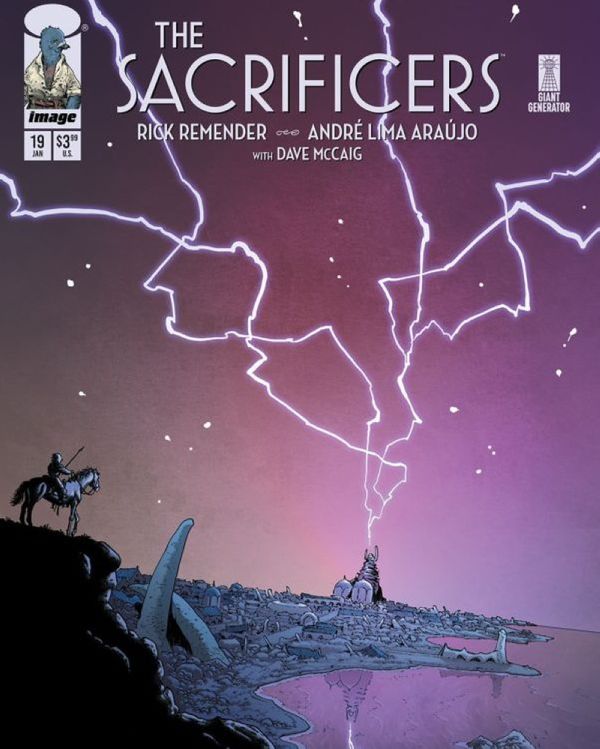
The Sacrificers #19 (Image Comics, 3/4/26): Writer Rick Remender and artist André Lima Araújo deconstruct the total collapse of a failed deity as a village uprising finally targets the dying Soluna. This issue is a haunting lore dump that manages to balance high stakes with intimate, systemic despair. Verdict: A must-read for fans.
Credits:
- Writer: Rick Remender
- Artist: Andre Lima Araujo
- Colorist: Dave McCaig
- Letterer: Rus Wooton
- Cover Artist: Andre Lima Araujo, Dave McCaig (cover A)
- Publisher: Image Comics
- Release Date: March 4, 2026
- Comic Rating: Teen
- Cover Price: $3.99
- Page Count: 32
- Format: Single Issue
Covers:
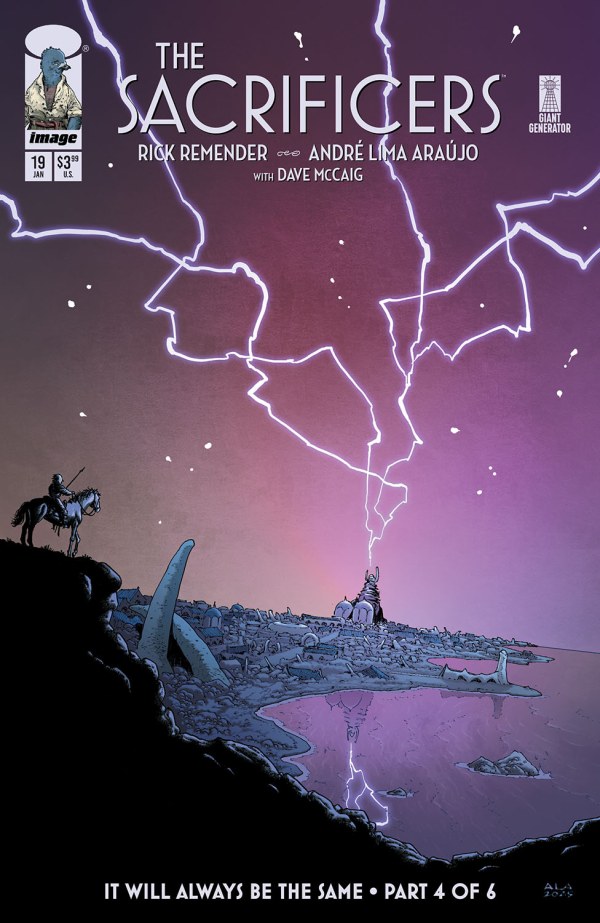
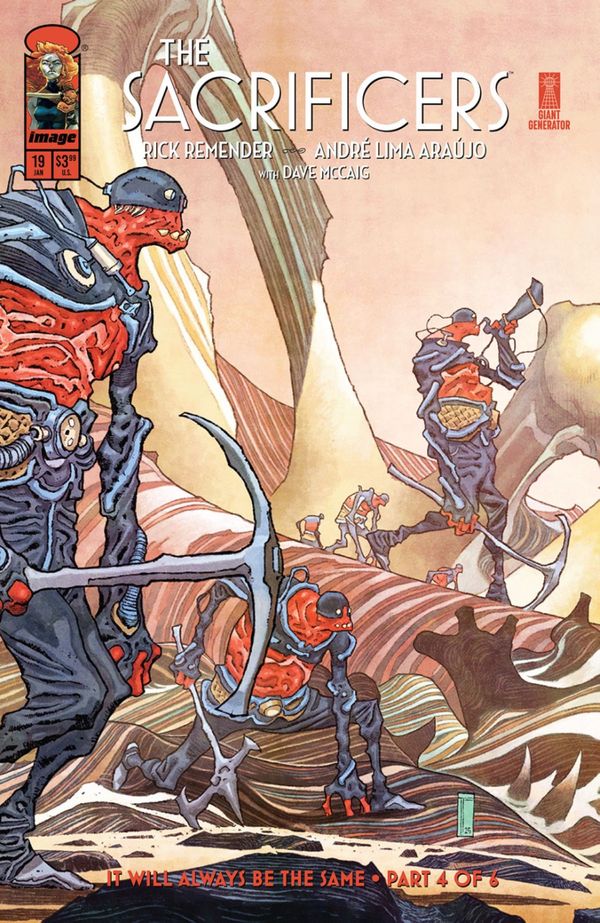
Analysis of The Sacrificers #19:
First Impressions:
Looking at this issue feels like watching a slow motion car crash involving an entire civilization, my friend. You can see the exhaustion in every line of André Lima Araújo’s art, and it reflects the systemic rot we have been tracking since the jump. There is a physical weight here that most modern fantasy books lack, largely because it refuses to offer easy hope to the reader.
It is the kind of reading experience that makes you sit back and wonder if any revolution actually ends with the people winning. The colors are muted, the dialogue is sparse, and the feeling of inevitable doom is palpable. It is high quality craftsmanship that serves a very dark master.
Recap:
In The Sacrificers #18, the story follows a thirty year jump where Soluna’s promised utopia has curdled into a mechanical nightmare of plague and desperation. Previously, we saw a father lose his child to fever while Soluna, tethered to machines to keep the sun and moon running, struggled to stay conscious. Beatrice confronted her sister with the cold truth that the revolutionary has become a tyrant. The foundation is cracked, and the children of the world are still the ones paying the ultimate price for a stability that no longer exists.
Plot Analysis (SPOILERS):
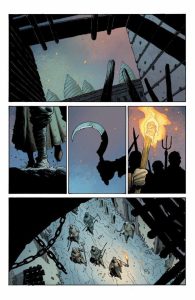
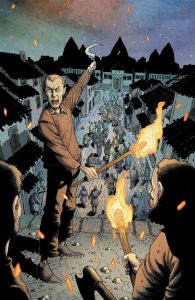
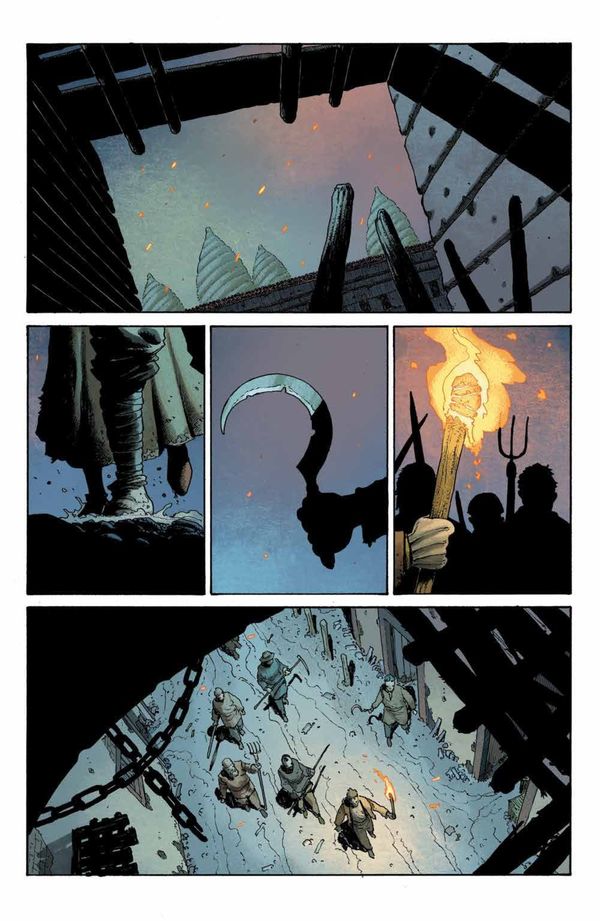
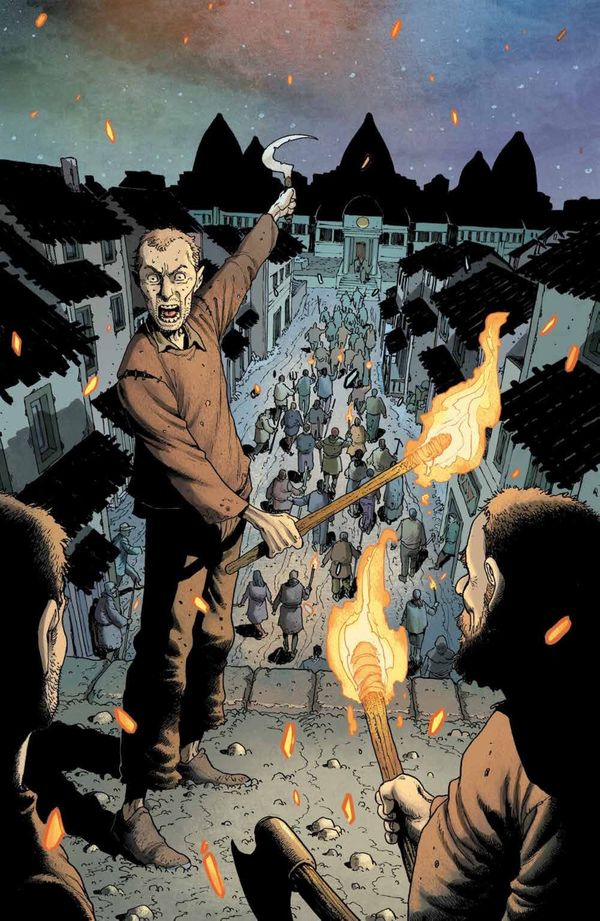
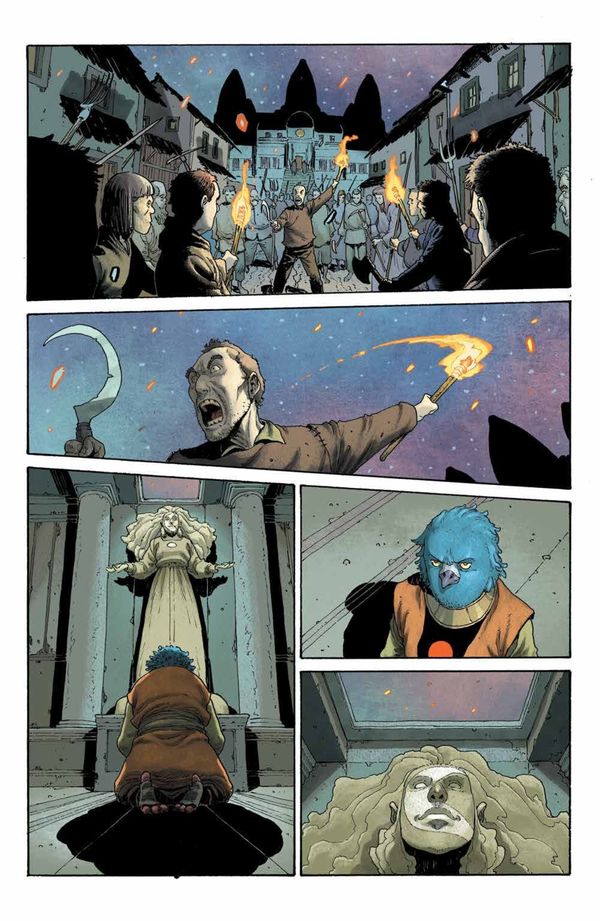
The story opens in a village where the air is thick with the scent of a dying world. Whispers of resentment finally catch fire as the villagers realize their prayers to Soluna have gone completely unanswered. They march on the local temple with torches and a collective rage that has been brewing for generations. This is not a sudden riot but a calculated rejection of a god who has failed to provide light or protection.
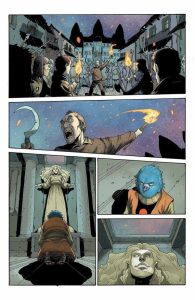
Inside the temple, Priestess Beatrice stands before the kill door as the mob approaches. Instead of calling for guards or using her power to resist, she chooses a path of radical honesty. She acknowledges her role as a lackey for a tyrant and admits to the people that she has failed them. By opening the doors willingly, she invites the fire that she believes is finally earned by those in power.
Meanwhile, the scene shifts to the private chambers where Soluna lies in a state of total decay. A fungal infection or spore has completely overtaken her body, leaving no clear distinction between the woman and the rot. Advisors suggest that the end is near and that she should be allowed to pass on. The physical cost of holding the world together has finally reached its breaking point, leaving the deity as a hollow shell.
However, the man at her side, Pigeon, refuses to accept the inevitability of her death. He commands that her sons not be woken up and brought to the chamber immediately because he swears on their very lives that he will find a way to cure the infection and restore his wife. This desperate vow suggests a new cycle of sacrifice is beginning just as the old one is burning down in the streets.
How is the story in The Sacrificers #19?
Rick Remender excels at writing the kind of world weary dialogue that feels heavy with history. Every interaction between Beatrice and the villagers carries the weight of decades of systemic failure. The pacing is deliberate, allowing the dread to settle into the bones of the reader before the temple doors even open. It is a masterclass in building tension through consequence rather than just action beats.
The structure of the issue mirrors the collapse of the world it depicts. We see the external revolution and the internal rot simultaneously, creating a sense of total failure. Remender avoids the trap of making anyone a simple villain, choosing instead to focus on the tragedy of impossible choices. This depth ensures the story feels like a legitimate exploration of power rather than just another dark fantasy trope.
How is the art in The Sacrificers #19?
André Lima Araújo provides art that is both clinical and deeply emotive. The way he renders the dying village and the fungal growth on Soluna is disturbingly beautiful. There is a clarity to his character acting that communicates the exhaustion of the priestess without needing a single word of narration. The layouts lead the eye naturally through the chaos of the uprising, maintaining a steady narrative flow.
Dave McCaig uses a color palette that feels like a fading memory of a better world. The warm glow of the torches contrasts sharply with the cold, sickly greens and purples of Soluna’s infection. This visual contrast highlights the theme of a world that is losing its natural light to a mechanical and biological parasite. The synergy between the inks and the colors creates a thick atmosphere that you can almost taste.
Characters
Beatrice continues to be the most compelling lens through which to view this world. Her transition from a high priestess to a woman who welcomes her own execution shows a profound internal shift. She is the only one willing to look at the systemic rot and call it by its name. This honesty makes her a tragic figure in a landscape filled with people who are too afraid or too stubborn to face the truth.
Originality & Concept Execution
The idea of a god as a literal biological battery for a planet is a fantastic hook that Remender is executing perfectly. It subverts the usual fantasy tropes by grounding the divine in the mechanical and the medicinal. The infection as a metaphor for the unintended consequences of total control is a sharp narrative choice. It feels fresh because it treats the end of the world as a slow, agonizing bureaucracy of failure.
Pros and Cons
Art Samples:
The Scorecard:
Writing Quality (Clarity & Pacing): 3.5/4
Art Quality (Execution & Synergy): 3.5/4
Value (Originality & Entertainment): 1.5/2
Final Thoughts:
(Click this link 👇 to order this comic)
The Sacrificers #19 is a grim reminder that even the best intentions can be swallowed by the systems they create. If you have a limited budget, this is the kind of book that justifies the price of admission by offering more than just capes and punches. It is a heavy, thoughtful piece of fiction that demands your full attention. You should buy it for the art alone, but the story will be what keeps you staring at the ceiling after you close the cover.
Related Posts:
We hope you found this article interesting. Come back for more reviews, previews, and opinions on comics, and don’t forget to follow us on social media:
If you’re interested in this creator’s works, remember to let your Local Comic Shop know to find more of their work for you. They would appreciate the call, and so would we.
Click here to find your Local Comic Shop: www.ComicShopLocator.com
As an Amazon Associate, we earn revenue from qualifying purchases to help fund this site. Links to Blu-Rays, DVDs, Books, Movies, and more contained in this article are affiliate links. Please consider purchasing if you find something interesting, and thank you for your support.