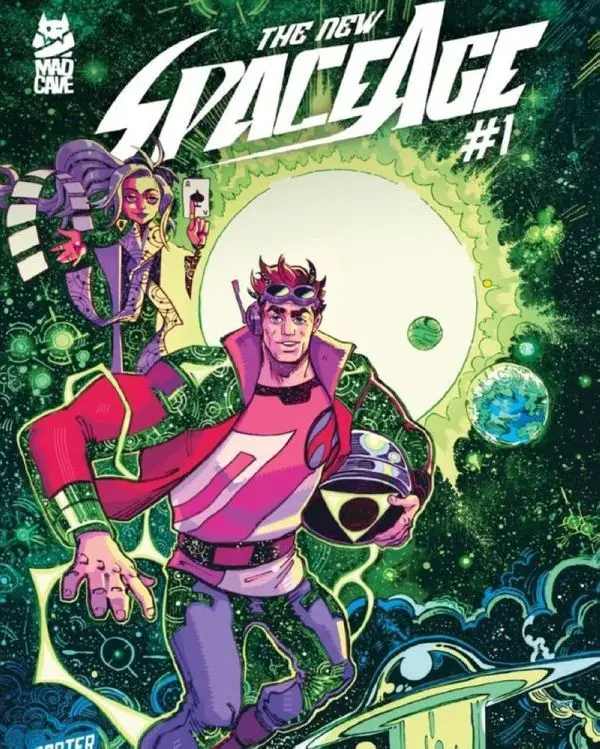
The New Space Age #1, by Mad Cave Studios on 12/17/25, kicks off with twin mysteries: the disappearance of an astronaut’s brother and the appearance of impossible crop circles that defy every conventional explanation.
Credits:
- Writer: Kenny Porter
- Artist: Mike Becker
- Colorist: Kevin Betou
- Letterer: Buddy Beaudoin
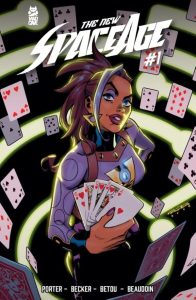
- Cover Artist: Mike Becker, Kevin Betou (cover A)
- Publisher: Mad Cave Studios
- Release Date: December 17, 2025
- Comic Rating: Teen
- Cover Price: $4.99
- Page Count: 36
- Format: Single Issue
Covers:
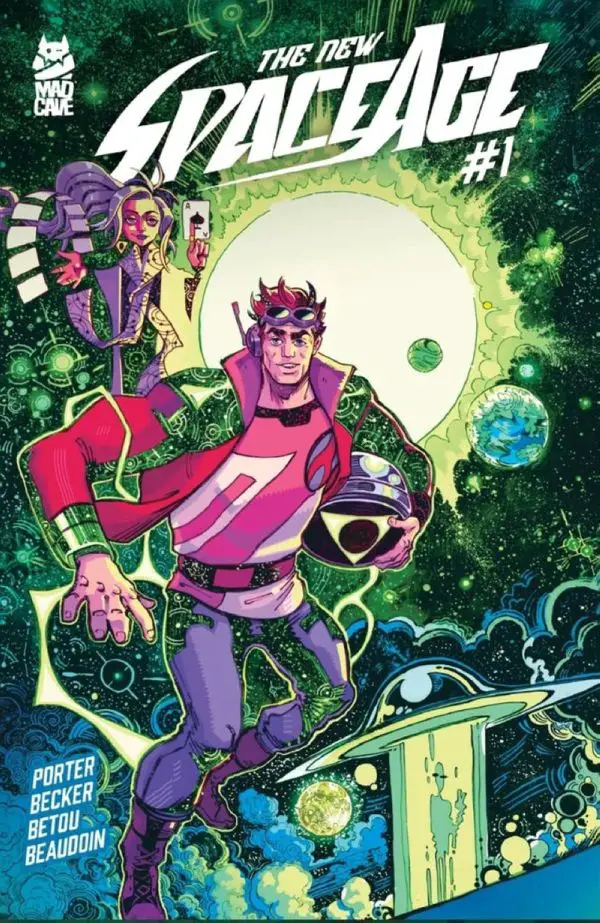
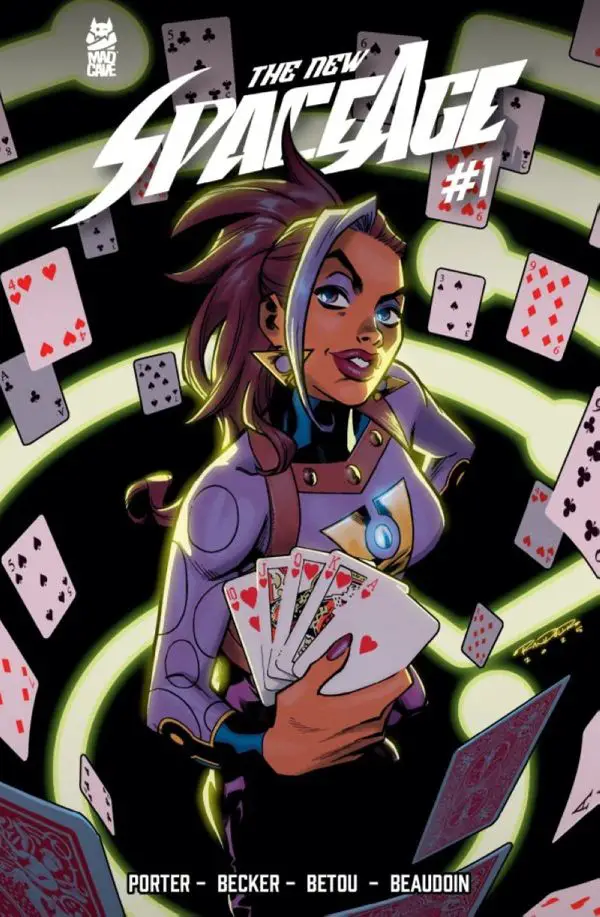
Analysis of THE NEW SPACE AGE #1:
First Impressions:
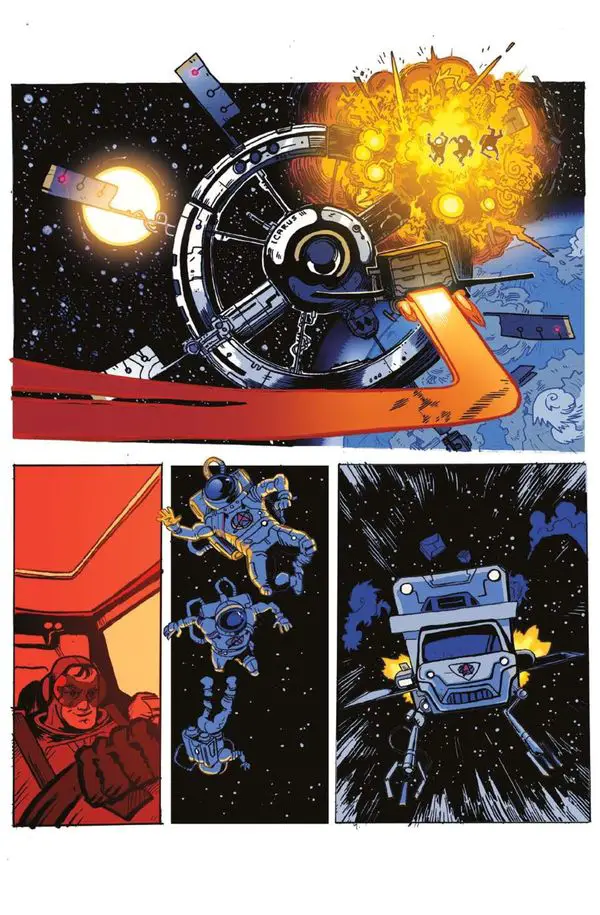
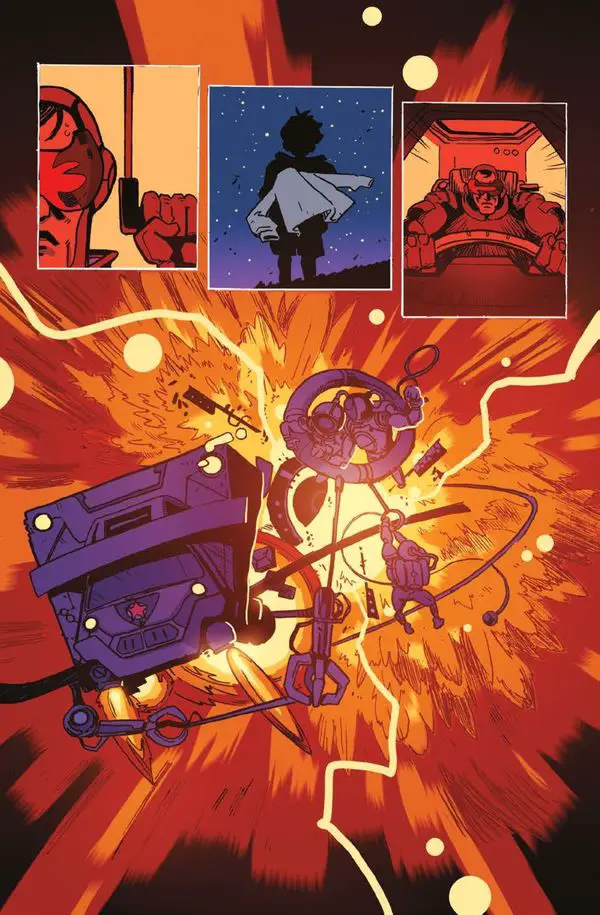
The comic opens with genuine emotional weight, introducing Mark Mitchell mid-crisis as he attempts a risky rescue at Icarus Station III in 2055. The sequence works because it immediately establishes his character through action; he breaks protocol because someone’s life matters more than the rulebook. When the narrative pivots to show us why Mark became an astronaut in the first place, that emotional foundation transforms a routine space rescue into something personal and resonant.
Plot Analysis:
The story begins with Mark Mitchell in the future, working as an astronaut at Icarus Station III in 2055. He’s mid-rescue when we learn his true motivation: years ago, his brother Joey mysteriously vanished from their rural home after spotting an impossible crop circle that glowed and burned the ground beneath it. Young Mark witnessed something that night that nobody believed. Now, as an adult, Mark has dedicated his life to space exploration, driven by two promises: find Joey and never leave anyone behind.
The narrative cuts between Mark’s youth, his escape from an abusive home with his brother through science fiction and stargazing, and the traumatic night when Joey simply vanished. The brothers saw alien crop circles forming in their fields, but when Mark looked away for a split second, Joey was gone. Police dismissed it as kidnapping or runaway, but Mark knows what he saw. For decades, Mark has kept his scanner running, waiting for a signal that finally comes through. When it does, he detects the same type of energy signature that was present the night Joey disappeared.
Mark visits his old friend Stacey “Padlock” Pulkowski, a traveling escape artist and stage magician who has since discovered ancient magical practices hidden in grimoires and occult texts. Stacey warns him to move on, but Mark is determined. He’s made a discovery of his own: the crop circle patterns aren’t random. When he studies them alongside Stacey’s magical symbols, he realizes something revolutionary, the alien craft operate not on physics but on magic. The symbols and runes have been instructions all along, teaching humanity how to navigate space and time through belief and intention rather than propulsion systems.
By the issue’s end, Mark has fully committed to his plan: he’ll build a ship powered by magic and use it to find Joey and bring him home. He convinces Stacey to join him, recognizing her expertise in the occult as essential to the project. The final image shows Mark lifting off the ground in his small room, proving the magic works, as Stacey agrees to show him every symbol she possesses. The stakes are set for what comes next.
Story
Kenny Porter constructs this issue with impressive structural precision. The story moves across multiple time periods, from present-day rescue operations to Mark’s childhood to his adult reckoning with his brother’s disappearance, yet the pacing never feels disjointed. Each transition serves the narrative rather than overwhelming it. The dialogue sounds natural, particularly the grounded banter between Mark and Stacey; their back-and-forth crackles with genuine affection beneath surface-level skepticism.
Porter avoids excessive exposition, letting Mark’s actions and choices reveal his desperation and determination. The monologue from Mark reflecting on his youth is conversational and engaging rather than heavy-handed. The issue’s structure works because it answers the central question, why is Mark so obsessed with space, while simultaneously introducing a bigger mystery: are aliens real, is magic real, or is Mark chasing grief into delusion? This tension keeps readers invested.
Art
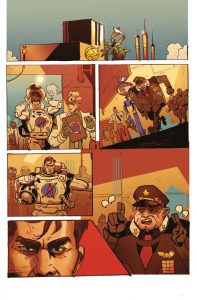
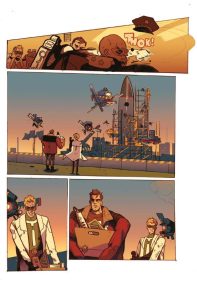
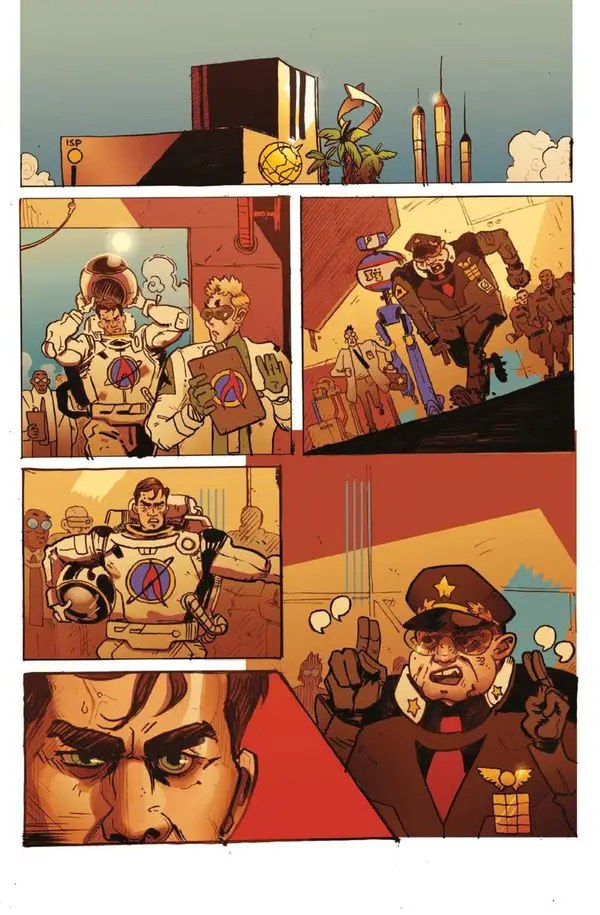
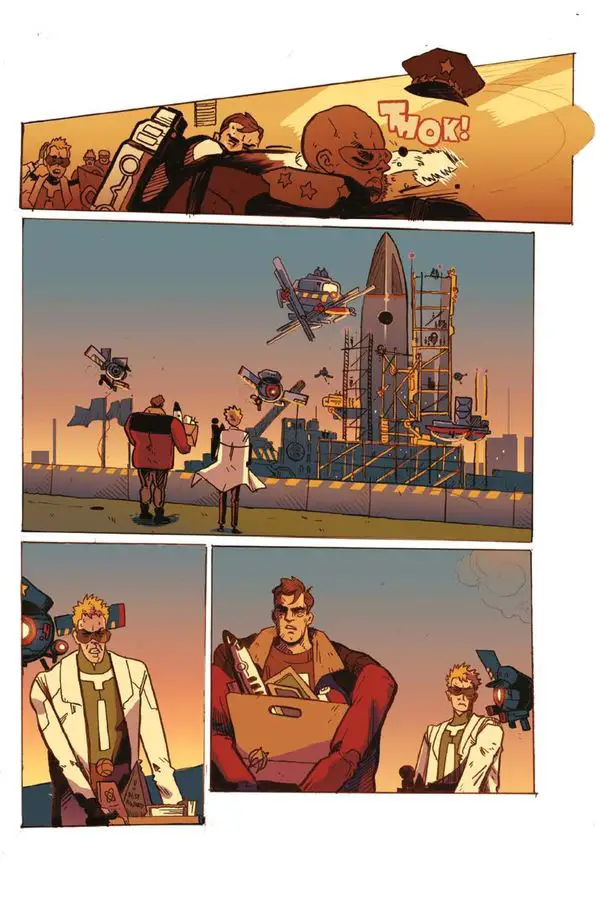
Mike Becker’s artwork is clean and dynamic, with particularly strong work during the action sequences at Icarus Station and the frantic farm scene where Joey vanishes. The layouts guide the reader’s eye effectively through complex scenes, and Becker understands when to use splash pages for impact versus when to dial back to smaller, intimate moments.
Kevin Betou’s color work deserves specific mention; the shift in tone between the colorful childhood sequences and the darker, more muted tones of adult Mark’s obsessive investigations creates visual narrative depth. The glowing crop circles are genuinely unsettling, rendered with an eerie phosphorescence that makes them feel simultaneously wondrous and threatening. The art successfully sells both the emotional weight of Mark’s quest and the “something’s very wrong here” atmosphere that the plot demands.
Characters
Mark Mitchell emerges as a character whose motivations feel earned rather than manufactured. His promise to Joey isn’t presented as heroic proclamation; it’s shown as the desperate promise of a kid trying to protect his brother from an abusive father. When adult Mark becomes obsessed with finding Joey, it doesn’t come across as irrational, it comes across as the only way Mark knows how to process grief and powerlessness.
Stacey Pulkowski is equally well-drawn; her skepticism about Mark’s theories is grounded, but her willingness to help speaks to a deeper friendship and understanding. The portrayal of their abusive father is brief but devastatingly effective, establishing the stakes of Mark’s childhood without veering into exploitation. Mark’s character arc across this single issue moves from desperate conspiracy theorist to someone who’s actually found something real, and his evolution feels organic.
Originality & Concept Execution
The premise of aliens teaching humanity magic through crop circles is genuinely original. Rather than falling into the tired “ancient astronauts” trope or hard sci-fi mysticism that doesn’t know what it’s doing, Porter commits to the idea that magic and alien technology might be the same thing viewed through different conceptual frameworks. The execution delivers on this promise by showing Mark making logical deductions that magic isn’t mystical nonsense, but a different operating system than Newtonian physics. The issue’s central conceit, that something transcendent and inexplicable has been trying to communicate with humanity through symbols and patterns, is executed with enough specificity and credibility that the reader buys in. The comic doesn’t shy away from asking hard questions about belief versus delusion, making the originality land with real thematic weight.
Positives
The standout strength of this issue is its emotional authenticity paired with genuine narrative intrigue. Porter builds Mark’s character arc so carefully that when the premise shifts from personal mystery to cosmic revelation, the reader is already emotionally invested in him. The reveal that magic is the answer to Mark’s decades-long search works because the comic has earned that moment through slow-burn character work rather than cheap plot twisting. Additionally, the art team’s commitment to visual clarity means even complex scenes with multiple time periods remain digestible and engaging. The issue communicates its premise efficiently without sacrificing depth or character development. For readers looking for a comic that treats its audience as intelligent and pays off emotional investment, this delivers.
Negatives
The primary weakness is that the issue leans heavily on setup without delivering resolution, which is both intentional and frustrating depending on your tolerance for cliffhangers. Readers expecting answers or payoff may feel unsatisfied; the comic essentially ends with a question mark and a promise of more to come. Additionally, while the childhood sequences are well-drawn, some readers may find the tonal shifts between past and present slightly jarring on first read, requiring a second pass to appreciate the pacing choices. The concept of alien technology as magic may alienate readers seeking grounded sci-fi explanations. Some may also feel the abuse subplot involving the father is introduced but underexplored, treated more as motivation than as a fully realized element of Mark’s psychology.
Art Samples:
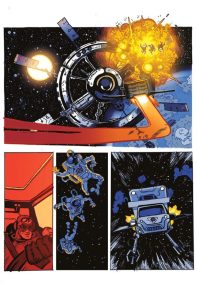
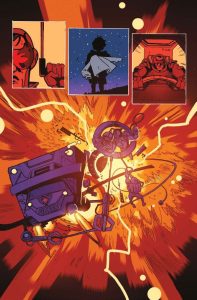
The Scorecard:
Writing Quality (Clarity & Pacing): [3.5/4]
Art Quality (Execution & Synergy): [3.5/4]
Value (Originality & Entertainment): [2/2]
Final Thoughts:
(Click this link 👇 to order this comic)
THE NEW SPACE AGE #1 earns its place in a limited comic budget by delivering genuine emotional stakes alongside a premise wild enough to justify the price of admission. This isn’t a perfect comic; it’s a setup issue designed to make you care about Mark Mitchell before the real cosmic adventure begins. But that’s precisely what makes it work. Porter understands that the best sci-fi stories start with the human element, and Becker’s visual execution ensures the book never looks away from the characters driving the narrative forward.
We hope you found this article interesting. Come back for more reviews, previews, and opinions on comics, and don’t forget to follow us on social media:
If you’re interested in this creator’s works, remember to let your Local Comic Shop know to find more of their work for you. They would appreciate the call, and so would we.
Click here to find your Local Comic Shop: www.ComicShopLocator.com
As an Amazon Associate, we earn revenue from qualifying purchases to help fund this site. Links to Blu-Rays, DVDs, Books, Movies, and more contained in this article are affiliate links. Please consider purchasing if you find something interesting, and thank you for your support.