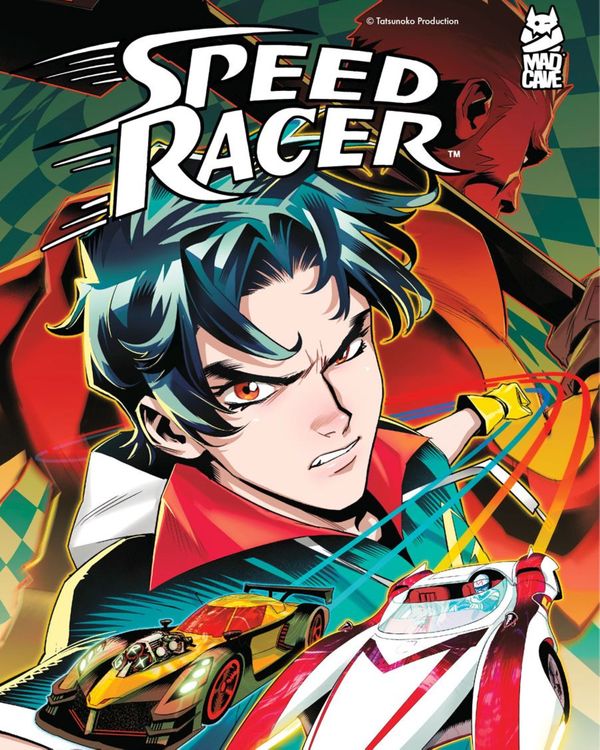
Speed Racer #6 (Mad Cave Studios, 3/4/26): Writer David Pepose and artist Davide Tinto escalate Speed’s journey into a vengeful tragedy when Carl Cranem, son of Pops Racer’s former partner, challenges Speed to a race powered by the dangerous G.R.X. engine to avenge his father’s ruined legacy. The execution is masterful, blending emotional character conflict with kinetic racing spectacle. Verdict: A must-read for fans.
Credits:
- Writer: David Pepose
- Artist: Davide Tinto
- Colorist: Jão Canola
- Letterer: Buddy Beaudoin
- Cover Artist: Alessio Zonno (cover A)
- Publisher: Mad Cave Studios
- Release Date: March 4, 2026
- Comic Rating: Teen
- Cover Price: $4.99
- Page Count: 32
- Format: Single Issue
Covers:
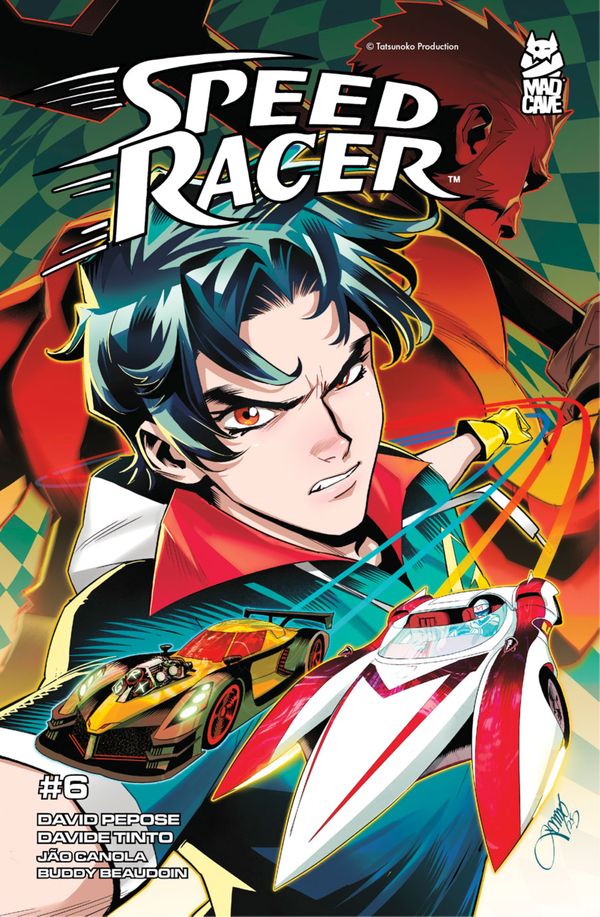
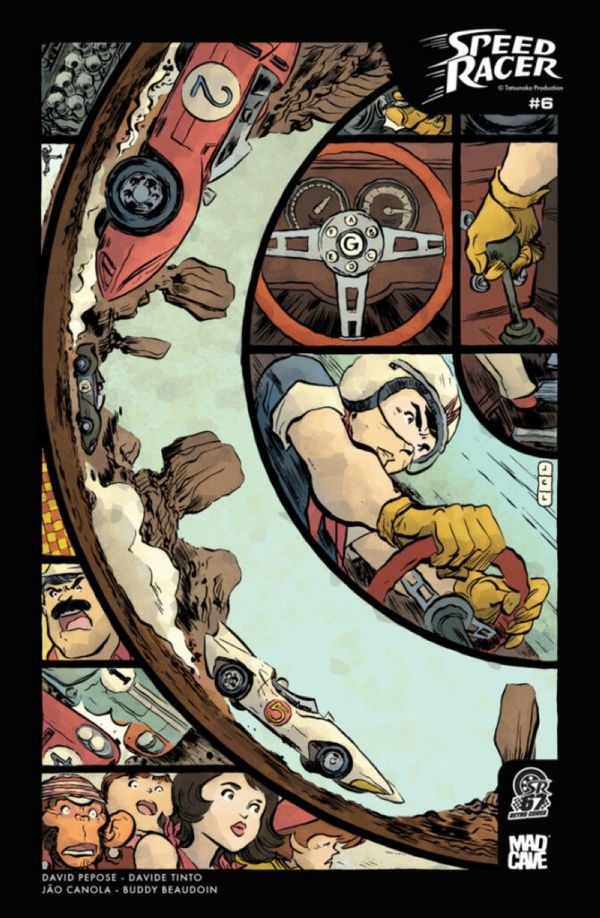
Analysis of Speed Racer #6:
First Impressions:
This issue hits like a gut punch wrapped in titanium plating. From the opening panels revealing Carl Cranem’s twisted obsession with his father’s legacy to the catastrophic climax where the Mach 5 explodes on live television, Speed Racer #6 refuses to let readers catch their breath. Pepose doesn’t just write a racing comic, he crafts a Greek tragedy on wheels, where the sins of the father literally manifest as a supercharged engine of destruction. The emotional weight is immense. Speed’s hot-headed defiance collides with Pops’ haunted guilt, and the result is a family fracturing under the pressure of past mistakes and present dangers.
What makes this chapter unforgettable isn’t just the racing mayhem or the explosive visuals, it’s how thoroughly Pepose commits to making Speed lose. This isn’t a heroic comeback story. This is a humbling, and Tinto’s art captures every brutal second of Speed’s overconfidence being dismantled panel by panel.
Recap:
In Speed Racer #5, Speed survived the Great Alpine Race despite sabotage from Dante Ferno’s C.A.T. Team that destroyed the Mach 5’s brakes mid-race. With help from Racer X, who revealed himself as Speed’s long-lost brother Rex, Speed narrowly won the race and avoided plummeting off a mountain cliff. The victory secured Speed’s momentum in Formula X, but the real prize, the million-dollar championship purse needed for Pops Racer’s heart transplant, remains out of reach. Tensions between Speed and Pops escalated over Speed’s reckless driving style, with Pops warning that charging ahead without strategy would cost him dearly. Meanwhile, Dante Ferno and the Tiger Syndicate continued plotting Speed’s downfall from the shadows.
Plot Analysis (SPOILERS):
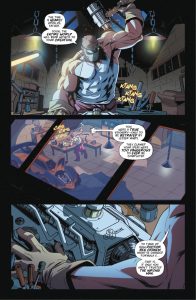
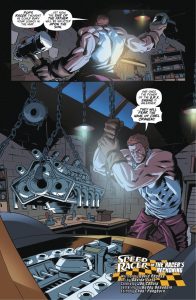
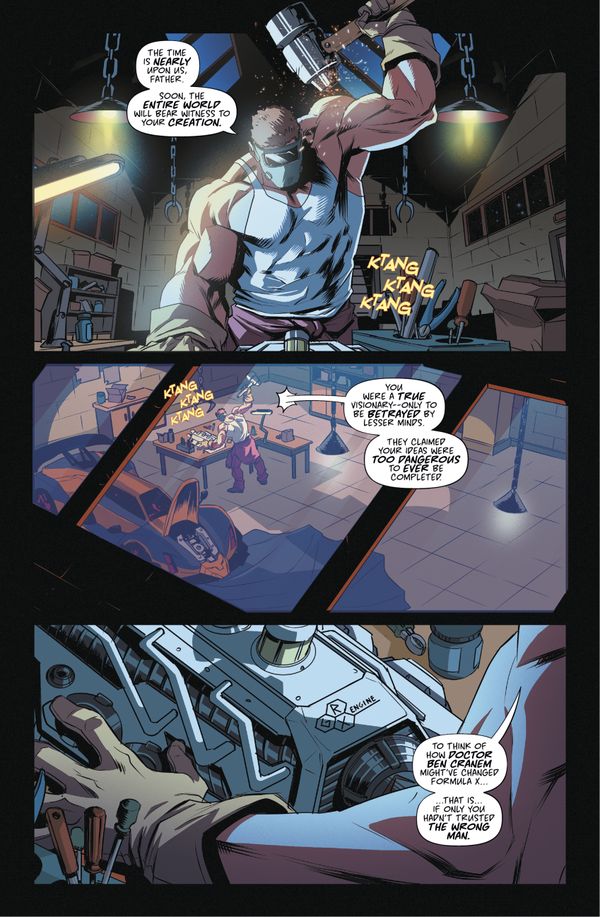
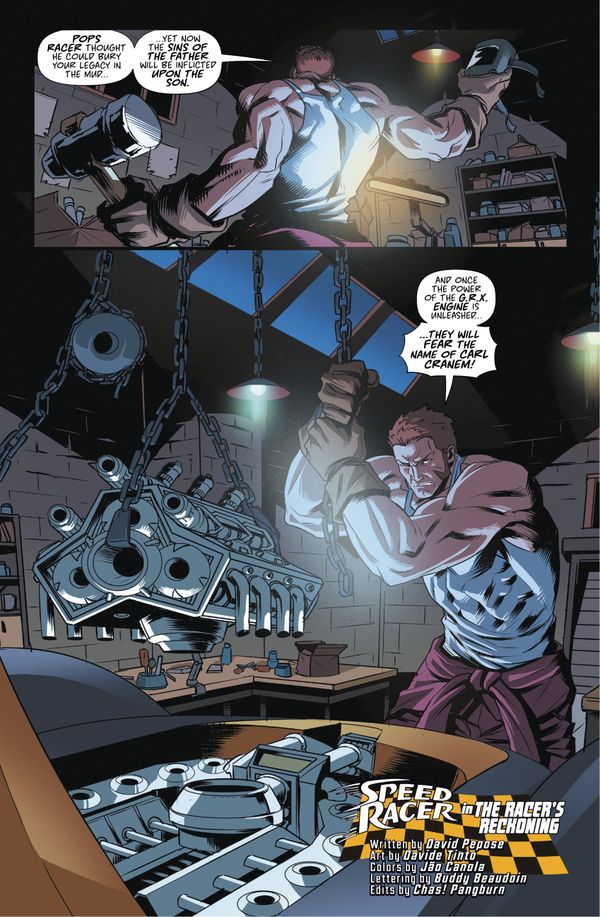
The issue opens with Carl Cranem monologuing in a garage workshop, hammering away at his race car while narrating his obsession with avenging his father, Doctor Ben Cranem. Pops Racer once partnered with Ben to develop Formula X, but when Pops deemed the G.R.X. engine too dangerous and abandoned the project, Ben’s reputation collapsed. Ben died attempting to rebuild the engine alone in a lab explosion. Carl blames Pops for destroying his father’s life and now seeks vengeance by defeating Speed and proving the G.R.X. engine’s superiority. He swears that once the world witnesses the engine’s power, they’ll fear the name Carl Cranem.
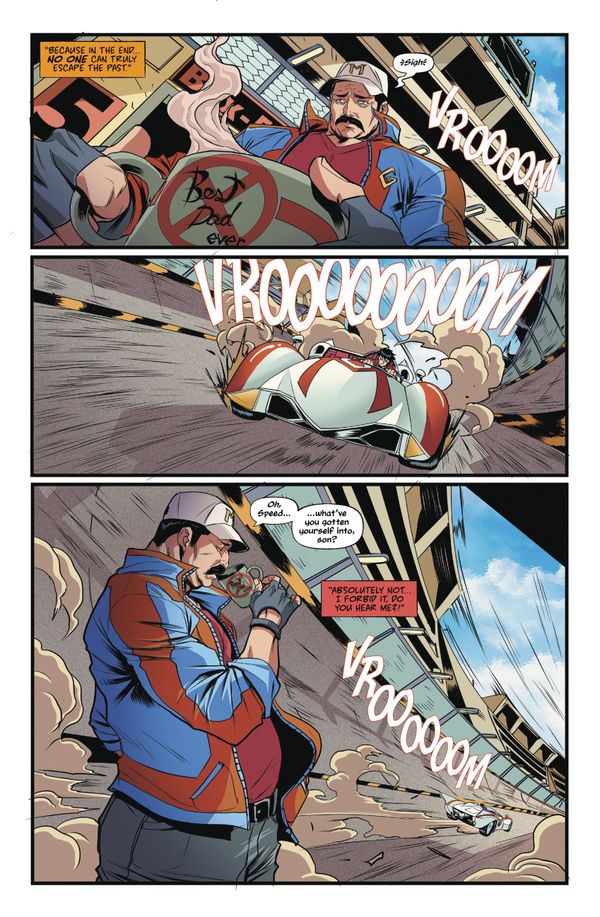
The scene shifts to the Racer compound, where Pops watches Speed practice laps in the Mach 5. Flashbacks reveal the heated argument from their past, Speed accusing Pops of never letting the family move on from Rex’s death and calling him a coward. In the present, Speed finishes his practice run, and Pops critiques his lack of strategic thinking, warning that charging ahead recklessly will make him pay the price. Speed fires back defensively, insisting he learned to race on the streets and doesn’t need Pops’ help. Spritle and Chim-Chim interrupt, joking about the father-son tension while reminding them both of Pops’ fragile health. Trixie then alerts everyone to a breaking news broadcast, Carl Cranem is publicly challenging Speed Racer on live television, announcing his partnership with Glorianna Flux and Flux Technologies to pilot the G.R.X. engine in Formula X. Carl declares he’ll defeat Speed by any means necessary to avenge his father’s legacy.
Speed, Pops, and Trixie confront Carl at his garage before the Fujiyama Grand Prix. Speed’s temper flares, but Trixie and Pops hold him back. Pops pleads with Carl, explaining he abandoned the G.R.X. because it was too unstable and dangerous, not out of betrayal. Carl rejects the explanation, calling Pops a coward and blaming him for Ben’s death. Carl reveals he knows about Pops’ heart attack and vows to destroy Speed and the entire Racer family to honor his father’s memory. Speed coldly accepts the challenge, swearing to finish the fight Carl started.
The Fujiyama Grand Prix begins, and Speed leads the pack in the Mach 5 with Carl’s G.R.X. supercar breathing down his neck. Speed pushes the Mach 5 to its limits, deploying belt tires and the cutter blade to gain distance, but the G.R.X. is reinforced with titanium plating and shrugs off every attack. Glorianna Flux taunts Speed over the comms, revealing the G.R.X.’s superiority. Carl activates the G.R.X. shockwave, a devastating energy blast that launches the Mach 5 into the air. Speed barely survives using auto jacks and the defensor shield, but the car’s frame is buckling. Pops begs Speed to slow down over the radio, warning the engine is redlining, but Speed ignores him, consumed by rage and determination to beat Carl. The Mach 5’s engine explodes catastrophically mid-race, sending Speed crashing in a fireball. Carl crosses the finish line victorious while Pops rushes to pull Speed from the wreckage. Carl gives a post-race interview, declaring the Racer family frauds and promising that if Speed ever faces him again, there won’t be anything left to bury.
How is the story in Speed Racer #6?
Pepose structures this issue like a ticking time bomb, and the fuse is Speed’s pride. The opening sequence with Carl hammering away in his garage while delivering exposition could’ve felt clunky, but Pepose leans into the villain monologue trope with self-awareness, making Carl’s obsession feel genuine rather than campy. The pacing accelerates brilliantly once the race begins, each panel tightening the noose around Speed’s neck as the Mach 5 deteriorates. Pepose doesn’t waste a single page. Every flashback, every argument, every warning from Pops builds toward the inevitable catastrophe, and when it arrives, it lands with devastating impact.
The dialogue crackles with tension, especially in the confrontation scenes. Speed’s hot-headed defiance, “I learned how to race just fine on the streets. I made it this far without you, and I can do it again!” contrasts sharply with Pops’ measured desperation. Carl’s villainy walks a fine line between theatrical and tragic, his monologues dripping with bitterness but grounded in genuine grief. The repeated motif of “sins of the father” echoes throughout, tying Carl’s vendetta to the larger generational conflict between the Racer and Cranem families. Pepose trusts the readers to connect the emotional dots without spelling everything out, allowing the drama to breathe while maintaining breakneck momentum during the race sequences.
How is the art in Speed Racer #6?
Davide Tinto delivers some of his finest work on this series, balancing intimate character acting with explosive vehicular carnage. The opening pages in Carl’s garage use tight framing and heavy shadows to emphasize his isolation and obsession, the silhouette of the G.R.X. looming like a mechanical specter over every panel. When the issue shifts to the Racer compound, Tinto opens up the compositions, using wide shots of the practice track to establish the scale of Speed’s world before tightening back in on facial expressions during the argument scenes. The way Tinto renders Pops’ worried grimace or Speed’s clenched jaw communicates volumes without a single word balloon.
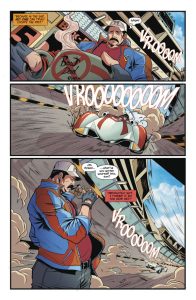
The race sequences are where Tinto truly shines. The Fujiyama Grand Prix unfolds with kinetic clarity, each vehicle’s trajectory traceable even amidst the chaos. Tinto uses dynamic angles and motion lines to convey velocity without sacrificing readability, a difficult balance many racing comics fail to strike. João Canola’s colors amplify the mood shifts brilliantly, the warm oranges and reds of the Racer compound contrasting with the cold blues and purples of Carl’s garage. During the race, Canola bathes the panels in fiery oranges and sickly greens when the G.R.X. engine activates, visually coding the technology as unnatural and dangerous. The final explosion is a masterclass in color-driven storytelling, the Mach 5 engulfed in blinding whites and yellows that bleed across the page borders, overwhelming the reader just as the disaster overwhelms Speed.
Characters
Speed Racer’s character arc in this issue is a brutal deconstruction of his heroic confidence. He enters the race believing his street racing instincts and raw talent will carry him through, but Pepose systematically dismantles that arrogance. Speed’s refusal to listen to Pops isn’t just teenage rebellion, it’s a defense mechanism born from years of living in Rex’s shadow and feeling underestimated. His internal monologue, “I refuse to live my life standing still,” reveals a young man terrified of becoming like his father, paralyzed by past trauma. Watching Speed push the Mach 5 past its breaking point isn’t thrilling, it’s heartbreaking, because we understand he’s not just racing Carl, he’s racing against his own fears of inadequacy.
Carl Cranem functions as a dark mirror to Speed, another son crushed under the weight of paternal expectations and tragedy. His motivations are crystal clear, avenge his father and prove the Cranem name deserves respect. What elevates Carl beyond generic villain status is Pepose’s willingness to let him be right about certain things. Pops did abandon the G.R.X. project, and that decision did destroy Ben Cranem’s career. Carl’s rage is justified even if his methods are monstrous. He’s not cackling evil, he’s a grieving son weaponizing his pain.
Pops Racer emerges as the emotional anchor of the issue. His guilt over abandoning Ben, combined with his terror of losing another son, makes every warning he delivers to Speed land with tragic weight. The flashback to his heart attack subtly reminds readers of his mortality, adding urgency to his pleas for Speed to slow down. Pops isn’t just worried about the race, he’s watching history repeat itself, another son charging recklessly toward disaster while he stands helpless.
Originality & Concept Execution
Mad Cave’s Speed Racer reboot has consistently delivered modernized takes on classic characters, and issue #6 cements that approach. The G.R.X. engine concept reimagines the franchise’s tech-driven spectacle through a lens of generational trauma and corporate exploitation. Glorianna Flux weaponizing a dead man’s legacy for profit adds a satirical edge to the racing drama, making the stakes feel both personal and systemic. Pepose’s decision to frame this arc as a revenge tragedy rather than a straightforward racing competition elevates the material beyond nostalgia bait.
The execution is nearly flawless. Pepose and Tinto understand that Speed Racer works best when the racing serves character development rather than overshadowing it. The Fujiyama Grand Prix isn’t just spectacle, it’s a crucible where Speed’s hubris, Pops’ guilt, and Carl’s vengeance collide. The issue delivers on its premise of “The Racer’s Reckoning” by forcing every character to confront the consequences of their past choices. Speed learns humility the hard way, Pops faces the fallout of his old partnership, and Carl achieves his revenge but reveals himself as hollow and broken. It’s tragic, propulsive, and emotionally intelligent.
Pros and Cons
Art Samples:
The Scorecard:
Writing Quality (Clarity & Pacing): 3.5/4
Art Quality (Execution & Synergy): 4/4
Value (Originality & Entertainment): 1.5/2
Final Thoughts:
(Click this link 👇 to order this comic)
Speed Racer #6 is a masterclass in superhero comics disguised as a racing manga, a brutal character study where the hero loses everything and has to reckon with the wreckage. Pepose refuses to let Speed win on raw talent alone, instead forcing him to confront the limits of his arrogance in the most painful way possible. Tinto and Canola’s art elevates every emotional beat and racing sequence, making the Mach 5’s destruction feel like watching a beloved character die. This isn’t a feel-good adventure, it’s a tragedy that earns its gut-punch ending by meticulously building toward catastrophe.
Related Posts:
We hope you found this article interesting. Come back for more reviews, previews, and opinions on comics, and don’t forget to follow us on social media:
If you’re interested in this creator’s works, remember to let your Local Comic Shop know to find more of their work for you. They would appreciate the call, and so would we.
Click here to find your Local Comic Shop: www.ComicShopLocator.com
As an Amazon Associate, we earn revenue from qualifying purchases to help fund this site. Links to Blu-Rays, DVDs, Books, Movies, and more contained in this article are affiliate links. Please consider purchasing if you find something interesting, and thank you for your support.