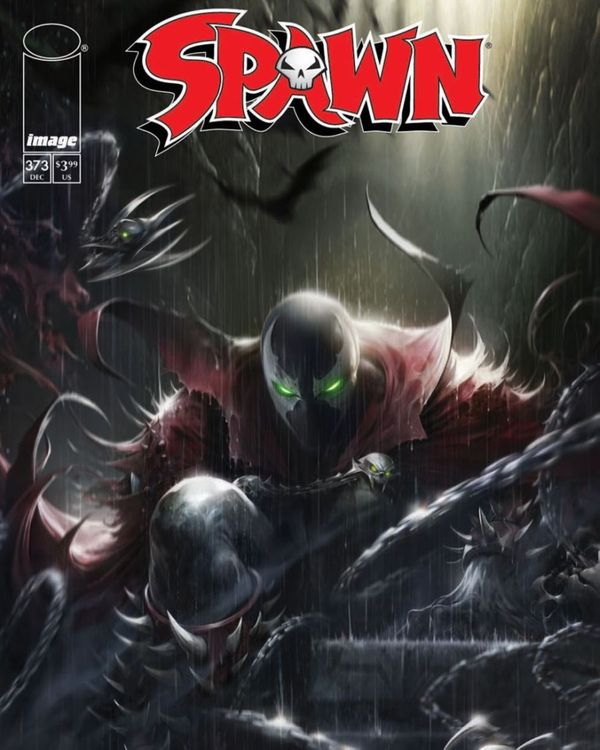
Spawn #373 (Image Comics, 3/11/26): Writer Todd McFarlane and artist Brett Booth escalate Hell’s comeback story as the resurrected Malebolgia brutally dominates Cogliostro (now Sinn) while Al Simmons and vampire lord Bludd infiltrate Omega Island for a confrontation centuries in the making. Verdict: Worth reading.
Credits:
- Writer: Todd McFarlane
- Artist: Brett Booth, Adelso Corona
- Colorist: Robert Nugent
- Letterer: Tom Orzechowski
- Cover Artist: Francesco Mattina (cover A)
- Publisher: Image Comics
- Release Date: March 11, 2026
- Comic Rating: Teen+
- Cover Price: $3.99
- Page Count: 22
- Format: Single Issue
Covers:
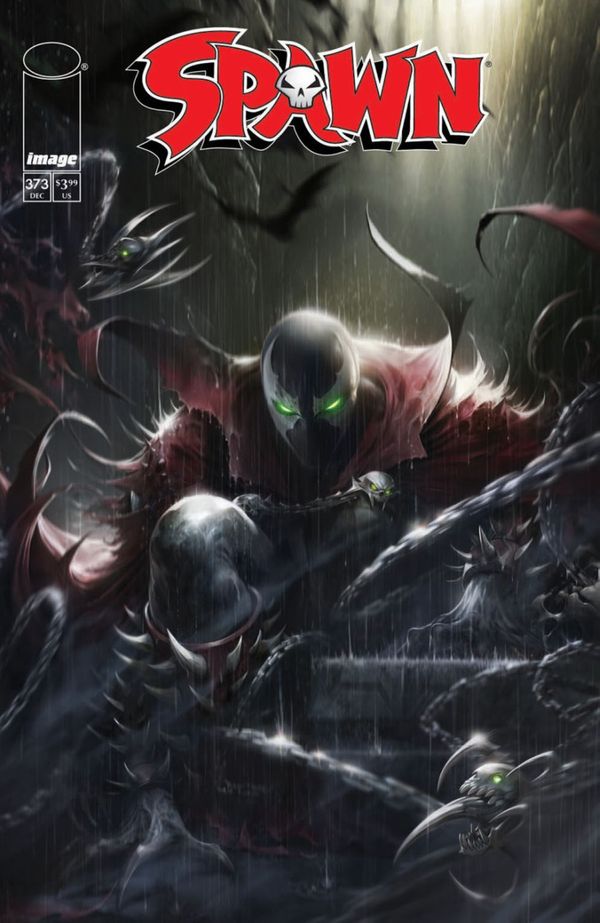
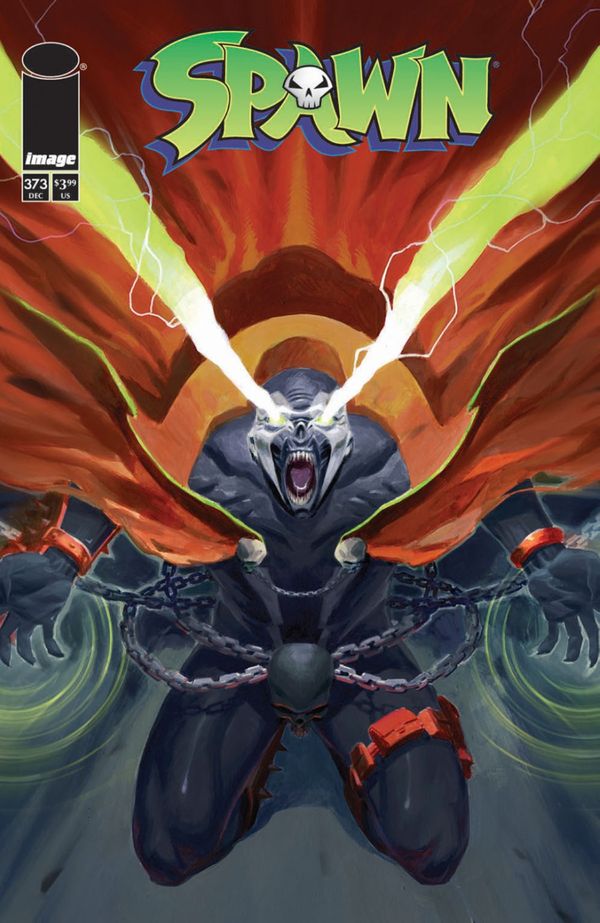
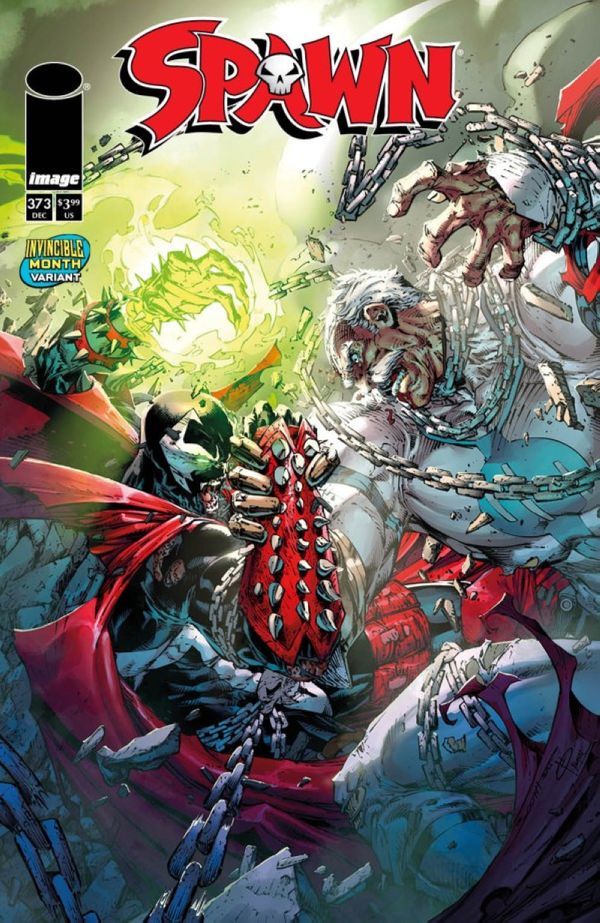
Analysis of Spawn #373:
First Impressions:
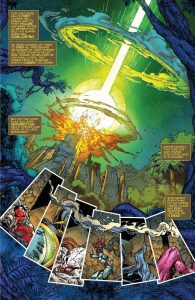
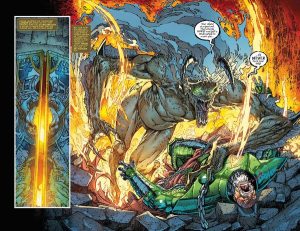
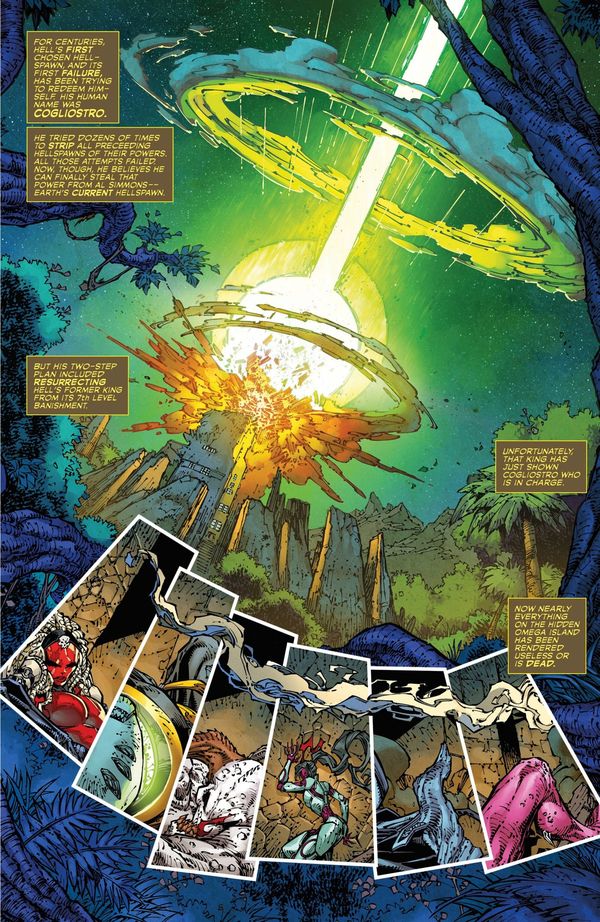
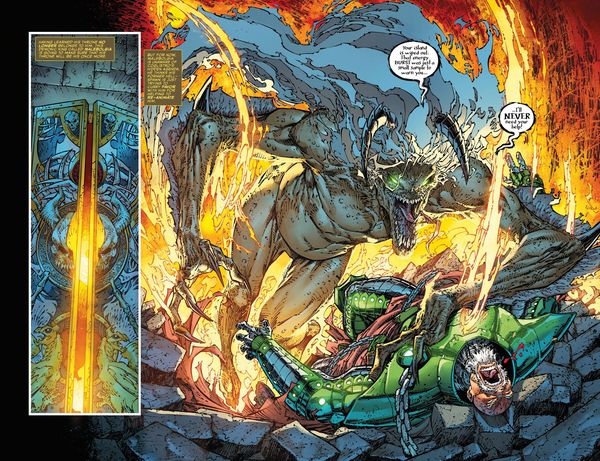
You feel the raw power imbalance from page one, where Malebolgia reminds his former failure Cogliostro exactly who holds the leash in this relationship, and the humiliation lands with brutal efficiency. Brett Booth’s kinetic layouts crackle with menace, every grotesque expression on Malebolgia’s face dripping with sadistic glee while Adelso Corona’s inks add ferocious weight to each snarl and claw. Robert Nugent’s sickly green color palette bathes the Omega Island scenes in radioactive dread, making every energy blast and glowing eye pop against the shadowy ruins, and when Sinn finally strikes back with stolen Hellspawn power, the visual payoff hits like a thunderclap. The pacing smartly alternates between this tense power struggle, Spawn and Bludd’s stealthy oceanic infiltration (complete with killer whale camouflage that’s equal parts clever and ridiculous).
The issue thrives when focused on physical confrontation and strategic maneuvering, less so when indulging McFarlane’s penchant for exposition-heavy monologues.
Recap:
In Spawn #372, Cogliostro (now calling himself Sinn after absorbing power from two other Hellspawns) successfully completed his ritual to resurrect Malebolgia, Hell’s former king who was banished to the 7th level after Spawn killed him in issue #100. The resurrection broke the treaty keeping Hell’s influence off Earth, but Sinn calculated this loophole would work because Malebolgia needed a physical anchor to remain corporeal. Meanwhile, Spawn confronted the Anti-Spawn (Redeemer) in Rat City and learned that someone was plotting to steal his power for a resurrection ritual, though he didn’t know the full scope until the Redeemer revealed Malebolgia’s return. Separately, vampire lord Bludd tortured a captive to extract Omega Island’s Pacific Ocean coordinates, threatening the prisoner’s children to ensure cooperation in dropping the island’s cloaking shield. The issue ended with Malebolgia awakening in diminished human form, confused by his weakness but determined to extract necro-energy from Al Simmons to regain his full demonic power and reclaim Hell’s throne.
Plot Analysis (SPOILERS):
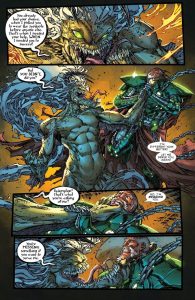
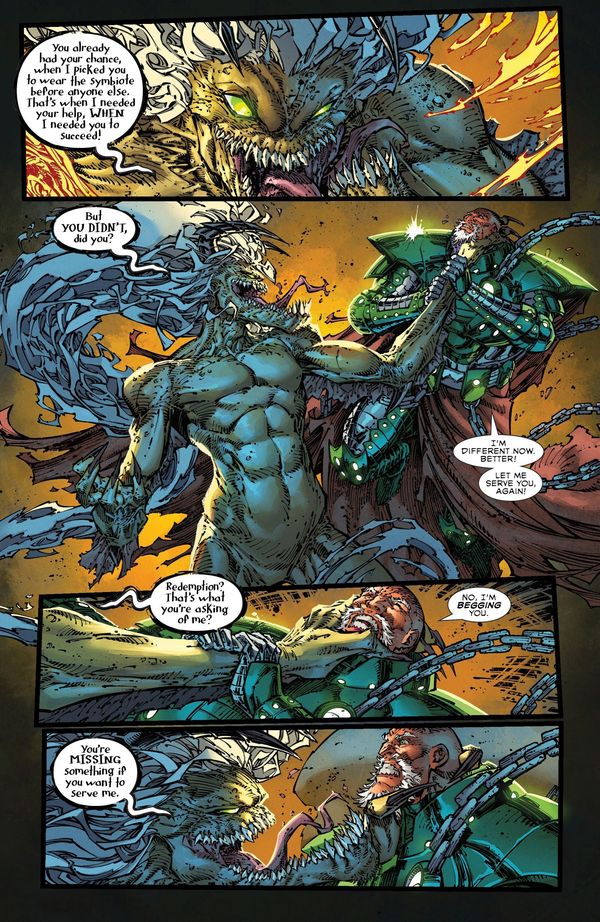
Malebolgia wastes zero time asserting dominance over Sinn, throttling his former servant while mocking Cogliostro’s original failure as the first Hellspawn who couldn’t deliver results. When Sinn begs for a chance to prove his new strength and loyalty, Malebolgia carves the letter “M” into his forehead with brutal precision, the same mark all Hellspawns wear on their chests, completing the humiliation. Sinn endures the pain (the first real agony he’s felt since stealing his absurd power levels), then shocks his master by firing a massive necroplasmic blast and impaling him with a spike, proving he’s evolved beyond the weak failure Malebolgia remembers.
Rather than kill the demon king or let him break the Heaven-Hell treaty by touching Earth’s soil, Sinn demonstrates strategic restraint, earning a wary partnership sealed with a handshake. Malebolgia explains his four-hour countdown to full stabilization, after which he’ll extract necro-energy from any source to trigger his growth and Hell re-entry, rewarding Sinn only after success. The demon king monologues about his original experiments with the symbiote, revealing he tested it on Hell’s demons (failed), Earth’s animals (brief success but fatal), and finally humans (the breakthrough), always expecting betrayal and planning contingencies like splitting his soul into trusted soldiers.
Meanwhile, Al Simmons and vampire lord Bludd sail across the Pacific on a sleek yacht toward Omega Island’s coordinates, Spawn questioning whether the crew can handle real combat while Bludd assures him they’re specialists. A captive agent of Heaven (who helped build the island’s cloaking shield) makes a phone call at Bludd’s command, convincing his contact Vijay to drop the shield for “maintenance,” giving the infiltrators their five-minute window. Spawn and Bludd take flight under moonlight, spreading their wings in a moment both characters clearly relish, then dive underwater precisely when the shield reactivates, swimming alongside a pod of killer whales to fool the island’s depth detectors. Security personnel dismiss the readings as marine life, the fifth pod in recent days likely spooked by Malebolgia’s earlier energy burst.
Back on Omega Island, Malebolgia continues his resurrection process while interrogating a chained demon servant about loyalty, threatening to kill both Sinn and the demon before Sinn reminds him that severing their link would trap Malebolgia in his weakened state forever, unable to grow or reclaim his throne. The demon king acknowledges Sinn’s clever survival insurance, then unleashes a second massive energy blast far larger than his first island-scorching warning, this one traveling across the globe to alert every shadow player (Heaven’s soldiers, Hell’s demons, and supernatural beings) that he’s ready to reclaim his throne. A frantic TV news anchor delivers a monologue comparing current global panic over super-beings and giant monsters to 1960s Cold War nuclear dread, ranting about tanking stock markets, empty grocery shelves, government gridlock, and a president more interested in golf than leadership. The issue closes with a splash page of Spawn emerging onto Omega Island’s shore, narration crowning him as the greatest Hellspawn who already killed Malebolgia once and is fully prepared to do it again, the cryptic code “5:1:3:1” glowing in demonic green suggesting a countdown or coordinates for the impending clash.
How is the story in Spawn #373?
McFarlane structures the issue with three distinct narrative tracks that intercut effectively to maintain forward momentum, though the execution across those tracks varies wildly in quality. The Malebolgia and Sinn confrontation delivers the issue’s strongest beats, establishing power dynamics through visceral action rather than just threats, and the moment Sinn strikes back after being branded carries genuine surprise because McFarlane earned that reversal through consistent characterization of Cogliostro’s evolved cunning across recent issues. The physical storytelling in these sequences works because the violence has strategic purpose, Sinn enduring humiliation to prove his value rather than just absorbing punishment, and Malebolgia’s decision to spare him feels earned rather than convenient. The demon king’s dialogue veers between effectively menacing (“You want to show your loyalty, then carry my mark. Forever.”) and tediously expository, particularly the multi-page monologue explaining symbiote experimentation history that grinds momentum to a halt when visual storytelling could’ve conveyed the same information through flashback panels or tighter narration.
The Spawn and Bludd infiltration sequence demonstrates McFarlane’s skill with atmospheric world-building and procedural detail, the phone call deception and underwater stealth approach unfolding with thriller-like precision that makes the heroes feel competent rather than lucky. Small touches like the killer whale camouflage and the security team’s casual dismissal of readings add texture to the supernatural espionage, grounding fantastical elements in plausible tradecraft. However, the extended TV broadcast monologue crashes the pacing like a drunk driver hitting a guardrail, its explicit Cold War parallel feeling both heavy-handed and tonally jarring against the issue’s shadowy supernatural intrigue. The anchor’s rant reads like McFarlane’s personal grievances about government dysfunction and media panic rather than organic character voice, and while thematic commentary about living under existential threat has merit, the execution here feels like a soap-box interruption rather than integrated storytelling. The pacing suffers most when McFarlane defaults to narration boxes explaining character motivations or plot mechanics that competent visual storytelling already conveyed, treating readers like they need Cliff’s Notes for scenes Booth’s art communicates perfectly. Dialogue oscillates between sharp character-driven exchanges (Spawn’s pragmatic crew questions, Bludd’s confident responses) and clunky exposition dumps that exist solely to catch up readers rather than advance character or plot organically.
How is the art in Spawn #373?
Brett Booth delivers ferociously kinetic artwork that transforms McFarlane’s script into visceral eye candy, his angular musculature and exaggerated proportions perfectly suited to a book where demonic power and physical dominance drive every confrontation. Booth excels at action choreography, the sequence where Sinn fires his necroplasmic blast and impales Malebolgia unfolding across overlapping jagged panels that convey explosive speed and bone-crushing impact simultaneously. His character acting shines brightest in close-ups, Malebolgia’s sadistic grin and glowing eyes radiating predatory malice while Sinn’s bloodied determination registers through clenched teeth and furrowed brows, every expression pushing emotional stakes without relying on dialogue. Adelso Corona’s inks add crucial weight and shadow depth, particularly in the Omega Island ruins where thick blacks and scratchy textures make the environment feel ancient and decayed, the perfect gothic backdrop for Hell’s king to rebuild his strength. Corona’s line work complements Booth’s energetic pencils without overpowering them, finding the balance between slick superhero polish and grimy horror aesthetic that Spawn’s hybrid genre demands.
Robert Nugent’s color work deserves special recognition for establishing distinct visual atmospheres across the issue’s three locations. The Omega Island scenes bathe in sickly radioactive greens and deep purples, Malebolgia’s energy blasts glowing with otherworldly menace against shadowy stone ruins that feel appropriately hellish. The Pacific Ocean infiltration sequence shifts to cool blues and moonlit silvers, creating serene beauty that contrasts sharply with the violence brewing beneath the surface, and the underwater panels use murky green-black gradients that convey depth and danger without losing clarity on character placement. The TV broadcast scene employs harsh studio whites and flat screen-glow blues that visually communicate sterile media artifice, though this sequence’s static talking-head panels feel like a missed opportunity for more dynamic framing or split-screen compositions that could’ve maintained visual interest during the extended monologue.
Booth’s panel layouts demonstrate strong cinematic instincts, using wide establishing shots for location transitions, medium frames for dialogue exchanges, and tight close-ups for emotional beats with professional rhythm. The splash page of Spawn emerging onto shore hits with blockbuster impact, his chains and cape flowing dramatically while green energy wisps frame the composition, though the cryptic “5:1:3:1” code feels visually underwhelming given its apparent narrative importance, resembling a digital clock readout more than a mystical prophecy.
Characters
Sinn (formerly Cogliostro) receives the issue’s most substantial character work, his arc demonstrating evolution from desperate schemer to calculating survivor who understands power dynamics with centuries-old wisdom. His willingness to endure Malebolgia’s branding before striking back reveals strategic patience that separates him from impulsive villains, and the moment he reminds the demon king about their life-link shows he’s learned from past failures to build insurance policies into his schemes. McFarlane writes Sinn as genuinely dangerous because his motivations remain murky, serving Malebolgia while clearly harboring his own agenda, creating tension around whether this partnership will hold or explode spectacularly. Malebolgia himself lands as appropriately menacing despite his diminished physical form, his dialogue dripping with entitled arrogance and his actions demonstrating he still views everyone as tools or obstacles rather than equals. The demon king’s monologue about symbiote experimentation adds historical context that enriches Spawn lore while revealing his methodical cruelty, though the delivery feels more like a history lesson than organic villain characterization.
Spawn remains frustratingly passive throughout this issue, reduced to traveling toward confrontation rather than actively driving plot, though his determination radiates through Booth’s body language even in silent panels. The narration crowning him “the greatest Hellspawn” who already killed Malebolgia once attempts to maintain his protagonist credibility, but without meaningful dialogue or decisions here, Al feels like a chess piece being moved into position rather than an active agent shaping events. Bludd fares slightly better as the competent professional who planned this infiltration down to the last detail, his confidence suggesting he’s operated at this level for centuries, though McFarlane doesn’t give him much personality beyond cool efficiency. The captive Heaven agent and security personnel function purely as plot devices, their brief appearances serving mechanical purposes without memorable characterization. The TV anchor exists solely as McFarlane’s mouthpiece for thematic commentary, lacking any personality or perspective beyond delivering the writer’s anxieties about government dysfunction and societal panic, which undermines the attempt at grounded human reaction to supernatural chaos.
Originality & Concept Execution
The core premise of resurrecting Spawn’s original villain carries nostalgic weight for longtime readers while feeling less fresh for anyone expecting new threats rather than greatest-hits callbacks. McFarlane leans heavily on established lore and character relationships, banking on readers’ emotional investment in Malebolgia’s return rather than introducing genuinely novel conflicts or thematic territory. The symbiote origin exposition adds world-building texture but doesn’t reveal information that fundamentally changes our understanding of Spawn mythology, functioning more as lore codification than revelation. The infiltration mechanics (phone call deception, cloaking shield, underwater approach) execute genre conventions competently without subverting or elevating them, delivering solid thriller beats that feel familiar rather than inventive. The Heaven-Hell treaty complication adds strategic stakes that prevent characters from simply unleashing maximum power, forcing Sinn and Malebolgia to operate within constraints that create tension, though this political maneuvering gets explained through dialogue rather than dramatized through consequences.
The issue’s strongest original element is the psychological warfare between Malebolgia and Sinn, their relationship functioning as twisted mentorship where the student has surpassed the teacher in raw power but still lacks the master’s centuries of tactical experience. This dynamic could yield fascinating character exploration if McFarlane commits to developing Sinn’s hidden agenda rather than just using him as Malebolgia’s henchman. The weakest element is the TV broadcast commentary attempting to ground cosmic supernatural stakes in contemporary political anxieties, the execution feeling tacked-on rather than organically integrated into the narrative fabric. The concept of society grappling with public knowledge of super-beings has merit and echoes themes from books like Astro City or Marvels, but McFarlane’s blunt-force approach here lacks the nuance or human specificity that makes such commentary resonate beyond surface-level “people are scared and governments are useless” observations.
Pros and Cons
Art Samples:
The Scorecard:
Writing Quality (Clarity & Pacing): 2.5/4
Art Quality (Execution & Synergy): 3.5/4
Value (Originality & Entertainment): 1/2
Final Thoughts:
(Click this link 👇 to order this comic)
Spawn #373 lands as a rock-solid middle chapter that positions pieces for the inevitable Malebolgia showdown while delivering enough visceral action and character maneuvering to justify the read. Brett Booth’s artwork elevates Todd McFarlane’s script beyond its expositional stumbles, transforming talky sequences into visually dynamic storytelling through sheer artistic craft and atmospheric color choices. The issue succeeds most when focused on physical confrontation and strategic positioning, Sinn’s brutal humiliation and calculated counterattack. Where the issue falters is McFarlane’s inability to resist explaining everything through dialogue and narration when his art team already communicates the necessary information.
Related Posts:

We hope you found this article interesting. Come back for more reviews, previews, and opinions on comics, and don’t forget to follow us on social media:
If you’re interested in this creator’s works, remember to let your Local Comic Shop know to find more of their work for you. They would appreciate the call, and so would we.
Click here to find your Local Comic Shop: www.ComicShopLocator.com
As an Amazon Associate, we earn revenue from qualifying purchases to help fund this site. Links to Blu-Rays, DVDs, Books, Movies, and more contained in this article are affiliate links. Please consider purchasing if you find something interesting, and thank you for your support.