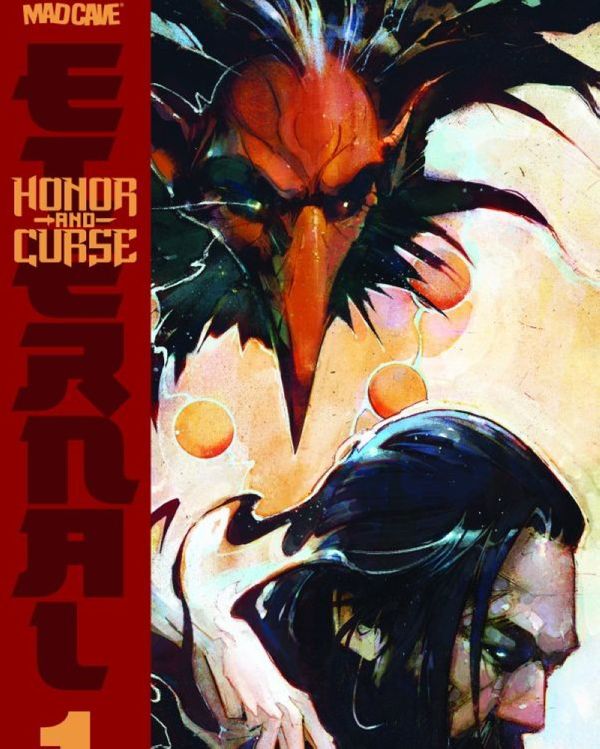
Honor and Curse: Eternal #1 (Mad Cave Studios, 3/25/26): Writer Mark London and artist Jaime Infante relaunch the supernatural saga as Genshi Sakagura navigates modern New York while haunted by an ancient Tengu. This atmospheric debut delivers a measured, disciplined on-ramp for a sustainable flagship series. Verdict: Worth reading.
Credits:
- Writer: Mark London
- Artist: Jaime Infante
- Colorist: Fran Gamboa
- Letterer: Carlos M. Mangual
- Cover Artist: Nick Marinkovich (cover A)
- Publisher: Mad Cave Studios
- Release Date: March 25, 2026
- Comic Rating: Teen
- Cover Price: $4.99
- Page Count: 32
- Format: Single Issue
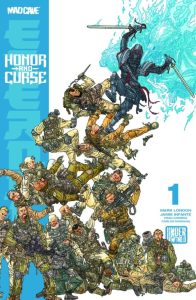
Covers:
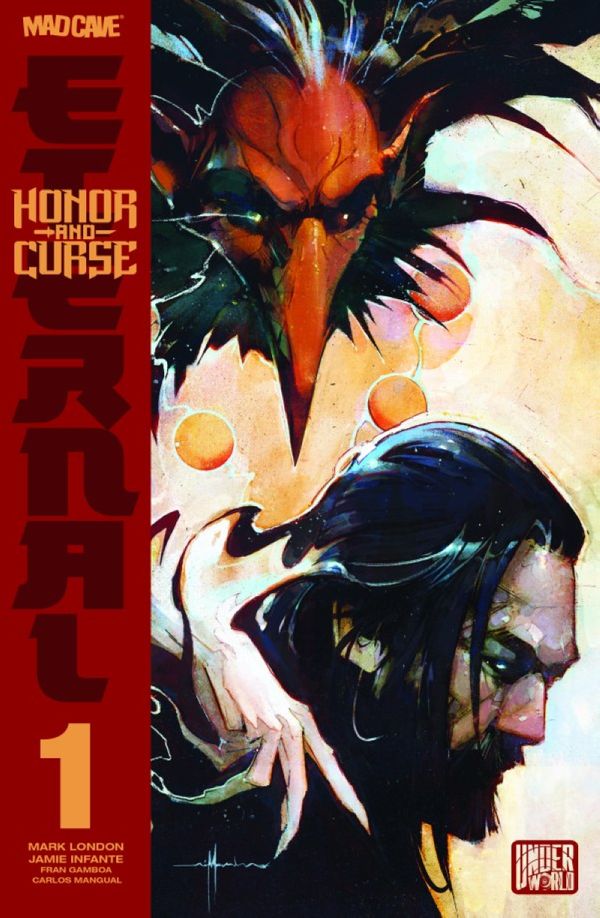
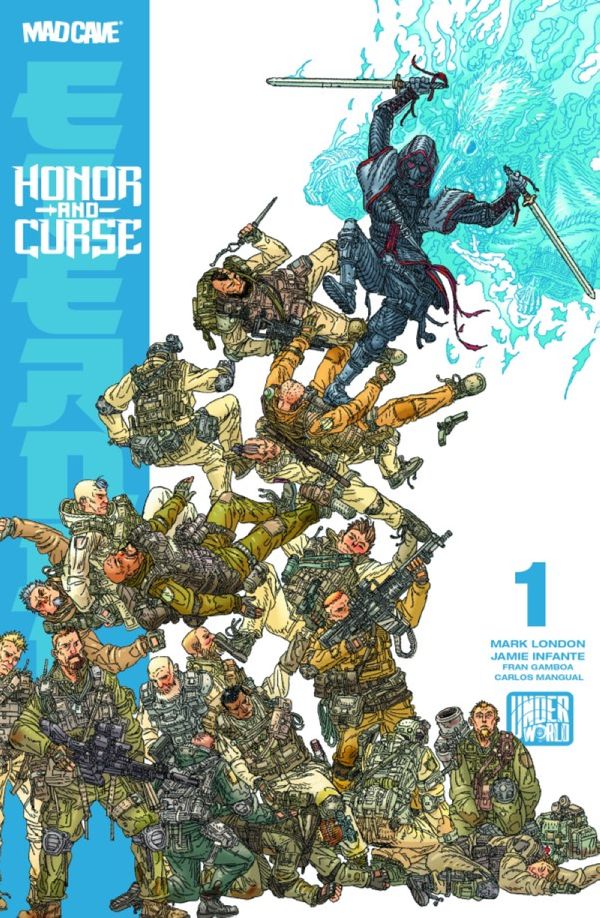
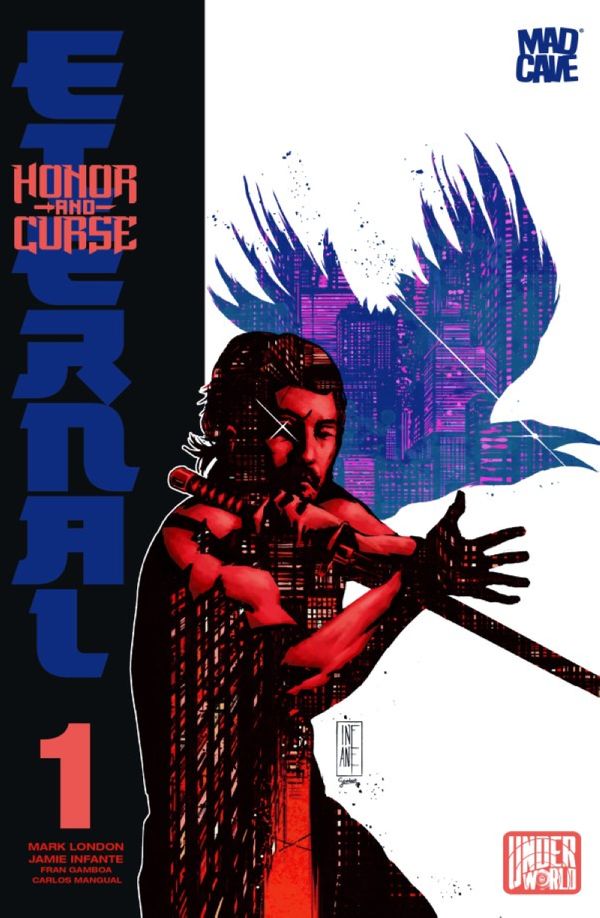
Analysis of Honor and Curse: Eternal #1:
First Impressions:
There is a specific weight to a series that manages to survive the typical indie churn and return for a second volume with its creative identity intact. You can feel the confidence in the opening pages, where the transition from 15th-century Iga to modern Manhattan feels less like a marketing gimmick and more like a natural evolution of the curse. Jaime Infante’s ink work immediately sets a grim, shadow-heavy tone that honors the original series while signaling a more mature, urban fantasy direction. It is a refreshing bit of stability in a market that usually relies on radical, committee-driven shifts to stay relevant.
Recap:
Genshi Sakagura was once the chief protector of the Iga clan before being possessed by a demonic Tengu and disappearing from history six centuries ago. The previous volume established his struggle with this internal monster during the feudal era, where he was ultimately forced into a life of isolation. Now, the story shifts its focus to the present day to see how that ancient burden translates to a modern concrete jungle. This issue serves as a fresh on-ramp for those who missed the original 2019 run while continuing the central tragedy of a man out of time.
Plot Analysis (SPOILERS):
Six hundred years ago in Iga, Japan, Genshi Sakagura faces a bitter confrontation with his former allies while struggling to control the Tengu spirit, Miyamoto, within him. He resolves to use an impending war as a way to protect his people, even if it means his own name is erased from the historical records of his clan. The scene is heavy with the weight of destiny, setting the stage for a man who cannot die as long as the curse remains active and hungry.
In modern-day New York, Genshi now operates Mountain Protection, a private security firm that utilizes his ancient training and supernatural resilience to survive the city’s underbelly. He maintains a tense, internal dialogue with Miyamoto, who remains a prisoner in the back of his mind but continues to exert a corrupting influence on his soul. As he manages the daily grind of the security business, old shadows begin to resurface, suggesting that his past in Japan is far from buried. The issue closes on a note of rising tension that promises a clash between modern corporate interests and ancient blood feuds.
How is the story in Honor and Curse: Eternal #1?
Mark London understands that the long-term health of a franchise depends on a slow burn rather than immediate, empty payoffs. The dialogue between Genshi and Miyamoto is particularly effective, avoiding the typical internal monologue tropes for something that feels more like a weary, unwanted partnership between two veterans. Pacing is deliberate, spending just enough time in the past to establish the stakes before pivoting to the systemic reality of running a business in the modern world. It is a smart move that gives the supernatural elements a grounded, pragmatic anchor that feels earned.
How is the art in Honor and Curse: Eternal #1?
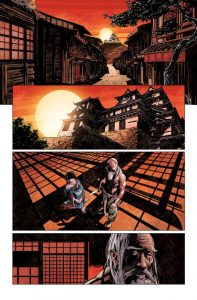
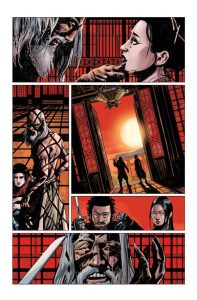
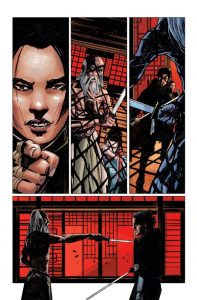
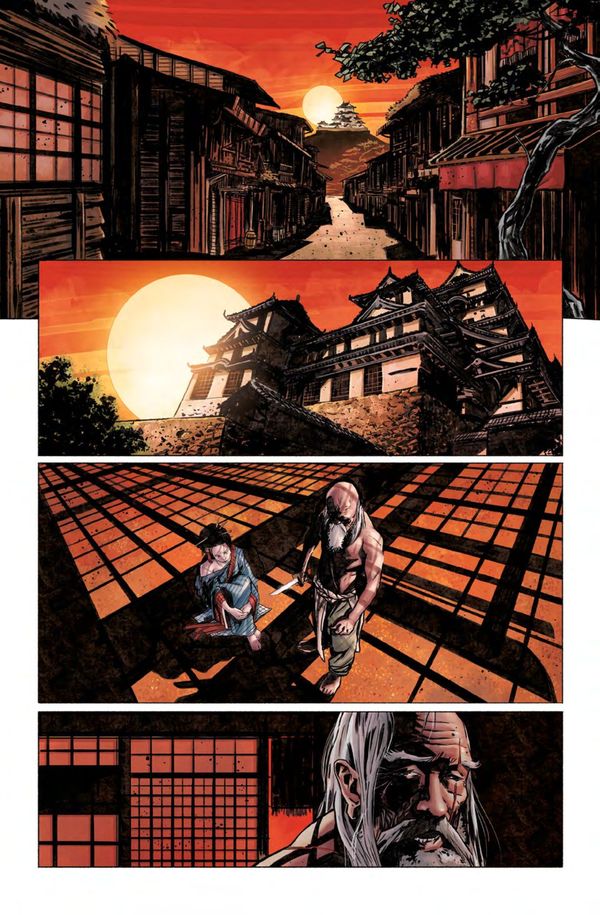
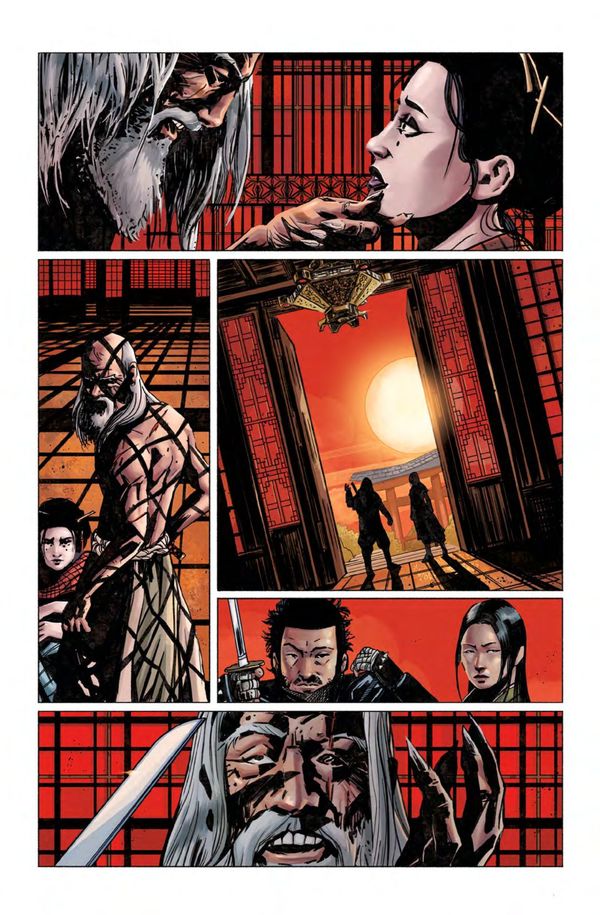
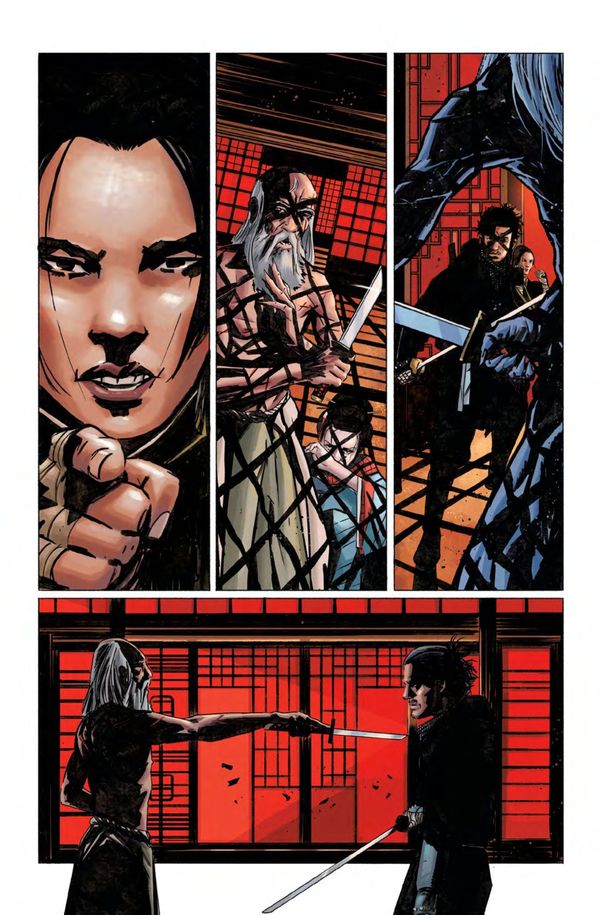
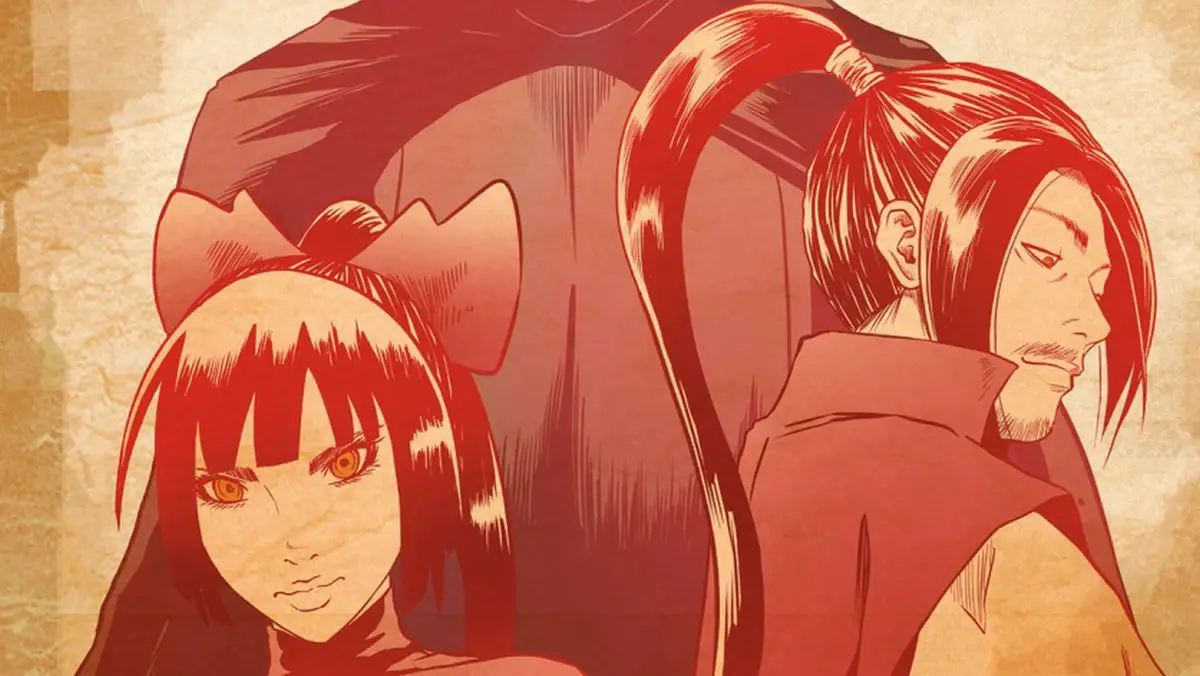
Jaime Infante masterfully utilizes heavy, jagged shadows to bridge the vast gap between the feudal and modern eras, creating a visual consistency that is absolutely vital for such a time-skipping narrative. The panel layouts in the opening Iga sequence are visceral and disciplined, using dynamic posing to sell the lethality of the shinobi without descending into visual clutter. When the setting shifts to New York, the art adopts a more structured, noir-inspired geometry that reflects the rigid, protective life Genshi has built for himself.
Fran Gamboa’s colors deserve praise for their atmospheric restraint, utilizing a palette of deep reds and murky blues that emphasize the darker themes of the title. The lighting in the modern sequences is particularly sharp, with neon highlights cutting through the gloom of New York alleys to maintain that urban fantasy edge. Character acting is subtle but clear, conveying Genshi’s six centuries of exhaustion through his eyes and posture without needing a single word of unnecessary narration.
Characters
Genshi Sakagura remains a compelling focal point because he is defined by his burden rather than his supernatural powers. His transition from a dutiful protector to a world-weary businessman is handled with a level of pragmatism that makes his immortality feel like a genuine, heavy exhaustion. The goal of staying hidden while staying relevant in the security world provides a clear internal conflict that grounds the more fantastical Tengu elements. He is not a hero looking for a fight, but a veteran looking for peace in a world that refuses to give it to him.
Originality & Concept Execution
While the ninja in the modern world trope is well-worn territory, this issue succeeds by leaning into the consequences of longevity rather than just fish-out-of-water humor. The execution of the Mountain Protection concept provides a sustainable flagship hook for future stories, moving past simple revenge to something more complex and systemic. It delivers on the basics of a strong journey and high stakes by showing us that even if the setting changes, the underlying obstacles remain the same.
Pros and Cons
Art Samples:
The Scorecard:
Writing Quality (Clarity & Pacing): 3.5/4
Art Quality (Execution & Synergy): 3.5/4
Value (Originality & Entertainment): 1.5/2
Final Thoughts:
(Click this link 👇 to order this comic)
Honor and Curse: Eternal #1 is an exceptionally paced return that respects the reader’s time by building a sustainable future for its protagonist. The issue succeeds because it chooses to analyze the systemic weight of immortality rather than just delivering empty action for the sake of hype. Jaime Infante’s moody, kinetic visuals and Mark London’s world-weary script create a debut that feels earned and necessary for the long-term health of the medium. This comic earns a place on your pull list for its disciplined execution and refreshing lack of superficial fluff.
Related Posts:

We hope you found this article interesting. Come back for more reviews, previews, and opinions on comics, and don’t forget to follow us on social media:
If you’re interested in this creator’s works, remember to let your Local Comic Shop know to find more of their work for you. They would appreciate the call, and so would we.
Click here to find your Local Comic Shop: www.ComicShopLocator.com
As an Amazon Associate, we earn revenue from qualifying purchases to help fund this site. Links to Blu-Rays, DVDs, Books, Movies, and more contained in this article are affiliate links. Please consider purchasing if you find something interesting, and thank you for your support.