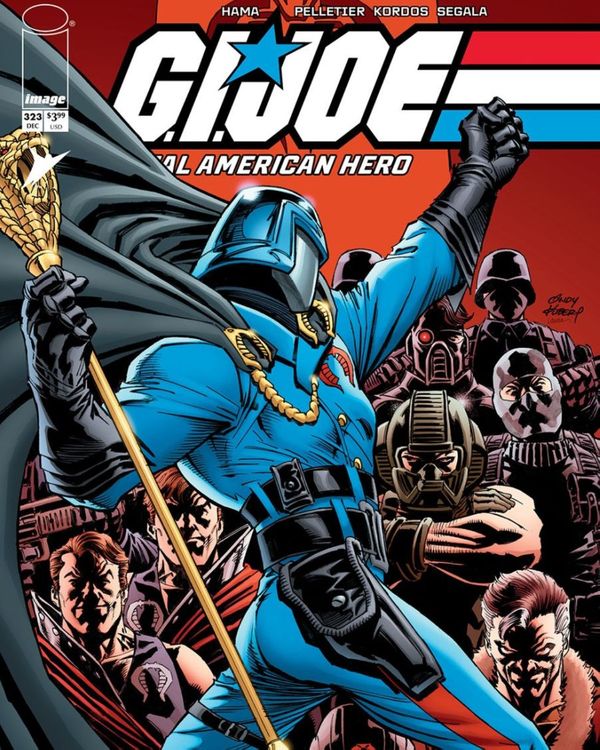
G.I. Joe: A Real American Hero #323, by Image Comics on 12/10/25, swaps the battlefield for the boardroom and spy networks, delivering a political thriller wrapped in military threads. It’s part chess match, part recruitment drive, and part horror show disguised as a vacation resort.
Credits:
- Writer: Larry Hama
- Artist: Paul Pelletier, Tony Kordos
- Colorist: Francesco Segala
- Letterer: Pat Brosseau
- Cover Artist: Andy Kubert (cover A)
- Publisher: Image Comics
- Release Date: December 10, 2025
- Comic Rating: Teen
- Cover Price: $3.99
- Page Count: 40
- Format: Single Issue
Covers:
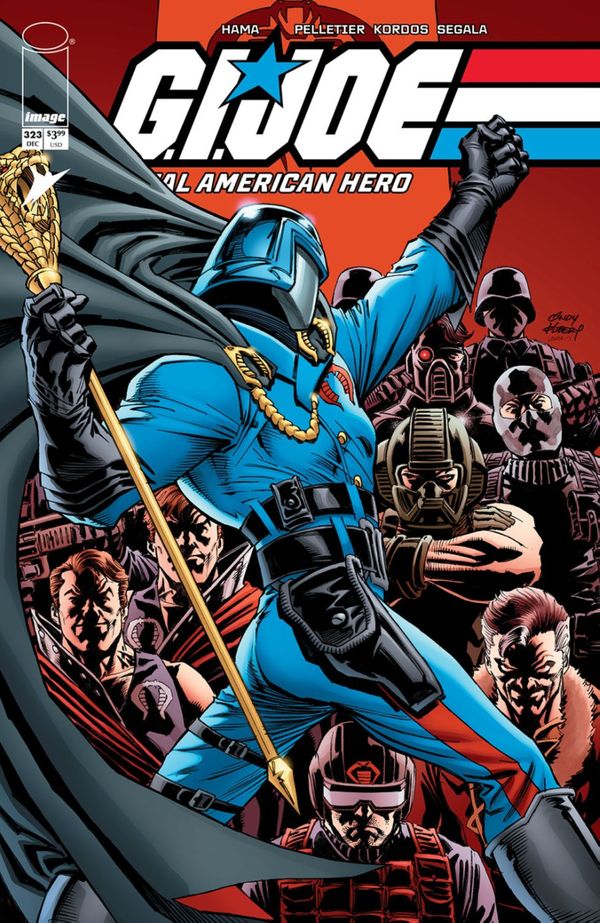
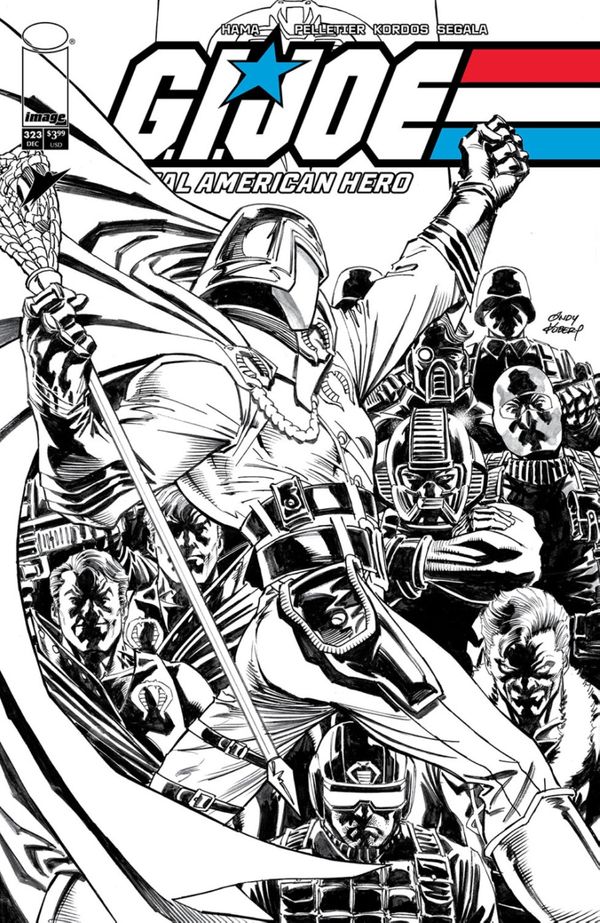
Analysis of G.I. JOE: A REAL AMERICAN HERO #323:
First Impressions:
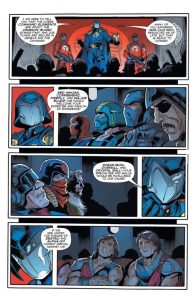
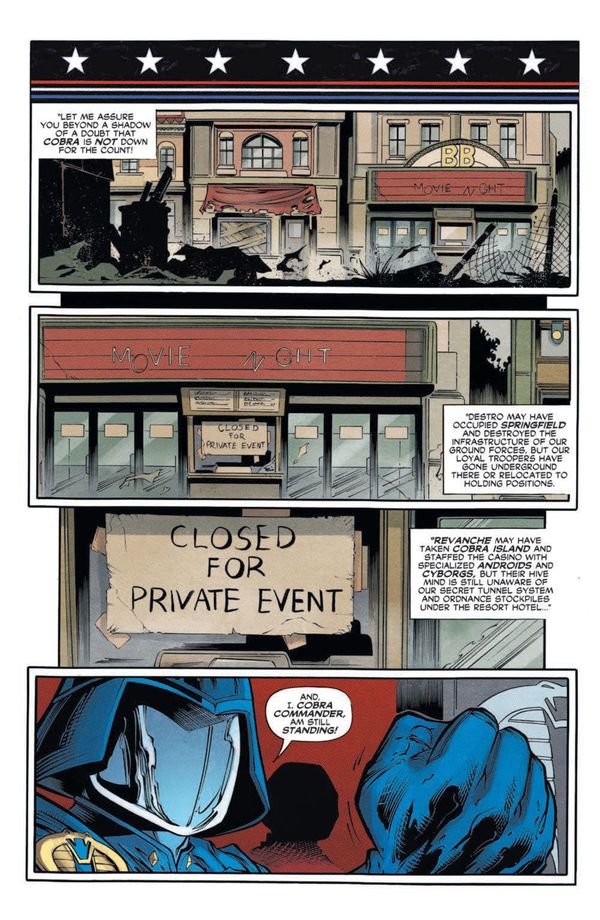
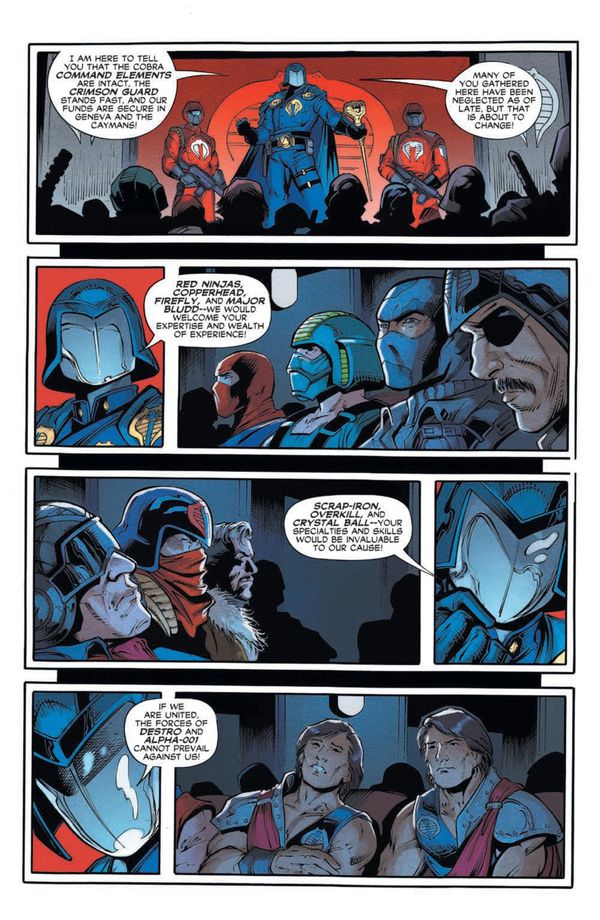
The opening monologue from Cobra Commander feels like a confidence play from a cornered player trying to convince everyone he still holds the cards. His assertion that Cobra stands firm despite Destro’s occupation of Springfield and Revanche’s control of Cobra Island sets the tone: this is about survival through cunning rather than firepower. The concept is strong, but the execution relies on long speeches to do the heavy lifting instead of showing strategic action unfold.
Recap:
In G.I. Joe: A Real American Hero #322, Lady Jaye’s desert reconnaissance team investigated a Terror Drome near Satan’s Anvil in Benzheen while Joe operatives infiltrated Frusenland to locate a nearly completed missile silo rumored to house nuclear triggers. Both teams faced overwhelming odds; desert crews defended against H.I.S.S. tank assaults amid sandstorms while Arctic operatives battled cyborg enemies. A communications blackout forced on-the-ground decision-making. The Joes discovered radioactive waste components and withdrew with enemy tech specimens, marking sites for hazmat disposal. The narrative closed with unresolved threads about Revanché’s arsenal and promises of escalating confrontation.
Plot Analysis:
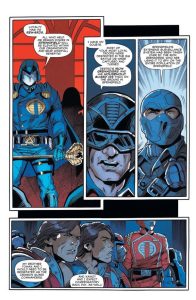
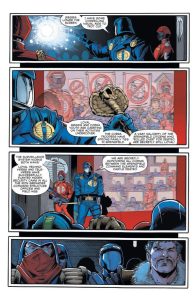
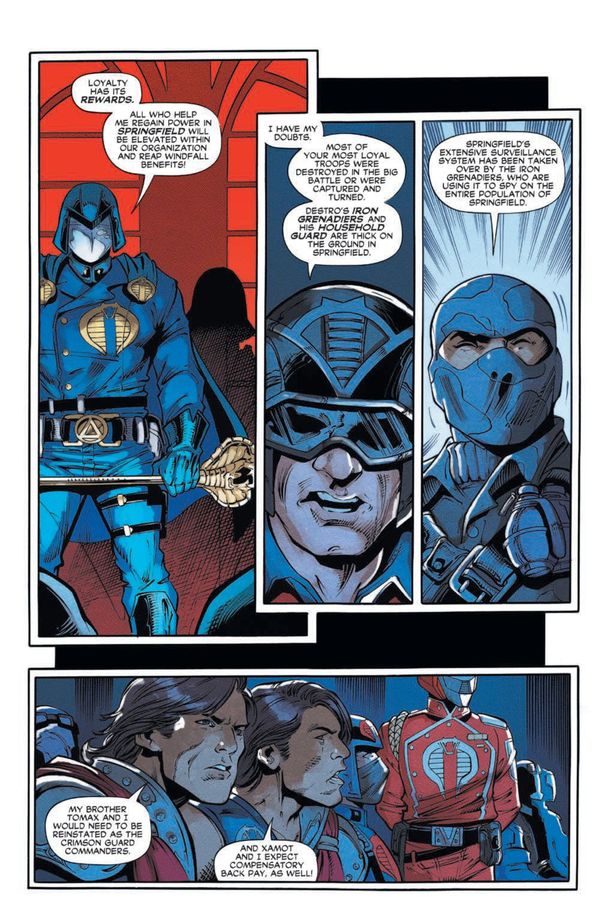
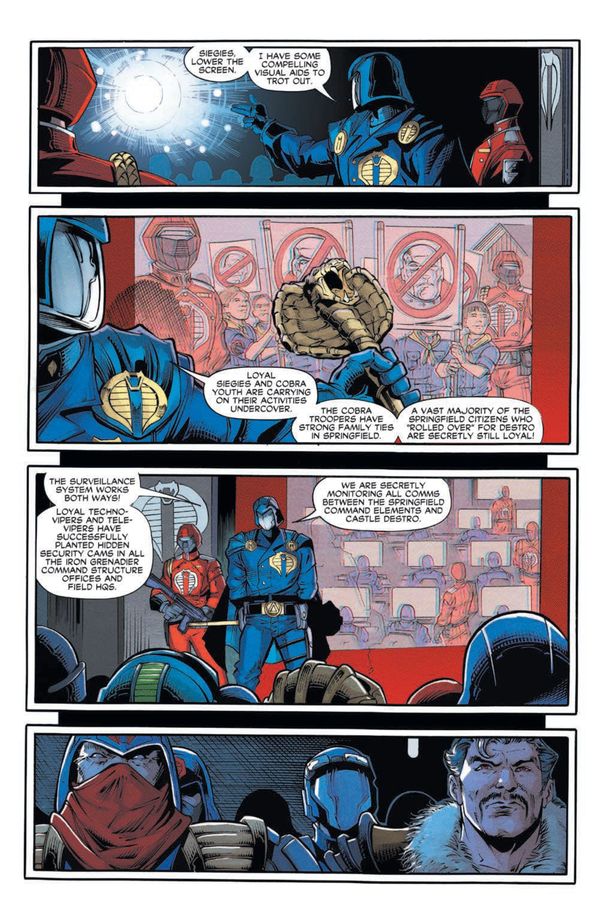
Cobra Commander convenes a secret meeting in Daytona Beach to rally fragmented loyalists, addressing Red Ninjas, Copperhead, Firefly, Major Bludd, Scrap-Iron, Overkill, Crystal Ball, and the Dreadnoks. He boasts of hidden military assets: underground tunnel systems, ordnance stockpiles, air squadrons concealed in secret hangars, and armor units hidden in residential garages throughout Springfield. The Crimson Guard twins, Xamot and Tomax, demand reinstatement and back pay in exchange for their support. Cobra Commander reveals that loyal Techno-Vipers and Tele-Vipers have planted hidden security cameras throughout Iron Grenadier command structures and that many Springfield citizens remain secretly loyal despite appearing to side with Destro.
The narrative cuts to Glasgow, Scotland, where villagers watch Destro parade his military hardware, including Dominators, Razorbacks, and Despoilers, before loading everything onto massive air transports heading to an undisclosed exotic locale. This visual spectacle of military strength contrasts sharply with Cobra Commander’s underground positioning.
Meanwhile, on Cobra Island, Alpha-001 awakens from hive-mind immersion, disconnects from neural transfer portals, and activates holographic cloaking to appear as a smug casino manager overseeing throngs of happy tourists and vacationers at the resort. Alpha-001’s internal monologue reveals the nightmare beneath the paradise: visitors are being converted into cyborgs through surgical bot units hidden as medical facilities. These chipped tourists return to their communities as sleeper agents, unaware of their transformation, tithing 20 percent of their incomes while recruiting more victims. Alpha-001 plans to activate dormant combat chips and muscle enhancements to deploy an army of enhanced mutant troopers once Revanche domination reaches critical mass.
Story
Larry Hama’s issue pivots from action to exposition and conspiracy, abandoning the tactical kinetics of #322 entirely. The pacing crawls. Cobra Commander’s opening speech stretches across multiple pages, laying out strategic assets verbally instead of weaving them into narrative discovery. Dialogue becomes functional briefing material; characters recite facts rather than react to consequences. The structure fragments across three locations, which could work as parallel storytelling but instead feels disjointed. Each segment (Daytona, Scotland, Cobra Island) interrupts the others without building momentum. The writing prioritizes world-building heavy lifting over emotional stakes or character moments that would make readers care about the outcome.
Art
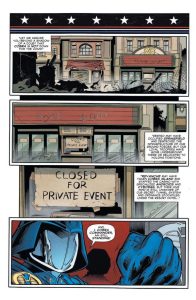
Paul Pelletier’s pencils maintain technical competence but struggle with the non-action sequences. Faces during dialogue scenes flatten into generic expressions; Cobra Commander’s confident monologue lacks the intensity his words demand. The Scotland sequence fares better, with military vehicles rendered in crisp detail and the parade composition showing scale effectively.
Francesco Segala’s coloring is polished and professional, but the casino scenes feel sterile and cold, which serves the message but sacrifices visual warmth. The holographic Alpha-001 reveal lacks visual pop; the casino manager disguise needs more unsettling body language to sell the horror beneath the hospitality smile. Panel layouts during dialogue heavy scenes are utilitarian, favoring clarity over dynamic composition.
Characters
This issue prioritizes plot mechanics over character arcs. Cobra Commander emerges as a survivalist playing leverage against Destro and Revanche, consistent with his self-preservation instincts, but his motivations feel reactive rather than proactive. Xamot and Tomax negotiate for power and compensation, behaving as mercenaries evaluating profit margins instead of soldiers committed to Cobra’s cause, which raises questions about whether anyone truly believes in the organization. Alpha-001 lacks relatability entirely by design, but the monologue reveals calculation rather than menace. The Dreadnoks, Red Ninjas, and other invited conspirators remain faceless unless you already know their lore. New readers won’t connect emotionally because no character demonstrates vulnerability, doubt, or consequence for their choices.
Originality & Concept Execution
Hama executes a smart concept: three Cobra factions vying for dominance while the Joe operatives remain off-stage. The sleeper agent cyborg recruitment factory idea has sinister potential. However, the execution suffers from relying on exposition monologues to convey stakes rather than letting visual storytelling or character interaction reveal strategy. The chess game between Cobra Commander, Destro, and Revanche is interesting conceptually but plays out as recitation rather than dramatic tension. The issue reads as setup for future payoff without delivering immediate narrative momentum or surprise.
Positives
The worldbuilding scope impresses. Hama constructs a complex web of hidden assets, double agents, and fractured command structures that suggests the Cobra organization possesses surprising resilience despite public defeats. The Dreadnoks subplot exploring loyalty and compensation adds economic realism to villain motivation; these are mercenaries calculating return on investment. The revelation that ordinary tourists become cyborg sleeper agents is genuinely creepy and raises the stakes beyond military conflict into domestic infiltration. Segala’s polished color work maintains professional standards throughout, and Pelletier’s vehicle designs in the Scotland sequence show craft and attention to detail.
Negatives
The issue buried its best concept, Alpha-001’s recruitment factory, under pages of speeches from less interesting characters. Cobra Commander’s opening monologue wastes real estate that could establish tension through action or conflict. Dialogue lacks personality and wit, treating exposition as obligation rather than opportunity for character voice. The three-location structure fragmentizes momentum; readers shift expectations before settling into each scene. Faces feel generic during dialogue sequences, reducing visual interest when dialogue drives narrative. Most damaging, the issue removes the Joes entirely, eliminating the central conflict that makes G.I. Joe stories compelling; without heroes to oppose the villains, the narrative becomes academic theorizing about strategy rather than dramatic confrontation.
Art Samples:
The Scorecard:
Writing Quality (Clarity & Pacing): [2.5/4]
Art Quality (Execution & Synergy): [3/4]
Value (Originality & Entertainment): [0.5/2]
Final Thoughts:
(Click this link 👇 to order this comic)
G.I. JOE: A REAL AMERICAN HERO #323 trades action for intrigue and fumbles the exchange. The foundational concept, a three-way power struggle for control of a fractured Cobra organization, possesses legs, but Hama buries it under speeches that mistake exposition for drama. Cobra Commander’s monologue could work as subtext revealed through action; instead it functions as a briefing scene. The cyborg sleeper agent concept deserves an issue of its own. Pelletier and Segala maintain professional execution, but character faces flatten when dialogue becomes the focus. This installment reads as necessary setup for upcoming confrontations rather than a satisfying story in its own right.
We hope you found this article interesting. Come back for more reviews, previews, and opinions on comics, and don’t forget to follow us on social media:
If you’re interested in this creator’s works, remember to let your Local Comic Shop know to find more of their work for you. They would appreciate the call, and so would we.
Click here to find your Local Comic Shop: www.ComicShopLocator.com
As an Amazon Associate, we earn revenue from qualifying purchases to help fund this site. Links to Blu-Rays, DVDs, Books, Movies, and more contained in this article are affiliate links. Please consider purchasing if you find something interesting, and thank you for your support.