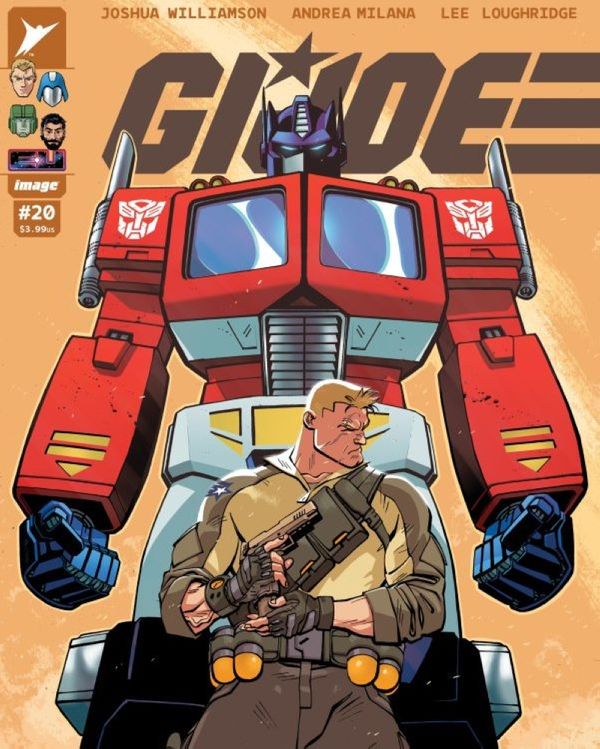
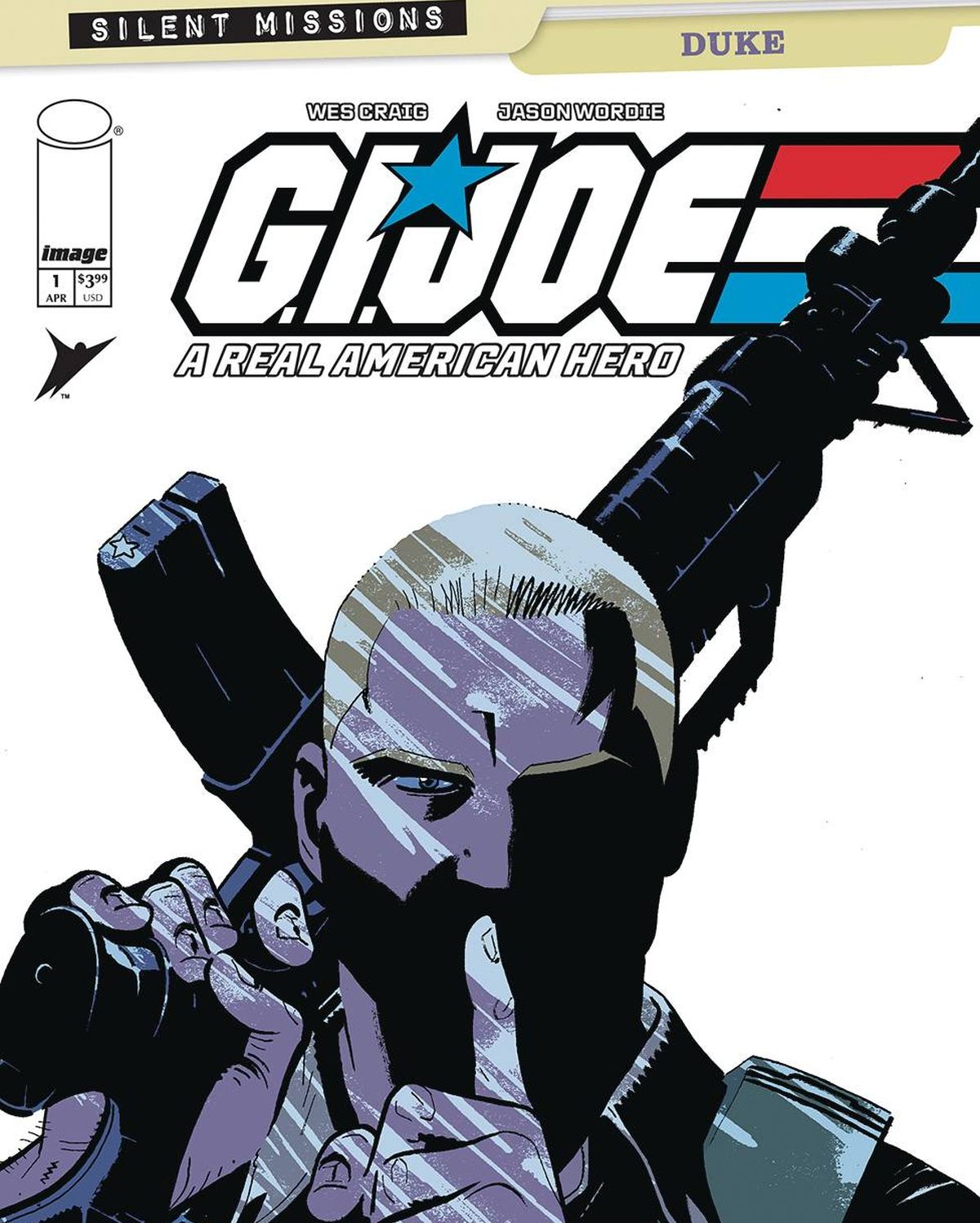
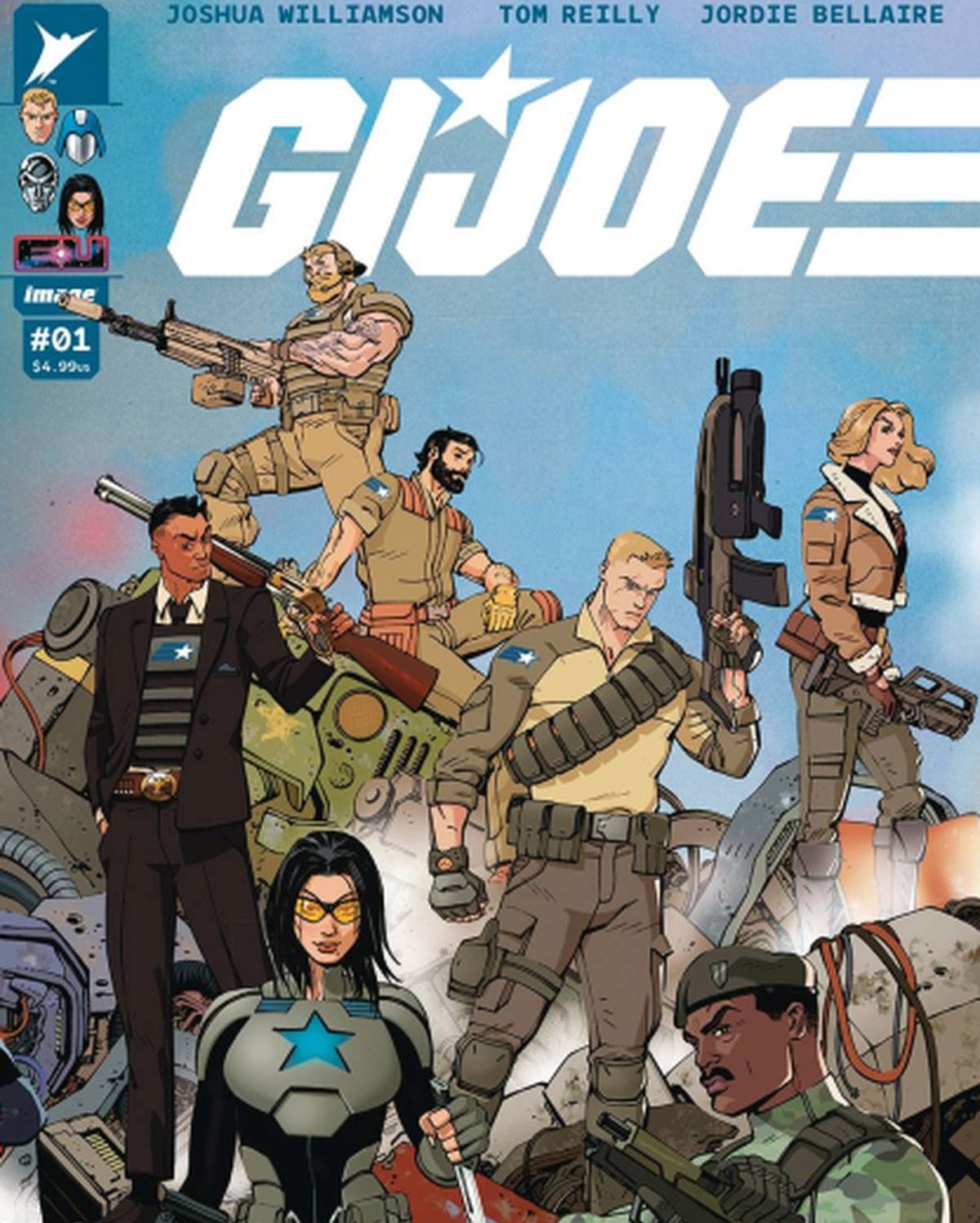
G.I. Joe #20 (Image Comics, 3/11/26): Writer Joshua Williamson and artist Andrea Milana steer Duke into a high-stakes first encounter with Optimus Prime built from a street-racing M.A.S.K. ambush and an Energon-laced leadership reckoning. The result is a character-heavy alliance issue with kinetic opening action, confident emotional beats, and some structural soft spots that still land as a recommended chapter for Energon Universe readers; Verdict: Light on impact but worth reading.
Credits:
- Writer: Joshua Williamson
- Artist: Andrea Milana
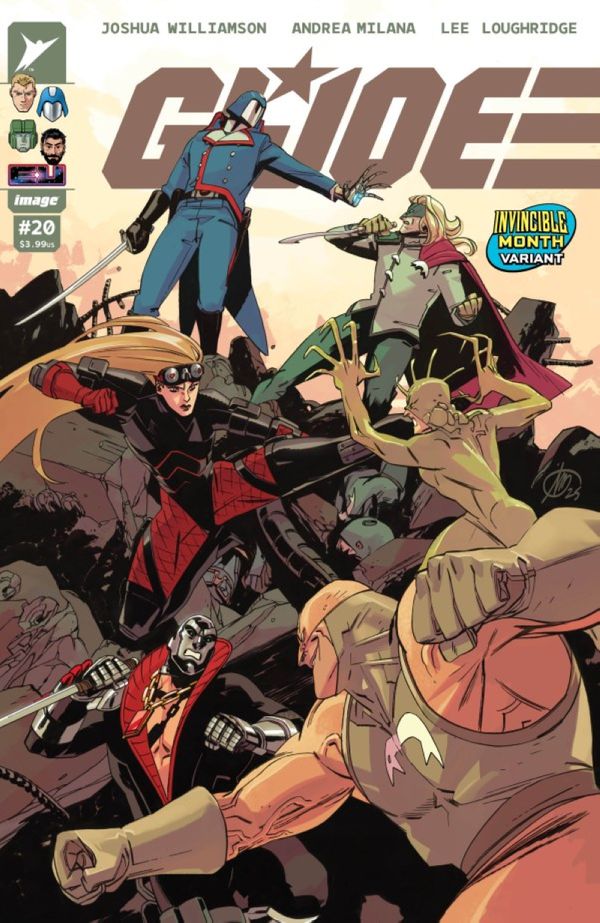
- Colorist: Lee Loughridge
- Letterer: Rus Wooton
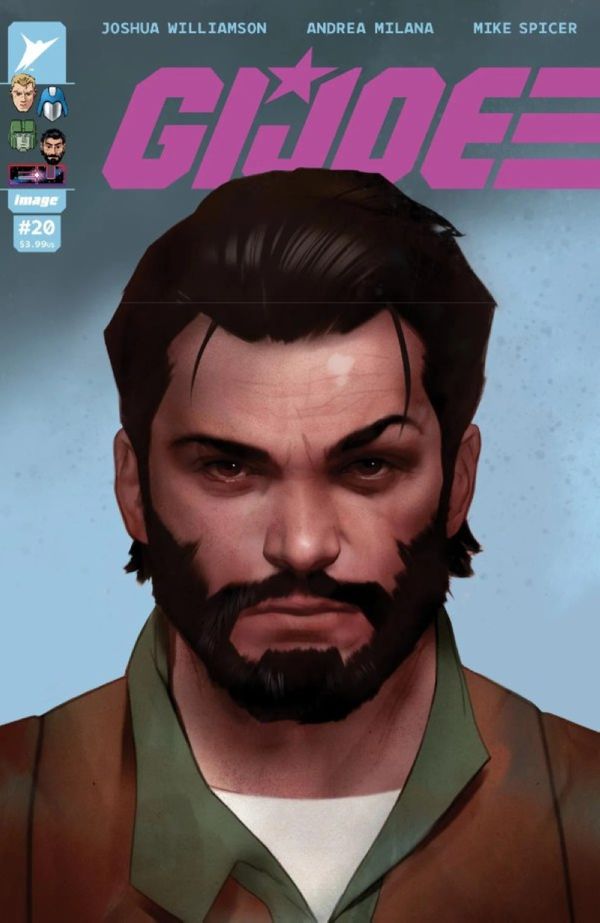
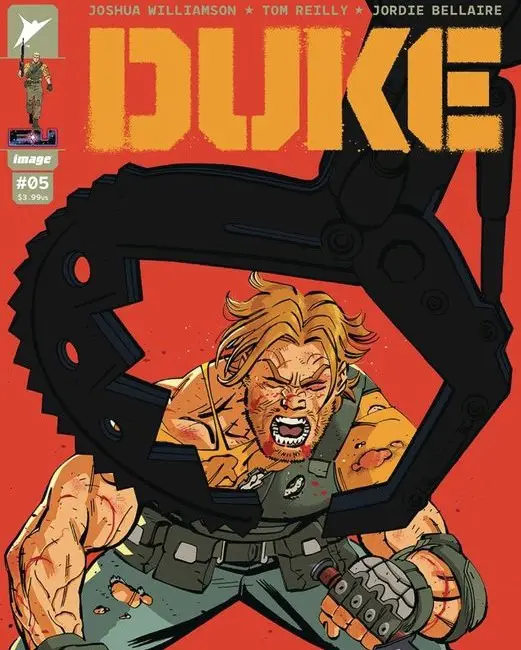
- Cover Artist: Tom Reilly (cover A)
- Publisher: Image Comics
- Release Date: March 18, 2026
- Comic Rating: Teen
- Cover Price: $3.99
- Page Count: 32
- Format: Single Issue
Covers:
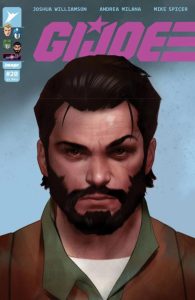
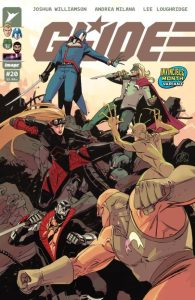
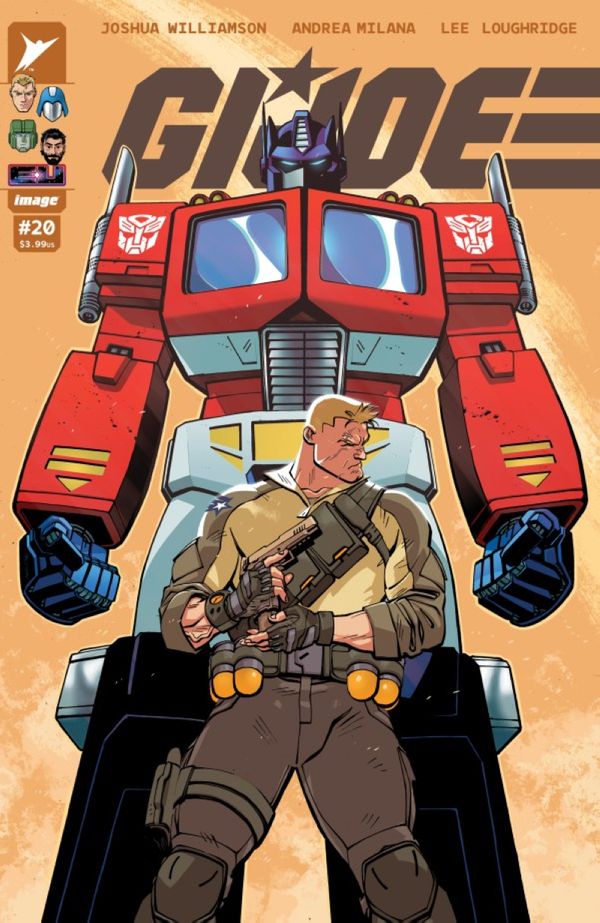
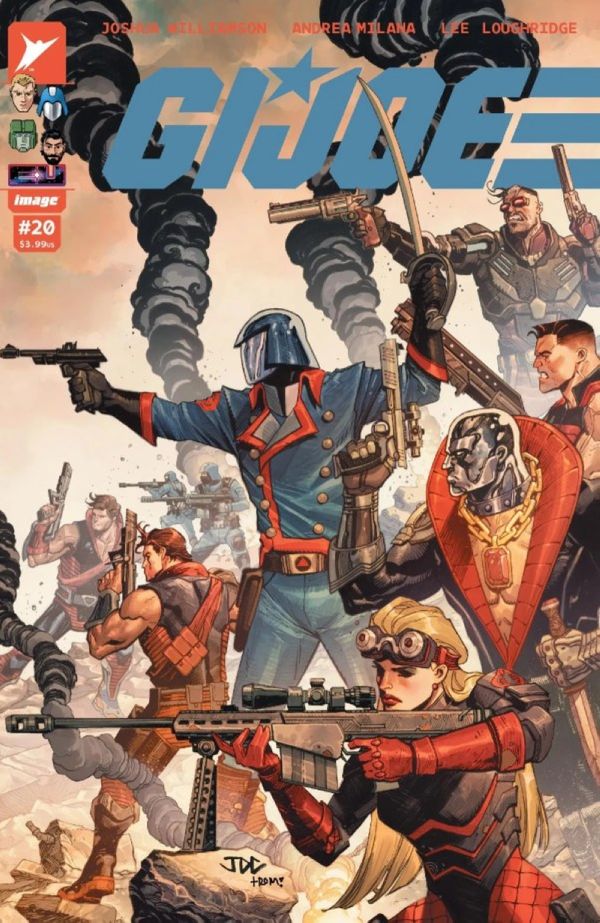
Analysis of G.I. Joe #20:
First Impressions:
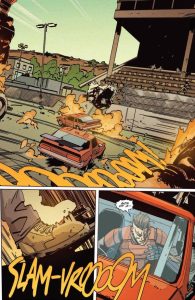
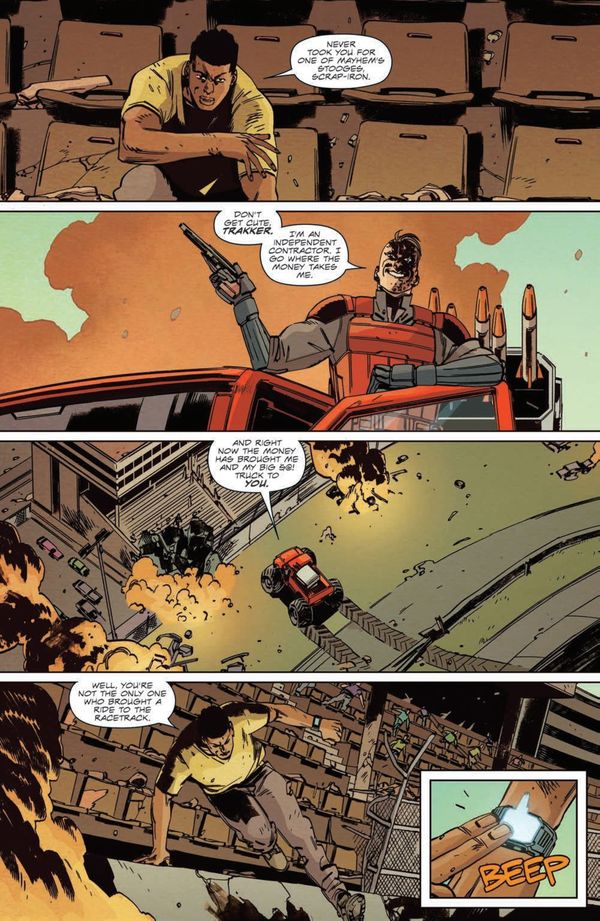
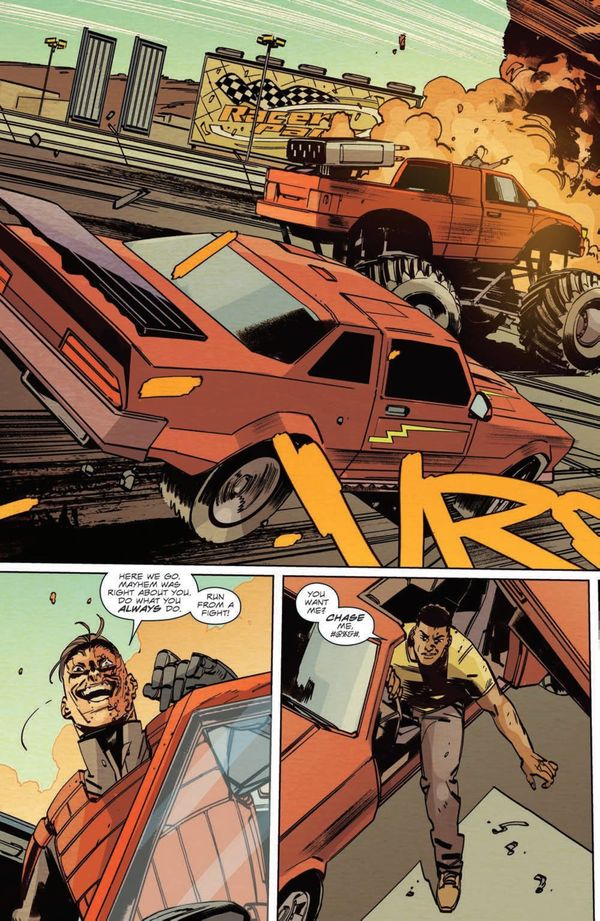
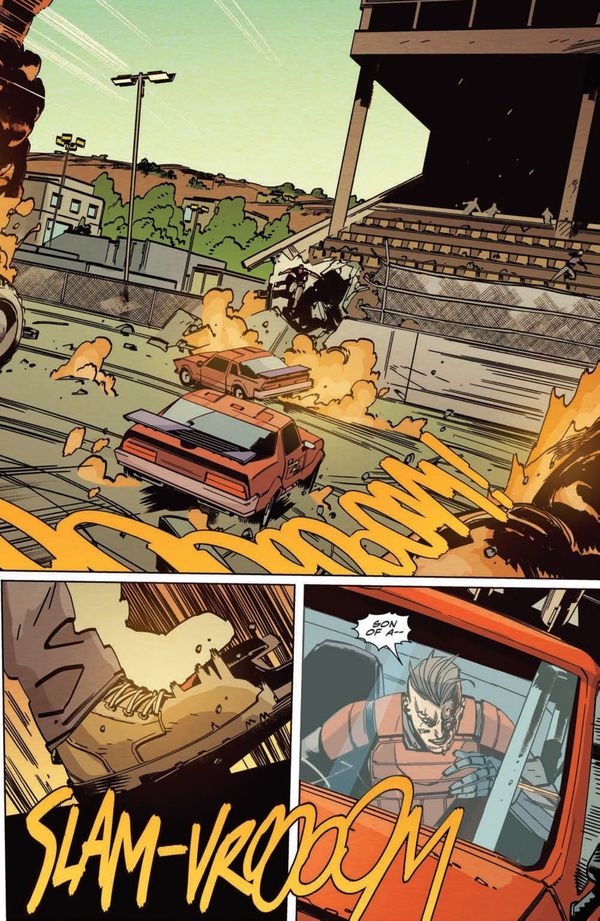
You crack open G.I. Joe #20 and the comic practically peels out of the gate, dropping you into a roaring track-side chase where Scrap-Iron, Matt Trakker, and Stalker weaponize muscle cars and monster trucks in a way that feels aggressively toyetic yet impressively tense. The sequence is briskly choreographed, from redirected missiles to a last-second swerve to avoid kids in the street, and Milana’s layouts sell every screech, impact, and transformation with sharp clarity that keeps the spectacle fun instead of noisy. Once Hound arrives and Scrap-Iron taps out of the fight, the issue downshifts into a more personal gear as Duke, Clutch, and Trakker gather in the aftermath, and that pivot from explosive vehicular carnage to quiet recrimination crackles authentically. You can feel Williamson deliberately trading scale for intimacy, which might frustrate readers craving a larger clash but pays dividends once Optimus Prime finally enters the frame.
The back half plays almost like a war-room therapy session in a field, only the therapist is Optimus Prime and the patient is a soldier who has been dreaming about murdering every robot on Earth, and that contrast carries a surprisingly grounded emotional charge. Duke’s confession of how his grief curdled into genocidal fantasies hits harder because we have already watched him point guns at Autobots for several issues, so the admission lands as earned self-awareness rather than a sudden heel turn. Optimus’s response is suitably stoic and compassionate, yet Williamson wisely lets Duke keep his edge with a blunt promise to annihilate Prime if he betrays the team, which keeps the alliance feeling uneasy instead of instantly cozy. By the time the book closes on a joint “G.I. Joe, roll out” sequence and a teaser that puts Snow Job and Cover Girl on a collision course with a wanted Scarlett, you walk away satisfied with the character work even if the big crossover milestone plays quieter than the hype implied.
Recap:
In the previous issue, Duke hauled Hound and Clutch back toward the Pit after discovering that his own teammate had been hiding an Autobot from the Joes, furious that a secret alliance had cost his friend Frost his life while Cobra chased Energon in the shadows. Hawk regrouped the team after their recent missions, split units across the globe to chase Energon signatures, and left Duke wrestling with a damaged Autobot transponder that needed Matt Trakker’s expertise, while Scrap-Iron made a play to capture Trakker for Mayhem in the middle of all the giant-robot upheaval. Duke’s interrogation of Hound revealed Starscream’s role in Frost’s death and a path toward Optimus Prime, while Matt barely escaped Scrap-Iron’s bounty hunt, setting the stage for a tense rendezvous between Joe command, Autobots, and the wider Energon war.
Plot Analysis (SPOILERS):
The story kicks off in full motion as Scrap-Iron corners Matt Trakker at a racetrack, eager to cash in on a bounty with a missile-loaded monster truck that turns the whole scene into a demolition derby. Stalker jumps into the fray, taunting Scrap-Iron into a high-speed chase that barrels off the track and into city streets, where Trakker’s tech and Stalker’s quick thinking redirect a missile barrage back into Scrap-Iron’s truck, forcing him to plow into a waiting jeep that transforms into Hound. With the immediate threat neutralized and Scrap-Iron fleeing, Duke and Clutch step in, calling Matt out for racing in public while reminding him he owes them for saving his life, and they use that leverage to push him into taking a hard look at Hound’s broken transponder. In the garage, Matt admits Cybertronian tech is nothing like his own but manages to bring Hound’s systems online again, which gives Duke the opening he needs to ask whether Trakker will return to hiding or stand his ground against Mayhem’s looming threat.
The repaired transponder pings Optimus Prime’s location, and Hound drives Duke and Clutch out of the city, through scenic hills, and into a remote field dotted with power lines, a deliberately neutral space for the first Joe–Autobot summit. Optimus arrives and immediately reframes expectations by declaring he is no longer Prime, having passed the Matrix of Leadership to Elita-1 so he could remain on Earth and protect it from Megatron and the Decepticons alongside his scattered comrades. As Stalker and Hound look on, Duke confronts Optimus about Starscream and learns the Decepticon is already dead, a revelation that collapses the revenge quest that has been driving him and leaves him shaken enough to retreat to a nearby hill for space. Optimus follows, and Duke admits that in his darkest moments he fantasized about using Cobra’s tech to wipe out every robot on Earth, Autobots included, only to realize he had lost sight of what truly matters, which opens a path for Optimus to acknowledge his own losses and the cost of war before Duke pointedly warns that any betrayal will be met with everything G.I. Joe can throw at him.
How is the story in G.I. Joe #20?
From a pacing standpoint, Williamson smartly bookends the issue with momentum, opening on a briskly escalating chase and closing on a covert “G.I. Joe, roll out” that promises bigger moves ahead, while allowing the entire middle to breathe as a character study between Duke and Optimus. The front half moves quickly without feeling rushed, since every beat of the race, the redirected missiles, and Hound’s reveal pushes both plot and character leverage forward, and the dialogue during the garage sequence efficiently sets Matt Trakker’s mindset without bogging down in tech jargon. Where the tempo wobbles slightly is in the transition from Duke’s confession to the field-wide alliance talk, which leans heavily on captions and conversational reflection that risk feeling static for readers who came in expecting a more explosive first meeting between these icons. Structurally, though, the choice to turn this landmark crossover into an intimate reckoning instead of a slugfest feels intentional and mostly effective, because it resolves Duke’s revenge arc in a way that aligns with previous issues and cements the uneasy partnership as more than a marketing moment.
Dialogue authenticity lands well across the board, and you can hear distinct voices even when the cast is mostly soldiers and robots talking about war and responsibility. Scrap-Iron’s foul-mouthed bravado, Stalker’s flippant taunts, and Matt’s mix of guilt and stubbornness all come through with clean, punchy lines that read like people who have known each other for a while and are too tired to mince words. Duke’s hilltop speech skirts melodrama but is grounded by the specificity of his admitted fantasies and by Optimus’s understated responses, which maintain the Autobot’s gravitas without turning him into a lecture machine. Thematically, the issue zeroes in on leadership, trust, and how grief can twist into something monstrous, and while the “I almost became what I hate” thread is not particularly original, it is executed with enough emotional honesty that it feels like a genuine step forward for Duke rather than a checkbox confession.
How is the art in G.I. Joe #20?
Andrea Milana’s linework shines in the vehicular action, where panel compositions keep the geography legible even as missiles arc overhead, trucks launch off ramps, and cars weave around civilian obstacles. The chase sequences use smart panel sizing and angled shots that masterfully accelerate your eye across the page, from close-ups on pedals and buttons to wide shots that pay off each risk, and the transformation beats for Hound land with a satisfying sense of weight. Character acting in the quieter scenes is equally strong, particularly in Duke’s body language as he moves from tense commander to hollowed-out mourner, and in Optimus’s subtle shifts of posture that communicate empathy without sacrificing scale. If there is a visual weak spot, it is that some of the open-field panels feel sparse, with backgrounds reduced to simple horizons and power lines that underscore the isolation but occasionally sap visual energy during longer conversational stretches.
Lee Loughridge’s colors do a lot of heavy lifting for tone, pivoting from hot, saturated reds and yellows during the racetrack chaos to cooler, more natural palettes once the story settles into the countryside meeting. The contrast helps signal the tonal shift from immediate physical danger to psychological confrontation, and the way he handles metal surfaces and explosions makes the Autobot designs pop without overwhelming the human figures. Mood is particularly effective in the hilltop sequence, where muted skies and warm, fading light wrap Duke and Optimus in a contemplative atmosphere that visually reinforces the sense of an exhausted soldier confronting his own reflection in a giant alien mirror. The final rollout splash, with Prime and Hound driving off into a dust-hazed sunset, balances iconography and storytelling in a way that feels suitably iconic without tipping into pure poster art, which is exactly what a shared-universe milestone like this needs.
Characters
Duke is the clear focal character here, and the issue does solid work taking him from a man defined by rage and suspicion to someone who can see the cost of his own obsession, even if he refuses to soften entirely. His motivation to hunt Starscream is consistent with prior installments, and learning that his target is already dead hits like a genuine rug pull that forces him to reevaluate what he actually wants from this war. The confession about wanting to kill every robot, paired with the acknowledgment that he lost sight of what matters, exposes an ugly but believable emotional trajectory for a soldier who has seen too much and had too many secrets kept from him, which keeps him relatable even as his fantasies trend extreme. Crucially, he does not pivot into naive trust; his explicit threat to annihilate Optimus if betrayed preserves his edge and his role as someone who will always put his people first, which fits both the character and the franchise.
On the Autobot side, Optimus’s choice to relinquish the Matrix to Elita-1 while staying on Earth reframes him less as an untouchable commander and more as a frontline guardian who willingly stepped away from ultimate authority, which deepens his sense of duty beyond simple nobility. Hound’s arc is quieter but meaningful: he moves from feeling like a liability for drawing Duke’s ire to someone trusted to choose his own path, ultimately electing to stay with G.I. Joe and hunt Cobra because he believes that is where he can do the most good. Matt Trakker’s “I’m done running” moment plants a clear pivot point for his involvement in the wider Energon narrative, and while he exits the issue quickly, his resolve after Scrap-Iron’s attack tracks with his earlier frustration about being a pawn. The teaser with Snow Job and Cover Girl grappling with Scarlett’s possible “traitor” status adds a fresh set of stakes for the next arc and hints at fractures inside the Joe family, which should keep character drama humming even when the robots are off-panel.
Originality & Concept Execution
On paper, “Duke meets Optimus Prime for the first time” sounds like an excuse for a big, bombastic crossover brawl, so there is a certain freshness in Williamson’s decision to frame the encounter as a candid leadership summit instead of a misunderstanding slugfest. The comic leans into the five basics of a story with clear intent: Duke is the focal character, his goal is to find Starscream and secure answers about the war, his journey runs from racetrack ambush to quiet hilltop confession, the stakes include not just global conflict but his own moral compass, and the obstacles range from Scrap-Iron’s assault to the shattering revelation that his quarry is already dead. That structure delivers a satisfying emotional arc even if the external plot beats are relatively modest, and the issue succeeds in making this meeting feel like a meaningful turning point in Duke’s story rather than a one-off event stunt.
That said, the mix of M.A.S.K., G.I. Joe, and Transformers elements is more incremental than revolutionary, and long-time franchise readers will recognize familiar beats in the “uneasy alliance” setup and the “I almost became a monster” confession. The originality lies less in the high concept and more in the tone, which treats the crossover as a serious negotiation between damaged leaders instead of a simple fan-service collision, and that choice feels aligned with the broader Energon Universe ethos. The closing stinger that pivots to a ninja-adjacent Scarlett hunt in Japan, complete with Energon sword implications, cleverly signals that this line is willing to chase new genre flavors inside the same continuity rather than just replaying old cartoon dynamics. Overall, the concept execution lands as confidently competent rather than wildly inventive, but it does enough to justify itself as a key chapter that respects reader investment in both characters and the shared universe.
Pros and Cons
Art Samples:
The Scorecard:
Writing Quality (Clarity & Pacing): 3/4
Art Quality (Execution & Synergy): 3/4
Value (Originality & Entertainment): 2/2
Final Thoughts:
(Click this link 👇 to order this comic)
G.I. Joe #20 delivers less of a bombastic crossover clash and more of a quiet emotional detonation, which is a smart play if you care about Duke as a fully realized protagonist instead of a moving piece on a nostalgia chessboard. The issue nails the five basics with a clear focal character, a goal that collapses in front of him, a physical and emotional journey, personal and global stakes, and both human and Cybertronian obstacles that force genuine change rather than cosmetic team-ups. If your pull list is already tight, this chapter earns its slot by meaningfully recalibrating Duke’s relationship to the Autobots. If you are only here for big robot brawls, you might feel shorted on pure spectacle.
Related Posts:
We hope you found this article interesting. Come back for more reviews, previews, and opinions on comics, and don’t forget to follow us on social media:
If you’re interested in this creator’s works, remember to let your Local Comic Shop know to find more of their work for you. They would appreciate the call, and so would we.
Click here to find your Local Comic Shop: www.ComicShopLocator.com
As an Amazon Associate, we earn revenue from qualifying purchases to help fund this site. Links to Blu-Rays, DVDs, Books, Movies, and more contained in this article are affiliate links. Please consider purchasing if you find something interesting, and thank you for your support.