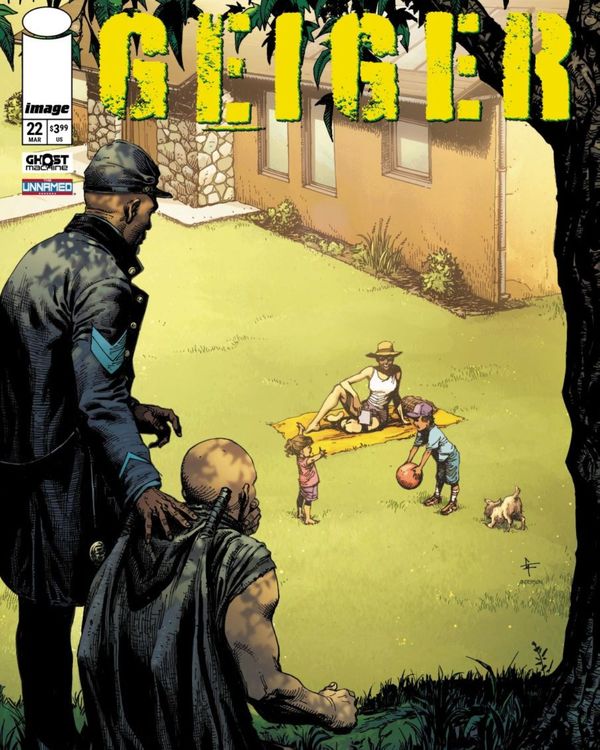
Geiger #22 (Image Comics, 3/18/26): Writer Geoff Johns and artist Gary Frank slow things down to explore Tariq Geiger and Northerner’s stopover with the St. Louis Strays in a tense “time-travel fallout” character piece that shifts from stand-off to uneasy campfire bond. Verdict: A sharply executed hangout issue with emotional teeth, worth reading if you are invested in The Unnamed, but a lighter buy for action-first readers.
Credits:
- Writer: Geoff Johns
- Artist: Gary Frank
- Colorist: Brad Anderson
- Letterer: Rob Leigh
- Cover Artist: Gary Frank, Brad Anderson (cover A)
- Publisher: Image Comics
- Release Date: March 18, 2026
- Comic Rating: Teen
- Cover Price: $3.99
- Page Count: 36
- Format: Single Issue
Covers:
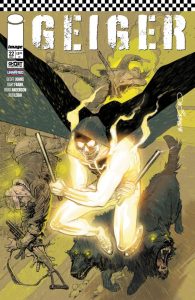
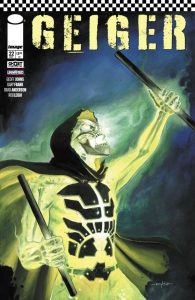
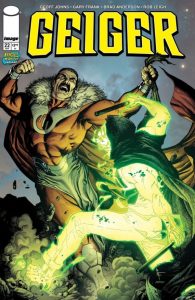
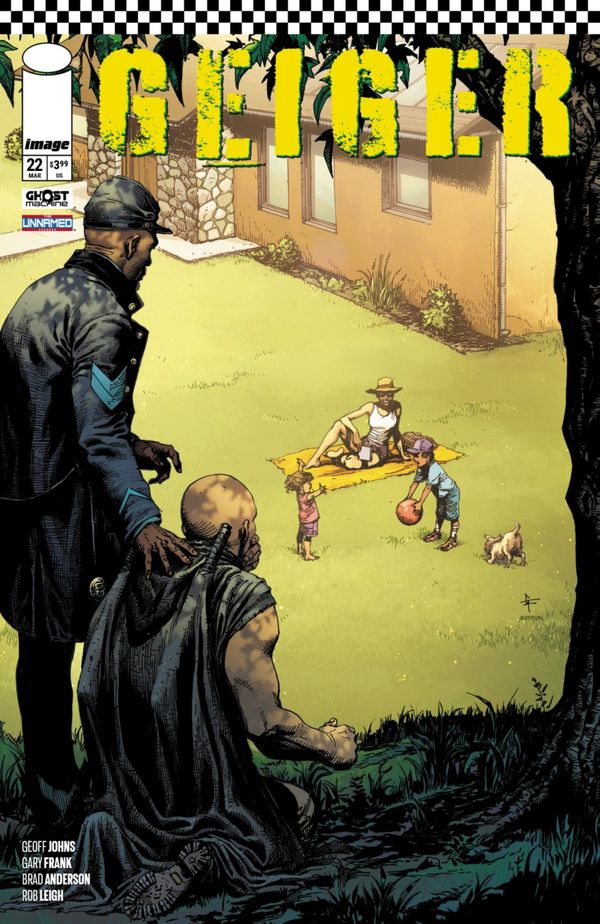
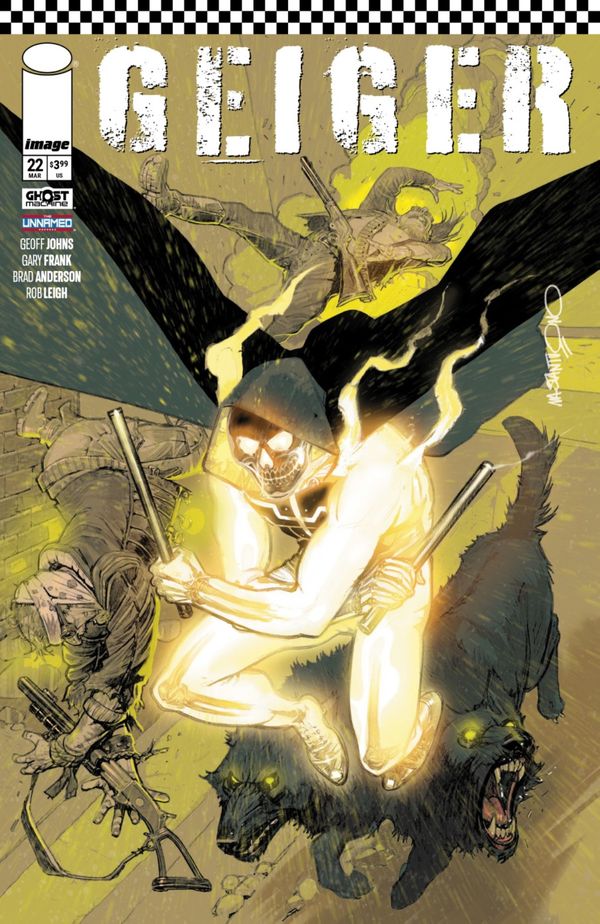
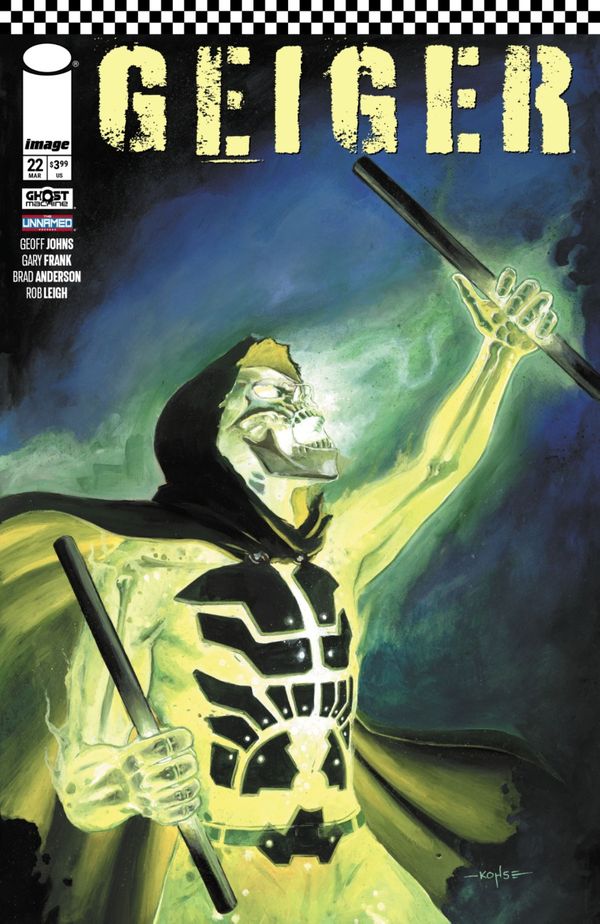
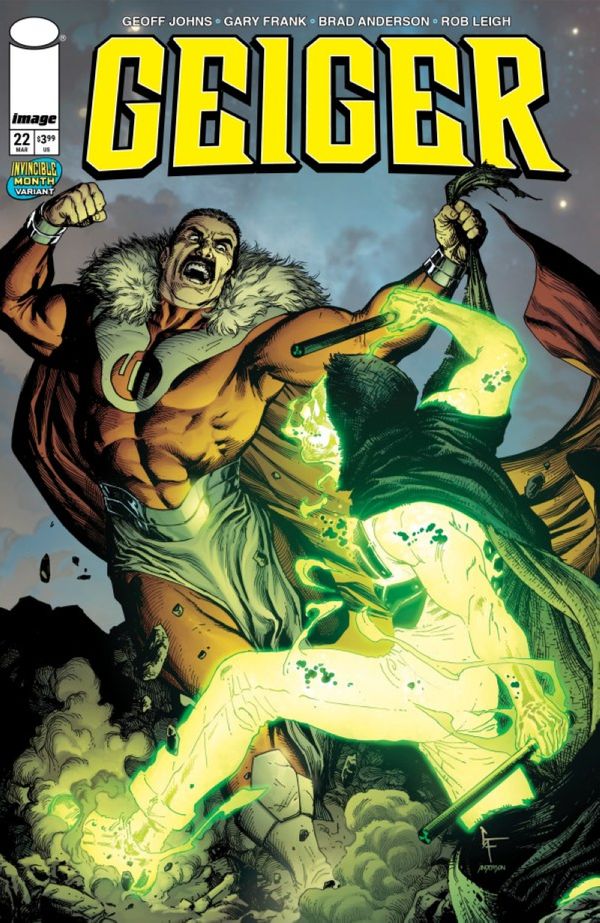
Analysis of Geiger #22:
First Impressions:
You drop into Geiger #22 expecting another big cannon blast from the time tank and instead get a quieter, pricklier chapter where Johns leans into found family, survivor logic, and the way kids in a broken world decide what to worship. Frank and Anderson back that choice with clean, readable pages that move from scrap-yard tension to cozy storytime glow, so the emotional shift never feels abrupt even when the script pivots hard from guns to Jack and the Beanstalk. The issue plays like the “day after the raid” episode of a prestige drama, where everyone pretends things are normal while something dangerous hums just off-panel, and you can feel Northerner’s doubt about his employers finally catching up with him. You also get a classic Johns ending beat that reframes the whole arc in one page, which hits nicely here because the script has spent twenty-plus pages reminding you what Malcolm thinks he is fighting for.
Recap:
Last issue, Geiger and the Northerner rolled their Nazi time coffin into a ruined city, got mistaken for invaders, and wound up on the business end of a bunch of angry kids with big guns who hate anything that looks like the old monsters of history. The St. Louis Strays dragged them in, demanded answers about glowing men and time tanks, and made it very clear this patch of the wasteland belongs to them, not to whatever war Geiger and Malcolm think they are trying to fix. Malcolm kept pushing his mission to reach the Department of Historical Preservation in Detroit and study the Unknown War, while Geiger pushed back that nobody actually knows how the war started and that this whole plan smells like madness baked in bureaucracy. By the end, Geiger and Malcolm were prisoners in everything but name, headed for a hard conversation with kids who learned to survive under a different glowing guardian.
Plot Analysis (SPOILERS):
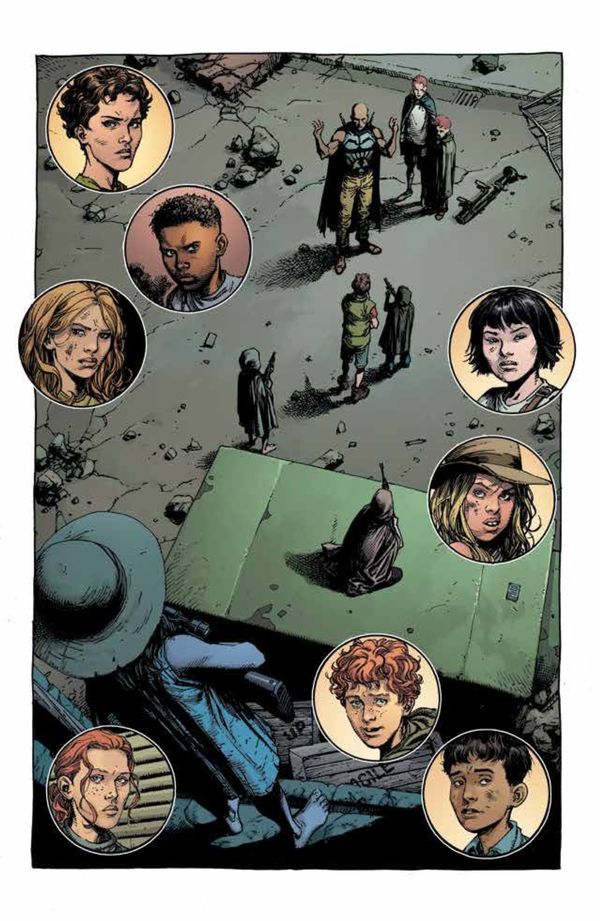
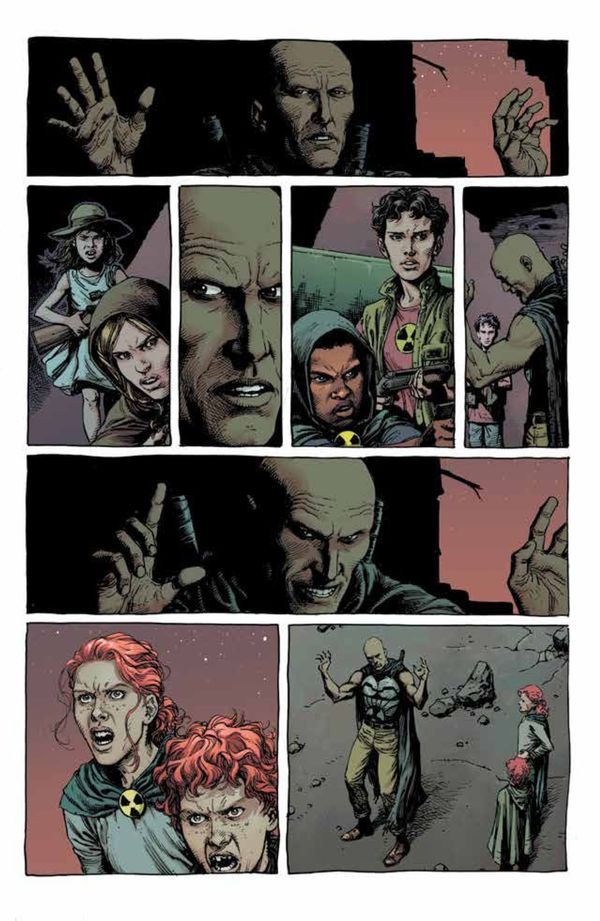
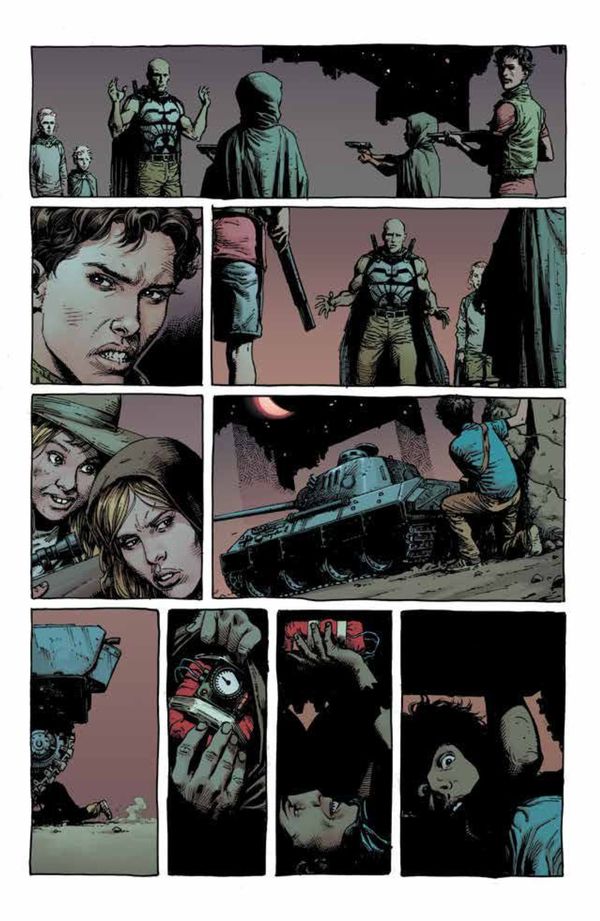
Geiger #22 opens on that standoff, with Geiger calmly asking the Strays to lower their guns and the kids reminding him that Ashley Arden armed and trained them for a reason, since human traffickers once owned every street they now guard. The Strays clock that Geiger glows like Ashley, wears a similar cloak, and walks around in radioactive iconography, and they push back when he suggests she “freed” them, insisting she only helped them free themselves. Barney’s entrance cracks the tension, as Gremlin admits he was supposed to blow up the tank but could not bring himself to kill a two‑headed dog, which nudges the group into a wary truce. Around the camp, Geiger explains he and Malcolm are heading to Detroit to find a way to save the world, a claim that earns a rough laugh from the kids until Northerner quietly doubles down and a local man warns him not to sell hope he cannot guarantee.
That night, Malcolm and Geiger share a rare slice of calm as Geiger reads Jack and the Beanstalk aloud to the kids, who devour the story with popcorn, questions, and that very specific wasteland joy that comes from imagining someone else getting a reprieve. While the Strays sleep, Malcolm receives a strange warning through his “Mr. North” connection that tells him to avoid Detroit and to look for a contact on “August thirty‑sixth,” a date that also appears on the time tank’s unsettling little calendar. Wandering the ruins, he notices the kids have ignored the toys and instead looted every weapon and knife, then finds Tilly hauling books she has no intention of reading, which quietly underlines the gap between survival and education until Geiger’s storytelling finally pulls her in. At dawn, Malcolm tries to ghost out without goodbyes, Geiger pushes him to admit they have responsibilities here, and a flashback to Malcolm’s recruitment by the Department contrasts sharply with Geiger’s blunt question about why his supposed family never came with a photograph. The tank finally reaches snowy Detroit, Malcolm leads Geiger and Barney into the frozen headquarters of the Department of Historical Preservation, and just as they step through what looks like a modest office front, a massive temporal blast tears them apart and flings Malcolm into a bright field where two children call him “Dad” while Geiger looks on in shock.
How is the story in Geiger #22?
Johns structures this issue like a pressure valve, and the pacing generally works, starting with a tense gun barrel conversation, dipping into a warm middle act around the campfire, then ramping back into mission mode just long enough to whip the rug out from under Malcolm at the end. The dialogue lands authentically for the Strays, who sound like kids raised on hard lessons and half‑understood slogans, and their banter about books, guns, and what “reprieve” means gives the setting more texture than a straight lore dump ever could.
Geiger and Northerner’s back‑and‑forth carries quieter thematic weight as they argue about whether history can be repaired like a busted timeline or whether someone has been using Malcolm by dangling a lost family in front of him, and that tension feeds right into the final twist. Structurally, the issue commits to being a bridge chapter that deepens motives and stakes rather than a big battle, and while a few readers will feel the momentum slow when Geiger starts reading Jack and the Beanstalk, the script mostly justifies that slowdown by tying it directly to what these kids actually need.
How is the art in Geiger #22?
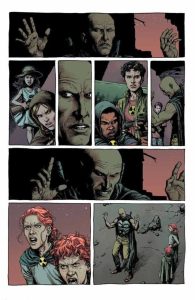
Gary Frank’s layouts are clean and confidently staged, which keeps every beat of the standoff and the later quiet scenes readable even when the panel count climbs and word balloons crowd the gutters. His character acting remains a major asset, from Geiger’s relaxed but coiled posture in front of a firing squad of children to Malcolm’s tiny flicker of hope when he looks at the family photo from the tank, and that acting sells emotional beats the script only hints at. The Strays all read as distinct silhouettes, with smart costume choices that blend scavenged gear and Ashley‑inspired cloaks, so your eye never loses track of who is speaking even as the crowd shifts around Geiger and Malcolm.
Brad Anderson’s colors do a lot of heavy lifting here, shifting from the sickly, dust‑choked oranges and browns of the ruined city into softer, golden campfire hues when the kids settle in for storytime, then to harsh, pale blues once the tank rolls into the snowbound ruins of Detroit. That progression quietly walks you from warm human connection to clinical institutional mystery, so the explosive blue‑white time blast near the end lands like an intrusion from a different book in the best possible way. Effects like Geiger’s glow and the shimmering time‑energy feel crisp rather than muddy, and the contrast between Barney’s warm fur tones and the cold stone around the Department of Historical Preservation helps keep the emotional center in the trio even when the background grows more abstract.
Characters
This chapter does more for Malcolm North than any previous installment, because Johns finally lets the mask slip a bit and forces him to confront the idea that the Department has been dangling the idea of a family he cannot even remember without offering something as simple as a photograph. Geiger gets quieter growth, mostly through action, as he shifts from nuclear brawler to patient reader who understands that giving these kids a story is just as valuable as blasting their enemies, and that choice fits with his long‑term arc as a reluctant guardian trying to make something gentle survive in a brutal world. The Strays themselves feel consistent with their introduction, driven by loyalty to Ashley and a hard line about their territory, yet open enough to laughter, popcorn, and curiosity that they register as kids rather than grimdark props, which goes a long way toward making the stakes feel personal.
Originality & Concept Execution
On paper, “post‑apocalyptic glowing hero and a time cop hang out with feral kids and read Jack and the Beanstalk” sounds familiar, but Johns and Frank execute the premise with enough small, specific choices that it feels less like a trope parade and more like a lived‑in stop on a larger road trip. The Unknown War and the Unnamed mythology still lean on classic Johnsian secret‑history instincts, yet the focus here on how kids prioritize weapons over toys and how one man’s promise of restored family can steer timelines gives the concept a sharper, more grounded edge. The issue does not radically reinvent the series, although the final page twist that may or may not show Malcolm’s altered family suggests the book is finally ready to interrogate the Department’s promises instead of taking them as given, which is a welcome evolution.
Pros and Cons
Art Samples:


The Scorecard:
Writing Quality (Clarity & Pacing): 3.2/4
Art Quality (Execution & Synergy): 3.6/4
Value (Originality & Entertainment): 1.4/2
Final Thoughts:
(Click this link 👇 to order this comic)
Geiger #22 delivers a sharply observed, character‑driven breather that invests heavily in Malcolm, the Strays, and the real cost of promising to “save the world,” which gives existing readers plenty to chew on even if the plot only nudges forward. The strengths sit squarely in the writing‑art synergy around mood and character acting plus that well‑timed final twist, while the biggest weaknesses are its dependence on prior lore and the soft‑pedaled Detroit reveal that punts some answers to next issue. If your pull list can only handle one radioactive road trip at a time, this one earns its slot as part of the ongoing run, but it is not the place to jump in cold or the issue that will convert a skeptic by itself.
Related Posts:
We hope you found this article interesting. Come back for more reviews, previews, and opinions on comics, and don’t forget to follow us on social media:
If you’re interested in this creator’s works, remember to let your Local Comic Shop know to find more of their work for you. They would appreciate the call, and so would we.
Click here to find your Local Comic Shop: www.ComicShopLocator.com
As an Amazon Associate, we earn revenue from qualifying purchases to help fund this site. Links to Blu-Rays, DVDs, Books, Movies, and more contained in this article are affiliate links. Please consider purchasing if you find something interesting, and thank you for your support.