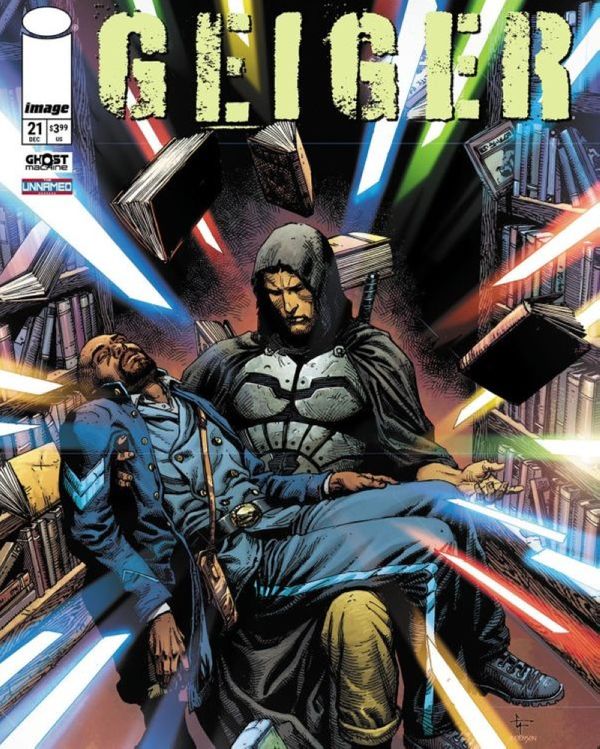
Geiger #21, by Image Comics on 2/11/26, is the issue where a Nazi tank, time puzzles, and glowing regret slam headfirst into your wallet and your patience.
Credits:
- Writer: Geoff Johns
- Artist: Gary Frank
- Colorist: Brad Anderson
- Letterer: Rob Leigh
- Cover Artist: Gary Frank, Brad Anderson (cover A)
- Publisher: Image Comics
- Release Date: February 11, 2026
- Comic Rating: Teen
- Cover Price: $3.99
- Page Count: 36
- Format: Single Issue
Covers:


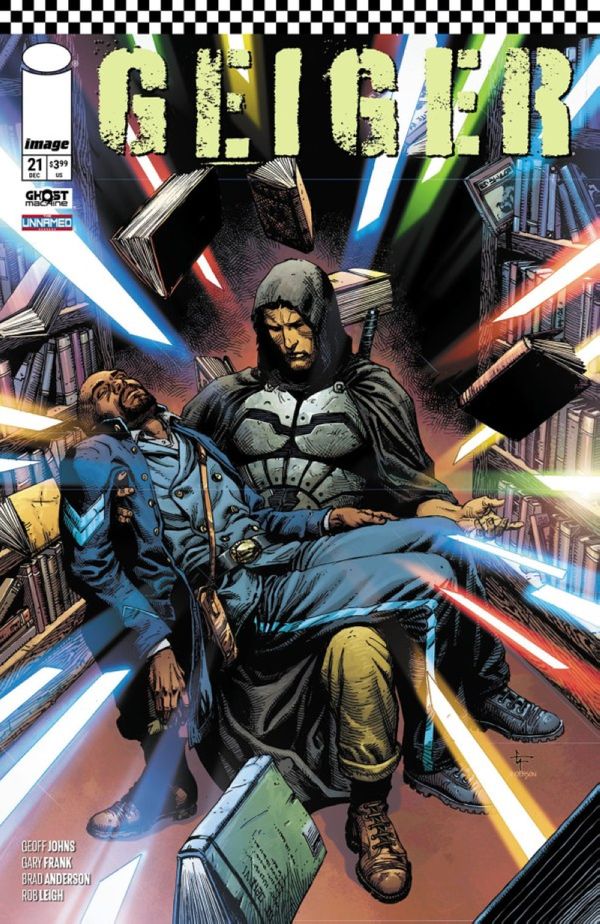
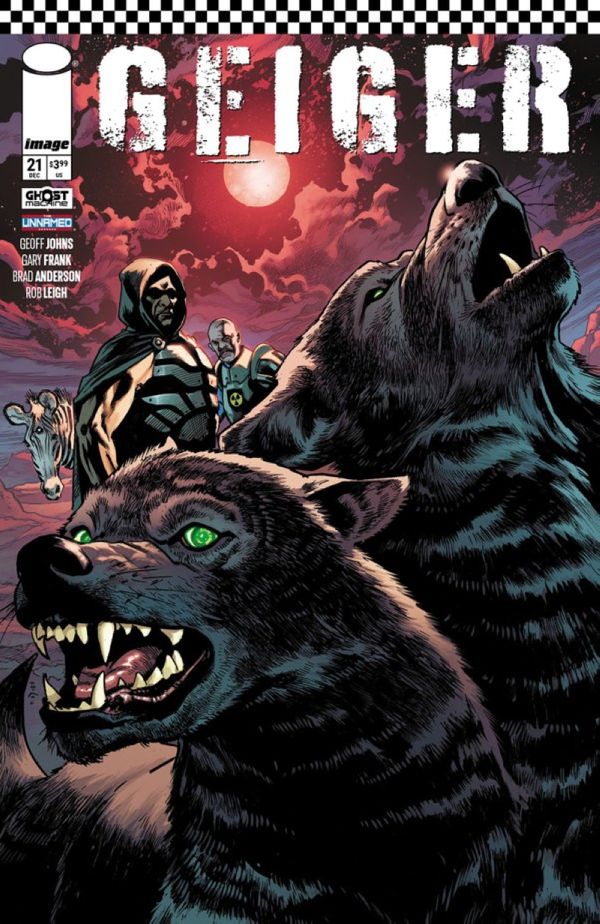
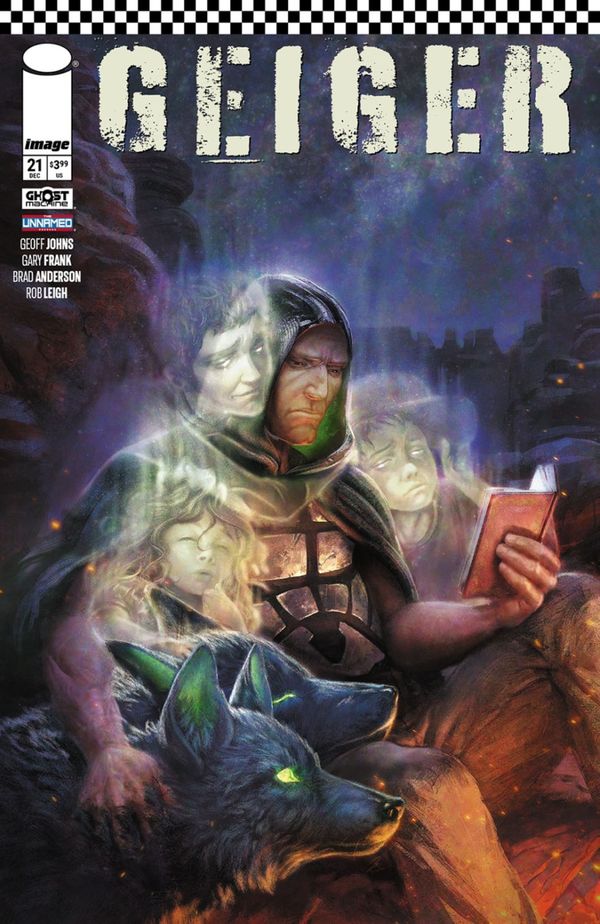
Analysis of GEIGER #21:
First Impressions:
The issue is concept heavy, talky, and determined to make that German tank do triple duty as a plot device, time machine, and character quiz. I came away more intrigued than thrilled, like flipping through a cool manual that forgot to include a test drive. It entertains in spots, but the mix of exposition and sudden action feels like a stock you hold, not one you rush to buy.
Recap:
In the prior chapter, Geiger breaks from his friends and even his own hope, telling Barney their mission days are over as he chooses isolation instead of chasing a cure. Malcolm North literally drops into his life claiming to be a Union soldier from an alternate 1864 where the South won, recruited by the Department of Historical Preservation to fix history. The Department shows him a world he never knew, including Martin Luther King Jr.’s speech, then flings him through misfired time jumps until he stops the Cobbler in 1864 and accidentally helps create the conditions for nuclear armageddon. Worried he helped write the path to the Unknown War, Malcolm now uses a special watch to summon weapons and proposes a new mission to Geiger: reach Detroit, find who started the Unknown War, and rewrite history again, though it is not clear whether he is a savior or just someone else’s pawn.
Plot Analysis (SPOILERS):
The issue opens right after the weapon drop, with Malcolm and Geiger standing in the wasteland beside a World War II German Panther tank and the corpses of Goldbeard’s crew. Malcolm explains that in his original timeline the South won the Civil War, America split, and industrial progress stalled, which delayed the Manhattan Project and kept the atomic bomb off the board, but dragged World War II into a longer, bloodier grind where Russia emerged as the lone superpower. Geiger pushes back, arguing that Malcolm’s victory for the North in his altered Civil War still led to stockpiled nukes and the Unknown War, and he suggests Malcolm may have helped cause the very apocalypse he came to prevent. Malcolm insists he rewrote one false history already and might be here to rewrite this one too, while Geiger questions his sanity and motives.
They climb into the tank, and Malcolm notes that the Department of Historical Preservation communicates through his watch, which is now silent, so he reads the tank itself as the message. Inside, they find a surreal, customized interior with red leather seats labeled for different operatives, history books, a gun, a compass that belonged to Malcolm’s brother, and photos and items tied to Geiger’s past, including a family picture and a can of soup. Each seat bears a name like Mr. North, Mr. Ghost, Mr. Pure, and Ms. Hollow, signaling that some unseen group has detailed knowledge of them and planned this vehicle for a team. Malcolm recognizes Mr. Pure as an immortal mercenary he has met before, while Ms. Hollow remains a mystery, and Geiger is rattled by how much these strangers seem to know about his life.
Malcolm powers up the tank, showing he knows how to run what Geiger calls a “Nazi time coffin,” and he plots a course for the Department’s office in Detroit based on its 1964 address. As they move out, Malcolm apologizes about Geiger’s family, pressing him about why he never talks about going back to them, then lays out his plan to study the Unknown War through records or survivors in order to change it. Geiger snaps that there are no books or written history after the Unknown War and insists nobody really knows how it started, which makes Malcolm’s plan sound insane to him. The conversation gets cut short when an internal alarm blasts red light through the tank, someone suggests it might actually be a time machine, and then an explosive strike slams into them.
Geiger exits to clear whatever is blocking their path, and the scene abruptly shifts to a ruined city where his glowing skeletal form erupts from a tank turret, attacking two figures on a balcony. His blasts blow apart the balcony and nearly kill a pair of kids, which shocks him out of his meltdown state as the glow recedes and his human face returns while rubble rains down. The next scene finds Geiger and Malcolm captured by a small, armed community that hates the sight of their tank, with a woman pointing out that in their town anything that looks like a Nazi war machine is suspect. The kids lash out, one even biting Malcolm, and the issue closes with the locals demanding answers about when glowing men became a thing as a caption teases the next chapter with the St. Louis Strays.
Writing
The script splits itself between long stretches of dialogue about alternate history and time travel and a late pivot into sudden conflict with the kids in the ruins. The pacing leans front loaded, with Malcolm’s exposition about his timeline and the Unknown War taking up much of the first half while the actual physical threat arrives almost at the end. Dialogue between Geiger and Malcolm is sharp in places, like the exchange about who might be the villain in their own story, but it also risks feeling like a dense lecture when they run through Civil War outcomes, World War II changes, and nuclear stockpile logic in quick succession. Structurally, the tank interior scene does a lot of heavy lifting for future arcs, yet the abrupt cut from the tank alarm to Geiger’s city attack is jarring, which may confuse readers who expect a clearer time jump or transition cue.
Art
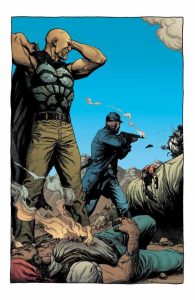
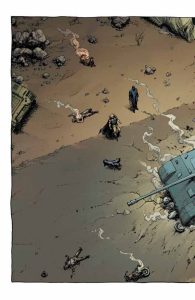
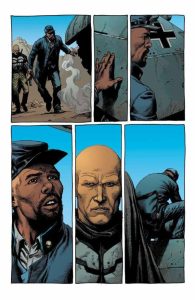
Gary Frank’s layouts keep conversations visually interesting, framing Malcolm and Geiger against smoking bodies, close tank details, and the stark desert to ground all the talk in tangible stakes. The reveal of the tank interior is a standout visual beat, with the plush red seats, labeled plaques, and personal relics arranged to read like a dossier in three dimensions, making the mystery feel tactile. Brad Anderson’s colors support the tonal swings, moving from hot, scorched wasteland hues to cool, ghostly greens when Geiger melts down and then to warm, grounded tones when the St. Louis survivors take control. Action beats are clear and impactful, especially the splash of glowing Geiger on the gun barrel and the balcony blast, though the jump between tank scenes and the ruined city might have benefited from a more explicit visual bridge to cue the time or place shift.
Characters
Geoff Johns keeps Malcolm’s motivation front and center, portraying him as a man who already rewrote one history and is now driven, maybe obsessively, to fix another, which tracks well with his earlier mission brief. His guilt over possibly causing the Unknown War fuels his push to study Geiger’s world and reach Detroit, and the tank interior items tied to his brother highlight that this is personal, not just a job. Geiger stays consistent as a man who views big missions with suspicion, pushing back on Malcolm’s plan and bristling at the idea of rewriting the apocalypse, but his panic when he nearly kills kids betrays that his moral core is still intact. The St. Louis group, especially the kids and their guardian, get quick, readable traits through actions like biting, calling out “Nazis,” and standing their ground, which makes them relatable even with limited panel time.
Originality & Concept Execution
The core concept here is not just “man in a wasteland” but a time tangled war story where a Civil War fix might have set up a nuclear endgame, and that angle still feels distinct inside the larger post apocalyptic market. The Department of Historical Preservation using cryptic hardware drops and a customized Nazi tank as a message gives the time travel premise a quirky, spy thriller edge. The issue, however, spends so much of its page count setting the table that the more original ideas, like the labeled seats for Mr. Ghost, Mr. Pure, and Ms. Hollow, feel more like a pitch deck for future stories than a fully realized payoff in this chapter. As a single issue, it delivers on expanding the scope of the Unknown War mystery, but the execution leans more on promise than on delivering a distinct, complete unit of story for this month’s purchase.
Positives
The strongest value here is in how clearly the creative team expands the universe while staying focused on two characters stuck in one impossible vehicle. Malcolm’s history lesson, Geiger’s pushback, and the tank interior all feed directly into the criteria of structure and character motivation, giving you tangible clues about who is pulling strings without resorting to random hand waving. The art and color sell Geiger’s nuclear transformation and guilt, especially in the sequence where he blasts the balcony then sees the kids, which makes his power feel dangerous instead of cool and that aligns with the book’s stakes. If you are buying for long term world building, the labeled seats and scattered relics are efficient, layered hooks that measurably increase the sense that this is one piece of a larger, planned design rather than a one off stunt.
Negatives
The pacing undercuts the entertainment side of the value equation, since so much page space is given to Malcolm’s recap of alternate history that the present day plot creeps instead of moves. The cut from the alarm filled tank to Geiger wrecking a city balcony reads like a hard skip, so the structure feels a bit lumpy, which can dilute reader confidence that every page is paying off the premise.
Character wise, Geiger’s emotional state is mostly reactive, so Malcolm walks away as the only fully explored point of view in the issue, which may frustrate readers who wanted more insight into Geiger himself after his big break from his friends. For buyers with a tight budget who judge originality by immediate payoff, this chapter feels more like an extended teaser for Detroit, Ms. Hollow, and the Department than a satisfying, self contained story in its own right.
Art Samples:
The Scorecard:
Writing Quality (Clarity & Pacing): [2.5/4]
Art Quality (Execution & Synergy): [3.5/4]
Value (Originality & Entertainment): [1/2]
Final Thoughts:
(Click this link 👇 to order this comic)
GEIGER #21 reads like a well drawn briefing for the next phase of the series, not a barnburner you press into a friend’s hands and say “you have to read this now.” If you are already locked into the Unnamed line and enjoy tracking every breadcrumb of the Unknown War, this issue earns its slot in your pull, especially for the tank interior and Malcolm’s expanded backstory. If your comic budget is tight and you buy based on single issue payoff, you could skim this on a shelf, note the key reveals, and wait to grab it in a collected edition where the slow burn pacing will feel less like a drag.
We hope you found this article interesting. Come back for more reviews, previews, and opinions on comics, and don’t forget to follow us on social media:
If you’re interested in this creator’s works, remember to let your Local Comic Shop know to find more of their work for you. They would appreciate the call, and so would we.
Click here to find your Local Comic Shop: www.ComicShopLocator.com
As an Amazon Associate, we earn revenue from qualifying purchases to help fund this site. Links to Blu-Rays, DVDs, Books, Movies, and more contained in this article are affiliate links. Please consider purchasing if you find something interesting, and thank you for your support.