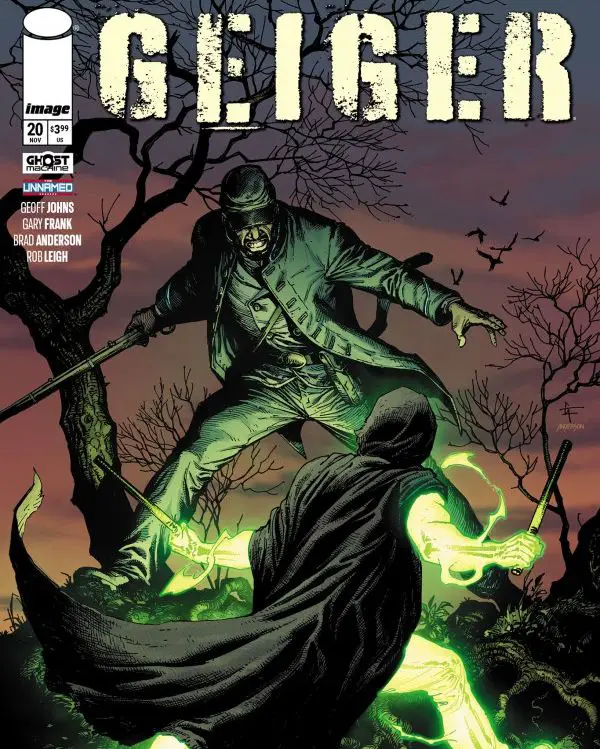
Geiger #20, by Image Comics on 1/14/26, abandons its hero’s desperate search for redemption in favor of a time-travel mystery that could reshape everything he thinks he knows about the apocalypse.
Credits:
- Writer: Geoff Johns
- Artist: Gary Frank
- Colorist: Brad Anderson
- Letterer: Rob Leigh
- Cover Artist: Gary Frank (cover A)
- Publisher: Image Comics
- Release Date: January 14, 2026
- Comic Rating: Teen
- Cover Price: $3.99
- Page Count: 36
- Format: Single Issue
Covers:
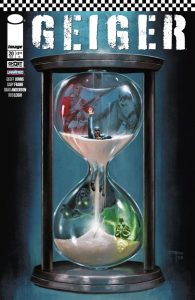

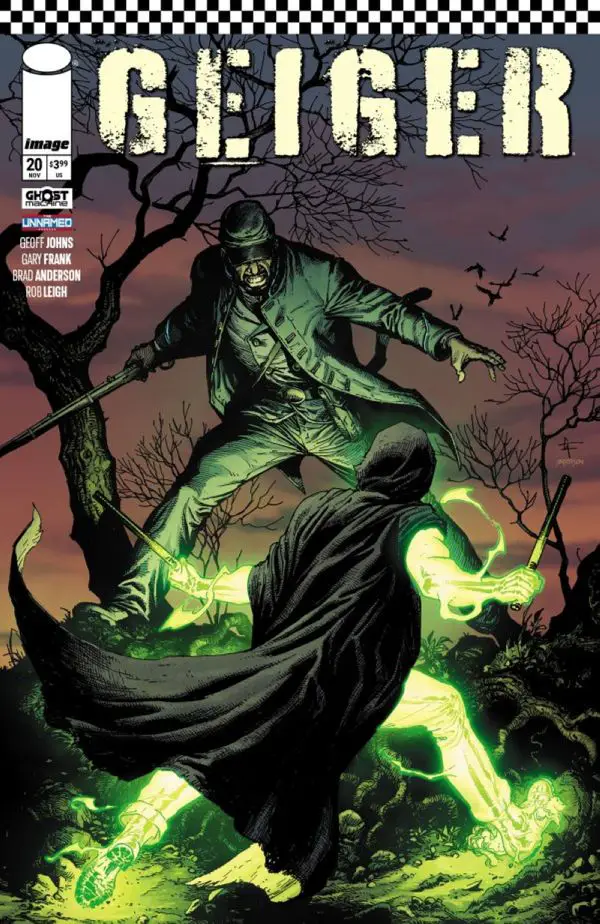


Analysis of GEIGER #20:
First Impressions:
This issue hits hard with existential fatigue wrapped in philosophical intrigue. Geiger’s rejection of heroism and the sudden arrival of the Northerner as a stranger claiming to be from 1864 creates immediate narrative tension that pulls you in. The time-travel premise feels grounded enough to trust, even if it sounds ridiculous on paper, because the character conviction sells it.
Recap:
In Geiger #19, Ashley Arden (the Glowing Woman) rescued trafficked children and established the St. Louis Strays as a pack with strict survival codes. She armed kids with weapons, trained them to fight, and questioned whether she was savior or monster. Meanwhile, Simon Pure tracked her glow thinking it belonged to Geiger but deemed her worthless to his hunt. The issue ended with converging threads suggesting larger forces were at work in the Unnamed universe.
Plot Analysis (SPOILERS):
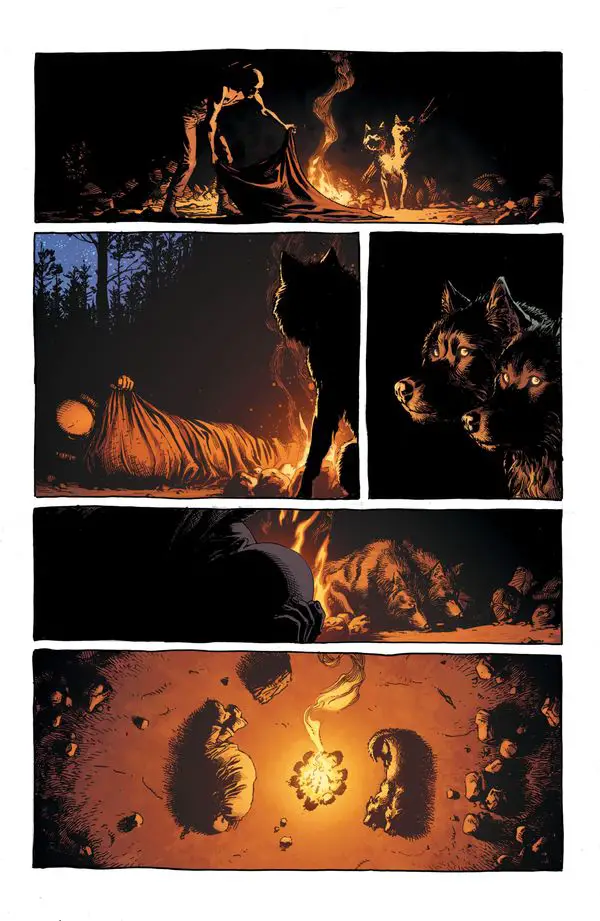
Geiger stands alone with Barney in the wasteland, telling his two-headed wolf that their chapter has ended. He’s abandoned the search for a cure and rejected his friends, declaring no more missions and no more mercy, choosing isolation over hope. When they discover the Northerner who literally falls out of the sky, Geiger’s hostility meets the Northerner’s urgent desperation to reach Detroit where records hold answers about the Unknown War’s origin.
The Northerner reveals he’s Malcolm North, a man from an alternate 1864 where the South won the Civil War. A woman from something called the Department of Historical Preservation showed him proof that time travel had twisted history; she played footage of Martin Luther King Jr.’s “I Have a Dream” speech, something that never happened in his world. The Department sent Malcolm back to 1864 to stop an enemy agent called the Cobbler and restore the “correct” history.
Malcolm’s mission went sideways fast. The time machine misfired, dumping him in 1914 where he briefly encountered immortal forces, then finally to 1864 where he stopped the Cobbler. But instead of returning home, the system flung him forward into the post-Unknown War future where Geiger wanders. Malcolm now fears he accidentally created the conditions for the very nuclear fire that destroyed everything by helping the North win.
Malcolm produces a special watch linked to the Department that triggers weapon drops from mysterious benefactors. He proposes a new mission to Geiger: reach Detroit and uncover who started the Unknown War, then rewrite it the way he rewrote the Civil War. The issue ends with Geiger considering this impossible proposition while the question hangs heavy: is Malcolm sent to save history, or are forces beyond their understanding using them both as pawns?
Story
Johns delivers a foundational issue that leans hard into exposition but earns it through character conflict. Geiger’s exhausted rejection of heroism collides directly with the Northerner’s missionary certainty, creating friction that keeps the exposition from feeling like a lecture. Pacing moves briskly between action beats and dialogue, though the middle stretches into heavy explanation that occasionally slows momentum. Structure smartly uses the Northerner as an unreliable witness, planting doubt about whether his version of events is accurate or whether time travel actually works as he describes it. The dialogue captures desperation and skepticism without forcing exposition into unnatural places; characters earn their explanations through genuine disagreement.
Art
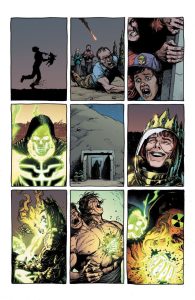
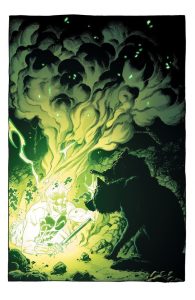
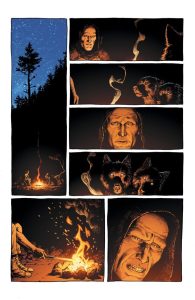
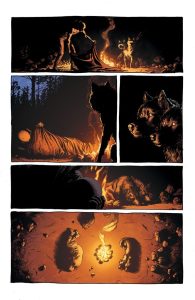
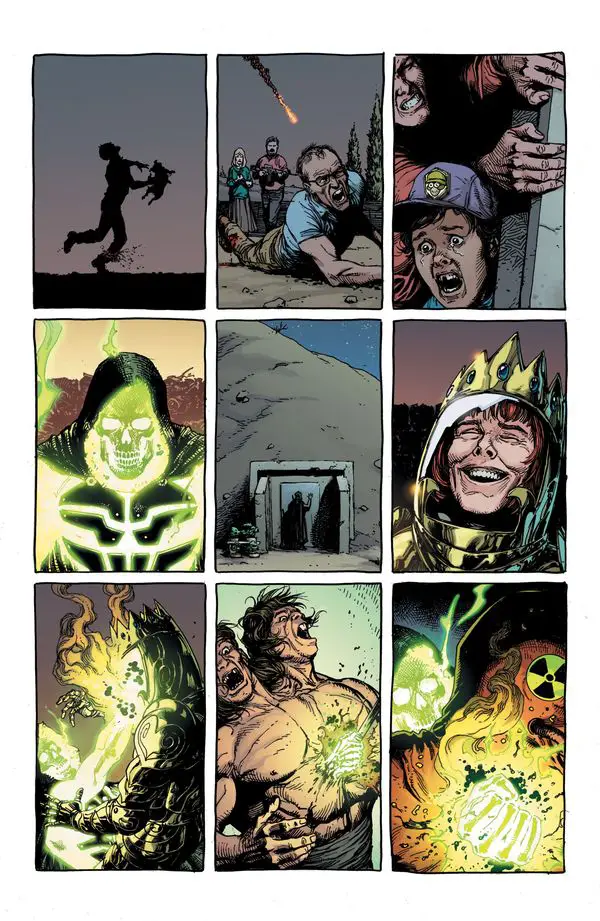
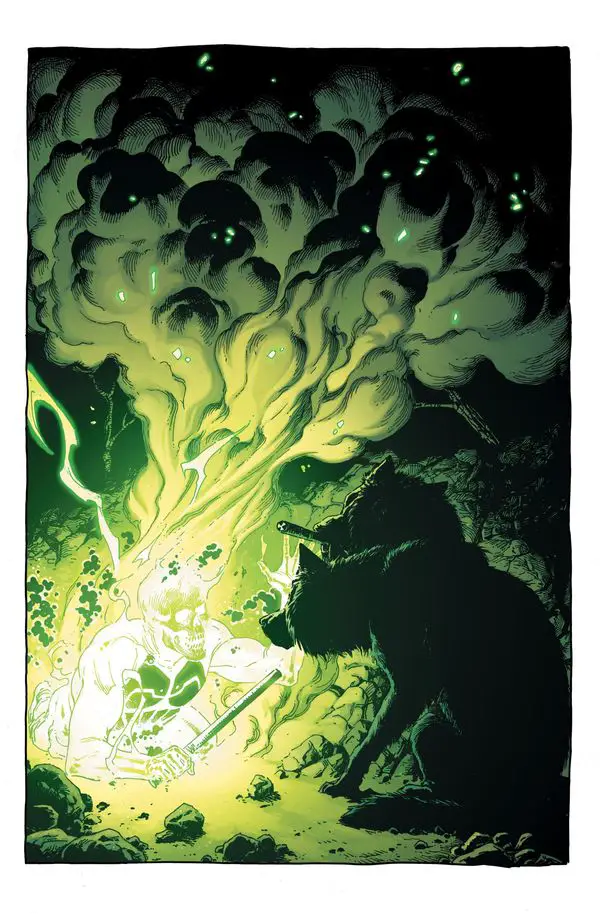
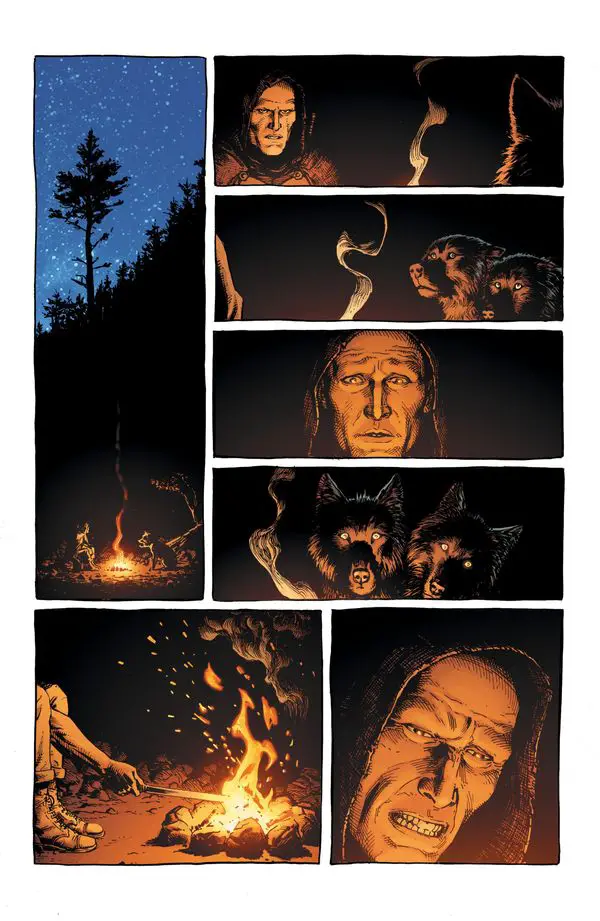
Frank and Anderson paint a desolate landscape that reinforces Geiger’s emotional emptiness with gray tones and muted greens. Panel composition uses spatial depth effectively, particularly in sequences showing the Northerner’s emergence from wilderness and the subsequent fight with mechanical opponents. Clarity remains sharp even in cluttered action sequences, with character expressions doing heavy lifting to convey emotional stakes. Color choices shift from sickly radiation green to ashen despair, creating mood synergy with dialogue about apocalyptic finality. The two-headed wolf Barney becomes a visual anchor for Geiger’s isolation, appearing consistently to emphasize his partnership and solitude simultaneously.
Characters
Geiger’s arc reaches a breaking point here; his refusal to accept another mission feels earned after his previous struggles. His consistency wavers slightly, though, between rejecting everyone and eventually listening to the Northerner’s proposition, making his character arc feel somewhat reactive rather than proactive. The Northerner emerges as a complex motivator driven by guilt over potential unintended consequences; his relatability stems from the universal fear of being responsible for catastrophic outcomes beyond your control. The supporting characters feel more sketch than substance, with mentions of Nathan, Molotov, and Nate creating lore depth without giving them meaningful presence. The Northerner’s philosophy about rewriting history mirrors Geiger’s core struggle with responsibility and power, creating thematic resonance even if their relationship remains antagonistic.
Originality & Concept Execution
The time-travel angle brings fresh narrative dimension to a series previously grounded in radiation horror and survival. Johns executes the premise carefully, avoiding the trap of making time-travel mechanics simple or convenient; the Northerner’s confusion about his own displacement and the Department’s silence creates uncertainty that feels true. The concept of historical editing bleeding consequences into the future adds intellectual weight to the Unnamed universe’s existing mythology. Execution stumbles slightly in making the Northerner’s backstory feel slightly rushed despite dedicated panel space, but the core idea of temporal paradox causing the apocalypse lands hard. The originality lies not in time travel itself but in using it to question whether Geiger’s world was always doomed or whether past actions created present ruin.
Positives
The issue’s greatest strength is its philosophical ambition coupled with genuine character tension. Johns refuses easy answers, instead staging a debate between exhaustion and purpose that feels earned rather than heavy-handed. Frank and Anderson’s artwork transforms the wasteland into a character itself, with color choices and composition decisions amplifying the thematic weight of Geiger’s despair. The Northerner’s introduction as an unreliable time traveler creates mystery that promises series-long payoff, and the reveal that Geiger himself might be responsible for the apocalypse stakes everything on future issues. The watch mechanism and weapon drops establish a clean sci-fi hook without explaining it away, trusting readers to sit with mystery.
Negatives
The Northerner’s exposition dump, while motivated by character conflict, still slows pacing considerably in the second half. The time-travel explanation risks feeling convoluted without additional context for newer readers; jumping through 1864, 1914, and the future within one issue asks a lot of comprehension. Some secondary characters mentioned by name (Nathan, Molotov, Nate) exist more as reference points than participants, diluting their narrative weight. The issue occasionally leans on Johns’ love of mystery boxes over clarity, leaving crucial questions unanswered about how time travel functions or whether the Department even still exists. Geiger’s sudden willingness to engage with the Northerner’s plan contradicts his stated rejection of missions, making his character shift feel more plot-convenient than organic.
Art Samples:
The Scorecard:
Writing Quality (Clarity & Pacing): [3/4]
Art Quality (Execution & Synergy): [4/4]
Value (Originality & Entertainment): [2/2]
Final Thoughts:
(Click this link 👇 to order this comic)
GEIGER #20 operates as an ambitious pivot point that trades survival horror for temporal mystery while questioning whether the radioactive wasteland itself might be a consequence of well-intentioned manipulation. The issue earns a spot on your shelf if you’re following the Unnamed universe’s long game, particularly given how it recontextualizes Geiger’s entire journey. This issue delivers enough intrigue and character weight to justify the purchase, even if it occasionally stumbles under the weight of its own mythology.
We hope you found this article interesting. Come back for more reviews, previews, and opinions on comics, and don’t forget to follow us on social media:
If you’re interested in this creator’s works, remember to let your Local Comic Shop know to find more of their work for you. They would appreciate the call, and so would we.
Click here to find your Local Comic Shop: www.ComicShopLocator.com
As an Amazon Associate, we earn revenue from qualifying purchases to help fund this site. Links to Blu-Rays, DVDs, Books, Movies, and more contained in this article are affiliate links. Please consider purchasing if you find something interesting, and thank you for your support.