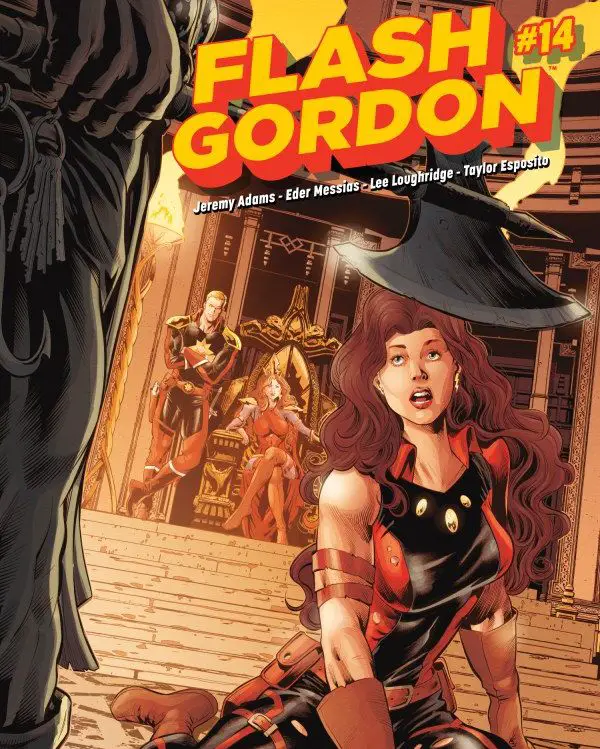
Flash Gordon #14, by Mad Cave Studios on 12/31/25, hurls the hero into the Cave of the Ancients while Ming’s forces close in, armies collide above ground, and an “evil” version of himself tightens the noose.
Credits:
- Writer: Jeremy Adams
- Artist: Eder Messias, Tom Derenick
- Colorist: Lee Loughridge
- Letterer: Taylor Esposito
- Cover Artist: Will Conrad, Lee Loughridge (cover A)
- Publisher: Mad Cave Studios
- Release Date: December 31, 2025
- Comic Rating: Teen
- Cover Price: $4.99
- Page Count: 34
- Format: Single Issue
Covers:
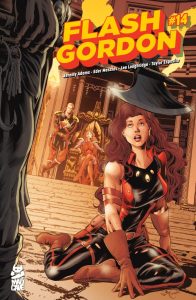
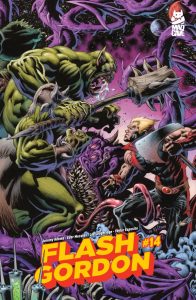
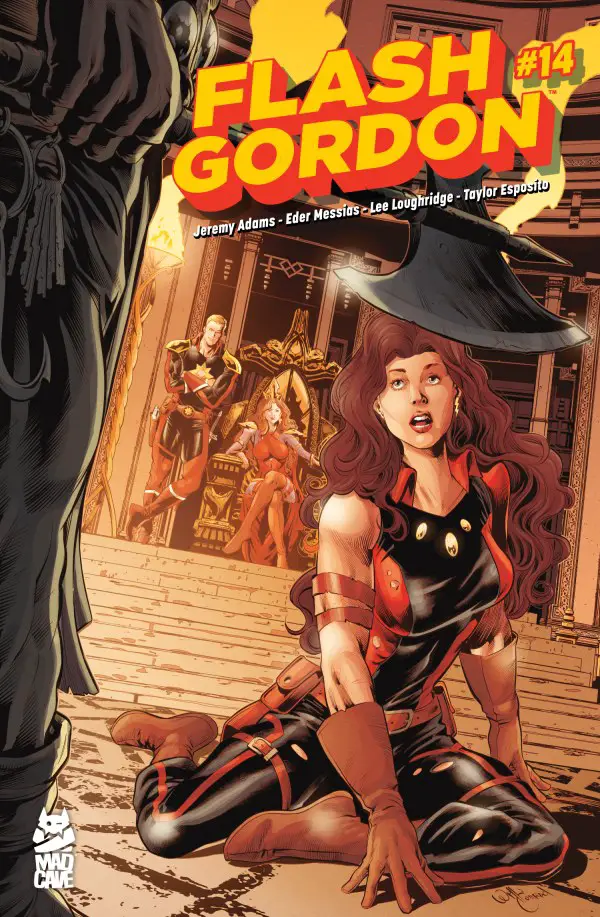
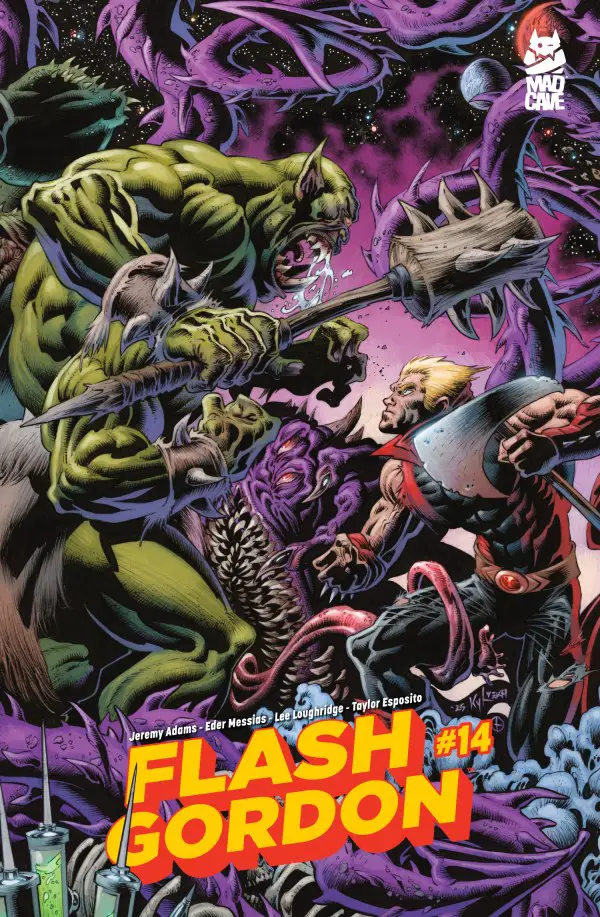
Analysis of FLASH GORDON #14:
First Impressions:
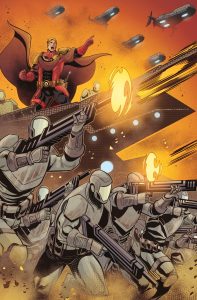
The opening salvo is pure chaos: armies screaming for their emperors while Flash tears through the battlefield with the kind of reckless confidence that makes you wonder if he’s a genius or just got lucky once too often. The art explodes off the page, colors pumping adrenaline into every frame, and you immediately know this issue isn’t interested in quiet moments or breathing room. The emotional gut punch comes fast, cutting between Dale’s escape attempt and the aerial dogfight above, reminding you that even when Flash is winning, everyone else is getting shredded.
Recap:
In Flash Gordon #13, Flash Gordon executed an Oscar-worthy masquerade as the “Evil Flash” to commandeer an alternate Ming’s army, plotting to use those forces against both his own nemesis and this parallel universe’s threats. He cut deals, played factions against each other, and hunted clues about ancient machines capable of ripping open time and space. The final act had armies massing and rebels preparing to storm the palace as Flash pivoted toward his homeworld, still hunting for the ancient tech that might save or doom everyone. Next stop: The Cave of the Ancients, with Mongo’s future at stake.
Plot Analysis:
The issue explodes with Flash’s stolen army attacking Mingo City as a diversion; Ming figures out he’s been played and scrambles for a flyer to pursue him. Flash, meanwhile, abandons the assault and veers north toward a rock formation, telling Vultan over the radio to keep Ming’s defenses pinned while he hunts for something that will “help us in our fight.” Vultan, thrilled to be useful, immediately volunteers his air wings for what he calls his “insurance policy” against the likes of Ming.
Flash locates the Cave of the Ancients based on coordinates from the alternate Ming, identifying the entrance by three intersecting cracks on a rock face. He descends into a chasm, narrowly avoiding a laser grid, and gets blindsided by collapsing stairs designed as a booby trap. Meanwhile, Vultan’s flyers tangle with Ming’s fighters in a vicious aerial slugfest. Despite damage to his ship’s magnetic landing gear, the lead pilot pushes forward, ejecting when a collision becomes inevitable. Talon, Ming’s general, engages the remaining fighter in hand-to-hand aerial combat after both pilots eject.
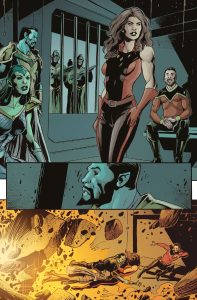
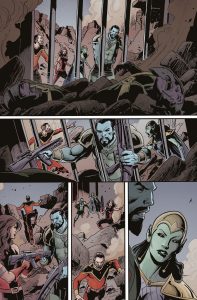
Below ground, Flash pushes through the ruins of Zarkov’s ancient machine, confirming its presence and functionality just as Ming’s forces breach the palace’s outer wall. Dale and Zarkov seize the chaos to escape, vowing to help Flash from above while the incoming army storms toward the lab where the miracle machine sits vulnerable. Flash, boxed in by pressure plates and laser grids, has nowhere to go but forward, racing against Ming’s advancing soldiers and an unknown enemy: himself, in the form of the Evil Flash, now hunting him down with orders to kill on sight.
Story
The pacing is relentless but uneven, treating action and dialogue like interchangeable fuel. Jeremy Adams crams a lot into thirty-four pages: simultaneous battle sequences, Flash’s descent into the cave, aerial combat, palace intrusions, and character beats. The structure works when it commits to a single thread, especially during the cave sequence, but when it ping-pongs between locations, some transitions blur together.
The dialogue snaps with energy, though some exchanges feel functional rather than sharp. The standout is Vultan’s “insurance policy” moment, which lands with character and confidence. Younger readers might struggle to follow the logic of Flash’s plan when the issue jumps around so much; clearer connective tissue would help them see why each piece matters. The internal monologue works when Flash’s frustration and desperation shine through, but sometimes it retreads ground already shown visually.
Art
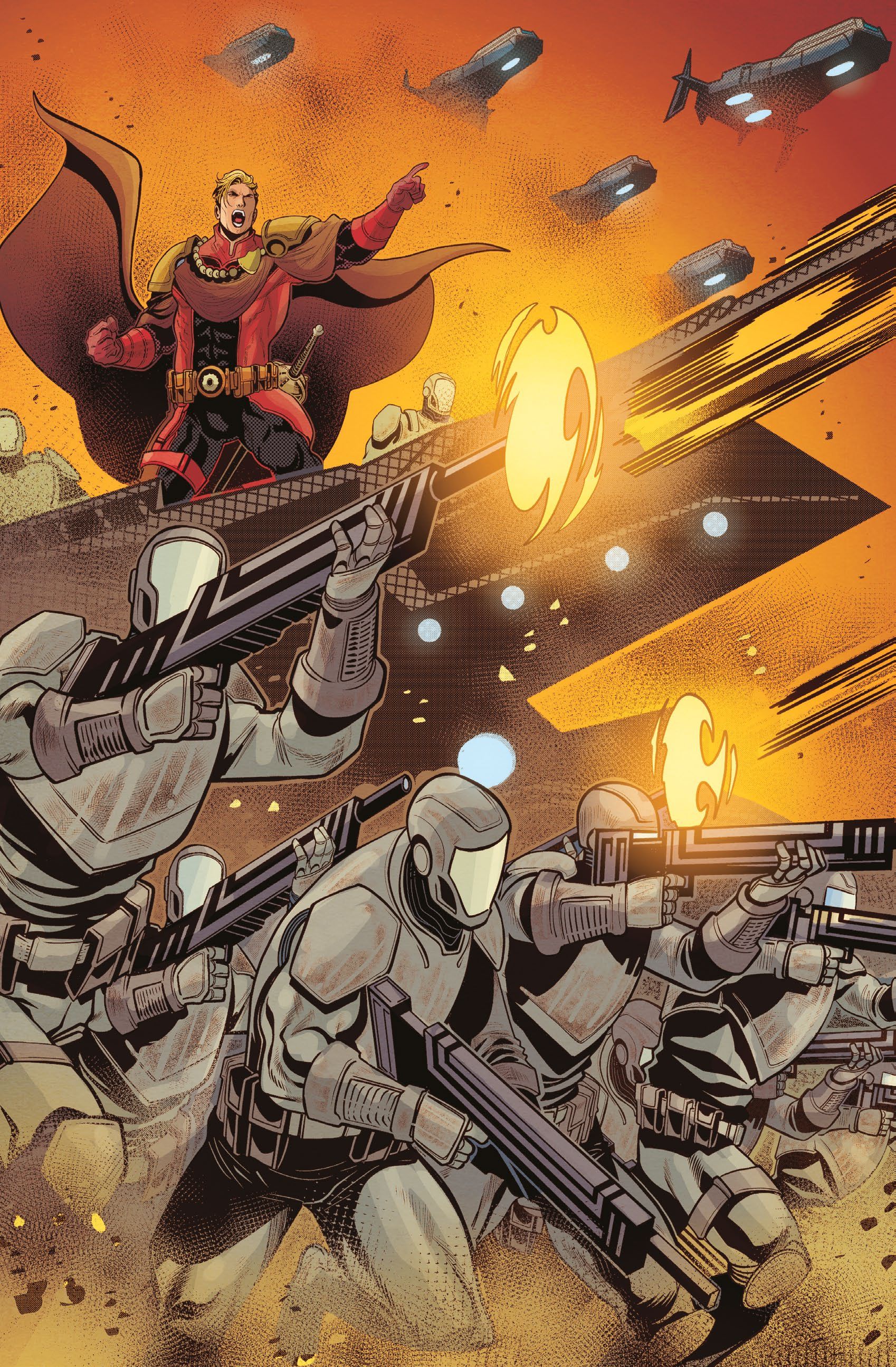
Eder Messias and Tom Derenick deliver kinetic, dynamic action that’s genuinely exciting. The aerial dogfight between Vultan’s flyers and Ming’s forces pops with violence and motion; you feel the speed and stakes in every panel. Composition is strongest during these set pieces, where clear sight lines and bold blocking keep readers locked in. The cave descent works visually as well, using shadows and perspective to sell the sense of danger descending into unknown territory.
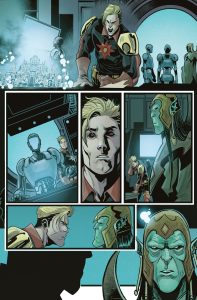
Lee Loughridge’s color choices elevate the mood; the cold purples and metallic blues of the spacecraft contrast sharply with the warm, earthy tones of the cave, making sure you know when Flash has stepped into a different kind of threat. The weakness surfaces in crowded panels where background soldiers or secondary characters get lost in the visual noise. Some scenes inside the palace feel cluttered, with lettering competing for space against detailed backgrounds. The laser grid sequence is clever but could use one more beat to register fully with younger readers unfamiliar with classic sci-fi booby traps.
Characters
Flash remains consistent: a man gambling with everyone else’s lives because he believes he’s the only one who can win. His self-doubt (“How could you be so stupid, Flash?”) feels earned, not performative, giving dimension to his recklessness. Dale and Zarkov’s choice to seize their own escape is a good moment, showing growth from the prior issue’s passive desperation. Vultan lands as reliable and self-interested in equal measure, which makes his willingness to help Flash feel like a transaction rather than pure heroism.
The Evil Flash is still a concept more than a character, appearing only in the final panels as a threat. Talon, Ming’s general, shows a moment of vulnerability when ejecting with Ming, hinting at a loyalty that costs him, though it’s brief. The motivations are clear but not deeply explored; characters want things and pursue them, but internal struggles take a back seat to plot momentum. Relatability is moderate; younger readers will enjoy Flash’s determination, but the rapid transitions and complex scheming might leave them unsure why they should care about the Cave of the Ancients until the final pages raise the stakes.
Originality & Concept Execution
The issue executes a classic heist structure (create a distraction, steal the prize) in a space opera setting, which is solid if not revolutionary. The “ancient technology” angle gives the concept pulp credibility, and Zarkov’s miracle machine justifies the elaborate setup. The real originality lies in how Adams layers the threats: Flash hunted by Ming, hunted by his alternate self, and racing against time while his allies deal with their own crises.
The execution is mostly successful, delivering on the “war on multiple fronts” promise, though the cave itself feels underdeveloped. Readers never quite understand what Zarkov’s machine does or why it’s the key to victory; it’s McGuffin-status, which works for pacing but undermines thematic weight. The concept holds together when readers accept that ancient tech equals hope, but more specificity would deepen the stakes considerably.
Positives
The standout strength is visual momentum. Messias and Derenick create action sequences that crackle with energy and clarity, especially during the aerial combat where Vultan’s flyers outmaneuver Ming’s fighters. The pacing, while relentless, rarely feels unfocused; scenes transition quickly without losing readers entirely. Lee Loughridge’s color work deserves special mention, using tone and temperature to separate the cold violence above ground from the ominous descent below.
The dialogue in Vultan’s scene is charming, giving a usually minor character a moment of genuine personality and humor. The ticking clock structure delivers tension; readers feel the squeeze tightening as multiple threads converge. Finally, Adams doesn’t waste time on exposition; if you’re tracking Flash Gordon’s universe, this issue assumes you’re sharp enough to follow the implications.
Negatives
The clutter works against clarity in several panels, particularly inside Ming’s palace and during the pressure-plate sequence underground. Younger readers may struggle to parse which threat matters at which moment, and the rapid location-switching can disorient rather than thrill. The Evil Flash’s appearance in the final scenes is a callback that lands flat because he hasn’t been a factor in this issue until then, making it feel like a twist with no buildup. Zarkov’s machine itself is a major problem: readers never learn what it does, why it matters beyond “ancient tech equals good,” or what victory actually looks like. The pacing sacrifice character depth on the altar of action; Dale, Zarkov, and Barin’s escape attempt is functional but emotionally inert, which is a missed opportunity given the stakes. Finally, the issue ends mid-action without resolving any of its threads, which is standard for serials but leaves this particular chapter feeling more like setup than a complete story. For readers buying this as a standalone experience rather than an ongoing series, the payoff is frustratingly deferred.
Art Samples:


The Scorecard:
Writing Quality (Clarity & Pacing): 3/4
Art Quality (Execution & Synergy): 3/4
Value (Originality & Entertainment): 1/2
Final Thoughts:
(Click this link 👇 to order this comic)
FLASH GORDON #14 is a relentless action machine that prioritizes velocity over substance, and whether that’s a compliment or critique depends on what you want from your four dollars and ninety-nine cents. If you crave dynamic aerial combat, stunning color work, and heroes operating under time pressure, this issue delivers those goods consistently. If you’re looking for character depth, emotional resonance, or a sense that this chapter accomplishes something beyond “move all the pieces closer to the finale,” you’ll leave disappointed.
We hope you found this article interesting. Come back for more reviews, previews, and opinions on comics, and don’t forget to follow us on social media:
If you’re interested in this creator’s works, remember to let your Local Comic Shop know to find more of their work for you. They would appreciate the call, and so would we.
Click here to find your Local Comic Shop: www.ComicShopLocator.com
As an Amazon Associate, we earn revenue from qualifying purchases to help fund this site. Links to Blu-Rays, DVDs, Books, Movies, and more contained in this article are affiliate links. Please consider purchasing if you find something interesting, and thank you for your support.