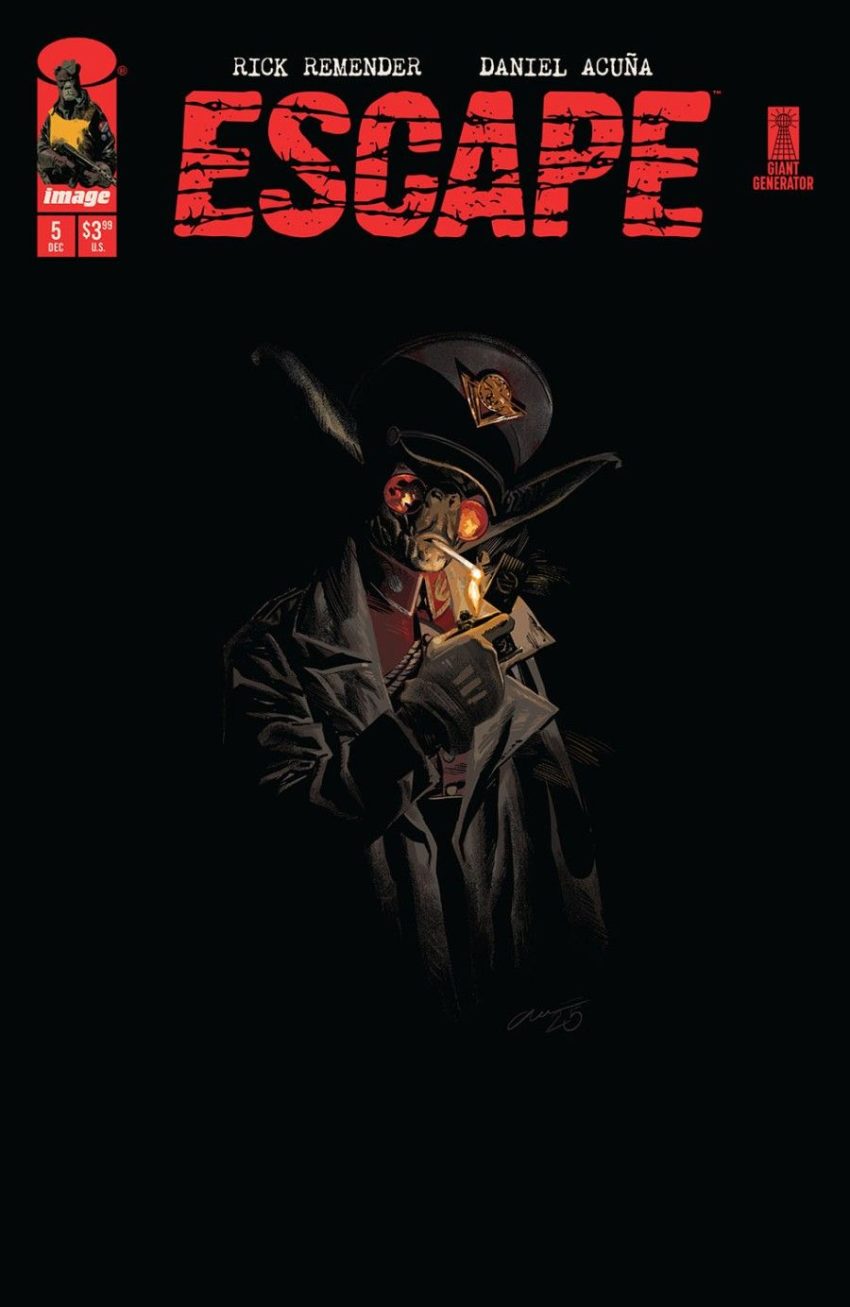
Escape #5, by Image Comics on 12/31/25, kicks off with a dark exploration of how power corrupts even the smallest moments of peace, and whether survival is worth the moral toll it demands.
Credits:
- Writer: Rick Remender
- Artist: Daniel Acuña
- Colorist: Daniel Acuña
- Letterer: Rus Wooton
- Cover Artist: Daniel Acuña (cover A)
- Publisher: Image Comics
- Release Date: December 31, 2025
- Comic Rating: Mature (gore, themes)
- Cover Price: $3.99
- Page Count: 32
- Format: Single Issue
Covers:
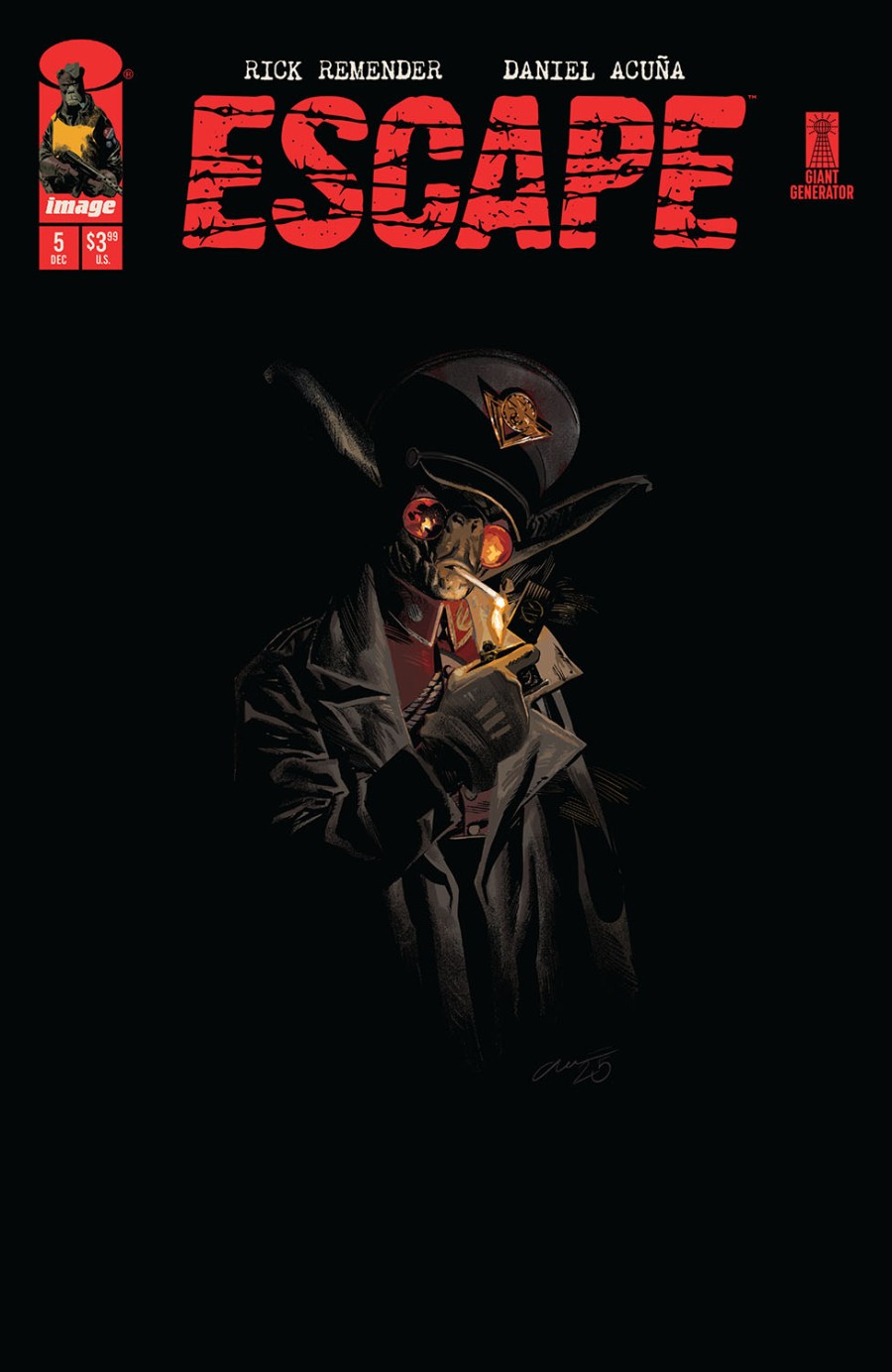
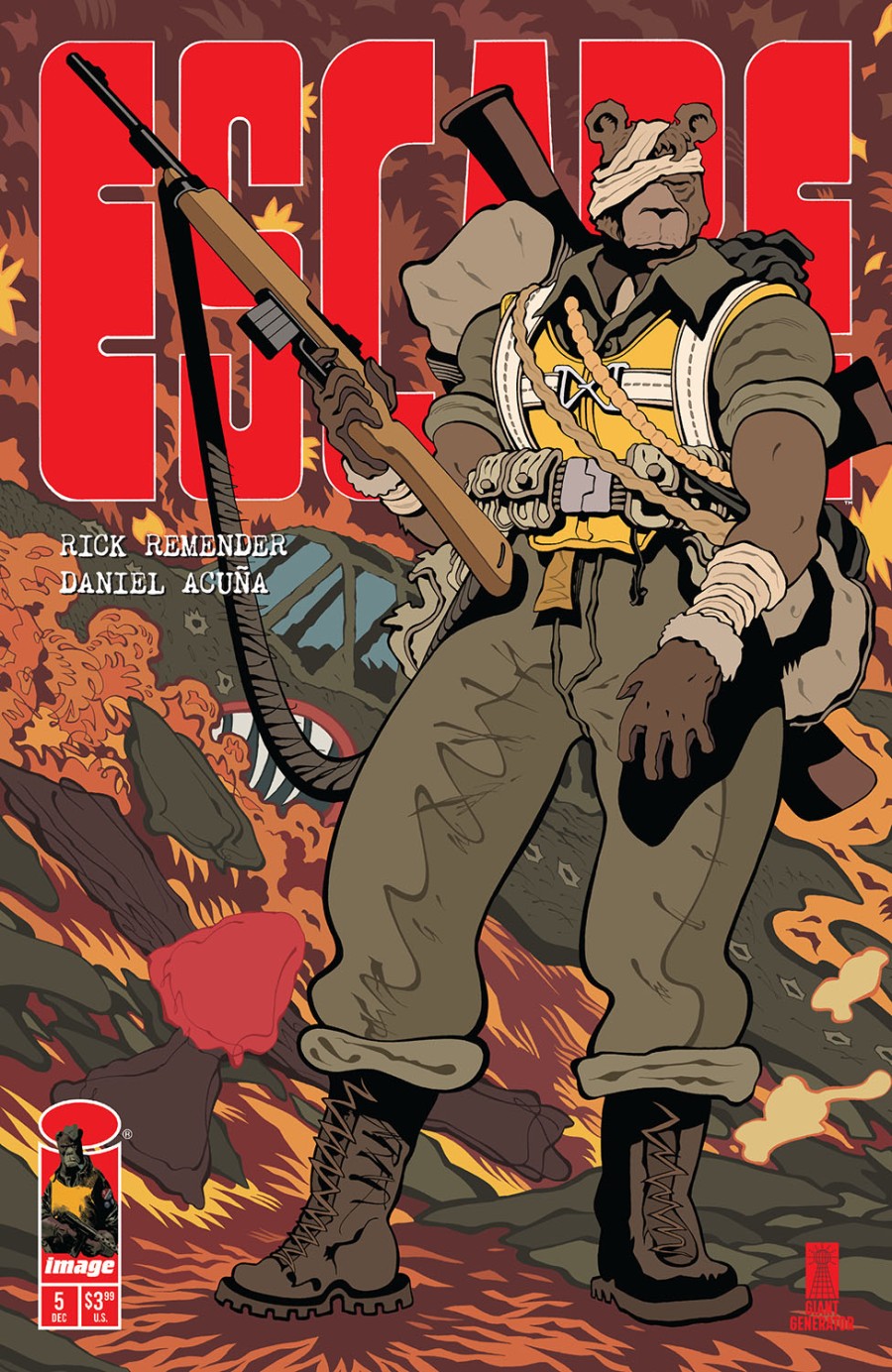
Analysis of ESCAPE #5:
First Impressions:
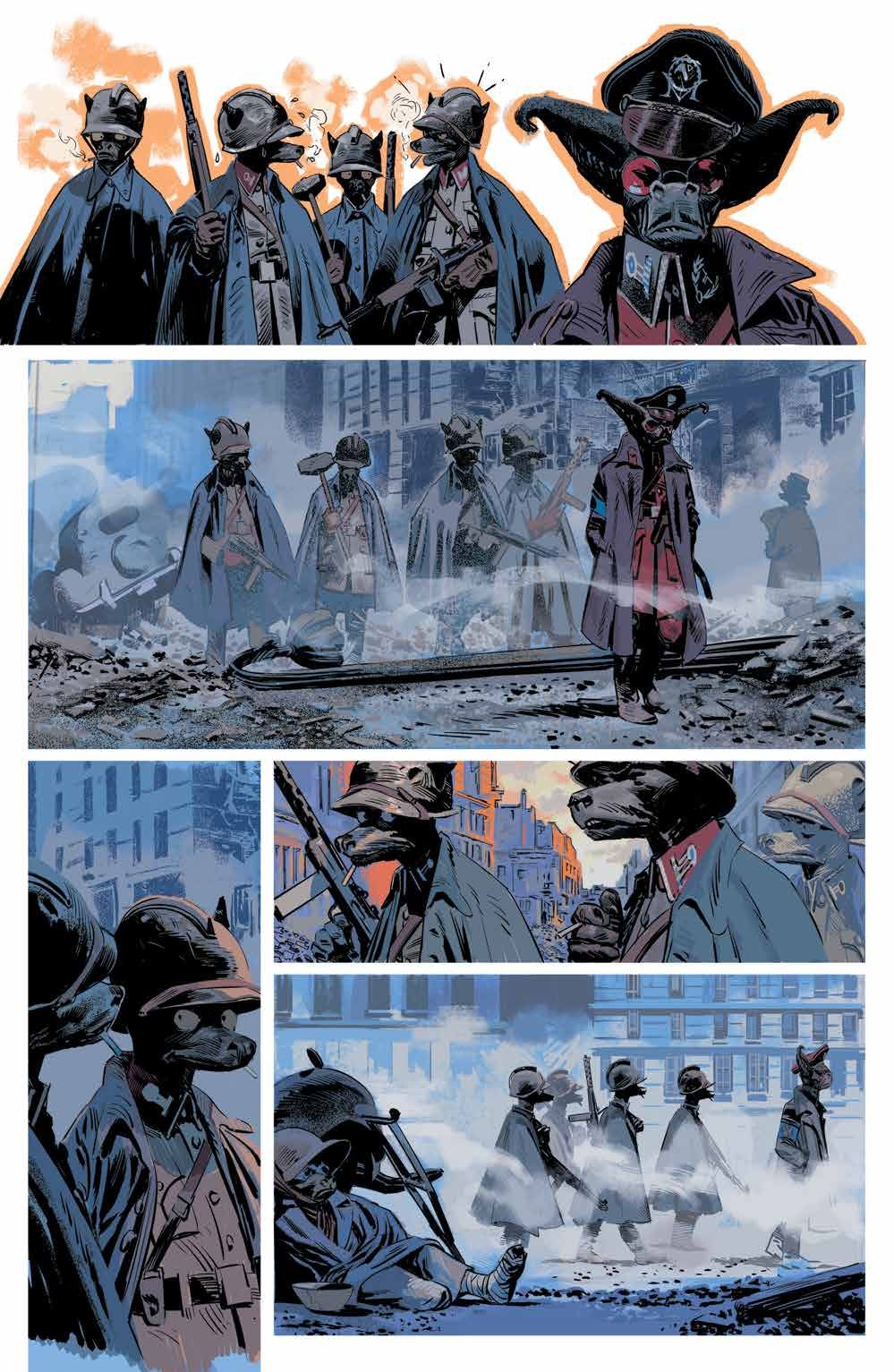
The opening pages set a familiar wartime scene where soldiers on leave drown their anxieties in cynical banter about missing beer and lost love, but the Colonel’s interruption shatters that cheap comfort with a philosophical gut punch: these brutal days are the good ones, and peacetime will steal everything that makes soldiers feel alive. That cruel wisdom lands harder than expected. The shift from soldiers killing time to a terrifying home invasion by occupation forces feels earned rather than manipulative.
Recap:
In Escape #4, Milton escaped a military base with explosives and intel after meeting a Narenian family hiding from the war. The baker, Anders, concealed the enemy pilot despite knowing his own wife and daughter were vanished by the occupation regime, forcing Milton to confront the moral complexity of his mission. Anders gave Milton the tools to destroy the Titan Cannon, even as he warned the pilot that civilians, not soldiers, would ultimately pay the price.
Plot Analysis:
The issue opens with off-duty soldiers griping during their forced rest period, setting a deceptively casual tone before the Colonel arrives with an existential warning: these war years are the best of their lives, and they won’t understand that until peace strips away their power and respect. The scene shifts abruptly to Anders’ home, where Colonel Korbit conducts a methodical interrogation designed to break a grieving father into submission, leveraging everything he knows about Anders’ past as a history professor and his missing wife Margarethe, who led resistance operations. As Korbit circles closer to discovering the hidden pilot, the tension builds through carefully layered questions that feel less like interrogation and more like a skilled predator toying with wounded prey before administering the killing blow.
The colonel discovers a foreign coin on Emil, Anders’ son, and uses it as leverage to force the boy to betray the pilot hiding in the basement, extracting explosives and a gun that Milton had stashed. Milton emerges, broken and desperate, and finds refuge with a man who has already lost everything to the occupation but cannot afford to lose his son as well. Anders offers Milton supplies and shelter while articulating the core moral paralysis of wartime: sometimes survival demands becoming exactly the kind of coward that dying men despise. As the issue closes, Milton leaves the home with his mission intact and the weight of Anders’ sacrifice pressing down on him, knowing that victory here means this family dies when the bombing begins.
Story
Remender structures the issue around two distinct conversations that mirror each other, creating a dialogue about the nature of power and sacrifice without ever explicitly stating the theme. The Colonel’s opening monologue is chillingly elegant; he warns soldiers that they’ll miss their current authority, building empathy for ruthless men while simultaneously condemning them as addicted to dominance. The dialogue between Anders and Korbit functions as a slow tightening of a trap, with each exchange peeling back another layer of the family’s vulnerability until the interrogator’s control becomes absolute.
Pacing remains deliberate rather than rushed, forcing readers to sit with the discomfort of watching a skilled authority figure break a father into compliance. The issue’s final sequence, where Milton and Anders discuss sacrifice in quiet, spare sentences, provides emotional weight without melodrama. Remender avoids heavy-handed speeches, letting the practical horror of their situation speak for itself. The shift from the soldiers’ crude banter to the suffocating interrogation to the quiet desperation of hiding creates strong momentum across distinct emotional registers.
Art
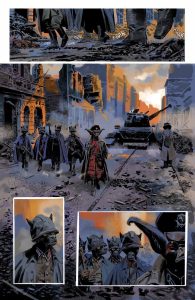
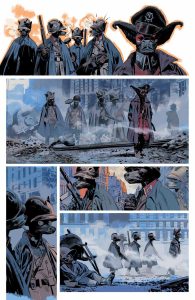
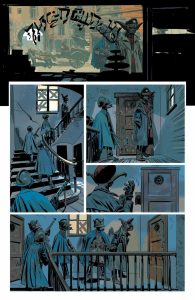
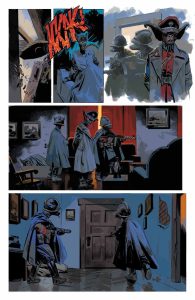
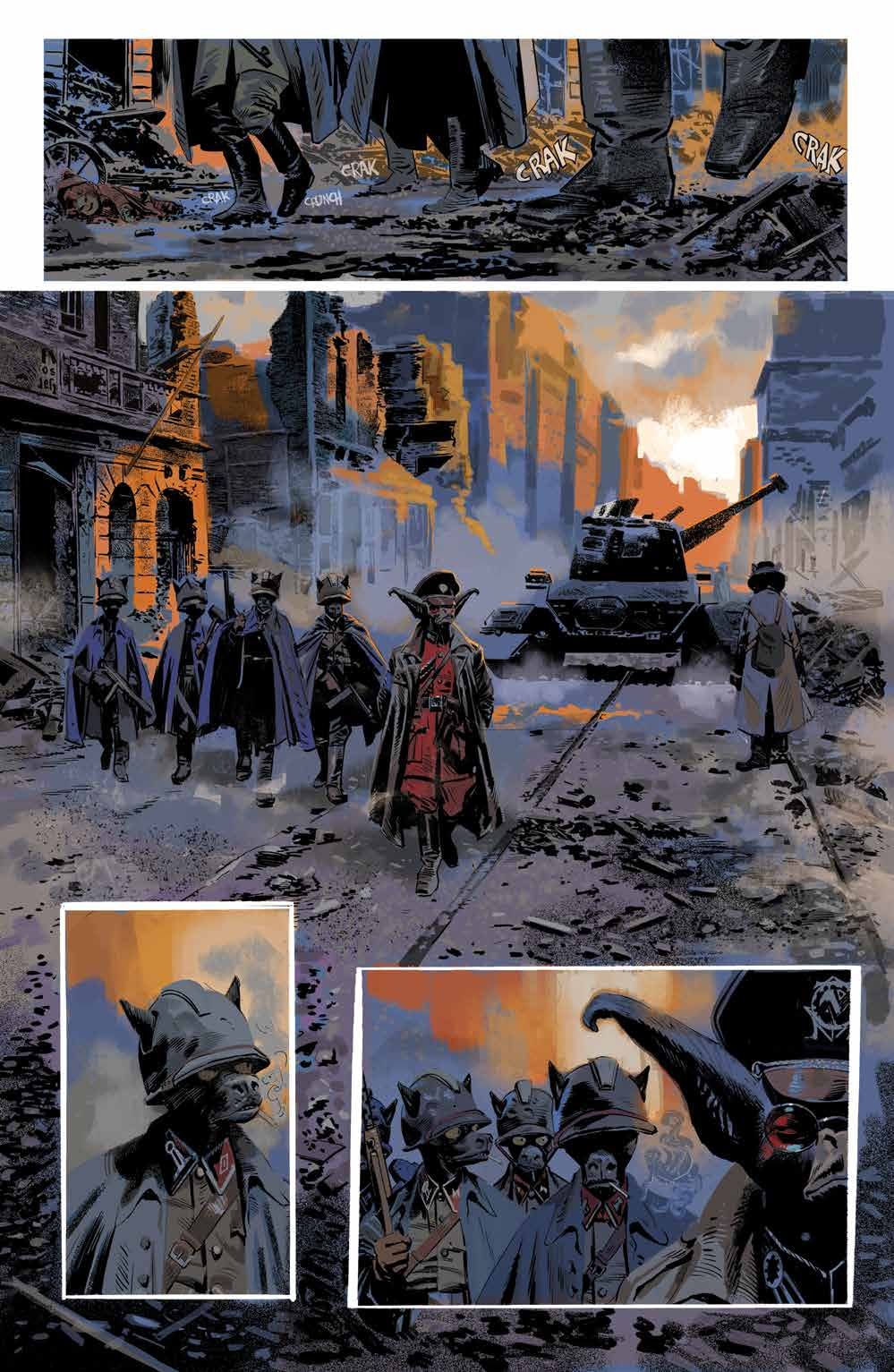
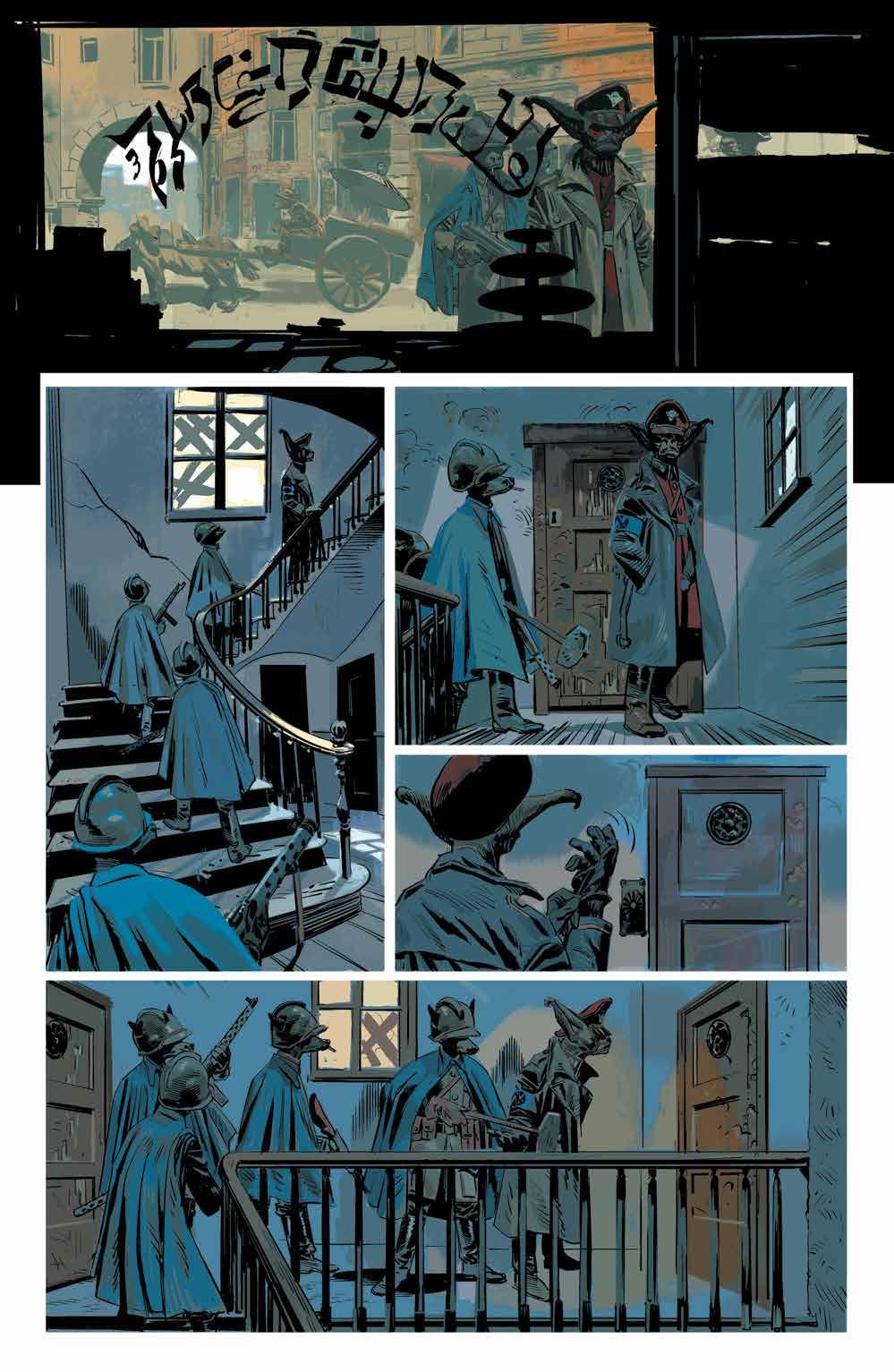
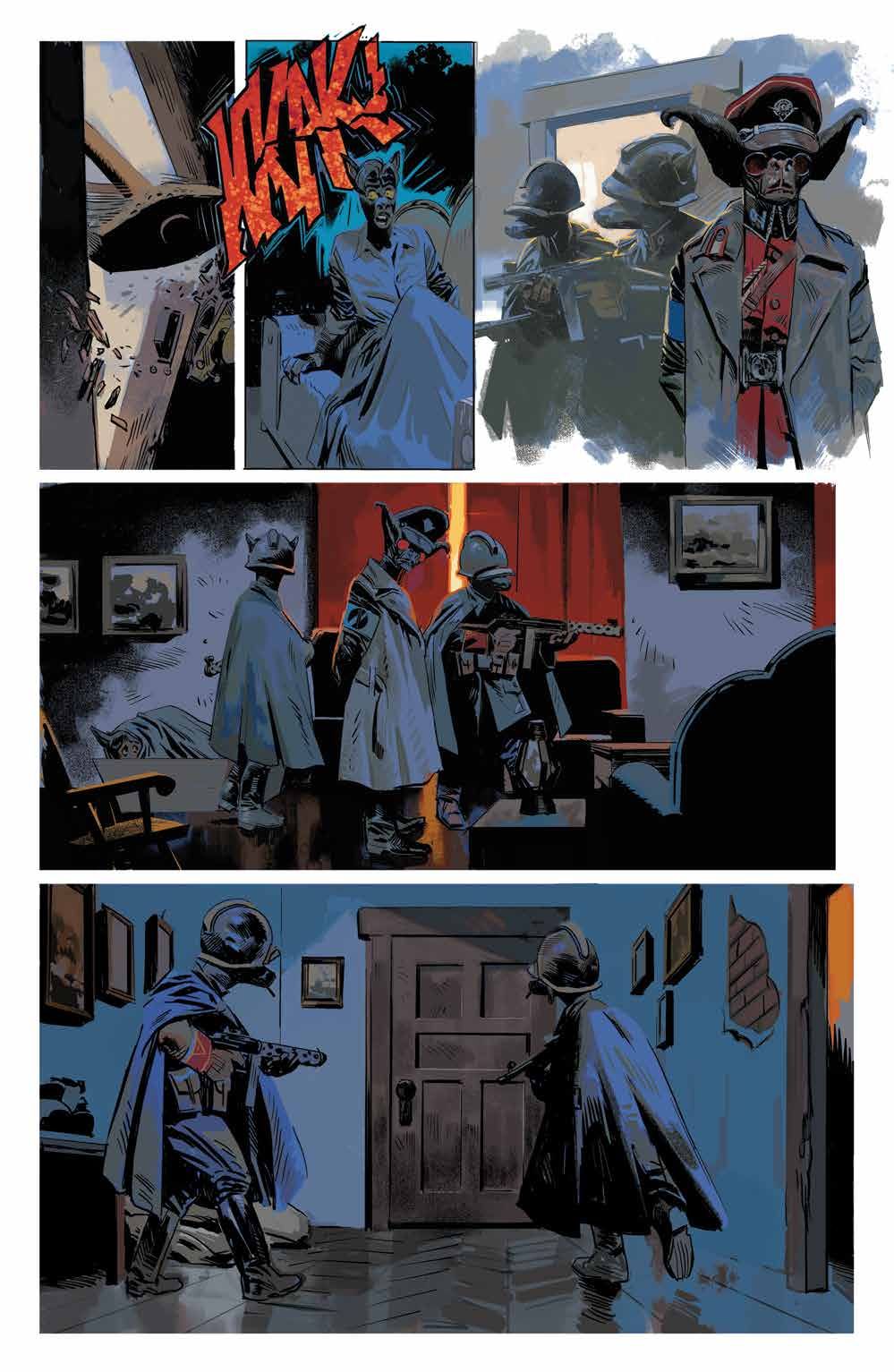
Acuña’s painted artwork conveys the visual language of occupation through claustrophobic framing and muted color palettes that shift between cold blues and sickly greens. The opening pages of soldiers at rest use warmer tones, oranges and browns, to emphasize safety and camaraderie, making the contrast sharper when Korbit arrives and the scene drains into grays and shadows. Close-up panels of faces during the interrogation reveal micro-expressions of fear and defiance, showing Acuña’s ability to convey emotional weight through subtle shifts in eye placement and jaw tension.
The composition of the interrogation scene uses negative space effectively, positioning Anders as a small, trapped figure while the Colonel occupies commanding angles that reinforce his authority. When Milton emerges from hiding, the art emphasizes his exhaustion through body language rather than explicit injury; his shoulders slump, his movements lack coordination, every line of his figure communicates depletion. The color choices throughout maintain visual coherence with the series’ established aesthetic: browns, grays, and desaturated reds suggesting decay and violence. Acuña avoids overstylization, keeping the artwork clean enough that readers process the emotional stakes without distraction.
Characters
Anders emerges as the issue’s moral center, and his character remains consistent with his introduction in the previous issue while deepening under pressure. His choice to protect Emil at the cost of his own integrity feels authentically rooted in parental desperation rather than sudden cowardice; the man has already lost his wife and daughter to the occupation, and watching Emil’s fear breaks his resolve. Milton’s response to Anders’ sacrifice reveals the pilot’s growing awareness that his mission destroys innocent lives, but his inability to stop himself from leaving with the explosives shows that awareness hasn’t yet translated into changed actions.
Colonel Korbit functions as a terrifying counterpoint to the series’ protagonists; he’s methodical, intelligent, and genuinely respectful toward Anders even as he dismantles his life, making him more dangerous than a one-dimensional villain. His monologue about soldiers missing power establishes him as someone who understands human weakness intimately, which makes his power over others feel inevitable rather than arbitrary.
Emil’s trauma, expressed through a single moment of compliance under threat, conveys the way occupation systems corrupt children into tools of control without explicit commentary. The ensemble cast demonstrates relatability through contradictions; these are not heroic figures choosing noble sacrifice, but desperate people making terrible choices because the alternative is worse.
Originality & Concept Execution
The anthropomorphic animal setting allows Remender to explore the mechanistic dehumanization of occupation without leaning on human genocide for impact; the Colonel’s casual discussion of vanished people feels colder, more systematic, because he discusses animals as a population category. The execution of the interrogation as a masterclass in psychological pressure rather than physical violence demonstrates confidence in the storytelling; Remender trusts readers to understand that the Colonel’s respect for Anders’ intelligence makes the interrogation more damaging than crude brutality.
The core premise of the series, following an enemy bomber forced behind occupied lines, continues to deliver fresh angles on war by refusing simple moral alignment; Milton isn’t heroic, and neither are his enemies universally villainous, making the narrative feel politically mature in a genre often dominated by black-and-white framing. The issue’s focus on the civilian cost of military action, demonstrated through Anders’ impossible position, reinforces the series’ commitment to unsentimental honesty about warfare’s human toll.
Positives
The interrogation scene ranks among the sharpest sequences in the series, with Colonel Korbit functioning as an antagonist who feels genuinely intelligent and dangerous without resorting to cartoonish villainy. Remender’s dialogue strips away filler, allowing each exchange between the Colonel and Anders to serve multiple functions simultaneously; they advance plot, reveal character motivation, and build thematic weight without redundancy.
Acuña’s color work distinguishes emotional states through palette shifts, using warm tones for hope and cool tones for dread in a way that feels organic to the painted aesthetic rather than heavy-handed. The opening soldiers’ scene provides crucial context for understanding the Colonel’s monologue about power’s seduction, making the subsequent interrogation land with greater impact. The quiet moments between Milton and Anders in the sequence’s final act deliver emotional payoff without melodrama; Anders’ decision to protect his son, even at the cost of Milton’s mission, feels like the only choice he could reasonably make given his circumstances.
Remender’s characterization ensures that readers understand Anders’ cowardice as heartbreaking human limitation rather than moral failure, which generates sympathy despite the character’s inability to help Milton. The pacing allows these emotional beats to settle, trusting readers to sit with discomfort rather than rushing toward release.
Negatives
The interrogation scene’s elegance occasionally threatens to overshadow other elements; the Colonel dominates the issue’s emotional energy so completely that the aftermath, where Milton absorbs the consequences of Anders’ choice, feels slightly rushed by comparison. While the philosophical depth serves the series’ mature ambitions, readers seeking straightforward action or clear moral resolution will find the issue’s refusal to deliver either frustrating rather than provocative.
The animal character design, which serves the series’ thematic goals, may create tonal dissonance for readers unfamiliar with the prior four issues; the contrast between cute anthropomorphic features and brutal occupation methodology can register as unclear rather than intentional without that context. The issue provides minimal setup for the next chapter, leaving readers with Anders’ tragedy and Milton’s extraction but little sense of the immediate stakes ahead, which creates a risk that momentum might falter if the following installment doesn’t quickly re-establish forward momentum.
Remender’s sparse dialogue in the Milton-Anders sequences, while emotionally effective, occasionally sacrifices clarity about Milton’s reaction to Anders’ moral collapse; more explicit acknowledgment of Milton’s understanding of what just transpired would strengthen the sequence’s thematic completion.
Art Samples:
The Scorecard:
Writing Quality (Clarity & Pacing): 3.5/4
Art Quality (Execution & Synergy): 4/4
Value (Originality & Entertainment): 1.5/2
Final Thoughts:
(Click this link 👇 to order this comic)
ESCAPE #5 demonstrates why this series has justified its publishing buzz by delivering a chapter that prioritizes political and emotional substance over spectacle. Colonel Korbit’s interrogation rivals the series’ best moments through sheer writerly confidence; Remender understands that skillfully drawn psychological pressure generates more tension than explosions or chase sequences. The core question of whether survival is worth moral compromise finds no easy answers here, which is precisely why the issue matters.
We hope you found this article interesting. Come back for more reviews, previews, and opinions on comics, and don’t forget to follow us on social media:
If you’re interested in this creator’s works, remember to let your Local Comic Shop know to find more of their work for you. They would appreciate the call, and so would we.
Click here to find your Local Comic Shop: www.ComicShopLocator.com
As an Amazon Associate, we earn revenue from qualifying purchases to help fund this site. Links to Blu-Rays, DVDs, Books, Movies, and more contained in this article are affiliate links. Please consider purchasing if you find something interesting, and thank you for your support.