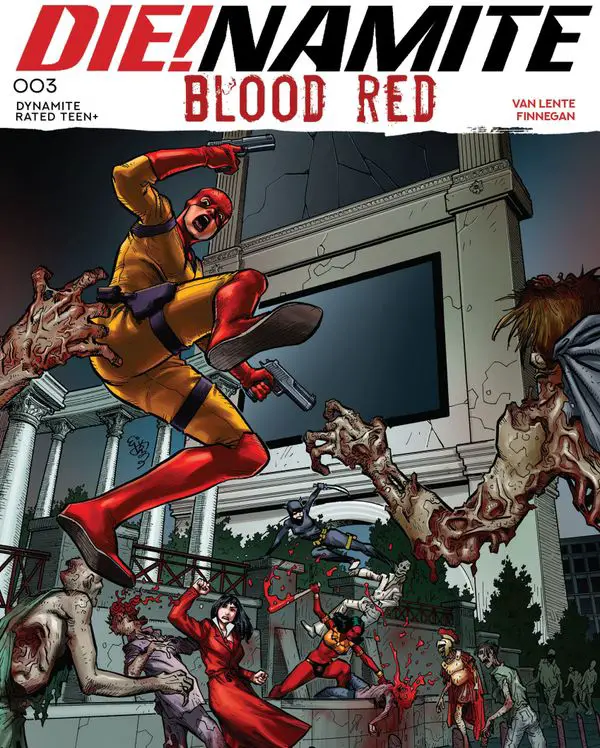
DIE!namite: Blood Red #3, by Dynamite Comics on 12/17/25, strips away the luxury of safe havens and forces our plague-ravaged survivors into Nevada’s most inhospitable terrain.
Credits:
- Writer: Fred Van Lente
- Artist: Marco Finnegan
- Colorist: Ellie Wright
- Letterer: Jeff Eckleberry
- Cover Artist: E.J. Su (cover A)
- Publisher: Dynamite Comics
- Release Date: December 17, 2025
- Comic Rating: Teen
- Cover Price: $4.99
- Page Count: 22
- Format: Single Issue
Covers:
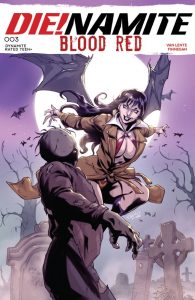
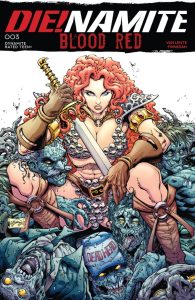
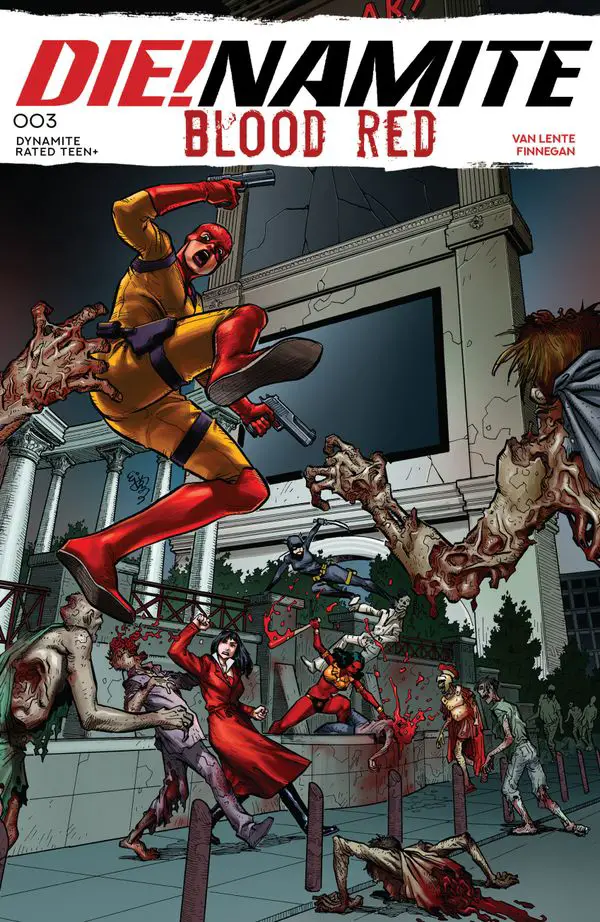
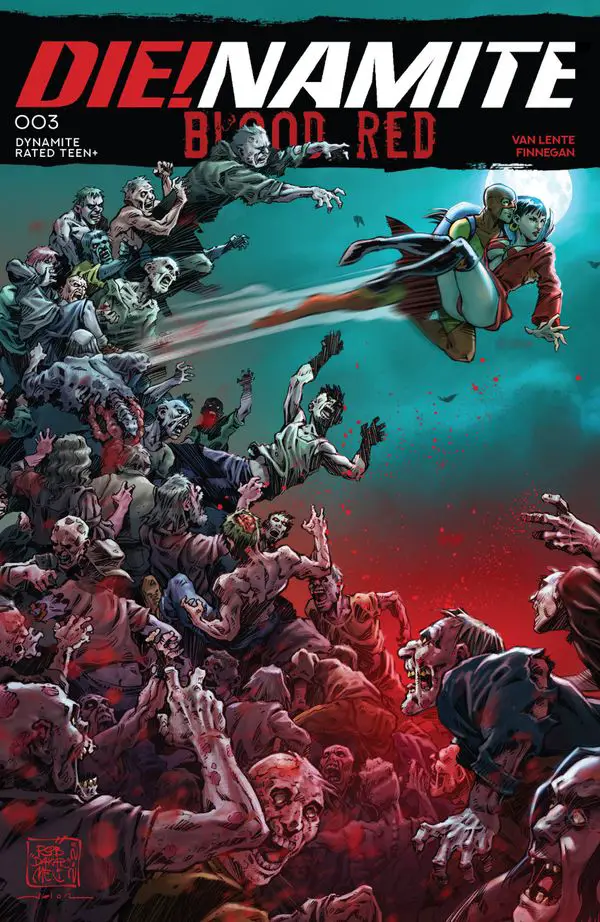
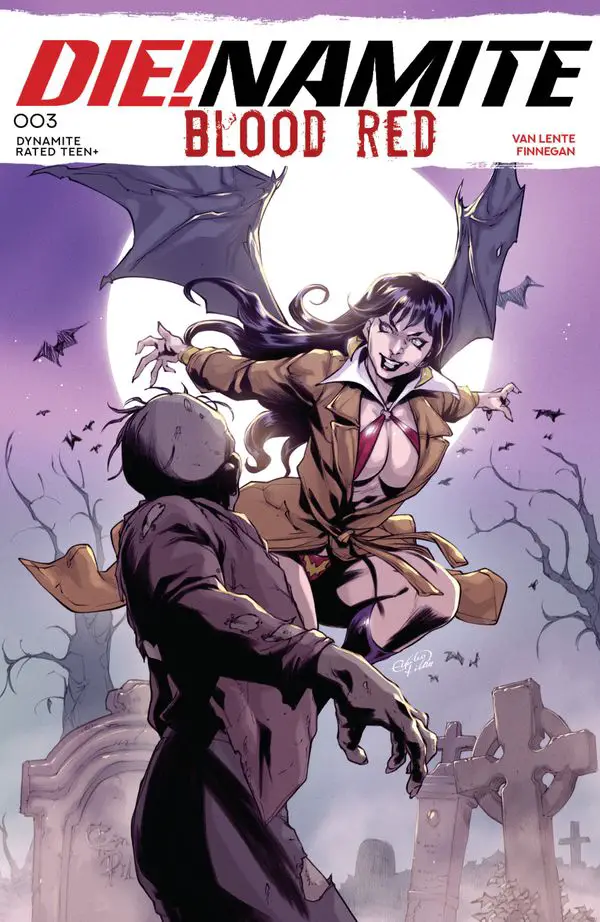
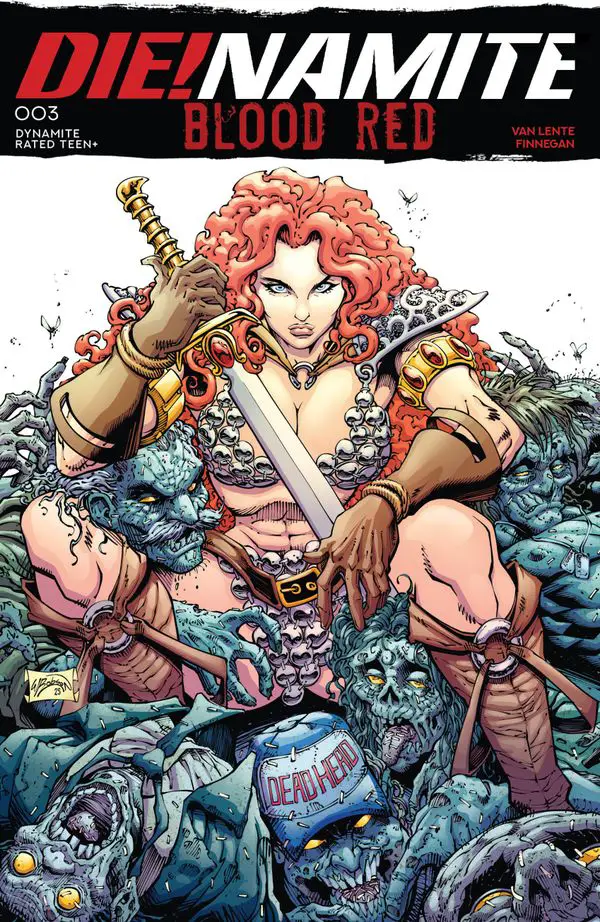
Analysis of DIE!NAMITE: BLOOD RED #3:
First Impressions:
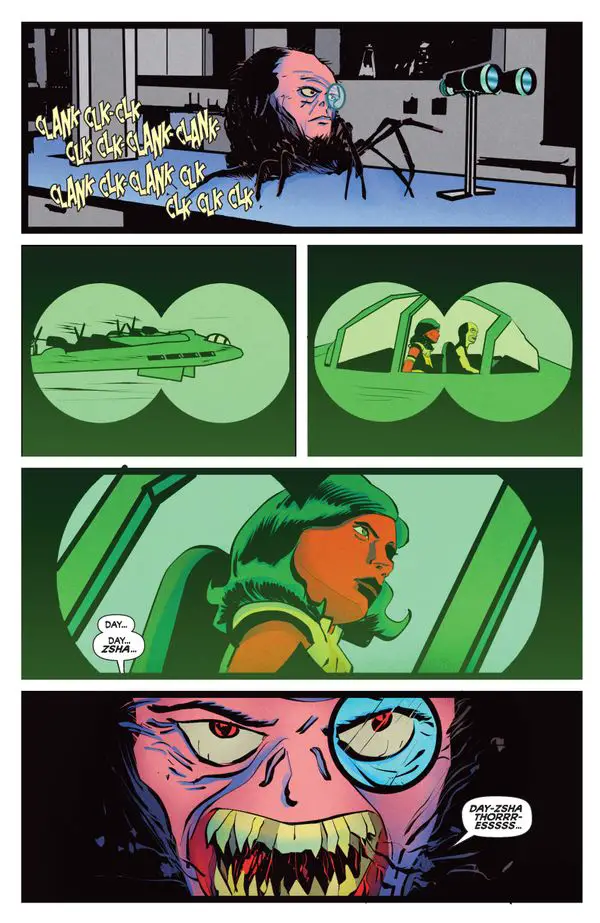
The opening slams readers face-first into chaos; mechanical gunfire and creature sounds dominate before a single word of dialogue lands, making the hook visceral and immediate. Van Lente wastes zero time on exposition, trusting readers to follow the thread from previous issues while establishing that danger has teeth. The energy feels kinetic, though it tilts dangerously close to assuming you remember exactly who’s where and why they’re running.
Recap:
In DIE!namite: Blood Red #2, Dejah Thoris arrived in Sunset City aboard a damaged flying saucer, identified Taak as the Kaldane responsible for the X-virus plague, and pinpointed his lab at Hoover Dam as the target. Purgatori sent Vampirella, Dejah, and a squad of her “Furies” toward the Dam on a suicide run, with Vampirella motivated by her infected partner Tristan. The team’s alliance fractured under the weight of hidden agendas and telepathic confrontations, but the mission remained locked in. By issue’s end, the group was heading south toward Nevada with everything still unresolved and the cure tantalizingly out of reach.
Plot Analysis:
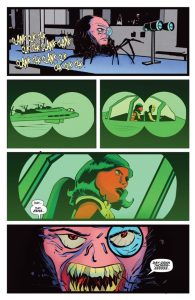
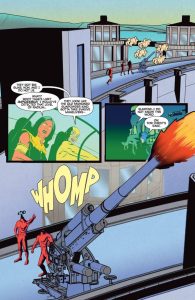
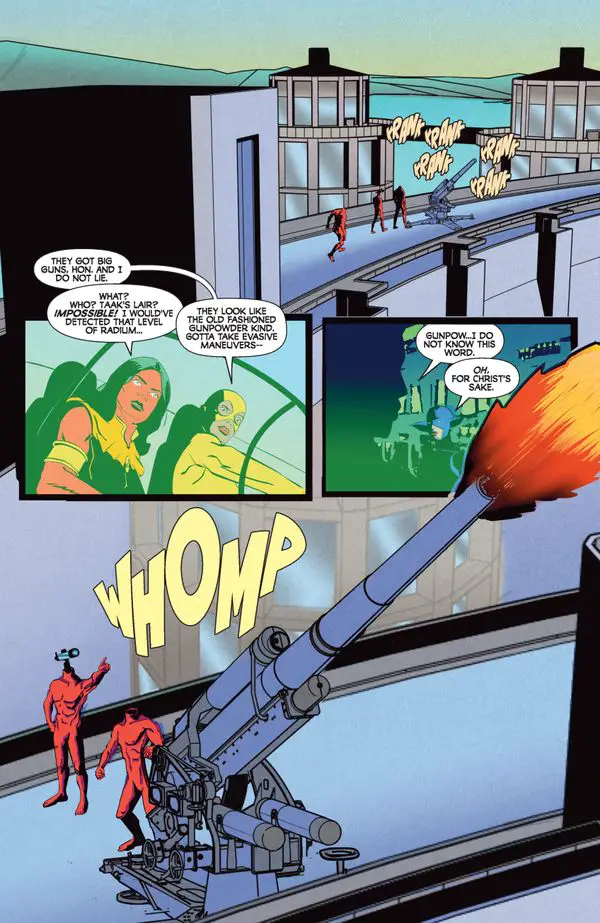
The issue opens with a tense extraction scene as Dejah’s flying wing gets peppered with gunfire while circling Taak’s lair, forcing a crash landing near Las Vegas. The survivors scramble through infested territory, dodging Deadmen until they find cover in the chaos and link up with Sonja, a lone survivor who used to perform in some kind of Hyborean-themed casino show. She’s been living off casino kitchens for months, isolated but relatively safe, and she’s got information worth trading. Sonja reveals that most of her original group died when the plague hit, and she’s desperate enough to join the mission toward Hoover Dam.
With Sonja’s local knowledge, the group realizes a car across Vegas streets means death by Deadmen, so Dejah proposes underground alternatives. Sonja mentions a main cistern in the old sewer system that drains into the Colorado River, giving them a silent route to sneak up on Taak’s position. The journey begins through flooded, disgusting tunnels with minimal supplies and zero guarantees. Along the way, Vampirella’s bloodlust becomes an immediate problem; despite her protestations about control, she’s clearly starving, and the prolonged water travel might trigger something she can’t contain.
Tension spikes when Vampirella admits her feeding instinct is building, and Dejah, sensing the time crunch, offers her own blue Martian blood as sustenance. Fury flips out at the casual vampire neck-biting happening mid-journey, but Dejah reassures everyone that women’s immunity to the X-virus means the blood carries no disease. As the group pushes through the sewers toward Hoover Dam, Stannis, another survivor from Sonja’s old group, appears as a bloated corpse in the water, implying the sewer route isn’t as secret or safe as anyone hoped. The issue closes with Fury barely holding it together, muttering sarcasm about how this entire operation has spiraled into something way too weird for anyone to handle.
Story
Van Lente’s dialogue remains the comic’s sharpest tool; every character gets a verbal signature that lands instantly and reinforces their personality without exposition dumps. The back-and-forth between Dejah’s formal Martian speech patterns and Fury’s street slang creates instant contrast, and Sonja’s casual mention of dead friends mixed with gallows humor feels earned rather than forced. However, the pacing suffers from a fundamental structure problem. The issue jumps between action beats, sewer scenes, and character introductions so rapidly that emotional weight gets bulldozed by momentum.
The sewer journey should feel claustrophobic and dread-soaked, but instead it plays like a setup montage where characters explain logistics instead of experiencing them. The big twist about Stannis appearing as a corpse lands with less impact than it should because the reader never met him and barely knows his name from Sonja’s throwaway mention. Scenes shift so fast that tension doesn’t have room to breathe; the comic treats horror as an afterthought while prioritizing plot advancement and witty asides.
Art
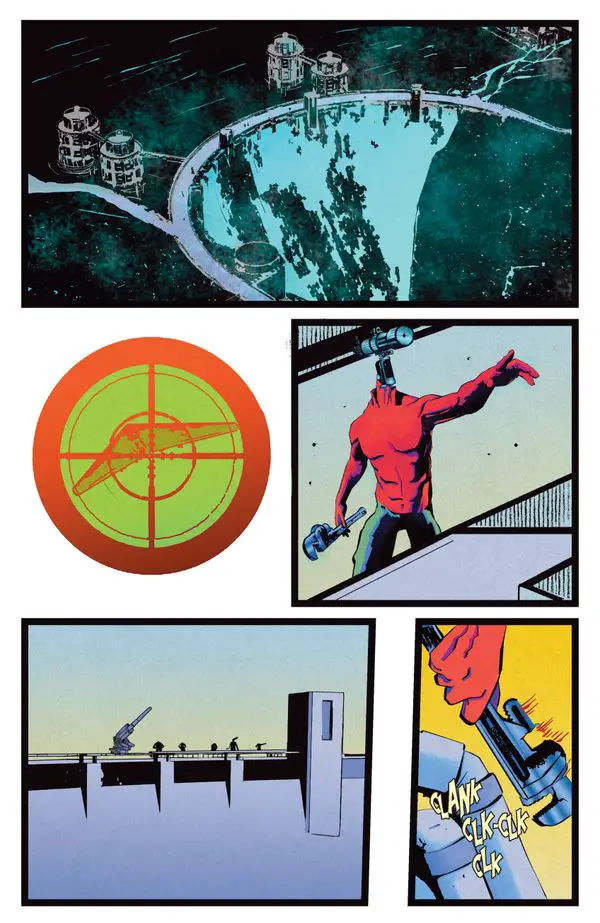
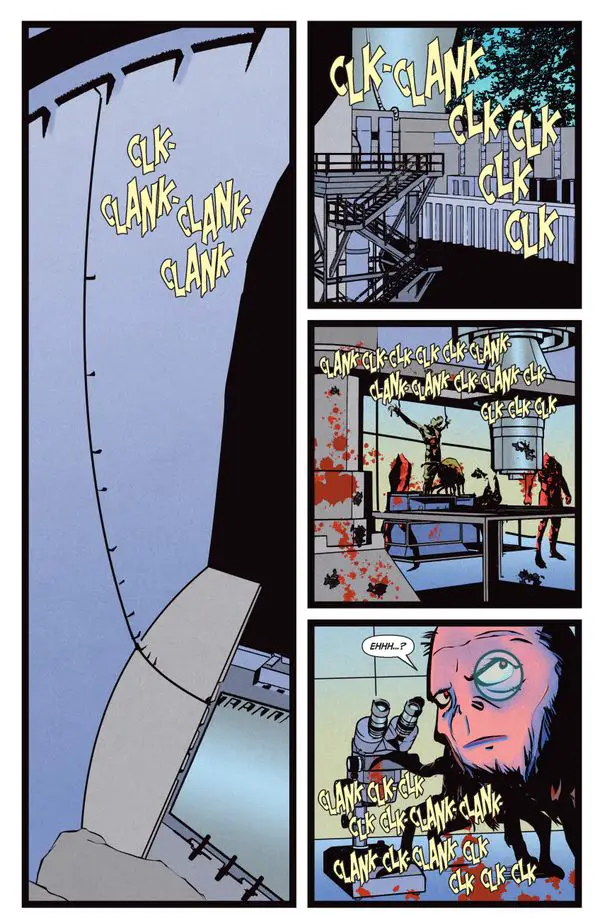
Finnegan’s linework struggles with the balance between clarity and mood. During the crash sequence, panels stay reasonably clean and readable, but once the sewer scenes begin, the artwork becomes murky and hard to parse. Backgrounds blur into generic shadows, and the water-filled tunnels don’t create the suffocating atmosphere the script implies. The contrast between the bright opening action and the dimly rendered underground sections is jarring rather than purposeful. Wright’s color palette attempts to shift from harsh daylight to cold, murky blue-green tones in the sewers, which works conceptually, but the muddy execution makes details harder to see exactly when clarity matters most.
Character anatomy remains inconsistent; Vampirella’s proportions shift between panels, and Sonja’s introduction art feels rushed compared to the more detailed work on Dejah. The most frustrating aspect is how Sonja is rendered as a generic showgirl stand-in rather than a memorable character design. She’s meant to be a survivor with agency, but the art treats her as window dressing, which undermines the script’s attempts to build her as someone worth investing in. The final page with Stannis’s corpse should be a gut punch, but it’s rendered so vaguely that the emotional payoff misses entirely.
Characters
Dejah Thoris continues her trajectory as the determined problem-solver, and her willingness to offer her own blood to save Vampirella demonstrates consistency with her character arc. Vampirella’s struggle with hunger adds a ticking clock to the mission, which is smart, but the resolution (accepting blue alien blood) happens so quickly that it sidesteps any real internal conflict. Fury serves as the team’s skepticism filter, which works functionally but reduces her to reaction shots rather than actual agency.
The problem character is Sonja. She’s introduced, given a sympathetic backstory about isolation and dead friends, and then immediately volunteered for a suicide mission toward a bioweapon lab. Her motivation is threadbare: loneliness. The script tells us she’s been isolated, but it doesn’t show us what that isolation cost her or why she trusts these strangers with her life. She exists because the plot needs a local guide, not because her character arc demands inclusion. Stannis’s corpse at the end is meant to retroactively validate Sonja’s warnings about the sewer route, but since readers never connected with Stannis as a person, it’s a dead beat. The team’s chemistry remains intact from previous issues, but the new cast member doesn’t integrate smoothly enough to deepen relationships or raise stakes in meaningful ways.
Originality & Concept Execution
The core concept of a all-female survival squad navigating a zombie apocalypse with Martian science and vampire complications remains fresh, especially compared to standard outbreak narratives that default to male-led groups. Using the sewer system as an escape route is practical worldbuilding rather than contrived plotting. However, the execution stumbles on originality. Vampire bloodlust as a secondary plot tension is familiar territory from dozens of zombie and vampire crossovers. The idea of Martian blood serving as a substitute is clever, but the comic treats it as a logistical problem to solve rather than a moral or character moment.
The bigger issue is that this issue doesn’t advance the concept in any meaningful way; it’s a bridge chapter that moves pieces from point A to point B. The premise set up in issue #2 was “cure exists, team goes to get it.” Issue #3 just shows them traveling. No new complications emerge that complicate the original concept. The gendered plague twist (women immune, men transformed) remains the most original element, but this issue barely engages with it. We get one line about Vampirella’s blood being safe because women are immune, and then the moment passes. For a series claiming novelty, this feels like treading water.
Positives
The dialogue writing remains consistently sharp and memorable; every exchange between Dejah and Fury crackles with personality, and Sonja’s dry observations about casino survival add flavor to an otherwise standard escape sequence. Van Lente’s commitment to avoiding exposition through character voice is genuinely strong, trusting readers to keep up while delivering plenty of laugh-out-loud moments. The concept of using the sewer system as a silent approach to Hoover Dam is smart worldbuilding that avoids the dumber option of driving through an infested city. Dejah’s willingness to sacrifice her own blood for the mission demonstrates character consistency and raises interesting questions about the cost of survival. The fast pacing keeps readers moving and prevents any scene from overstaying its welcome, which is valuable for a bridge issue. For readers invested in the cast dynamics and Vampirella’s internal struggle with hunger, there’s enough character moment to justify the cover price.
Negatives
The sewer sequence that comprises half the issue is rendered so murkily by Finnegan that it becomes hard to follow panel-to-panel, turning what should be claustrophobic tension into murky confusion. Sonja is introduced as a sympathetic survivor but never given enough development to feel like more than a plot device, leaving her character arc dependent on traits the script mentions rather than shows.
The biggest offense is the cheap use of “Red Sonja” as a character. The comic introduces a character named “Sonja” who used to work a barbarian show and treated as a stand-in for Red Sonja, one of the most iconic female sword-and-sorcery characters in comics history, but this Sonja is neither the legendary warrior nor even a convincing echo of her legend. She’s a Vegas showgirl who happened to survive the plague, stripped of anything that made Red Sonja a distinctive character. The choice feels like marketing parasitism rather than creative homage.
Additionally, the cliffhanger with Stannis’s corpse doesn’t land emotionally because Stannis never registers as a real character to the reader; he’s just a name Sonja mentioned once. The issue moves pieces but doesn’t deepen stakes or character relationships enough to justify the lack of plot advancement. Readers are essentially paying four dollars to watch characters walk through sewers and chat, with the actual confrontation at Hoover Dam pushed to next issue.
Art Samples:
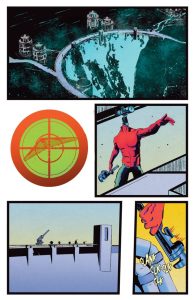
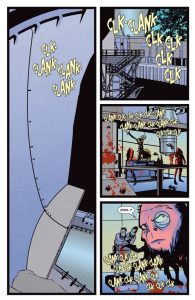
The Scorecard:
Writing Quality (Clarity & Pacing): [2.5/4]
Art Quality (Execution & Synergy): [1.5/4]
Value (Originality & Entertainment): [1/2]
Final Thoughts:
(Click this link 👇 to order this comic)
DIE!NAMITE: BLOOD RED #3 is a sewer level that shouldn’t cost full price. The script’s snappy dialogue keeps the issue from completely flatting, but the muddy artwork transforms what should be a claustrophobic journey into a visual chore, and Sonja’s casting as a Vegas performer masquerading as a Red Sonja homage feels like the creative team settling for a concept over a character. Your comic budget is better spent on something with actual stakes, character development, or art that doesn’t require a flashlight to parse.
We hope you found this article interesting. Come back for more reviews, previews, and opinions on comics, and don’t forget to follow us on social media:
If you’re interested in this creator’s works, remember to let your Local Comic Shop know to find more of their work for you. They would appreciate the call, and so would we.
Click here to find your Local Comic Shop: www.ComicShopLocator.com
As an Amazon Associate, we earn revenue from qualifying purchases to help fund this site. Links to Blu-Rays, DVDs, Books, Movies, and more contained in this article are affiliate links. Please consider purchasing if you find something interesting, and thank you for your support.