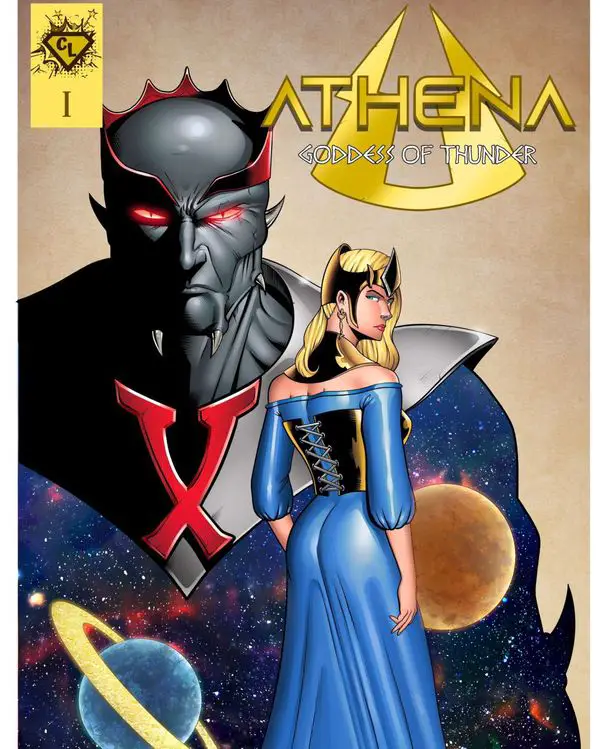
Athena: Goddess of Thunder #1, available now on Kickstarter, introduces Lyra, the princess of a doomed world, who gets flung across the galaxy to escape a genocidal warlord named Xerxes.
Credits:
- Writer: Jared Liuzzi, Charlotte Yeramian
- Artist: D.J. Wiedrich
- Colorist: D.J. Wiedrich
- Letterer: D.J. Wiedrich
- Cover Artist: D.J. Wiedrich (cover A)
- Publisher: Kickstarter
- Release Date: December 20, 2025
- Comic Rating: Teen
- Cover Price: $5.00
- Page Count: 28
- Format: Single Issue
Covers:
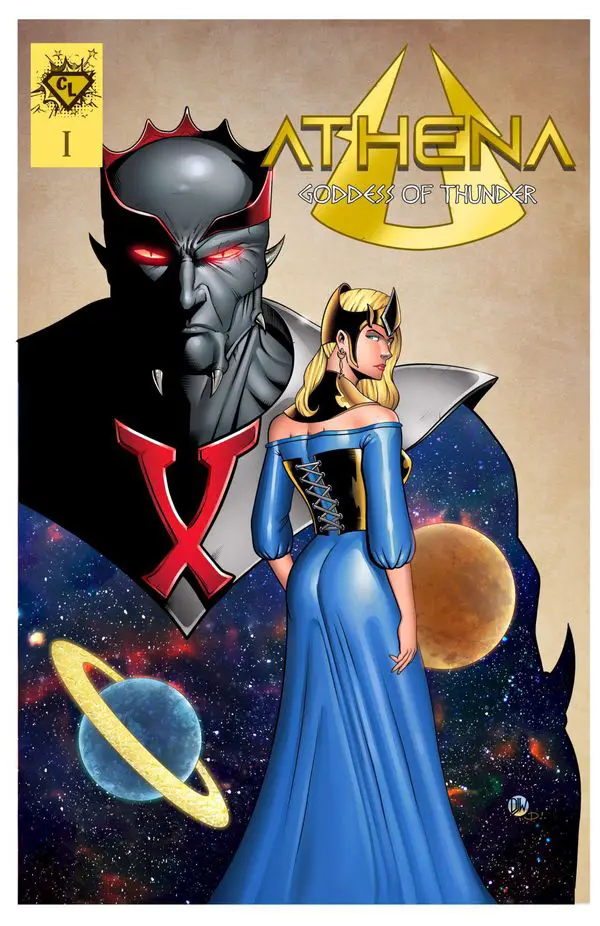
Analysis of ATHENA: GODDESS OF THUNDER #1:
First Impressions:
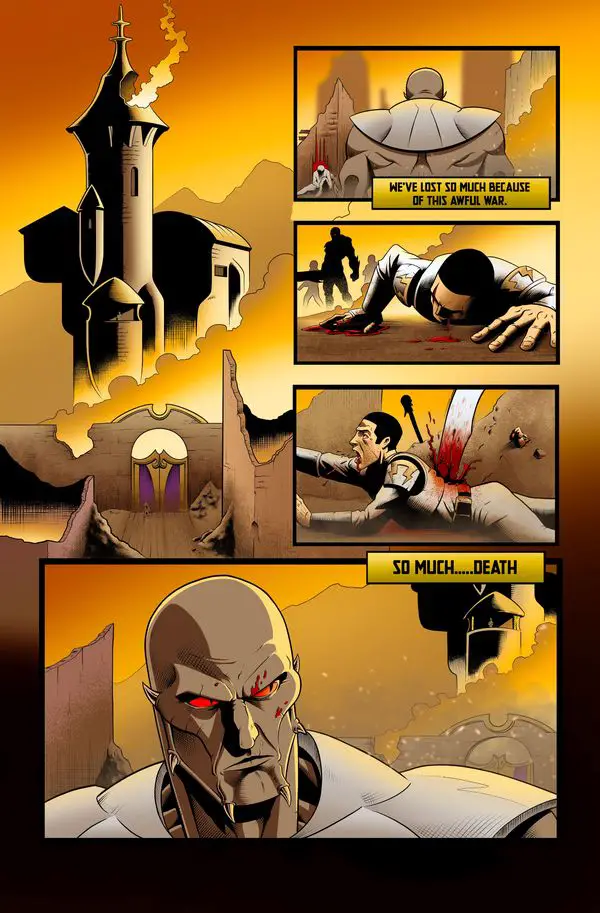
The opening narration promising cosmic destruction and a world being conquered does what it’s supposed to do, establishing stakes and sympathy for Lyra in broad strokes. The jump to her escape feels abrupt, though, like we’re supposed to care about someone we’ve just met rather than mourning what we’ve actually seen destroyed. The art doesn’t quite match the emotional weight of the script, giving everything a stilted quality that undermines the tragedy the story is reaching for.
Plot Analysis:
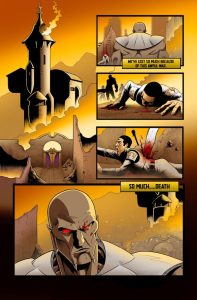
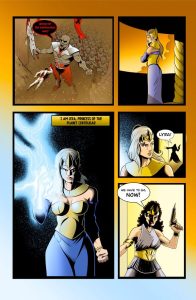
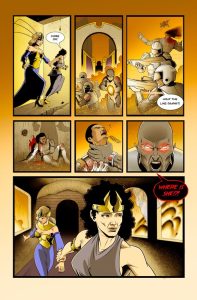
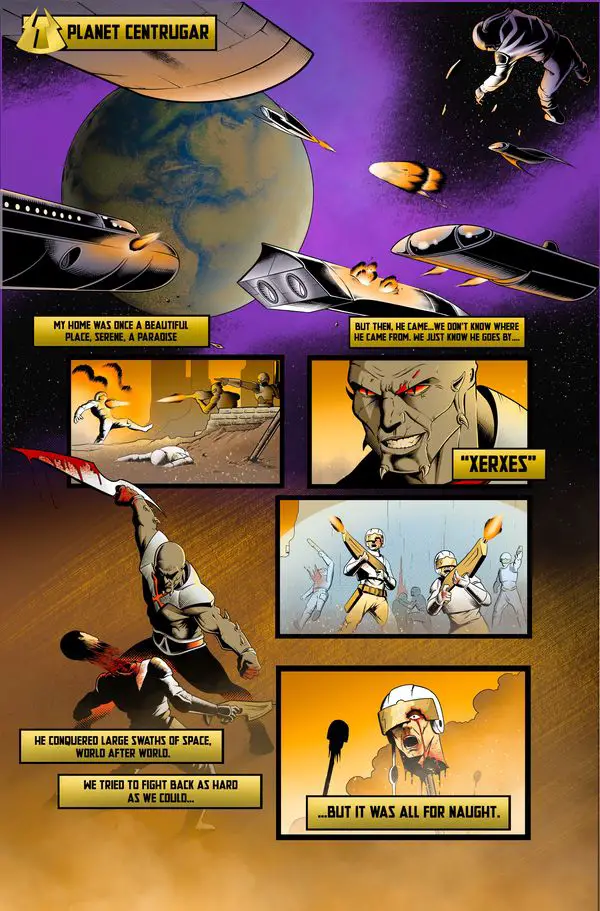
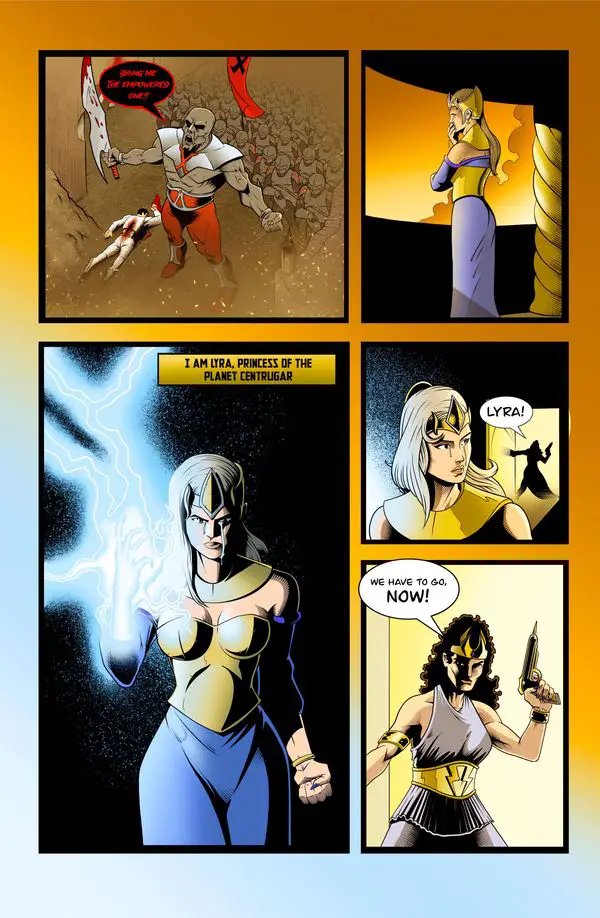
Planet Centrugar was once a paradise until Xerxes arrived from unknown origins and began his conquest. The warlord systematically conquered world after world, and when the people of Centrugar tried to fight back, they failed completely. Lyra, the princess of this dying world, realizes her home is lost and the war is over. A soldier (Lyra’s mother?) tells Lyra she must escape because her destiny lies elsewhere, and someone described as an “empowered one” is needed on every world. As Xerxes demands her capture, a spacecraft launches Lyra toward safety, and she escapes the world’s destruction.
The craft carries Lyra through space with optimal conditions for Earth, and she arrives in the Milky Way Galaxy. Lyra’s arrival is soon upended when her brother Niko, hungry for the throne, finds her on Earth and attempts to capture her on behalf of Xerxes. Suddenly, a group of superpowered heroes arrives and confronts Niko. The heroes fight Niko to a standstill, but Lyra is injured in the battle. She wakes up in a medical facility where a man named Atlas tells her the Pantheon just saved her. Atlas reveals he and his team are a group of empowered individuals who fight against threats. Lyra explains that she’s a princess from Centrugar whose world was destroyed by Xerxes, and Atlas listens to her story without judgment.
Atlas offers Lyra a place with the Pantheon, telling her that his team has faced gods, monsters, and alternate versions of themselves. He promises her the chance to hide, fall in love, and start a new life free from Xerxes’ blood-red eyes. Lyra considers his offer and decides that standing beside fellow empowered people gives her a better chance of survival than running alone. She agrees to join them.
Atlas takes Lyra to the armory to outfit her for the mission ahead. She asks Atlas how she looks in her new gear, and he gives her a simple, confident answer before the story ends on the promise of what comes next.
Story
The script hits every exposition beat with the subtlety of a sledgehammer. Lyra explains her entire backstory in one speech, Atlas explains his team’s resume in another, and the dialogue reads like each character is giving a presentation rather than having a conversation. Lines like “We only just met and, just like that, you offer me a place?” feel like they exist to address potential reader confusion rather than grow organically from character dynamics. The pacing rushes through the emotional beats that should land harder, treating Lyra’s planet’s destruction and her grief as plot mechanics rather than genuine tragedy. The script also struggles with word choice and punctuation in places, creating moments that feel rough around the edges.
Art
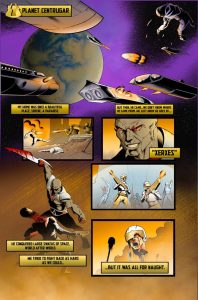
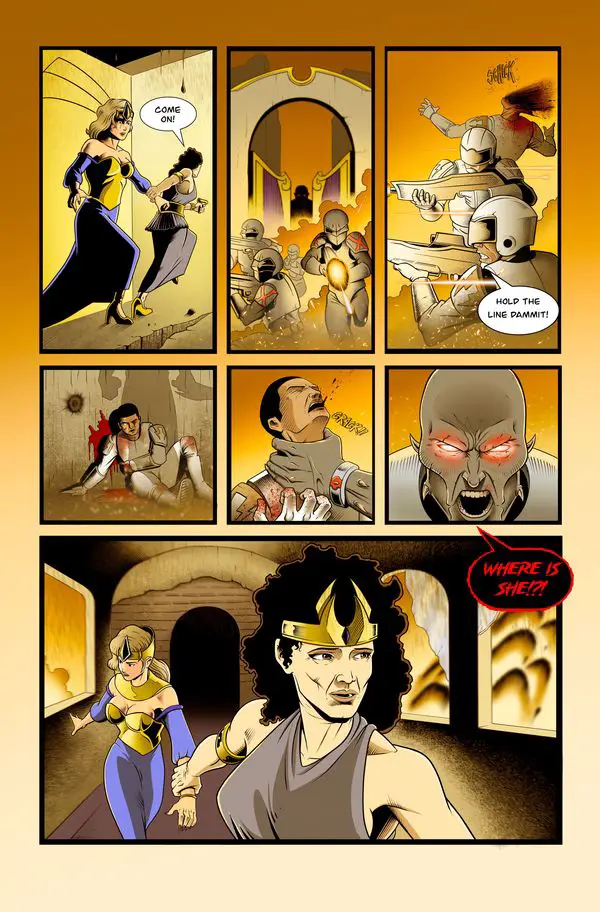
The art carries the weight of a digital-native creator who understands composition better than execution. Panels are clear enough to follow, and the double-page spreads show ambition in layout. However, the line work feels inconsistent, with some character faces appearing stiff and others poorly proportioned. The color palette is functional but flat, lacking the depth or atmospheric richness that would make the space setting feel truly lived-in or the Centrugar destruction genuinely catastrophic. Details like facial expressions and body language don’t convey the emotional stakes of the story. The armory pages at the end benefit from a clearer visual focus, showing that the artist can execute cleaner work when the scene demands it.
Characters
Lyra’s motivation is straightforward, maybe too straightforward: survive. She’s a refugee who lost everything, and the story tells us this directly rather than letting us feel it. Her decision to join the Pantheon comes within pages of meeting Atlas, which feels less like a character choice and more like accepting the plot’s inevitability. Atlas is confident bordering on cocky, but he’s also a blank slate designed to recruit Lyra rather than serve as a fully realized character in his own right. The father figure who sent Lyra away gets a single emotional moment and disappears. There’s potential for Lyra to become someone, but right now she’s grief in a body that hasn’t learned how to channel that grief into anything meaningful yet.
Originality & Concept Execution
The core premise takes a familiar shape, a refugee with powers joins a superhero team, but it’s executed with the finesse of someone hitting the broad strokes and calling it done. Xerxes as a threat exists mostly as a name and a vague sense of danger rather than a character with dimension or compelling villainy. The idea of lost worlds and cosmic stakes has been explored in countless properties already, and this comic doesn’t do enough to differentiate itself from that crowd. The Pantheon themselves are barely sketched in. The comic promises a story about an empowered princess finding refuge among heroes, but it settles for rushing through the setup.
Positives
The comic’s strongest moment is its willingness to start with real stakes. A world has fallen, people are dead, and a young woman is running for her life. That foundation gives the story something to build on. The escape sequence itself, chaotic and urgent, shows the creators understand how to create momentum visually. The promise of the Pantheon and the suggestion that Lyra will find family among them has genuine emotional potential, even if the execution here doesn’t quite nail it. The decision to give Lyra agency in choosing to join the team, rather than having her saved and suddenly obligated, is a solid character choice. The artwork demonstrates enough skill to suggest this team can improve with practice and feedback.
Negatives
The script’s biggest shortcoming is telling rather than showing at nearly every turn. Lyra doesn’t feel like a traumatized refugee, she feels like someone reciting her trauma. The emotional weight that should make readers care about her survival gets buried under exposition-heavy dialogue that prioritizes plot mechanics over character authenticity. The art, despite clear effort, lacks the refinement needed to carry a dramatic space-opera story; character proportions shift, faces fail to convey emotion convincingly, and the color work does nothing to enhance atmosphere or mood. The pacing is aggressive to the point of carelessness, cramming a planetary destruction, an escape, and a team recruitment into one issue without letting any of it breathe. The villainous Xerxes exists as a threat in name only, never demonstrating why readers should fear him beyond being told he’s powerful. The dialogue throughout feels written rather than spoken, and it’s a hard wall to climb emotionally.
Art Samples:
The Scorecard:
Writing Quality (Clarity & Pacing): [2.5/4]
Art Quality (Execution & Synergy): [2.5/4]
Value (Originality & Entertainment): [1/2]
Final Thoughts:
(Click the link to buy the comic 👇)
ATHENA: GODDESS OF THUNDER #1 is the work of creators who understand the pieces of superhero storytelling but haven’t yet learned how to put them together in a way that makes you feel something beyond “okay, I see what you’re doing here.” This is a first issue that knows where it wants to go but hasn’t figured out how to make the journey as compelling as it could be. Whether this team has the guts and growth potential to fix these problems in issue two remains to be seen, but we’ll be watching.
We hope you found this article interesting. Come back for more reviews, previews, and opinions on comics, and don’t forget to follow us on social media:
If you’re interested in this creator’s works, remember to let your Local Comic Shop know to find more of their work for you. They would appreciate the call, and so would we.
Click here to find your Local Comic Shop: www.ComicShopLocator.com
As an Amazon Associate, we earn revenue from qualifying purchases to help fund this site. Links to Blu-Rays, DVDs, Books, Movies, and more contained in this article are affiliate links. Please consider purchasing if you find something interesting, and thank you for your support.