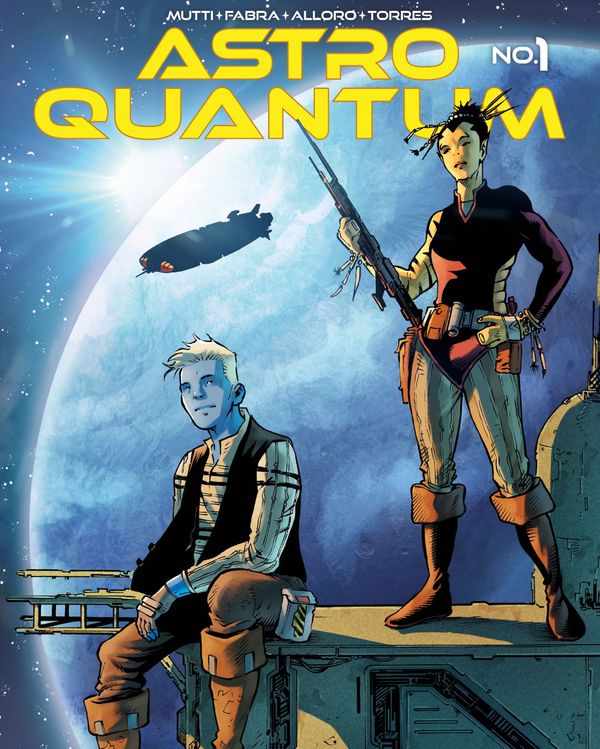
Astro Quantum #1, by Mad Cave Studios on 1/28/26, finds a young dreamer leaving his sheltered homeworld, only to crash-land on a hellscape planet and stumble into the company of a hardened warrior hunting among the desperate.
Credits:
- Writer: Andrea Mutti, Arturo Fabra
- Artist: Andrea Mutti
- Colorist: Valerio Alloro
- Letterer: Dan Cutali
- Cover Artist: Andrea Mutti, Valerio Alloro (cover A)
- Publisher: Mad Cave Studios
- Release Date: January 28, 2026
- Comic Rating: Teen
- Cover Price: $4.99
- Page Count: 32
- Format: Single Issue
Covers:
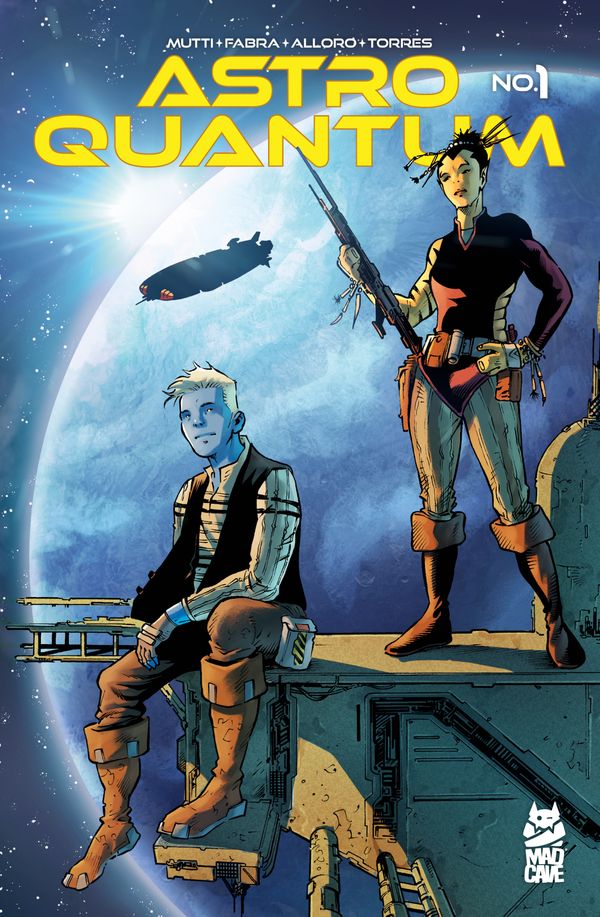
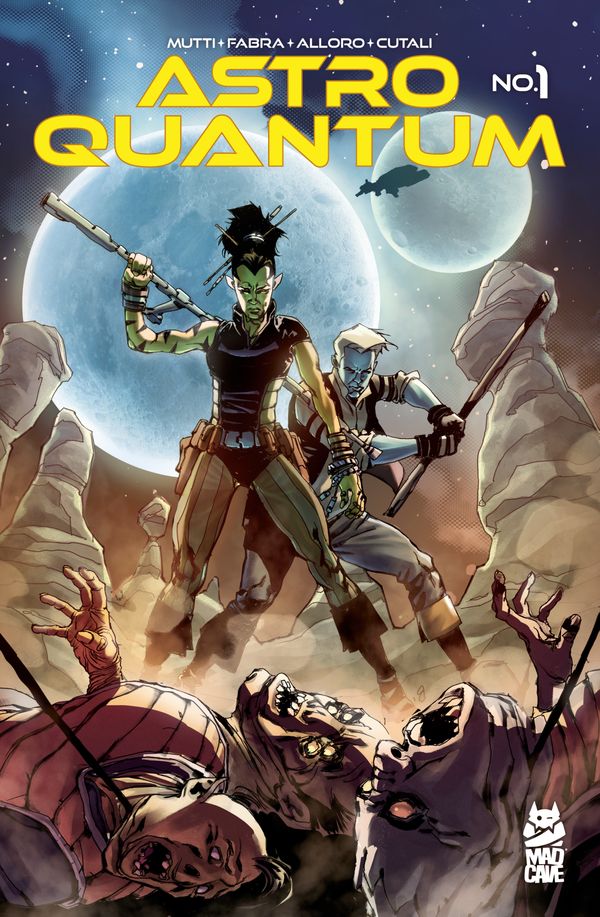
Analysis of ASTRO QUANTUM #1:
First Impressions:
This issue lands with genuine momentum, trading immediate spectacle for character-driven world-building that actually matters. The core concept works because it tethers big sci-fi ideas like energy monopolies and planetary exploitation to two protagonists whose opposing worldviews create natural friction and real dramatic potential.
Plot Analysis (SPOILERS):
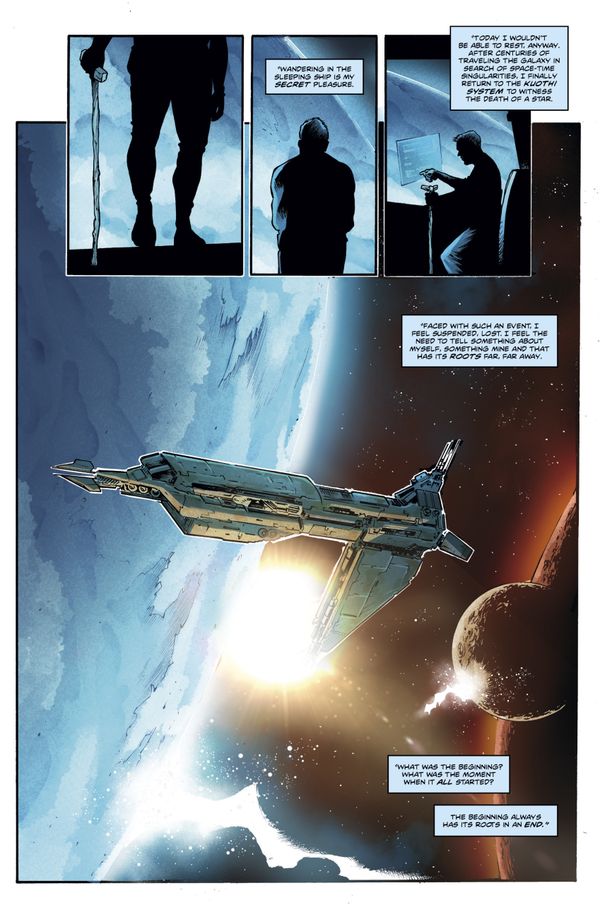
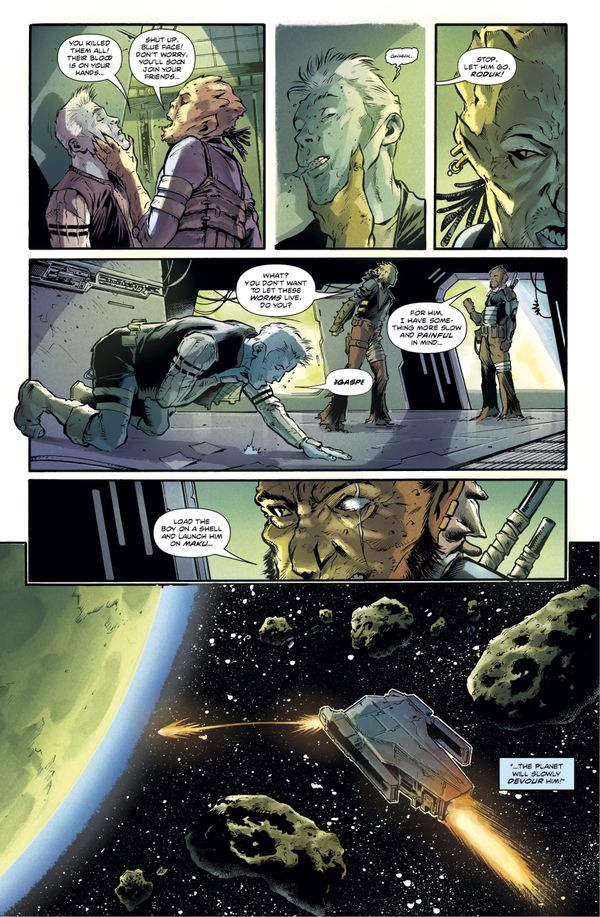
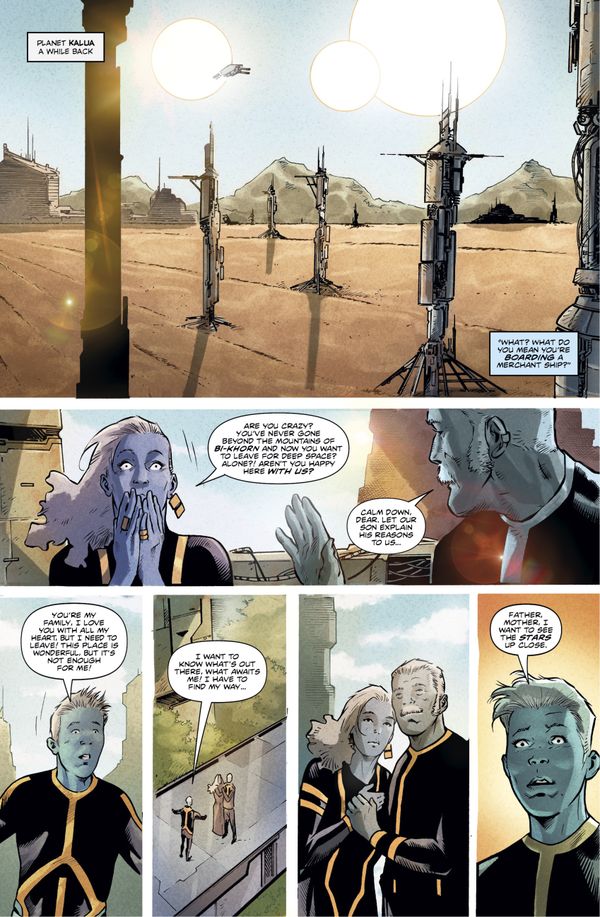
The comic opens with a mysterious traveler reflecting on centuries spent chasing space-time singularities, but this opening quickly pivots to a scene of brutal violence. A blue-skinned humanoid is tortured and executed by a faction leader named Roduk, while his young companion is cast onto the planet Maku to slowly die from silicon poisoning. We then cut backward to meet our main character, Ishmael, as a young man leaving his peaceful homeworld of Kalua to seek adventure among the stars. His tearful departure reveals a classic tension: familial love versus personal ambition.
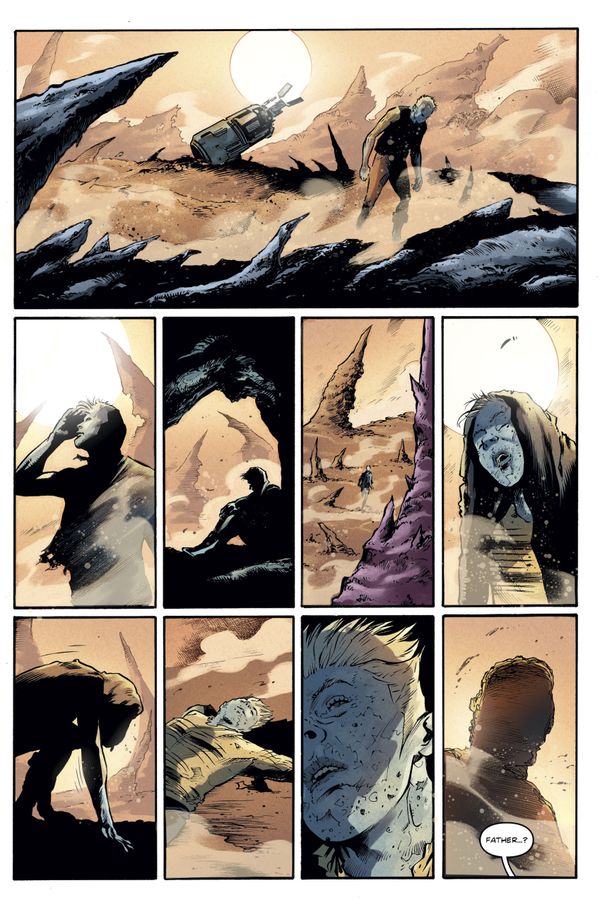
Ishmael boards a merchant ship for deep space, but halfway through the journey a mutiny erupts. The crew loyal to the captain is murdered, and Ishmael is among the survivors dumped on Maku. He crashes in an escape pod only to be rescued by Que-Keg, a tough and cynical Solium female who operates in the underground settlements. Que-Keg has technical knowledge and a crude sense of humor; Ishmael has optimism and mechanical aptitude. The two strike a deal: Ishmael fixes her ship, and she gives him passage off this dying world.
The pair venture into Tar-Tar, the largest underground settlement on Maku, where Que-Keg enters Ishmael into combat racing using a symbiotic creature called a Rantol. She wins big, but when the stakes come due, she discovers she bet Ishmael as a slave. They head to Nube, a massive spaceport and shipyard, where conversation reveals the galactic landscape: Quantum crystals power civilization, they’re harvested from an alien species called Moloks, and corporations like the Kodash control planetary economies through this monopoly. The Kobalt, an eco-terrorist faction, opposes this exploitation but kills innocent people in the process. A gang of Quantum-dependent thugs attacks Que-Keg in the streets because she’s Solium. She defeats them brutally, and afterward a mysterious hooded figure named JidO approaches them with a job offer: boarding on the Pekuod, a ship that hunts Moloks. The issue closes with a “to be continued” and the ominous revelation that the Pekuod is known as a cursed vessel.
Story
The pacing operates at two speeds effectively. The opening violence establishes stakes immediately, while the longer middle section allows us to understand the characters through their choices and conflicts. Dialogue feels functional overall, though some lines lean heavy on exposition; when Ishmael asks what Quantum is, the explanations come rapid-fire and sometimes awkward. The structure itself is strong: cold open with violence, flashback to origins, present-day collision of characters, and escalation toward a larger conspiracy. Scene transitions are clear despite the density of world-building information crammed in.
Art
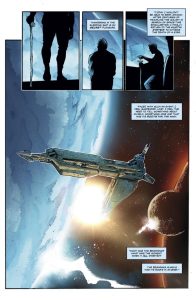
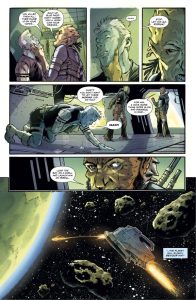
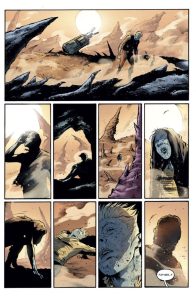
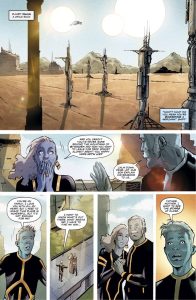
Andrea Mutti’s painterly line work is expressive, particularly in close-ups where facial reactions convey emotional weight. Valerio Alloro’s colors shift appropriately between the lush Kalua flashbacks and the harsh industrial tones of Maku and Nube. Composition uses negative space wisely; action scenes breathe rather than overwhelm. However, some panels feel crowded with dialogue balloons, making visual storytelling take a backseat to exposition delivery. The color palette successfully establishes atmosphere: warmer tones for hope and memories, cooler and more muted shades for desperation and danger.
Characters
Ishmael reads as genuinely conflicted and his naivety feels earned rather than contrived. Que-Keg is the stronger character; her cynicism has weight because we see the world that shaped it, and her moments of dark humor ring true. Their dynamic works because they want fundamentally different things. The issue struggles slightly with secondary characters, particularly Roduk and JidO, who function more as plot devices than people. That said, the relationship between Ishmael and Que-Keg carries enough emotional authenticity to sustain reader investment.
Originality & Concept Execution
The premise is familiar: a naive outsider meets a jaded mentor figure on a space opera journey. What distinguishes this execution is the genuine attention paid to economic systems driving the conflict. Quantum monopolies creating planetary slavery is not revolutionary, but it’s specific enough to avoid feeling generic. The idea of hunting an intelligent alien species for energy feels morally complicated in ways the issue doesn’t fully explore, which is both a strength (room for growth) and a minor weakness (felt rushed in places).
Positives
The strongest element is the dynamic between Ishmael and Que-Keg. Their contrasting worldviews create natural conflict that makes scenes crackle without needing explosions to carry weight. The scene where Que-Keg casually mentions betting Ishmael as a slave, then dismisses his shock, lands perfectly; it tells us everything about her survival mindset in three panels. The art effectively conveys emotional states through facial expressions and body language, reducing reliance on heavy narration. The world-building, while exposition-heavy, establishes a coherent galactic economy with clear stakes for each faction. The pacing never stalls despite juggling flashbacks and present-day action.
Negatives
The exposition delivery feels clunky at times; several conversations exist primarily to explain how Quantum works or what the Kodash do. The opening violence, while attention-grabbing, doesn’t clearly connect to Ishmael’s story until much later, creating a slight tonal whiplash. Secondary characters feel sketched rather than lived-in; Roduk and JidO lack distinct personality, which undercuts the impact of the final reveal. The script has occasional awkward phrasings that suggest rushed dialogue passes. The mysterious opening narration about singularities never resurfaces, leaving readers wondering if it’s setup or forgotten flavor text.
Art Samples:
The Scorecard:
Writing Quality (Clarity and Pacing): [2.5/4]
Art Quality (Execution and Synergy): [3.3/4]
Value (Originality and Entertainment): [1/2]
Final Thoughts:
(Click this link 👇 to order this comic)
ASTRO QUANTUM #1 is competent space opera that leans into character conflict over cosmic spectacle, which is a smart call. The Ishmael and Que-Keg dynamic has genuine potential, and the underlying world of energy monopolies and slave labor feels grounded enough to sustain a series. However, the issue is bogged down by exposition delivery and secondary characters who lack memorable identity. It’s a solid foundation that justifies a second issue.
We hope you found this article interesting. Come back for more reviews, previews, and opinions on comics, and don’t forget to follow us on social media:
If you’re interested in this creator’s works, remember to let your Local Comic Shop know to find more of their work for you. They would appreciate the call, and so would we.
Click here to find your Local Comic Shop: www.ComicShopLocator.com
As an Amazon Associate, we earn revenue from qualifying purchases to help fund this site. Links to Blu-Rays, DVDs, Books, Movies, and more contained in this article are affiliate links. Please consider purchasing if you find something interesting, and thank you for your support.